
 Cart (
Tank Gauging System Calibration in Singapore
On-board calibration of cargo tank gauging systems on tankers, gas carriers and bunker vessels in Singapore. We verify level gauges against manual ullage, calibrate tank temperature and pressure sensors, test the high level and overfill alarms, and issue a certificate with as-found and as-left readings.
- ISO 9001:2015
- ISO 45001:2018
- bizSAFE Level 4
- bizSAFE Star
- Alongside & anchorage
- Level · temperature · pressure
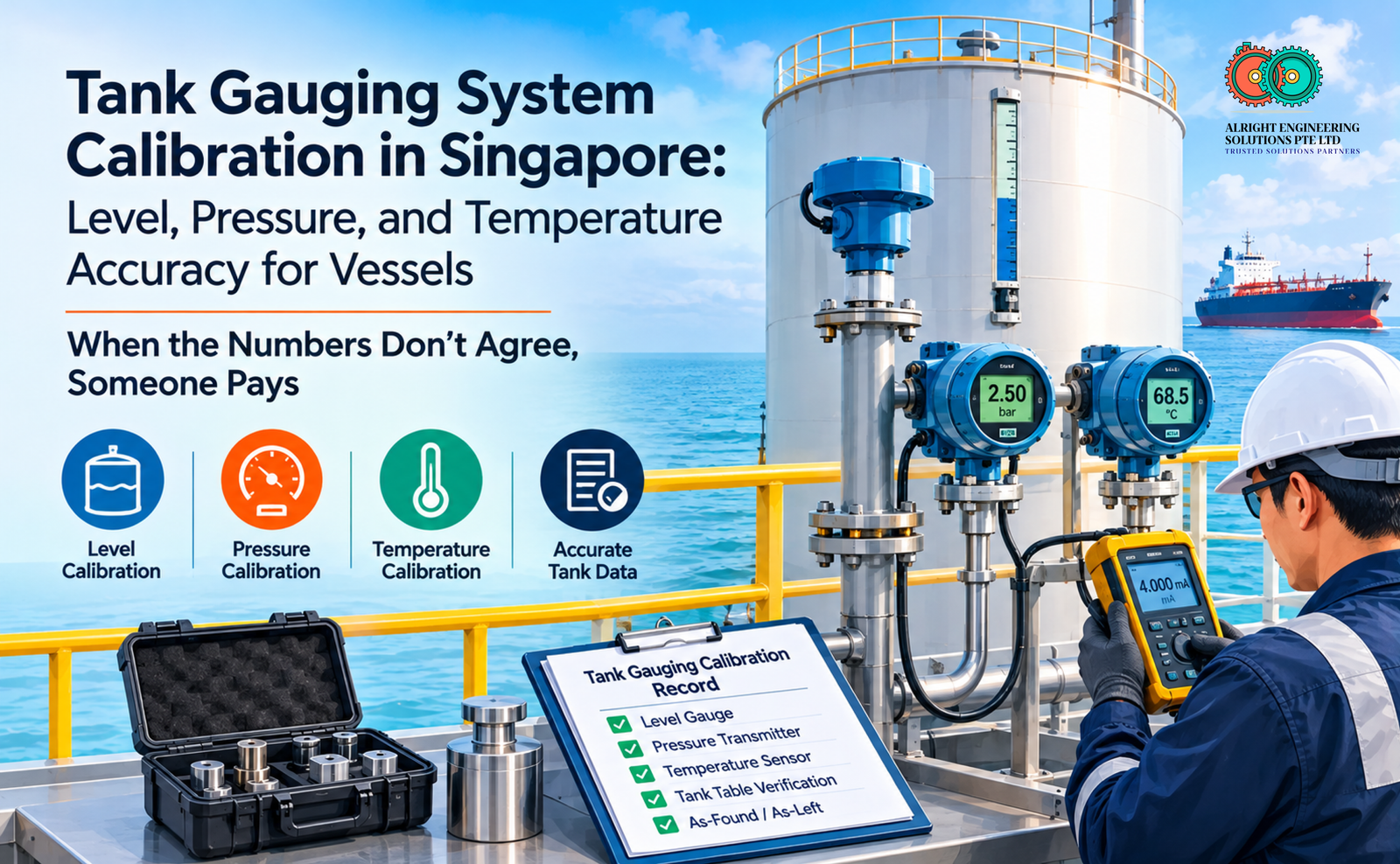
Tank gauging system calibration in Singapore, in short: Alright Engineering Solutions (AES) calibrates the instruments that give you your cargo figures. We check each level gauge against a manual ullage reading, calibrate the tank temperature sensors and pressure transmitters against traceable references, test the high level and overfill alarms, and confirm the readings reaching the cargo control room match the field. You get a certificate with as-found and as-left values, tank by tank.
What We Calibrate on Your Tank Gauging System
A gauging system is a chain: sensor, transmitter, cabling, cargo control display. A reading is only as good as the weakest link, so we check all of them.
Cargo tank level gauges
Radar, servo and float, and hydrostatic gauges verified against a manual ullage or sounding at several levels through the tank's range.
High level & overfill alarms
Independent high level and overflow alarm switches tested for set point, audible and visual alarm, and any shutdown signal.
Tank temperature sensors
Spot and average Pt100 sensors compared with a certified reference thermometer, so your volume correction is based on a real temperature.
Tank pressure transmitters
Cargo tank and inert gas pressure transmitters checked across their range, with alarm set points confirmed.
Cargo control room readout
We compare what the field instrument reads with what the CCR screen and alarm panel show, so scaling errors don't hide in the loop.
Repairs & spares
Sensors, transmitters, display boards and cabling repaired or replaced, with parts supplied in Singapore.
Portable gauging instead? See UTI meter calibration in Singapore. Engine room instruments are on our pressure & temperature calibration page.
"Tank Calibration" Means Two Different Jobs
When people search for tank calibration in Singapore, they mean one of two things. They're done by different companies and produce different documents.
| Tank capacity calibration | Tank gauging system calibration | |
|---|---|---|
| What's measured | The tank's physical geometry and its volume-to-level relationship | The instruments that read level, temperature and pressure |
| What you get | A certified tank capacity table | A calibration certificate with as-found and as-left readings per tank |
| Who does it | A survey or inspection company, usually in dry dock or at newbuilding | An instrumentation service provider, on board during a port call |
| How often | Rarely, unless the tank is modified | Per the maker's instructions and your planned maintenance system |
| Does AES do it? | No | Yes, this is what this page covers |
Both halves matter. A perfectly calibrated radar gauge still gives the wrong volume from an outdated capacity table, and a certified table doesn't help if the gauge feeding it has drifted. More detail in our guide to tank gauging system calibration: level, pressure and temperature accuracy.
How Each Type of Level Gauge Is Checked
The sensing principle decides what can drift and how we verify it. Tell us the make and model and we'll bring the right references.
| Gauge type | How we check it | What usually goes wrong |
|---|---|---|
| Radar (non-contact) | Reading compared with manual ullage at several levels; reference distance and tank reference height confirmed in the settings | Wrong reference height after a repair, false echoes from internals, dirty or iced antenna |
| Servo / displacer | Displacer behaviour, wire condition and drum checked, then readings compared with manual ullage through the range | Wire wear and stretch, displacer fouling with cargo, drum or balance faults |
| Float and tape | Float travel and tape checked for free movement, then compared with manual sounding | Sticking float, corroded tape, guide wire wear |
| Hydrostatic / pressure | Transmitter calibrated against a pressure reference; density setting confirmed against the cargo | Blocked impulse line, wrong density setting, zero drift |
| Temperature (Pt100) | Sensor compared with a certified reference thermometer at several points | Drift with age, wiring and terminal faults, failed element in an averaging probe |
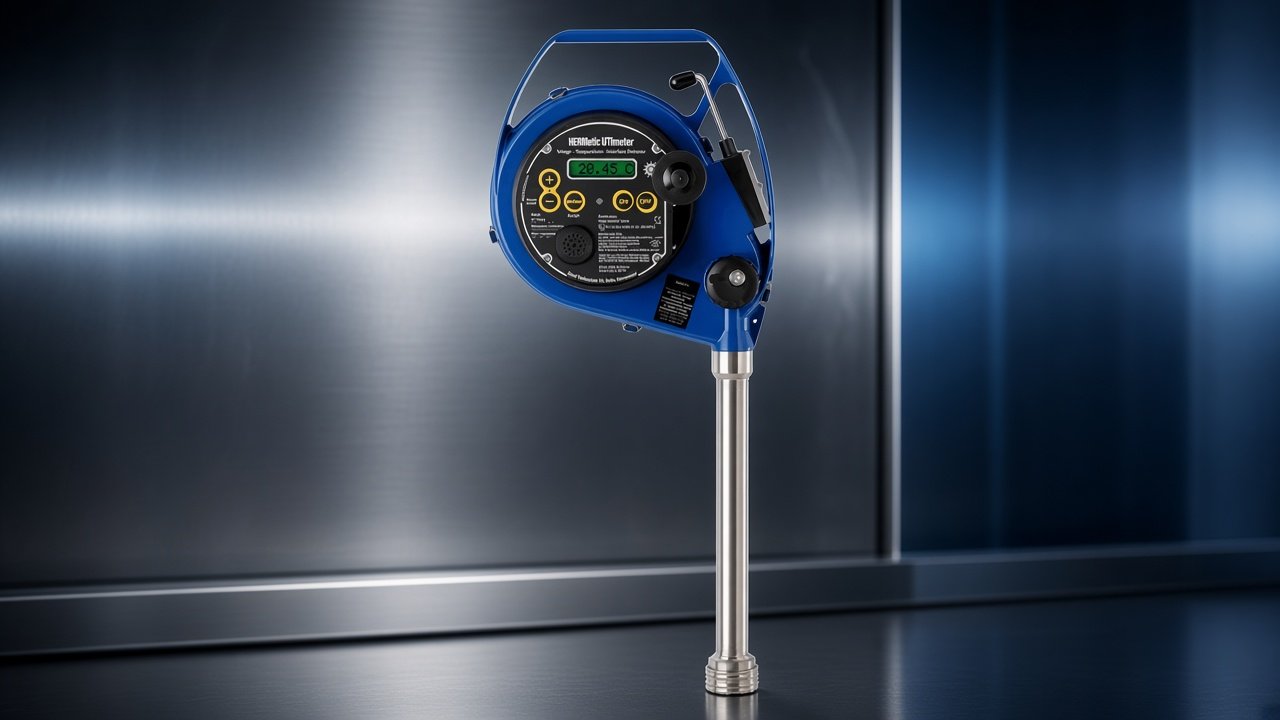
The manual reading is the reference
A fixed gauge is verified against a manual ullage or sounding taken with a portable UTI meter. That only works if the UTI itself is in calibration, which is why the two jobs usually go together.
We can calibrate your portable UTI meters in the same attendance. See UTI meter & portable gauging calibration.
The Alarm That Has to Work Even When the Gauge Doesn't
On chemical tankers under the IBC Code, cargo tanks have a visual and audible high level alarm that warns as the tank approaches the normal full condition, and it has to be independent of both the overflow control system and the tank gauging equipment itself. The whole point is that one failure shouldn't take out both the reading and the warning.
- Level alarms must be capable of being tested before loading starts
- The high level alarm is independent of the gauging system and of the overflow control system
- The overflow system gives its own alarm and an agreed signal to shut down shore pumps or valves
- Gauging devices are open, restricted or closed types, and the cargo decides which is allowed
We test the alarms as part of the gauging job, so the test record is on the same certificate as the gauge readings. Tankers under vetting should also see our SIRE 2.0 calibration checklist.
How an On-Board Gauging Calibration Runs
Planned with the chief officer around cargo operations and which tanks can be accessed.
Send the details
Gauging system make and model, number of tanks, what's fitted per tank, any known faults, plus ETA and ETD.
As-found readings
Each gauge, sensor and CCR display is recorded as found before anything is adjusted.
Manual comparison
Level gauges are compared with a manual ullage or sounding at several levels through the range.
Sensor calibration
Temperature sensors and pressure transmitters are calibrated against traceable references and adjusted where the design allows.
Alarm tests
High level and overfill alarms are tested for set point and response, with any shutdown signal confirmed.
Certificate
As-left values go on a tank-by-tank certificate with the next due date, and faults we couldn't fix are listed.
Gauge disagreeing with the manual ullage? Send us the figures and your port window.
What We Find on Ship Gauging Systems
Most of these don't announce themselves. They show up as a ship-shore figure dispute.
One tank reading off
A single gauge drifts while the rest are fine, so the total looks plausible and nobody questions it until a survey.
Wrong reference height
After a repair or a software reset, the tank reference height is left at a default, which shifts every reading on that tank.
Field vs CCR mismatch
The transmitter is right but the scaling in the cargo control system isn't, so the screen and the tank disagree.
Untested high level alarms
Alarms that were never proven at the set point, or test circuits that confirm the lamp works and nothing more.
Temperature sensor drift
A Pt100 reading a couple of degrees out quietly changes the volume correction on every calculation.
Blocked impulse lines
On hydrostatic systems, sludge in the line damps the reading or freezes it at a value that looks reasonable.
What's on Your Gauging Calibration Certificate
- System make, model and the instruments fitted on each tank
- Reference equipment used, with its own certificate details
- As-found and as-left readings, tank by tank
- Manual ullage comparison figures at each test level
- High level and overfill alarm set points and test results
- Date, vessel name, IMO number, next due date and engineer's signature
See what inspectors check in our guide to marine calibration certificates.
Booking checklist — send us these
- Vessel name, IMO number and ship type
- Gauging system make and model, and number of cargo tanks
- What's fitted per tank: level, temperature, pressure, alarms
- Any tanks with known reading problems
- Berth or anchorage, ETA and ETD
Tank Gauging Systems We Work With
Send your system make and model and we'll confirm the method and references before booking.
- Honeywell Enraf
- Musasino
- Saab / Rosemount TankRadar
- Kongsberg (GLD / cargo monitoring)
- VAF Instruments
- Scanjet
- Tanktech
Portable instruments to go with it? Browse our portable gauging and UTI meters.
Why Tanker Operators Use AES for Gauging Calibration
Tank-by-tank records
Every tank gets its own as-found and as-left line, so you know exactly which gauge was the problem.
Fixed and portable together
We calibrate the UTI meter that verifies the gauge, in the same attendance, so the reference is sound.
Certified management systems
ISO 9001:2015 and ISO 45001:2018, bizSAFE Level 4 completed and bizSAFE Star.
Alongside and at anchorage
Planned around cargo operations, at terminals, shipyards and Singapore anchorages.
One tanker visit
Combine with ODME, IG oxygen analyser and gas detector calibration.
Ready for vetting
Cargo measurement is a standard vetting topic. See our SIRE 2.0 checklist.
See all our marine calibration services in Singapore.
Tank Gauging Calibration in Singapore: Common Questions
Do you calibrate the tank, or the gauging instruments?
The instruments. Tank capacity calibration produces a capacity table and is done by a survey company, usually in dry dock. We calibrate the level gauges, temperature sensors, pressure transmitters and alarms that read against that table.
How often should a tank gauging system be calibrated?
Follow the maker's manual and your planned maintenance system. Many operators work to a yearly cycle, with extra checks after repairs, software changes or a ship-shore figure dispute. Our calibration interval table lists common intervals.
How is a radar or servo level gauge checked without emptying the tank?
By comparing the gauge reading with a manual ullage or sounding at the levels the tank happens to be at during the call, and by confirming the configured reference height and settings. Several tanks at different levels give the comparison across the range.
Can you test the high level and overfill alarms too?
Yes. We test the alarm set points and responses as part of the job, and the results go on the same certificate as the gauge readings.
Our ship and the terminal figures don't agree. Can you help?
That's one of the most common reasons we're called. We check the gauges, the temperature sensors and the UTI used for the manual reading, and give you figures that show where the difference came from.
Do you calibrate gauging on bunker tankers and gas carriers?
Yes. The principle is the same across tanker types. Tell us the ship type and cargo when you book so we bring the right references and plan for the gauging type fitted.
Can you attend at Singapore anchorage?
Yes. We attend ships at anchorage as well as alongside at terminals and shipyards. Your agent usually arranges the launch.
How much does tank gauging calibration cost in Singapore?
It depends on the number of tanks, what's fitted on each one, and the condition of the system. Send the details through the contact form or WhatsApp and we'll price it before we board.
Get Your Tank Gauging System Calibrated Before Cargo Work
Send the vessel details, gauging system model and number of tanks. We'll confirm timing and price, then attend alongside or at anchorage.
Email sales@alrightes.com · 3791 Jalan Bukit Merah #06-01, E-Centre @ Redhill, Singapore 159471
Other Calibration Services in Singapore
UTI Meter Calibration
Portable ullage, temperature and interface meters.
View servicePressure & Temperature Calibration
Gauges, switches, sensors and transmitters.
View serviceODME Calibration
Oil discharge monitoring equipment on tankers.
View serviceGas Detector Calibration
Portable, personal and fixed gas detection systems.
View serviceOWS 15ppm Bilge Alarm Calibration
15ppm bilge alarms and oil content meters.
View serviceOil Mist Detector Calibration
Crankcase oil mist detectors for main and auxiliary engines.
View serviceOxygen Analyzer Calibration
IGS, IGG and N2 generator oxygen analysers.
View serviceEGCS Scrubber Analyzer Calibration
SO2/CO2 emission analysers and CEMS on scrubber systems.
View serviceFire Detection System Testing
Fire alarm and detection systems on board.
View service