
 Cart (
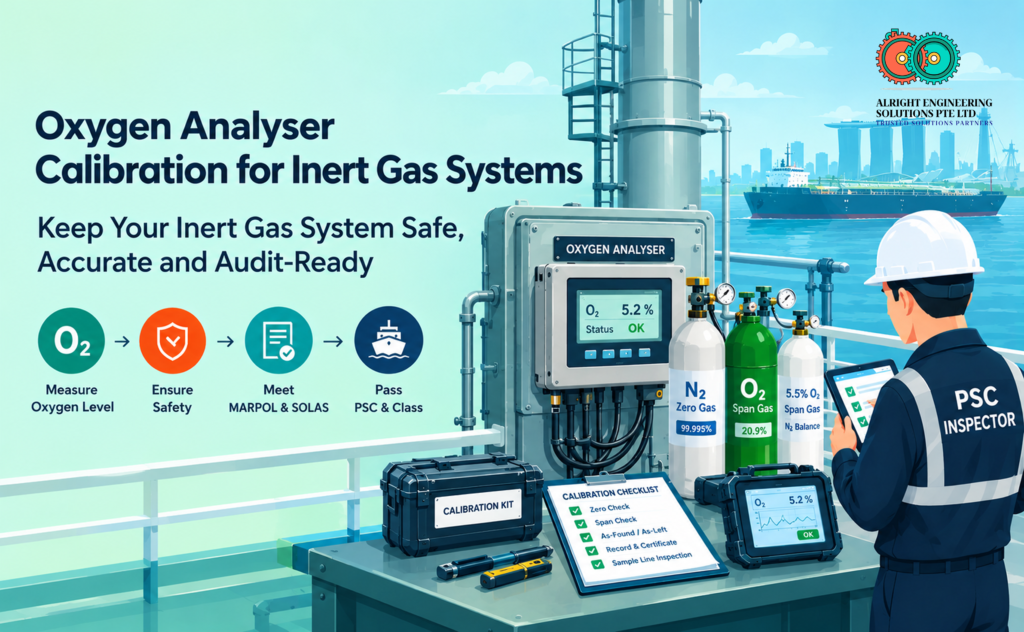
Oxygen Analyser Calibration for Inert Gas Systems
When the Oxygen Reading Is Wrong, the Inert Gas Is Too
An inert gas system exists to keep the cargo tank atmosphere out of the flammable range, and the oxygen analyser is the instrument that tells everyone whether it’s working. If that reading is off, the crew is deciding about inerting, purging, and cargo operations on bad information. The chain is short. An inaccurate reading can mean an unsafe atmosphere, and even in the best case it means a SIRE observation, a delayed cargo operation, or closer PSC attention.
That’s why oxygen analyser calibration isn’t a routine housekeeping job. It’s a safety-critical one, and inspectors treat it that way. This guide covers what the rules require, why the type of analyser matters, where marine analysers go wrong, and how to get one calibrated in Singapore without losing the cargo window.
The 5% Rule and the 24-Hour Check
Under SOLAS and the FSS Code, an inert gas system has to deliver inert gas to the cargo tanks with no more than 5% oxygen by volume at the required flow rate. OCIMF guidance explains the thinking behind the numbers: keeping a positive tank pressure and an atmosphere below 8% oxygen makes the tank atmosphere non-flammable, and the 5% limit at the delivery main is the stricter design requirement that gives a margin.
SIRE guidance adds a timing expectation. The fixed oxygen analyser should be calibrated not more than 24 hours before the inert gas system is started, and records should show calibration before each cargo, purging, or inerting operation. Inspectors also tend to check whether the local and remote oxygen recorders agree, whether span gas is on board, and whether the officers can explain how the analyser is operated and calibrated.
There are two different jobs hiding in that paragraph. The pre-use calibration is the crew’s routine, done with onboard gas before each operation. The periodic calibration, repair, and certification by an accredited provider is a separate job, and it’s the one that gives the crew’s routine something trustworthy to stand on. Both need to be in order.
Zirconia vs. Paramagnetic: Know What’s Fitted
“Oxygen analyser” covers two quite different instruments, and treating them the same is a common source of calibration errors. The manual and nameplate will tell you which one you have.
| Zirconia analyser | Paramagnetic analyser | |
|---|---|---|
| How it measures | A heated zirconia ceramic acts as an oxygen concentration cell, with porous platinum electrodes sensing the potential created by different oxygen levels on each side | Oxygen is strongly paramagnetic, and the instrument converts the magnetic force on oxygen molecules into a reading (designs include a suspended dumbbell, magnetic wind, and pressure-sensor methods) |
| Where it’s typically used | Hot combustion gas, such as boiler and flue gas monitoring. It can’t measure oxygen in flammable mixtures | Low oxygen concentrations that need high precision, including in flammable mixtures |
| What goes wrong | Thermal shock can damage the ceramic. Soot and contaminants foul the electrodes. Condensate in sample lines causes corrosion and false readings | Contamination, vibration, and incorrect zero or span gas affect the sensing parts and sample conditioning |
| What calibration needs | The manufacturer’s specified reference gas and operating temperature, plus attention to sensor condition and sample-line integrity | An oxygen-free zero gas, commonly high-purity nitrogen, and a span check on fresh air at 20.9% O₂, unless the manufacturer says otherwise |
Why Marine Analysers Drift
Most analyser problems at sea come from a short list of causes. Soot builds up on sensing surfaces in combustion gas. Zirconia elements crack when heated or cooled too quickly. Condensate collects in sample lines and corrodes fittings or skews readings. Vibration wears on mechanical sensing parts. Span gas passes its expiry date, or the wrong gas gets used for the wrong step.
Sample lines deserve special attention, because a perfectly healthy analyser can read wrongly behind a failing sample path. A small leak that draws in outside air pushes the oxygen reading up, which is the opposite of what an inert gas system needs to see. We’ve traced a sampling-path fault on a Consilium SW2020 analyser that looked fine at the sensor and wasn’t, and the same logic applies here: calibrating the analyser doesn’t prove the line feeding it is sound.
Gas matters just as much. Other gases in the sample, including the CO₂ present in flue-gas-based inert gas, can affect some analyser designs, so following the manufacturer’s procedure and using the right reference gases isn’t optional.
Zeroing and Spanning: What Inspectors Watch For
The practical sequence for most paramagnetic analysers is simple. Zero against an oxygen-free gas such as high-purity nitrogen, let the reading stabilise, then check span against fresh air at 20.9% oxygen or a certified 20.9% oxygen span gas. The manufacturer’s procedure always has the final word, and the readings at each step should be written down.
A single check at 20.9% tells you the analyser works at the top of its range, but the number that matters operationally is near 5%. Where the manufacturer’s procedure allows it, a mid-range check against a gas close to the limit, such as a 5.5% oxygen mix, shows whether the analyser reads correctly where the decision actually gets made. A broader range of certified calibration gases is useful to have onboard for this reason.
Inspectors tend to ask crews to explain the steps. An officer who can say what gas is used at each stage, why, and how the readings were recorded is showing the human side of compliance, and it counts for as much as the certificate.
What an Audit-Ready Calibration Record Contains
A certificate that just says “calibrated” isn’t enough. A useful record shows the date and time, the reference gases used (concentration, cylinder identification, and expiry), the as-found and as-left readings, the tolerance or measurement uncertainty, who did the work, and the traceability of the reference standards.
If a laboratory carries out the calibration, check its accreditation scope too. SAC-SINGLAS accredits laboratories against ISO/IEC 17025 for specific tests and calibrations, and accreditation covers only what’s listed in the lab’s stated scope. A lab accredited for pressure gauges isn’t automatically accredited for oxygen analysers. The difference between a quick function check and a full calibration comes up constantly in inspections, and we’ve written about how bump testing and full calibration differ under PSC scrutiny.
Getting It Done in Singapore
Timing is where Singapore calls get tight. A ship at anchor has a narrow window between arrival and the next cargo, purging, or inerting operation, and an analyser that needs repair or shore-side calibration has to fit inside it. Agree collection, calibration, certification, and return with the provider before the vessel arrives, not after the problem shows up, and keep a spare, in-date supply of zero and span gas onboard for the pre-use routine.
A structured calibration interval schedule helps here, because it shows well ahead of arrival when the periodic calibration falls due. Our fixed and portable measurement equipment calibration service handles the shore-side side of this, and our fixed measurement and automation service covers fixed analysers and their sample systems.
Before the Next Inerting Operation
- Confirm which type of analyser is fitted, and keep the manufacturer’s calibration procedure at hand.
- Check zero and span gas cylinders against their expiry dates.
- Run and record the pre-use calibration within the 24-hour window, with readings at each step.
- Check the sample line for leaks, condensate, and blockages, and compare local and remote oxygen readings.
- Confirm the periodic shore-side certificate is in date, shows as-found and as-left data, and comes from a provider whose accreditation scope covers oxygen analysers.