Cart (
Overview
Across gas detection calibration, analytical instrumentation, and industrial process applications, the quality of the inert or zero gas used as a carrier, diluent, or purge medium directly affects the accuracy and reliability of every measurement made downstream. Impurities in a so-called “pure” nitrogen supply — residual oxygen, moisture, hydrocarbons, or trace reactive gases — introduce background interference that corrupts calibration baselines, affects sensor zero readings, and in analytical applications, produces measurement errors that are difficult to trace back to their source without exhaustive troubleshooting.
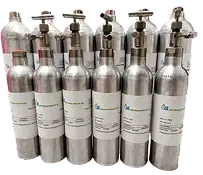
The N2 – Pure Nitrogen 99.995% Vol Balance Air Cylinder is a high-purity nitrogen gas product formulated at 99.995% volume purity — a specification commonly referred to in gas industry standards as Grade 4.5 nitrogen. At this purity level, total impurities are held below 50 ppm by volume, making this cylinder suitable for zero gas applications in gas detection calibration, instrument purging, analytical carrier gas use, and industrial processes where contamination from a lower-grade nitrogen supply would compromise process or measurement integrity.
Available across five C10 cylinder sizes — 34L, 58L, 103L, 110L, and 116 litres — this nitrogen supply gives procurement teams and calibration managers the flexibility to match cylinder volume to operational demand. Whether you need a compact cylinder for a portable calibration kit or a high-capacity supply for a fixed calibration bench serving a large instrument fleet, the correct size is available without compromise on purity specification.
Key Features
99.995% Vol Purity — Grade 4.5 Nitrogen Standard
The 99.995% volume purity specification places this nitrogen in the Grade 4.5 category — a widely recognised industrial and analytical purity classification meaning total impurities do not exceed 50 ppm by volume. For gas detection calibration applications, this purity level ensures the zero gas baseline is genuinely clean — free from residual oxygen, moisture, or hydrocarbon contamination that could cause a CO, H₂S, or LEL sensor to read a non-zero background value before calibration gas is even applied. For analytical applications such as GC carrier gas or detector purge gas, Grade 4.5 purity meets the specification required by most laboratory instrument manufacturers for reliable baseline stability.
Zero Gas Application — Accurate Sensor Baseline Before Span Calibration
In a two-point gas detector calibration sequence — zero calibration followed by span calibration — the quality of the zero gas determines the accuracy of the zero point from which the span calibration is referenced. If the zero gas contains residual impurities that cause a sensor response, the zero calibration point is set incorrectly, and the span calibration built on top of it will be systematically offset. High-purity nitrogen at 99.995% eliminates this source of calibration error, providing a genuinely inert background against which the sensor can be accurately zeroed before span gas is applied.
Five Cylinder Sizes — 34L to 116L in C10 Format
The nitrogen is available in C10 cylinders across five volume options: 34L, 58L, 103L, 110L, and 116 litres. The smaller 34L and 58L cylinders are practical for portable calibration kits, field calibration teams, and confined space entry programmes that require zero gas to be transported to the point of use. The larger 103L to 116L cylinders are suited for fixed calibration benches, instrument service workshops, and high-frequency calibration programmes where a larger nitrogen supply reduces cylinder changeover frequency and the associated downtime and procurement activity that comes with it.
Inert and Non-Reactive — Safe Handling in Calibration Environments
Nitrogen is chemically inert, non-flammable, and non-toxic — properties that make it one of the safest gases to handle in calibration and laboratory environments. Unlike some reactive calibration gas components, pure nitrogen does not create secondary chemical hazards during cylinder handling, storage, or use. It does not degrade cylinder integrity, react with regulator materials, or create disposal complications at end of cylinder life. For calibration facilities handling multiple gas types simultaneously, the inert nature of high-purity nitrogen simplifies risk assessment and safe handling procedures.
Instrument Purge and Inertisation Applications
Beyond zero calibration, high-purity nitrogen has practical utility as an instrument purge gas — used to clear sensors and gas pathways of residual calibration gas between calibration cycles, to inertise detector housings during storage or transport, and to purge analytical instrument sample lines of reactive gas residues between measurements. For gas detection instrument service workshops that handle multiple gas types, having a dedicated high-purity nitrogen supply for purging prevents cross-contamination between successive calibration events and extends sensor service life by minimising prolonged sensor exposure to reactive gas concentrations.
Technical Specifications
Gas Type: Nitrogen (N2)
Purity: 99.995% Vol (Grade 4.5)
Total Impurities: ≤ 50 ppm by volume
Balance Gas: Air
Cylinder Format: C10
Available Cylinder Sizes: 34L / 58L / 103L / 110L / 116 Litres
Gas Classification: Pure Gas / Zero Gas
Application: Zero Calibration, Instrument Purging, Carrier Gas, Inertisation
Product Category: Span Gas and Regulator
Benefits
Eliminates zero-point calibration error at its source. A contaminated or low-purity zero gas is one of the most common and least obvious sources of systematic calibration error in gas detection programmes. Because the error is introduced at the zero step — before span gas is even applied — it can be carried through every subsequent calibration on that instrument without ever being identified as a gas quality issue. Using 99.995% purity nitrogen removes this variable entirely, giving your calibration programme a clean, defensible zero reference point.
Protects sensor service life during calibration and storage. Repeated exposure to reactive gases during calibration cycles gradually consumes electrochemical sensor electrolyte and degrades catalytic bead sensors over time. Using high-purity nitrogen to purge sensors between calibration events and during storage or transport minimises cumulative reactive gas exposure — extending the service interval between sensor replacements and reducing the long-term consumable cost of your gas detection programme.
Supports analytical instrument baseline stability. In gas chromatography, photoionisation detection, and other analytical measurement applications, carrier gas purity directly affects baseline noise, peak resolution, and detector sensitivity. Grade 4.5 nitrogen at 99.995% purity meets the specification required by most GC and analytical detector manufacturers for stable baseline operation — reducing the recalibration frequency and troubleshooting burden caused by impurity-related baseline drift.
Simplifies gas store risk assessment. As a non-flammable, non-toxic, chemically inert gas, high-purity nitrogen does not introduce flammable gas storage requirements, toxic gas exposure controls, or reactive gas compatibility concerns into your calibration gas store. For facilities managing multiple gas types, having a zero gas that requires no special segregation or hazard-specific storage controls simplifies the overall gas store risk assessment and COSHH documentation burden.
Flexible cylinder sizing reduces procurement waste. Matching cylinder volume to actual consumption prevents carrying high-purity nitrogen inventory past its shelf life — wasting a product that was never needed at the volume procured. The five available C10 sizes give you the granularity to right-size your nitrogen supply to your actual programme demand, whether that is a single portable calibration kit or a multi-bench service workshop.
Who It’s For
The Gas Detection Calibration Technician Running a Two-Point Calibration Programme
Your calibration procedure for portable and fixed CO, H₂S, O₂, and LEL detectors follows a zero-then-span sequence — zero the sensor with clean inert gas, then apply the span gas to set the calibration point. You need a zero gas that is genuinely inert at the ppm level, not a lower-grade nitrogen that introduces background sensor response during the zero step. The 99.995% purity specification gives you the zero gas quality your calibration procedure requires, and the range of cylinder sizes lets you match supply volume to your calibration bench setup and programme frequency.
The Laboratory Manager or Analytical Chemist Using Nitrogen as a Carrier or Detector Purge Gas
Your gas chromatograph, photoionisation detector, or analytical sampling system requires a carrier gas or purge gas that meets the purity specification stated in your instrument manufacturer’s guidelines. Lower-grade nitrogen introduces baseline noise, peak contamination, and detector sensitivity loss that directly affects the quality of your analytical results. Grade 4.5 nitrogen at 99.995% purity provides the clean, stable gas supply your instrument requires — and the C10 cylinder format integrates directly into standard laboratory gas supply connections without modification.
The HSE Officer Managing Instrument Storage and Transport Between Sites
Your gas detection instruments travel between sites, go into storage during project gaps, or are transported by personnel to remote locations where exposure to residual reactive gas in the sensor housing is an ongoing concern. You use high-purity nitrogen to inertise detector housings before storage and to purge sensors that have been exposed to high concentrations of reactive gas during incident response or testing. A compact 34L or 58L cylinder is your field tool — small enough to include in a calibration kit, sufficient for multiple purge cycles, and safe to transport without specialist gas handling requirements.
Possible Applications
- Gas detector zero calibration — Providing the inert zero gas reference point for two-point calibration of portable and fixed CO, H₂S, O₂, LEL, and multi-gas detectors
- Instrument service workshop purging — Clearing sensor housings and gas pathways of residual reactive calibration gas between successive calibration events to prevent cross-contamination and sensor overexposure
- Gas chromatography carrier gas — Providing high-purity nitrogen carrier gas for GC columns and analytical detector systems requiring Grade 4.5 or equivalent purity specification
- Detector and sensor storage inertisation — Purging detector housings with high-purity nitrogen before long-term storage or transport to minimise ongoing reactive gas exposure to sensor elements
- Photoionisation detector (PID) lamp purging — Purging PID lamp housings with clean dry nitrogen to prevent moisture condensation and contaminant deposition on UV lamp surfaces
- Analytical sampling line purge gas — Clearing sample delivery lines, manifolds, and probe assemblies of residual gas between measurement cycles in continuous emissions monitoring and industrial hygiene sampling systems
- ATEX instrument maintenance and testing — Providing inert purge gas for maintenance procedures on purged and pressurised ATEX-rated enclosures in classified hazardous area installations
- Marine and offshore calibration programmes — Zero gas supply for shipboard and offshore platform gas detection calibration programmes where a portable, compact zero gas cylinder is required alongside span gas cylinders
Trust and Certifications
99.995% Purity — Grade 4.5 Industry Classification
The Grade 4.5 purity classification is a recognised international standard for high-purity nitrogen, defined by total impurity content not exceeding 50 ppm by volume. This classification is referenced by instrument manufacturers, analytical chemistry standards bodies, and gas detection equipment specifications when defining the minimum purity required for zero gas and carrier gas applications. Procuring to a defined grade classification — rather than a generic “high purity” claim — gives buyers a consistent, verifiable standard they can reference in procurement specifications and calibration quality records.
Certified Gas Analysis — Purity Documentation per Cylinder
Each cylinder is accompanied by a certificate of analysis documenting the verified purity, impurity limits, and gas preparation standard. For calibration programmes subject to quality management system requirements — including ISO 17025-accredited calibration laboratories, ISM Code safety management systems, and OSHA-regulated gas detection programmes — the certificate of analysis provides the documentary evidence of gas quality required to support calibration record traceability and regulatory audit readiness.
Non-Hazardous Classification — Simplified Storage and Handling
Pure nitrogen is classified as a non-flammable, non-toxic gas under international and national dangerous goods and occupational health regulations. It does not require the specialist storage segregation, toxic gas exposure controls, or flammable gas safe storage provisions applicable to reactive calibration gas components. For facilities operating under COSHH regulations, ATEX storage requirements, or similar national hazardous substance frameworks, the non-hazardous gas classification of pure nitrogen simplifies the compliance burden associated with calibration gas storage.
Supplied by Alright Engineering Solutions
The N2 – Pure Nitrogen 99.995% Vol Balance Air Cylinder is supplied through Alright Engineering Solutions Pte. Ltd., an authorised distributor of portable and fixed gas detection equipment, calibration gases, span gas regulators, and gas detection accessories in Singapore. Our team supports industrial, marine, and offshore clients with calibration gas sourcing, programme advisory, and gas detection equipment supply across Singapore and the wider regional market.
Accessories and Variants
Cylinder Size Variants
34 Litre (C10) — Compact portable cylinder for field calibration kits, confined space entry programmes, and low-frequency single-site use
58 Litre (C10) — Mid-size cylinder for regular site calibration and small instrument fleets
103 Litre (C10) — Large capacity cylinder for calibration benches and medium-to-high frequency programmes
110 Litre (C10) — High-capacity option for programmes servicing large detector fleets
116 Litre (C10) — Maximum C10 capacity for calibration laboratories, service workshops, and high-consumption industrial facilities
Compatible Span Gas Regulators
A correctly specified regulator is required to connect C10 cylinders to your calibration equipment at the appropriate delivery flow rate. Alright Engineering Solutions supplies compatible C10 span gas regulators in flow rate configurations suited for portable bump testing and bench calibration applications. For two-point calibration programmes using both nitrogen zero gas and span gas, matched regulators for each cylinder type ensure consistent, accurate gas delivery throughout the calibration sequence.
Related Calibration Gas Products
CO 50 PPM Balance Air — Carbon monoxide span gas for CO detector calibration at mid-range concentration
CO 100 PPM Balance Air — Carbon monoxide span gas for upper working range CO detector calibration
H₂S Calibration Gas (Balance Air) — Hydrogen sulphide span gas for H₂S sensor verification
Multi-Gas Calibration Mixtures (CO / H₂S / O₂ / LEL) — Combination span gas for calibrating multi-gas personal monitors in a single calibration cycle
Get in Touch
If you are sourcing N2 – Pure Nitrogen 99.995% Vol for zero calibration, instrument purging, analytical applications, or any other high-purity nitrogen requirement — contact Alright Engineering Solutions to confirm cylinder size availability and request a formal quotation.
Our team can also advise on compatible regulators, matched span gas products for your calibration programme, and supply arrangements suited to your instrument fleet and facility requirements.
📍 3791 Jalan Bukit Merah #06-01, E-Centre @ Redhill, Singapore 159471