Cart (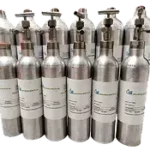
Overview
Oxygen deficiency is one of the leading causes of confined space fatalities — and in the majority of those incidents, a gas detector was either not used, not calibrated, or not calibrated correctly. Oxygen monitors are straightforward instruments in concept, but their calibration has a technical nuance that is frequently misunderstood: an oxygen sensor cannot be accurately spanned using fresh air alone. Fresh air contains approximately 20.9% oxygen, which is used to set the instrument’s zero and full-scale reference points, but it cannot verify the sensor’s linearity and accuracy at the sub-normal oxygen concentrations that represent the actual hazard in a deficient atmosphere. That is precisely what a certified oxygen span gas does — it presents the sensor with a known, below-ambient oxygen concentration that confirms the instrument will respond accurately in the range where personnel safety decisions depend on it.
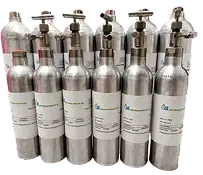
The 5.5% Oxygen (O2) Balanced Nitrogen Span Gas is a precision calibration gas mixture formulated at 5.5% oxygen by volume in a nitrogen balance, supplied in aluminium cylinders across five size options — 34L, 58L, 103L, 110L, and 116 litres. At 5.5% O2, this calibration gas is formulated well below the oxygen-deficient threshold of 19.5% — verifying the sensor’s response accuracy in the hazardous range that matters most for confined space entry safety. For safety managers, HSE officers, and instrument technicians who need to demonstrate that their oxygen monitors have been calibrated against a certified sub-ambient oxygen standard, this product provides that verification in a cylinder size matched to programme volume.
The concrete differentiator for this product is the nitrogen balance gas at the 5.5% O2 concentration. Some oxygen calibration gas products are offered at oxygen concentrations closer to the deficiency threshold (18% or 19%) — concentrations that test the sensor in a range that is technically deficient but does not challenge the sensor’s response accuracy at the severely depleted concentrations encountered in the most dangerous confined space atmospheres. At 5.5%, this calibration gas verifies sensor performance across a much wider portion of the sub-ambient range, providing a more robust calibration check for confined space entry programmes where the consequences of sensor failure at low oxygen concentrations are most severe.
Key Features
5.5% Oxygen Concentration — Calibration Well Into the Oxygen-Deficient Range
The 5.5% O2 concentration places this calibration gas significantly below both the oxygen-deficient threshold (19.5%) and the immediately dangerous to life and health (IDLH) concentration for oxygen deficiency (16%). Calibrating an oxygen sensor at 5.5% O2 verifies that the sensor responds accurately at concentrations that represent a severe oxygen-deficient atmosphere — the range most critical for personnel safety in confined space entry, where atmospheres that have been displaced by inert gases, product vapours, or biological oxygen consumption can reach concentrations far below normal alarm thresholds. An oxygen monitor that has been spanned only with fresh air has never had its response verified below ambient oxygen levels; one calibrated with 5.5% O2 has.
Nitrogen Balance Gas — Inert Diluent with No Cross-Sensitivity to Oxygen Sensors
Nitrogen is used as the balance gas for this mixture. As a chemically inert diluent, nitrogen does not interfere with the electrochemical oxygen sensor reaction and introduces no cross-sensitivity effects that could distort the calibration response. For oxygen sensor calibration in particular, a nitrogen balance is the technically standard formulation — presenting the sensor with a precisely controlled oxygen concentration in a chemically neutral carrier gas. The nitrogen balance also means the calibration gas does not introduce combustible gas or reactive gas components that could interact with other sensors in a multi-gas instrument during the calibration event.
Five Cylinder Sizes — 34L, 58L, 103L, 110L, 116L — Matched to Programme Scale
Oxygen calibration gas consumption varies with instrument count, calibration frequency, and programme scope. A single-site confined space entry programme with a small number of portable monitors uses substantially less calibration gas per month than a multi-vessel marine operator or a safety equipment hire fleet maintaining a large instrument inventory on weekly recalibration cycles. The five cylinder sizes in this range allow procurement teams to specify the capacity that matches actual consumption — avoiding residual gas waste from oversized cylinders and the stockout risk that comes from undersized cylinders running dry between procurement cycles. Larger sites or operations with high instrument counts typically benefit from the 103L–116L format; single-site or project-based applications are well served by the 34L or 58L options.
Aluminium Cylinder — Lightweight and Corrosion-Resistant for Field Use
All cylinders are manufactured from aluminium — lighter than steel at equivalent gas capacity and corrosion-resistant for use in the humid, marine, and chemically active environments common in industrial and offshore confined space entry operations. For instrument technicians carrying calibration equipment to field access points — vessel pump rooms, below-deck spaces, underground utilities, or industrial plant confined space entry locations — the reduced weight of an aluminium cylinder relative to a steel equivalent is a genuine handling advantage, particularly when combined with the weight of the portable gas monitor, personal protective equipment, and other entry equipment being transported simultaneously.
Certified Concentration — Traceable for Regulatory and Management System Compliance
Each cylinder is supplied with a certificate of analysis confirming the verified oxygen concentration against traceable reference standards. For oxygen deficiency monitoring — a calibration requirement under most confined space entry regulations and safety management systems globally — the certificate of analysis provides the documented evidence that the calibration event was performed with a gas of known and verified oxygen content. That traceability is not a bureaucratic formality: it is the evidentiary basis for the calibration record that demonstrates due diligence in the event of an incident, regulatory inspection, or management system audit.
Technical Specifications
Cylinder: C10 — Aluminium
Available Sizes: 34L / 58L / 103L / 110L / 116 Litres
Oxygen (O2): 5.5% Vol
Balance Gas: Nitrogen (N2)
Benefits
Calibration at 5.5% O2 verifies sensor accuracy in the range most relevant to confined space entry safety. An oxygen monitor calibrated only with fresh air has a verified response at 20.9% O2 — atmospheric normal — but has never been confirmed to respond accurately below ambient concentration. In a confined space where oxygen has been displaced by nitrogen, carbon dioxide, or product vapour to concentrations of 10%, 8%, or 5% O2, that instrument’s readings in the hazardous range rest on an assumption of linearity that has never been tested during the calibration procedure. Spanning with 5.5% O2 eliminates that assumption by verifying the sensor’s response at a concentration that is representative of a severely depleted atmosphere — providing genuine calibration assurance rather than a partial check.
Documented calibration traceability supports confined space entry permit compliance. Most confined space entry procedures — whether under local occupational safety regulations, company HSE management systems, or industry standards — require that gas monitors used for pre-entry atmosphere testing have been calibrated within a defined interval against a certified calibration gas. The certificate of analysis supplied with each cylinder provides the documentary basis for that requirement, supporting the work permit documentation, calibration records, and management system evidence that safety managers and HSE officers need to demonstrate compliance during internal audits and regulatory inspections.
Nitrogen balance gas prevents interference with other sensor channels in multi-gas instruments. Portable gas monitors used for confined space entry typically carry multiple sensor channels — oxygen, combustible gas, CO, H2S, and others — and calibration gas introduced to the instrument reaches all sensor channels simultaneously. A nitrogen-balanced oxygen calibration gas does not introduce combustible gas, reactive gas, or foreign chemical components that could interact with other sensor channels during the calibration event. That chemical cleanliness is important for multi-gas instruments where the oxygen calibration event should not interfere with the calibration status of the other channels.
Cylinder size selection optimises gas consumable cost across programmes of any scale. Oxygen calibration gas is consumed at a fixed rate per calibration event — the cost-per-calibration is determined by how well the cylinder size matches the programme’s actual consumption pattern. Specifying a cylinder that matches actual usage avoids paying for residual gas that cannot be used before the cylinder reaches end of service life, and avoids the unplanned procurement cost and programme disruption of running out of calibration gas before the scheduled interval. Across a multi-instrument programme running monthly or quarterly calibration cycles, that optimisation accumulates into a measurable reduction in calibration consumable cost per year.
Who It’s For
The Safety Officer or HSE Manager Responsible for Confined Space Entry Programme Compliance
Your confined space entry procedure requires pre-entry atmosphere testing with a calibrated multi-gas monitor, and the calibration records must demonstrate that the oxygen channel was spanned against a certified sub-ambient oxygen standard within the required calibration interval. You need a reliable, consistently available supply of certified oxygen span gas in a cylinder size that covers your site’s instrument count and calibration frequency without requiring frequent unplanned reorders. When your programme spans multiple sites or vessels — each with their own instrument inventory and calibration schedule — sourcing oxygen calibration gas from a single supplier across all locations simplifies procurement documentation and ensures consistency in the calibration standard applied across the programme.
The Marine Safety Officer or Ship’s Electrician Managing Vessel Gas Detection Equipment
You are responsible for maintaining the portable gas detection equipment on board a commercial vessel — monitors used for confined space entry in cargo holds, ballast tanks, pump rooms, and void spaces. Each monitor requires periodic calibration against certified span gas, and the calibration records are reviewed during port state control inspections and class surveys. Oxygen calibration gas at 5.5% O2 in nitrogen provides the certified sub-ambient oxygen standard your calibration procedure requires, in a cylinder format that can be stored in the vessel’s safety equipment storage and transported to confined space access points across the vessel during calibration rounds.
Possible Applications
- Marine vessel confined space entry — ballast tanks, cargo holds, and enclosed spaces — Span calibration of portable oxygen monitors used for pre-entry atmosphere testing on commercial vessels, offshore platforms, and naval vessels where oxygen deficiency in enclosed spaces is a documented hazard
- Industrial confined space entry programmes — petrochemical and refinery plants — Calibration of multi-gas monitors with oxygen channels used by maintenance workers and contractors entering process vessels, storage tanks, columns, and enclosed plant spaces where nitrogen purging or product displacement can produce oxygen-deficient atmospheres
- Sewage treatment and underground utility confined space entry — Span calibration of oxygen monitors used for atmosphere testing in sewers, wet wells, manholes, and underground utility chambers where oxygen consumption from biological activity and methane accumulation can produce severely depleted oxygen levels
- Cold storage and cryogenic facility oxygen monitoring — Calibration of fixed and portable oxygen deficiency monitors used in liquid nitrogen, liquid oxygen, and cryogenic storage environments where inert gas leakage can displace atmospheric oxygen in enclosed or low-ventilation areas
- Inert gas system operations on tankers and gas carriers — Calibration of oxygen monitors used during inert gas system operations on oil tankers, LNG carriers, and chemical tankers where cargo tank atmospheres are maintained at low oxygen concentrations and personnel must verify safe entry conditions before tank access
- Welding, cutting, and hot work operations in enclosed spaces — Span calibration of oxygen monitors used to verify atmospheric oxygen levels during hot work in enclosed or semi-enclosed spaces where oxygen enrichment from welding gas leakage or oxygen deficiency from combustion are both credible hazards requiring monitoring
- Safety equipment hire and calibration service operations — Bulk oxygen calibration gas supply for instrument hire companies and third-party calibration service providers maintaining portable multi-gas monitor fleets with oxygen sensor channels requiring regular scheduled recalibration
Trust and Certifications
Certified Calibration Gas — Traceable Concentration Accuracy
Each cylinder is supplied with a certificate of analysis confirming the verified oxygen concentration against traceable reference standards. Oxygen deficiency monitoring is a safety-critical instrument function in confined space entry programmes globally, and the calibration record for each instrument’s oxygen channel is the documented evidence of calibration compliance reviewed during regulatory inspections, incident investigations, and management system audits. A traceable calibration gas certificate is the foundational document that substantiates that calibration record — without it, the calibration event cannot be demonstrated to have been performed with a gas of known oxygen content.
Aluminium Cylinder — Pressure Vessel Compliant Construction
Cylinders are manufactured and tested to applicable pressure vessel standards and must be handled, stored, and transported in accordance with compressed gas cylinder safety requirements — secure upright storage away from heat and ignition sources, cylinder caps or valve guards fitted during transport, and connection only via compatible single-stage calibration gas regulators rated for the cylinder pressure and gas service. Cylinder re-qualification intervals must be observed in accordance with local compressed gas regulations applicable to the country of use.
Supplied by Alright Engineering Solutions
The 5.5% Oxygen Balanced Nitrogen span gas is supplied through Alright Engineering Solutions Pte. Ltd., an authorised distributor of portable and fixed gas detection equipment, calibration gas, and marine safety system components based in Singapore. Alright Engineering Solutions provides procurement support for calibration gas, gas detection instruments, and associated safety equipment across the Singapore and regional market.
Accessories and Variants
Calibration Gas Regulator
A single-stage calibration gas regulator is required to connect the cylinder to the instrument under calibration. Regulator compatibility depends on the cylinder valve outlet configuration and the instrument’s calibration gas inlet connection. Alright Engineering Solutions can advise on compatible regulator options for your specific instrument make and model — contact our team with your instrument and cylinder configuration details for guidance before ordering.
Available Cylinder Size Variants
34L Aluminium Cylinder — For low-volume use: single-site programmes, small instrument counts, vessel-based storage, or project-based calibration requirements
58L Aluminium Cylinder — For moderate-volume use: multi-instrument sites or programmes with regular scheduled calibration cycles
103L / 110L / 116L Aluminium Cylinders — For high-volume use: safety equipment hire fleets, multi-site maintenance programmes, and calibration service operations with large instrument counts
Related Products from Alright Engineering Solutions
CO 5/10/50 ppm Bal Air Span Gas — Carbon monoxide calibration gas in three concentrations for portable and fixed CO monitor calibration
CO2 1%–15% Vol Bal N2 Span Gas Range — CO2 calibration gas across five concentrations for confined space and process CO2 monitor calibration
Isobutylene 100 ppm Bal Air Span Gas — Standard PID calibration gas for VOC monitor span calibration in industrial hygiene and environmental monitoring applications
GX-8000 Sample Draw Multi Gas Monitor — Portable marine sample draw multi-gas monitor with oxygen sensor for vessel confined space entry atmosphere testing
RX-8700 Portable Gas Detector — Portable multi-gas monitor with ATEX/IECEx/MED certification including oxygen deficiency detection for marine and industrial applications
Fixed Gas Detection Systems — Fixed point oxygen deficiency detectors and system components for permanent installation in marine, commercial, and industrial environments
Get in Touch
If you need to source 5.5% oxygen balanced nitrogen calibration gas — whether for a single instrument, a vessel-based confined space entry programme, or ongoing consumable supply across multiple sites or vessels — contact Alright Engineering Solutions to confirm availability and request a formal quotation.
Our team can assist with cylinder size selection, compatible regulator sourcing, and calibration gas supply arrangements matched to your instrument inventory and programme calibration interval.
📍 3791 Jalan Bukit Merah #06-01, E-Centre @ Redhill, Singapore 159471