Cart (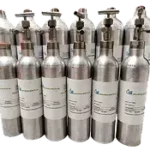
Overview
Ammonia is one of the most widely encountered toxic gas hazards in industrial workplaces — present in refrigeration plant rooms, wastewater treatment facilities, fertiliser production, food processing cold stores, and chemical manufacturing environments. It is detectable by smell at concentrations as low as 5 ppm, but the human nose habituates rapidly, and a worker who has been in an ammonia-contaminated atmosphere for even a few minutes may no longer perceive a concentration that remains acutely hazardous. Electrochemical NH3 sensors in personal monitors and fixed detection systems are the reliable line of defence — but only when those sensors are calibrated accurately against a verified reference concentration.
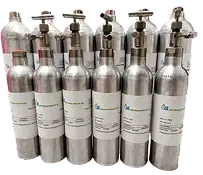
The (NH3) – Ammonia Calibration Gas Cylinder, 5 / 10 / 50 ppm Balance N2 is a precision-blended ammonia-in-nitrogen span gas available in three concentration options — 5 ppm, 10 ppm, and 50 ppm — formulated specifically for span calibration, bump testing, and sensor verification of ammonia gas detectors. The nitrogen balance gas is the correct carrier for ammonia calibration mixtures, as it prevents the oxidative side reactions that would occur with an air-balanced ammonia mixture and ensures long-term cylinder stability at low ppm concentrations. Available in five C10 cylinder sizes — 34L, 58L, 103L, 110L, and 116 litres — this calibration gas gives safety programmes operating in ammonia-risk environments the correct reference gas in the concentration and volume that matches their specific detection and calibration requirements.
What sets this product apart from generic calibration gas offerings is the three-concentration range in a single product family. Whether your detection programme is calibrated to OSHA’s 25 ppm ceiling limit, the 25 ppm ACGIH TLV-TWA, or a lower action level of 5 or 10 ppm used in food-grade or sensitive process environments, the correct reference concentration is available without requiring a custom mixture order — giving procurement teams a straightforward selection that directly matches detector alarm thresholds common across industrial and refrigeration ammonia monitoring programmes.
Key Features
Three Concentration Options — 5 ppm, 10 ppm, and 50 ppm
The availability of three ammonia concentrations within a single product range allows safety programmes to select the reference concentration most appropriate for their specific detector alarm thresholds and regulatory framework. The 5 ppm concentration is suited for sensitive low-level detection programmes — food processing environments, laboratories, and applications where early warning at concentrations well below occupational exposure limits is required. The 10 ppm concentration aligns with common first-stage alarm setpoints used in industrial refrigeration and wastewater treatment. The 50 ppm concentration is appropriate for programmes calibrating to concentrations approaching OSHA’s short-term exposure limits, or for verifying sensor response at higher alarm thresholds used in heavy industrial ammonia applications.
Balance Nitrogen (N2) — Chemical Stability for Ammonia Mixtures
Ammonia is a reactive gas — it reacts with oxygen and moisture, which makes air-balanced ammonia mixtures inherently less stable over time, particularly at low ppm concentrations. Nitrogen is an inert balance gas that does not react with ammonia, providing a chemically stable carrier that preserves the stated concentration throughout the cylinder’s shelf life. For calibration programmes using low-concentration ammonia reference gases — particularly the 5 ppm and 10 ppm variants where even minor concentration loss represents a significant percentage error — nitrogen balance is the technically correct and industry-standard choice for ammonia calibration gas formulation.
Low-PPM Precision Blending — Accurate Concentration at Challenging Levels
Preparing accurate calibration gas mixtures at 5 ppm and 10 ppm concentration levels presents a greater technical challenge than higher-concentration mixtures — the margin for blending error is proportionally larger relative to the total concentration, and any adsorption of ammonia onto cylinder walls can shift the actual delivered concentration below the stated value. This mixture is produced using precision blending techniques appropriate for low-ppm reactive gas mixtures, with cylinder passivation processes that minimise ammonia adsorption and maintain concentration accuracy from first use to last — giving calibration technicians confidence that the reference gas is delivering the stated concentration throughout the cylinder’s working life.
Five Cylinder Sizes — 34L to 116L in C10 Format
The calibration gas is available in five C10 cylinder volumes: 34L, 58L, 103L, 110L, and 116 litres. The 34L and 58L cylinders are well-suited for field calibration programmes — portable enough for a technician to carry to remote plant rooms, refrigeration machine rooms, and site locations where ammonia detectors are deployed. The larger 103L to 116L cylinders are the appropriate choice for fixed calibration benches and high-frequency programmes servicing large NH3 detector fleets across industrial facilities with extensive ammonia monitoring systems.
Compatible with Portable and Fixed Electrochemical NH3 Sensors
This ammonia calibration gas is suitable for use with the full range of electrochemical NH3 sensors deployed in portable personal monitors and fixed-point industrial ammonia detection systems. Common compatible instrument manufacturers include Industrial Scientific, Honeywell (BW Technologies), Draeger, MSA Safety, Crowcon, and GMI. For facilities operating mixed-brand ammonia detector fleets — common in large refrigeration plants and wastewater treatment works — a single calibration gas specification at the appropriate concentration covers the full instrument inventory without requiring multiple gas SKUs.
Technical Specifications
Gas Type: Ammonia (NH3)
Available Concentrations: 5 ppm / 10 ppm / 50 ppm
Balance Gas: Nitrogen (N2)
Cylinder Format: C10
Available Cylinder Sizes: 34L / 58L / 103L / 110L / 116 Litres
Mixture Type: Span Gas (Single Component)
Application: Span Calibration, Bump Testing, NH3 Sensor Verification
Compatible Sensors: Electrochemical Ammonia (NH3) Sensors — Portable and Fixed
Product Category: Span Gas and Regulator
Benefits
Calibration concentration matched directly to your alarm threshold. Rather than selecting a generic ammonia calibration gas and applying a correction to the calibration result, the three available concentrations allow you to calibrate at — or close to — the actual alarm setpoint your detectors are configured to. Calibrating near the alarm threshold gives the most operationally relevant verification of sensor performance: confirming that the detector will respond accurately at the concentration where a worker action is required.
Nitrogen balance ensures cylinder concentration stability. An air-balanced ammonia mixture at 5 or 10 ppm can lose concentration through oxidative degradation over the cylinder’s shelf life, resulting in a delivered concentration below the stated value by the time the cylinder is used. Nitrogen balance eliminates this degradation pathway — the ammonia concentration in the cylinder is the same at the end of the cylinder’s life as it was when it was filled, provided the cylinder is stored correctly. For calibration programmes that purchase cylinders in advance and use them over extended periods, this stability is a material procurement advantage.
Supports compliance with occupational exposure limit frameworks for ammonia. Ammonia exposure is regulated under OSHA (PEL 50 ppm TWA, 35 ppm STEL in some jurisdictions), ACGIH TLV (25 ppm TWA, 35 ppm STEL), and equivalent national occupational health standards. Maintaining calibrated ammonia detectors with documented span calibration records is a recognised component of a compliant ammonia exposure monitoring programme. The three available concentrations support calibration at concentrations referenced to these frameworks — 5 ppm and 10 ppm for low-level action programmes, 50 ppm for calibration against higher regulatory reference points.
Reduces the risk of ammonia exposure incidents going undetected. Ammonia’s rapid olfactory fatigue means workers cannot rely on smell as a reliable hazard indicator after brief initial exposure. A calibrated, functional ammonia detector that has been bump tested before use is the only reliable protection against undetected NH3 accumulation in enclosed plant rooms, cold stores, and process areas. Regular calibration with a certified reference gas is the maintenance activity that keeps that protection in place.
Multiple cylinder sizes reduce waste and optimise procurement cost. Ammonia calibration gas is used in more targeted applications than broad-spectrum calibration gases — typically in facilities with defined NH3 hazard areas rather than across a general industrial detector fleet. The five available cylinder sizes allow procurement managers to match supply volume to actual consumption frequency, preventing the cost and disposal inconvenience of carrying unused ammonia calibration gas inventory past its expiry date.
Who It’s For
The Refrigeration Engineer or Plant Manager at an Industrial Ammonia Refrigeration Facility
Your refrigeration plant operates with anhydrous ammonia as the refrigerant — a system that provides the most energy-efficient large-scale refrigeration but also requires a robust gas detection and monitoring programme to manage the NH3 leak risk. Your machine room, plant room, and condensing areas are equipped with fixed ammonia detectors, and your maintenance and operations teams carry portable NH3 monitors when working in areas where ammonia pipe work or equipment is accessible. Your calibration programme requires a certified ammonia span gas matched to your detector alarm setpoints — typically a first-stage alarm at 25–35 ppm and an emergency alarm at 150–300 ppm. The 10 ppm or 50 ppm concentration options give you a mid-range calibration reference appropriate for your alarm configuration, with cylinder sizes that suit your plant room calibration bench and your portable kit.
The HSE Officer at a Wastewater Treatment Works or Fertiliser Facility
Ammonia is produced as a process byproduct in anaerobic digestion, and is handled as a raw material in fertiliser manufacturing — two environments where low-level ambient NH3 monitoring is a continuous occupational health requirement. Your personal monitors are set with a first-stage alarm at 5–10 ppm to provide early warning before concentrations approach the 25 ppm TLV, and your calibration programme needs a reference gas at the 5 ppm or 10 ppm level to verify sensor response at concentrations relevant to your alarm thresholds. Generic high-concentration ammonia calibration gas does not give you a meaningful verification at the low-level alarms where your programme is actually configured to respond.
The Gas Detection Instrument Service Technician Serving Industrial and Cold Storage Clients
Your service portfolio includes industrial refrigeration plants, cold storage facilities, food processing sites, and wastewater treatment works — all of which have ammonia gas detectors requiring regular calibration. Your clients operate at different alarm thresholds and under different regulatory frameworks, meaning you need ammonia calibration gas in multiple concentrations to service the full range of instruments in your client base. Having access to 5 ppm, 10 ppm, and 50 ppm options within a single product family — from a single supplier, in cylinder sizes that suit your calibration van kit and bench supply — simplifies your calibration gas inventory management and ensures you always have the right concentration for each client’s detector configuration.
Possible Applications
- Industrial ammonia refrigeration plant rooms — Span calibration and bump testing of fixed wall-mounted NH3 detectors and portable personal monitors in machine rooms, plant rooms, and condensing areas of large-scale ammonia refrigeration systems
- Cold storage and food processing facilities — Calibration of ammonia monitors in chilled and frozen food storage environments where ammonia refrigerant leak detection is a food safety and occupational health requirement
- Wastewater treatment and anaerobic digestion plants — NH3 sensor verification for detectors monitoring ambient ammonia in digestion areas, sludge handling facilities, and enclosed process buildings where ammonia is produced as a process byproduct
- Fertiliser manufacturing and ammonia storage terminals — Span calibration of fixed and portable NH3 detectors in facilities handling anhydrous ammonia as a raw material, where high-concentration leak detection and early warning are critical operational requirements
- Chemical processing and pharmaceutical manufacturing — Calibration of ammonia monitors in process areas where NH3 is used as a reagent, solvent, or pH adjustment agent in chemical synthesis and pharmaceutical production
- Poultry and livestock farming facilities — Calibration of low-level NH3 monitors used to manage ammonia concentrations in enclosed animal housing, where sustained low-level exposure affects both animal welfare and farm worker health
- Gas detection instrument service workshops — Bench calibration reference gas for technicians calibrating and certifying portable and fixed NH3 detectors across refrigeration, food industry, and chemical processing clients
- Confined space entry in ammonia-risk environments — Bump testing of personal NH3 monitors before entry into refrigeration plant voids, pipe ducts, and enclosed areas adjacent to ammonia systems where residual or leaked ammonia may be present
Trust and Certifications
Nitrogen Balance — Industry-Standard Formulation for Ammonia Calibration Gas
The use of nitrogen as the balance gas for ammonia calibration mixtures is the recognised industry-standard formulation — specified by gas mixture manufacturers and referenced in calibration gas selection guidance for reactive toxic gas mixtures. The chemical stability of nitrogen-balanced ammonia at low ppm concentrations is significantly greater than air-balanced alternatives, and the nitrogen balance formulation is consistent with the requirements of ISO 6142 and related standards governing the preparation of calibration gas mixtures for occupational safety instruments.
Certified Concentration — Traceable Reference Documentation per Cylinder
Each cylinder is produced to certified concentration tolerances using precision blending techniques appropriate for low-ppm reactive gas mixtures, and is accompanied by a certificate of analysis documenting the verified ammonia concentration, tolerance, and preparation standard. For calibration programmes subject to quality management requirements — including ISO 17025-accredited calibration laboratories, food safety management systems requiring documented instrument calibration records, and occupational health regulatory compliance programmes — the certificate of analysis provides the traceable reference required to support defensible calibration documentation.
Relevant to OSHA, ACGIH, and National NH3 Exposure Regulations
Ammonia exposure monitoring is required under OSHA regulations (29 CFR 1910.1000), ACGIH TLV recommendations, and equivalent national occupational health standards in most industrial jurisdictions. Maintaining calibrated ammonia detectors with documented calibration records is a recognised component of a compliant NH3 exposure monitoring programme. The three available concentrations — 5 ppm, 10 ppm, and 50 ppm — provide reference points appropriate for compliance programmes across the full range of OSHA and TLV-referenced alarm threshold configurations.
Supplied by Alright Engineering Solutions
The (NH3) – Ammonia Calibration Gas Cylinder, 5/10/50 ppm Balance N2 is supplied through Alright Engineering Solutions Pte. Ltd., an authorised distributor of portable and fixed gas detection equipment, calibration gases, and span gas regulators in Singapore. Our team supports industrial, marine, and offshore clients with calibration gas sourcing, regulator supply, and gas detection programme advisory across Singapore and the regional market.
Accessories and Variants
Concentration Variants
5 ppm NH3 Balance N2 — Low-level concentration for sensitive detection programmes, food processing environments, and first-stage alarm calibration below 10 ppm
10 ppm NH3 Balance N2 — Mid-range concentration aligned with common first-stage alarm setpoints in industrial refrigeration and wastewater treatment monitoring programmes
50 ppm NH3 Balance N2 — Higher concentration for calibration programmes referenced to OSHA PEL-adjacent thresholds or heavy industrial ammonia detection applications
Cylinder Size Variants
34 Litre (C10) — Compact portable cylinder for field calibration kits, plant room visits, and low-frequency single-site programmes
58 Litre (C10) — Mid-size cylinder for regular site calibration and small NH3 detector fleets
103 Litre (C10) — Large capacity cylinder for calibration benches and medium-to-high frequency programmes
110 Litre (C10) — High-capacity option for instrument service workshops and large detector fleet programmes
116 Litre (C10) — Maximum C10 capacity for calibration laboratories and high-consumption industrial facilities
Compatible Span Gas Regulators
A correctly specified C10 regulator compatible with ammonia service is required to connect the calibration cylinder to your detector or calibration adapter. Ammonia is a reactive gas that can degrade incompatible regulator materials — Alright Engineering Solutions can confirm the appropriate ammonia-compatible regulator specification for your cylinder and instrument combination to ensure accurate gas delivery and regulator service life.
Related Calibration Gas Products
CO 50 PPM Balance Air — Carbon monoxide span gas for CO sensor calibration
CO 100 PPM Balance Air — Higher concentration CO calibration gas
HC Methane 2.5% (50% LEL) Balance Air — LEL span gas for combustible gas detector calibration
HC Isobutane 0.9% (50% LEL) Balance Air — Gas-specific LEL calibration for LPG environments
N2 Pure Nitrogen 99.995% Vol — Grade 4.5 zero gas for sensor zeroing prior to NH3 span calibration
Get in Touch
If you are sourcing (NH3) – Ammonia Calibration Gas in 5 ppm, 10 ppm, or 50 ppm Balance N2 for an industrial refrigeration programme, food processing facility, wastewater treatment works, or instrument service operation — contact Alright Engineering Solutions to confirm your required concentration, cylinder size availability, and request a formal quotation.
Our team can advise on ammonia-compatible regulators, related calibration gas products, and supply arrangements suited to your NH3 detection programme and instrument fleet requirements.
📍 3791 Jalan Bukit Merah #06-01, E-Centre @ Redhill, Singapore 159471