Cart (
Overview
On tanker ships, the discharge of oily water from cargo space ballast into the sea is one of the most tightly regulated operations under MARPOL Annex I. The legal and operational consequences of non-compliance — overboard discharge exceeding permitted limits, inaccurate Oil Record Book entries, or ODME equipment that fails during a Port State Control inspection — are not abstract risks. They are the source of vessel detentions, criminal prosecutions, and class suspension events that affect tanker operators regularly across all major PSC inspection regimes. The challenge for operators is not a lack of regulatory awareness. It is finding an ODME system that is fully compliant with current IMO requirements, reliably accurate in the conditions of tanker ballast operations, and straightforward enough to retrofit to existing vessels without a complex installation programme.
The Seil Seres S-3000 Ver.1 Oil Discharge Monitoring Equipment is a dedicated ODME system developed specifically for tanker ship operations. It is in full compliance with current IMO/MARPOL Regulations MEPC 108(49) and is designed as a system for controlling the discharge into the sea of oily products in ballast from the cargo spaces of tankers — the specific regulatory application covered by MARPOL Annex I requirements for crude tankers and product tankers carrying persistent oils. The S-3000 Ver.1 is approved in accordance with Resolution MEPC 108(49), providing the type approval documentation required by flag states and classification societies for ODME installation on regulated tanker vessels.
What distinguishes the S-3000 Ver.1 specifically for tanker operators is its suitability for retrofitting to all existing tanker ships — including vessels already in service where the ODME is being replaced on an existing installation rather than fitted as part of a new build programme. The retrofit design intent means that an operator replacing an ageing ODME on a trading tanker does not need to plan a complex engine room modification project. The S-3000 Ver.1 is designed to fit the existing installation with minimal disruption, which matters significantly when the vessel has a defined and limited port call or drydock window available for the replacement.
Key Features
Full MEPC 108(49) Compliance — Tanker-Specific Type Approval
The S-3000 Ver.1 is type-approved in full compliance with IMO Resolution MEPC 108(49), the performance standard that defines measurement accuracy, overboard valve control, and data recording requirements for ODME systems fitted on tanker ships under MARPOL Annex I. MEPC 108(49) type approval is the foundational flag state and class requirement for ODME installation on tankers carrying persistent oils — crude tankers, product tankers, and combination carriers. The S-3000 Ver.1’s approval specifically addresses the oily ballast discharge application from cargo spaces, which is the primary ODME regulatory requirement for tanker operators and the one most directly scrutinised during PSC inspections on tanker vessels.
Designed for Oily Ballast Discharge Control from Cargo Spaces
The S-3000 Ver.1 is built specifically to monitor and control the discharge into the sea of oily products in ballast from the cargo spaces of tankers — not a general-purpose bilge water ODME adapted for tanker use, but a system designed from the outset for the tanker ballast discharge application. Ballast water from cargo spaces on crude and product tankers contains residues from the previous cargo that differ significantly in composition and concentration from engine room bilge water, and the ODME must handle this range of oil types and concentrations accurately. The S-3000 Ver.1’s approval covers this specific application, which is the correct specification for tanker procurement rather than a more general ODME approval.
Retrofit Suitable for All Existing Tanker Ships
The Seil Seres S-3000 Ver.1 is specifically described as suitable to be retrofitted to all existing tanker ships — a practical specification that reflects the reality of most ODME replacement projects, which occur on vessels already in service rather than during new construction. A retrofit-suitable design means the installation can be completed within the piping and structural arrangement of the existing vessel without requiring significant modification to the surrounding systems. For a technical superintendent managing an ODME replacement on a trading tanker with a limited drydock window, a system designed for retrofit reduces installation risk and drydock time allocation compared to a unit that requires significant structural or piping modifications to install on an existing vessel.
Integrated Operator Interface with LCD Display and Keypad
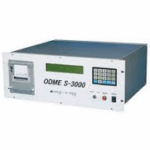
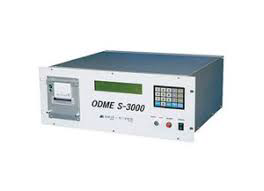
The S-3000 Ver.1 front panel incorporates an LCD display and a keypad operator interface, allowing the watchkeeper to monitor discharge status, oil content readings, and system conditions directly from the control unit without requiring a separate remote operator’s panel. The display provides the operational information the crew needs to manage discharge operations — current oil content ppm reading, system status, and alarm conditions — in a format accessible from the installed position in the cargo control room or machinery space. A clear, direct operator interface on the control unit itself reduces the crew familiarisation time required to operate the system correctly and supports confident operation during PSC inspections when the surveyor requests a system demonstration.
Built-In Printer — Discharge Record Documentation
The S-3000 Ver.1 includes an integrated printer, visible on the left side of the front panel, which produces a printed discharge record directly from the unit during and after discharge operations. Printed discharge records provide a physical documentation trail supporting Oil Record Book Part II entries under MARPOL Annex I, which requires tankers to record all ballast water discharge operations including the position of the vessel, the quantity discharged, and the oil content of the discharged water. Having a built-in printer means the documentation is produced at the point of measurement — without requiring data export, PC connection, or manual transcription — which reduces the administrative burden on the officer maintaining the ORB and strengthens the evidentiary record during a PSC inspection.
Robust Panel-Mount Design for Cargo Control Room Installation
The S-3000 Ver.1’s panel-mount form factor is designed for installation in the vessel’s cargo control room or central control station, where tanker discharge operations are managed and monitored. The unit’s compact, rack-mounted enclosure suits the panel layouts found in tanker control rooms — integrating with the vessel’s other cargo and ballast management instrumentation in a familiar format. Panel-mount installation at the central control position means the officer on watch can monitor oil content readings and system status as part of their normal cargo and ballast monitoring routine, rather than having to go to a separate location to check the ODME during discharge operations.
IMO/MARPOL Required System — Regulatory Compliance Built In
ODME equipment is required by MARPOL regulations on tanker vessels carrying persistent oils — it is not an optional safety improvement but a mandatory regulatory installation. The S-3000 Ver.1 is specifically designed and approved to meet that mandatory requirement. For operators replacing an existing ODME that has reached end of service life or lost type approval validity, specifying a replacement unit with current, documented MEPC 108(49) type approval closes the compliance gap cleanly and provides the approval documentation required by the vessel’s flag state and classification society to confirm that the mandatory installation requirement is met with currently approved equipment.
Technical Specifications
Model: ODME S-3000 Ver.1
Manufacturer: Seil Seres (KSB Sel Co. Ltd.)
Application: Oil Discharge Monitoring Equipment — Tanker Ships
MARPOL Compliance: IMO Resolution MEPC 108(49) — full compliance
Regulatory Requirement: MARPOL Annex I — oily ballast discharge from cargo spaces of tankers
Display: LCD display with keypad operator interface
Printer: Integrated built-in printer for discharge record documentation
Form Factor: Panel-mount enclosure — cargo control room / central control station installation
Retrofit Suitability: Suitable for retrofitting to all existing tanker ships
Bio Fuel Approval: MEPC 108(49) — Ver.1 (for MEPC 240(65) bio fuel blend coverage see S-3000 Ver.2)
IP Rating / Battery Life / Wireless Connectivity: Confirm with supplier for vessel-specific installation requirements
Benefits
The most direct operational benefit of the S-3000 Ver.1 is that it provides tanker operators with a currently approved, MEPC 108(49)-compliant ODME system that meets the mandatory regulatory requirement for tanker ballast discharge monitoring — installed on a platform that is specifically designed for the tanker ballast application, not adapted from a general bilge water ODME. For a chief officer or chief engineer managing cargo operations on a crude tanker or product tanker, operating with a correctly specified and currently approved ODME means that every ballast discharge operation is conducted with the measurement and control system the MARPOL requirement was written for.
The integrated printer eliminates a common documentation gap in tanker ORB record-keeping. When a PSC surveyor cross-references ORB Part II entries against ODME discharge records, having a printed record produced directly by the measurement system — rather than a manually transcribed entry — provides corroborating documentation that materially strengthens the vessel’s compliance position. For vessels operating in PSC regimes where MARPOL documentation quality is routinely examined, ODME-generated printed records are a meaningful compliance asset.
The retrofit suitability of the S-3000 Ver.1 translates into a lower total replacement cost compared to units requiring significant installation modifications. For operators managing ODME replacement across a fleet of trading tankers — particularly older tonnage where the installation arrangement may not match the design assumptions of more recently developed ODME systems — a retrofit-first design reduces the engineering assessment, modification scope, and installation time that add cost and risk to replacement projects.
From a crew familiarisation perspective, the front-panel LCD and keypad operator interface provides a straightforward interaction model that experienced tanker officers can learn quickly without specialist training. A system that the crew can operate confidently — and demonstrate to a PSC surveyor without hesitation — reduces the human factor contribution to MARPOL compliance risk during discharge operations.
Who It’s For
Chief Officers and Chief Engineers on Crude and Product Tankers
If you are the officer responsible for managing ballast water discharge operations on a crude tanker or product tanker — and for maintaining the Oil Record Book Part II entries that document those operations — the S-3000 Ver.1 gives you an ODME system that is specifically approved for the tanker ballast discharge application, produces a printed discharge record at the point of measurement, and is designed for the cargo control room environment where you are already managing the discharge operation. The combination of current MEPC 108(49) approval, integrated printer, and panel-mount installation in your normal working position directly supports the operational and documentation responsibilities that fall to you under MARPOL Annex I.
Fleet Technical Superintendents Planning Tanker ODME Replacement
For technical superintendents managing a fleet of trading tankers with ODME units approaching end of service life — or vessels where the existing ODME has lost type approval validity because it was approved only under a superseded resolution — the S-3000 Ver.1 offers a current MEPC 108(49) approved replacement that is designed for retrofit without major installation modification. If your replacement programme involves older tanker tonnage with variable installation arrangements, retrofit suitability across all existing tanker ship types reduces the vessel-by-vessel engineering assessment burden and gives you a consistent specification to apply across the replacement programme.
Vessel Owners and DPA Officers Managing PSC Compliance Records
If you are a designated person ashore managing the MARPOL compliance records for a tanker fleet and you have received PSC deficiencies related to ODME equipment condition, type approval status, or ORB documentation quality, replacing the affected units with currently approved, documentation-capable ODME equipment is the direct corrective action. The S-3000 Ver.1’s MEPC 108(49) type approval and integrated printer give you the equipment specification and documentation capability to close those deficiencies with a clearly documented, class-confirmed installation on the vessel record.
Possible Applications
Crude Tanker Ballast Discharge Operations — MARPOL-required monitoring and control of ballast water discharge from cargo spaces on crude tankers, where oil content in ballast water reflects crude oil cargo residues requiring accurate ppm measurement throughout the discharge.
Product Tanker Persistent Oil Discharge Control — ODME installation on product tankers carrying persistent petroleum products, where MARPOL Annex I requires monitoring of ballast discharge from cargo tanks and the MEPC 108(49) approval covers the petroleum product range carried.
ODME Replacement on Ageing Tanker Fleet Vessels — Retrofit replacement of end-of-life or type approval-expired ODME units on trading tankers where retrofit suitability and minimal installation modification are primary procurement criteria.
Tanker Drydock ODME Upgrade Programme — Planned ODME replacement during scheduled drydocking on a tanker fleet, using the S-3000 Ver.1’s retrofit design to reduce installation time and drydock cost allocation across multiple vessels.
Combination Carriers (OBO Vessels) — ODME installation on ore/bulk/oil combination carriers where cargo space ballast discharge requires MARPOL Annex I ODME coverage equivalent to dedicated tanker requirements when operating in oil-carrying mode.
PSC Deficiency Rectification — ODME Equipment — Replacement of ODME units that have received PSC deficiencies related to type approval status, measurement accuracy, or ORB documentation capability on tanker vessels in high-inspection PSC regimes.
Cargo Control Room Integration on Tankers — Panel-mount ODME installation integrated into the vessel’s central cargo control room panel layout, providing discharge monitoring at the primary cargo management position without requiring a separate dedicated ODME monitoring station.
Trust & Certifications
IMO Resolution MEPC 108(49) — Tanker ODME Performance Standard
Resolution MEPC 108(49) is the IMO performance standard under MARPOL Annex I that defines the technical requirements for Oil Discharge Monitoring Equipment fitted on tanker ships. It specifies measurement accuracy requirements for crude oils and petroleum products, the response characteristics of the overboard valve control system, the position-fixing interface requirement, and the data recording obligations that support ORB Part II entries. Type approval to MEPC 108(49) is the mandatory requirement for ODME installation on tankers under MARPOL and is the certification reviewed by flag state surveyors and PSC inspectors when examining ODME compliance on tanker vessels. The S-3000 Ver.1 is approved in full compliance with MEPC 108(49), providing the type approval documentation required for installation on MARPOL-regulated tanker ships.
MARPOL Annex I — Mandatory Regulatory Requirement
MARPOL Annex I Regulation 31 and related regulations require that tankers of 150 gross tonnage and above and every ship of 400 gross tonnage and above are fitted with approved ODME equipment when carrying oil. The S-3000 Ver.1 is specifically designed and approved to meet this mandatory requirement for tanker ships. For operators, the MARPOL mandatory status of ODME installation means that a vessel without functioning, type-approved ODME equipment is technically unseaworthy for trading — a classification and flag state status that affects the vessel’s ability to obtain port clearance and P&I cover.
Seil Seres — Marine ODME Specialist
The S-3000 ODME product series is developed by Seil Seres (KSB Sel Co. Ltd.), a manufacturer with an established product history in marine Oil Discharge Monitoring Equipment for tanker applications. The S-3000 product line spans Ver.1 (MEPC 108(49) approved) and Ver.2 (additionally MEPC 240(65) approved for bio fuel blends), providing a product family with a documented development and approval history across successive IMO regulatory updates. For procurement teams evaluating ODME suppliers, a manufacturer with a traceable version history and documented type approval records across the current and previous IMO resolution provides the procurement documentation trail required for class survey and flag state inspection purposes.
Accessories & Variants
S-3000 Ver.1 vs S-3000 Ver.2 — Choosing the Right Version
The S-3000 product line is available in two versions with different MARPOL approval profiles. The S-3000 Ver.1 is approved under MEPC 108(49) for crude oils and petroleum products — covering the standard tanker ballast discharge application for vessels operating on conventional fuels. The S-3000 Ver.2 additionally holds MEPC 240(65) approval for petroleum oil and bio fuel blends, required for vessels using bio fuel blends in machinery operation. For tankers currently operating exclusively on conventional petroleum fuels where MEPC 108(49) compliance is the applicable standard, the Ver.1 provides the correct approval profile. For vessels transitioning to or already operating on bio fuel blends, the Ver.2 is the appropriate specification to ensure MEPC 240(65) compliance is covered.
Operator Interface and Printer Consumables
The S-3000 Ver.1 includes a built-in printer for discharge record documentation. Printer paper and consumables for the integrated printer should be held as onboard spares to ensure continuous documentation capability during and after discharge operations. Confirm the correct printer consumable specification with your supplier at the time of equipment procurement to ensure the correct items are stocked from installation.
Installation and Retrofit Support
For ODME replacement projects on existing tankers where the existing installation arrangement requires assessment before specifying the replacement unit — including piping interface, signal connections to the overboard valve and GPS position fixing system, and cargo control room panel integration — your supplier can provide installation support documentation and technical guidance for the retrofit planning process. Confirm the vessel-specific installation requirements with your supplier before finalising the procurement to ensure the S-3000 Ver.1 configuration is correct for your vessel’s existing ODME installation arrangement.
Available Variants:
• ODME S-3000 Ver.1 — MEPC 108(49) approved | Tanker ballast discharge application | Integrated printer | LCD display | Retrofit suitable for all existing tanker ships
• ODME S-3000 Ver.2 — MEPC 108(49) + MEPC 240(65) approved | Bio fuel blend coverage | Self-cleaning optical system | Intrinsically safe flowmeter
Get in Touch
If you are planning an ODME replacement on a trading tanker, managing a fleet upgrade programme across multiple vessels, or need to confirm MEPC 108(49) type approval documentation for a flag state or class survey — contact us to discuss your specific requirement and request a formal procurement quotation.
Our technical team can assist with product selection against your vessel’s MARPOL compliance specification, confirm the correct variant for your fuel type and trading area requirements, and support the procurement documentation your vessel file and classification society records require.
📍 3791 Jalan Bukit Merah #06-01, E-Centre @ Redhill, Singapore 159471