Cart (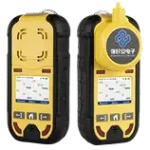
Overview
In industries where workers routinely encounter toxic or flammable gases — oil and gas, mining, chemical manufacturing, wastewater treatment — the personal gas detector is a piece of safety equipment that has to work every single time it’s asked to. The challenge most safety managers face isn’t finding a device that works in a lab; it’s finding one that holds up across months of daily use in dirty, wet, physically demanding environments, continues to alarm accurately after repeated drops and impacts, and doesn’t introduce daily charging or operational complexity that erodes consistent use across a workforce.
The BH-90M Portable Single Gas Detector is built around that operational reality. Its Three-Defense Design — covering protection against water ingress, dust, and physical impact — sets the mechanical durability baseline for the device. Combined with industrial-grade sensors, a minimum 8-hour continuous working time on a 1500mAh lithium battery, and Type-C charging, the BH-90M is specified for the kind of sustained daily use that field environments actually demand.
What distinguishes the BH-90M from comparable single-gas portables in its price and performance category is the Three-Defense build standard applied consistently across the housing — not just splash resistance, but a deliberate design approach to withstanding the physical and environmental stresses of industrial fieldwork. For procurement teams and HSE officers sourcing personal monitors for workers in outdoor, heavy-industry, or physically demanding environments, that design commitment matters more than headline specifications that don’t survive contact with real working conditions.
Key Features
Three-Defense Design — Water, Dust, and Impact Protection
The BH-90M’s Three-Defense Design addresses the three most common causes of portable gas detector failure in industrial environments: water and moisture ingress, dust and particulate contamination, and physical shock from drops or impacts. The housing is engineered to resist all three simultaneously, rather than being optimised for one at the expense of others. For workers in outdoor plant environments, confined spaces, or physically active field roles, a device that survives the working day intact is the prerequisite for everything else the detector is supposed to do.
Industrial-Grade Sensors
The BH-90M uses industrial-grade electrochemical or catalytic sensors depending on the target gas variant, providing stable, accurate detection in the concentration ranges that matter for occupational safety monitoring. Industrial-grade sensor specification means the sensor is selected and validated for continuous use in field conditions — not just for controlled laboratory environments — with a rated sensor life of two years under normal usage conditions. For safety-critical monitoring applications, sensor quality and longevity are not details; they are the basis of the device’s reliability.
Four-Mode Alarm System (Sound, Light, Vibration, Display)
Gas alarm events activate all four alarm channels simultaneously: audible alarm, LED visual alert, vibration, and on-screen display notification. In the environments where the BH-90M is most likely to be deployed — noisy processing plants, outdoor sites, confined spaces — a single-channel alarm has a meaningful failure rate in terms of the worker actually perceiving it. The simultaneous four-mode response removes that dependence on any single channel and maximises the probability that the alarm reaches the worker in time to act. The T90 response time is under 60 seconds.
8-Hour Continuous Working Time
The 1500mAh lithium battery at DC 3.7V delivers a minimum of 8 hours of continuous operation — covering a standard industrial shift without a mid-shift recharge. Charging time runs between 4 and 6 hours, supporting a charge-between-shifts workflow without requiring a large inventory of spare units. For shift-based operations where workers clock on with a full shift ahead of them, 8-hour battery life is the practical minimum for a personal monitor to be considered genuinely fit for purpose rather than a liability waiting to run flat.
Type-C Charging Interface
The BH-90M charges via a USB Type-C interface — the current standard connector for industrial and consumer electronics, widely available and reversible. In practice, this means workers and facilities managers don’t need to source or stock proprietary charging cables. A standard USB-C cable works, reducing the operational friction of keeping a fleet of devices charged and reducing the cost and complexity of cable management across a large device deployment.
Bilingual Interface — Chinese and English
The BH-90M supports switching between Chinese and English language interfaces. For multinational operations, international project sites, and procurement teams sourcing equipment across different markets, a bilingual device removes language as a deployment barrier without requiring separate hardware variants for different regional teams. Workers can operate the device in their preferred language, reducing the risk of interface misinterpretation in a safety-critical context.
Compact and Lightweight Form Factor
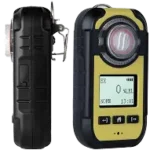
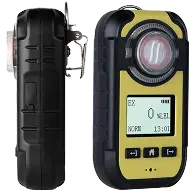
At 114 × 60 × 43mm and approximately 172 grams, the BH-90M is compact and light enough for comfortable all-day personal wear without adding meaningful burden to a worker already carrying tools, PPE, and other equipment. The form factor is designed for clip-on or belt attachment, keeping the sensor positioned at breathing zone height for representative readings throughout the work task — not just when the worker thinks to check it.
Technical Specifications
Model: BH-90M
Display: 1.77 inch LCD
Dimensions: 114 × 60 × 43mm
Weight: Approximately 172g
Power Supply: 1500mAh Lithium Battery (DC 3.7V)
Charging: Type-C interface, 4–6 hours
Working Time: ≥8 hours continuously
IP Rating: Three-Defense Design (water, dust, impact resistant)
Alarm Types: Sound, Light (LED), Vibration, Display — four simultaneous modes
Sampling Method: Natural diffusion
Response Time: T90 <60 seconds
Working Temperature: -10°C to 55°C
Humidity: ≤95% RH (no dew)
Sensor Life: 2 years (depending on usage environment)
Wireless Connectivity: Not specified
Safety Approvals: Not stated on specification sheet — confirm with supplier for site-specific hazardous area requirements
Language: Chinese / English (switchable)
Benefits
For individual workers, the BH-90M’s Three-Defense build means a device that keeps working through the conditions they actually encounter — not just the conditions described in a product brochure. Drops happen. Rain happens. Dusty environments are the norm on most industrial sites, not the exception. A detector that can absorb those realities and continue functioning accurately is one that workers will trust to clip on each morning without mentally qualifying whether it’s up to the task that day.
For HSE managers and safety programme owners, the 8-hour battery life and universal Type-C charging remove two of the most common sources of operational non-compliance in personal gas monitoring programmes: flat batteries and missing chargers. When the charging infrastructure is straightforward and the battery covers a full shift, the proportion of workers arriving for shift with a functioning, charged monitor goes up — and that improvement in consistent compliance is what translates into actual safety outcomes, not just safety intentions.
For procurement teams evaluating portable single gas detectors for fleet deployment across industrial field teams, the BH-90M’s two-year sensor life and durable Three-Defense housing support a predictable total cost of ownership over a multi-year fleet lifecycle. Fewer damage-related replacements, a manageable sensor replacement schedule, and standard consumables (Type-C cables, widely available calibration gas) keep ongoing operational costs transparent and manageable.
Who It’s For
Field Maintenance Technician — Oil, Gas, or Chemical Plant
You spend your working day moving between process areas, climbing equipment, working in confined spaces, and operating in outdoor environments where the weather doesn’t respect safety equipment. You need a personal gas monitor that doesn’t become a liability — one that survives a drop, keeps working in the rain, and doesn’t alarm at irrelevant concentrations that make you and your colleagues start ignoring it. The BH-90M’s industrial-grade sensors and Three-Defense housing are specified for exactly the kind of working conditions you’re dealing with every shift.
HSE Officer — Mining or Tunnelling Operation
You’re responsible for gas monitoring compliance across a workforce that operates in physically demanding underground or open-cut environments where dust, moisture, and physical impacts are constant features of the working day. You need personal monitors that hold up across a multi-month deployment without high failure rates, that workers will actually keep wearing because they’re not uncomfortable or fragile, and that alarm reliably when they need to. The BH-90M’s compact size, durable build, and clear four-mode alarm system address all three of those requirements.
Safety Equipment Procurement Manager — Industrial Fleet Deployment
You’re sourcing personal gas monitors for a large team across one or more industrial sites. You need a device that balances reliable performance with a manageable total cost of ownership — one that doesn’t require constant replacement due to damage, that uses standard consumables, and that workers can operate without extended training. The BH-90M’s Type-C charging, bilingual interface, and industrial-grade sensor specification make it straightforward to deploy at scale without introducing significant operational complexity.
Possible Applications
Oil and Gas Field Operations — Upstream and midstream field workers, pipeline inspection teams, and wellhead operators require robust personal gas monitors that can handle outdoor environments, physical activity, and the specific gas hazards of their operations. The BH-90M’s durable build and industrial sensor options make it appropriate for these field-intensive roles.
Mining and Underground Operations — Underground miners and surface plant workers face gas hazards alongside some of the most physically demanding and dusty working environments in any industry. Personal monitors worn in these settings need to withstand impact, dust infiltration, and moisture — the core of the Three-Defense design specification.
Chemical and Petrochemical Manufacturing — Production workers, maintenance engineers, and contractors on chemical plant sites require continuous personal gas monitoring for the specific toxic or flammable gases present in their work areas. The BH-90M’s single-gas configuration allows specification to the exact target gas for each zone or role.
Wastewater Treatment and Sewer Maintenance — Workers in wastewater infrastructure face H2S, methane, and oxygen deficiency risks in enclosed, wet, and physically challenging environments. The BH-90M’s water and dust resistance directly address the environmental conditions of this application.
Construction and Civil Engineering — Enclosed or Below-Grade Work — Construction workers operating in below-grade structures, tunnels, or enclosed civil works face CO, O2 deficiency, and flammable gas risks from diesel plant, ground gases, and building materials. Personal monitoring for these workers requires equipment that keeps working through site conditions.
Utilities and Power Generation Maintenance — Maintenance engineers in power stations, substations, and utility plant areas work in environments with potential gas hazards from SF6, H2, CO, or combustible gas sources. Compact, durable personal monitors that cover the relevant target gas provide individual-level protection during inspection and maintenance tasks.
Refrigeration and Cold Chain Facilities — Workers in ammonia refrigeration plants and cold storage facilities require personal NH3 monitoring throughout their shift. The BH-90M’s compact form factor and wearable design support consistent monitoring without adding bulk to workers already wearing cold-environment PPE.
Trust & Certifications
Three-Defense Design Standard
The Three-Defense Design classification indicates the BH-90M housing has been engineered and tested to meet defined standards for water resistance, dust protection, and impact resistance simultaneously. This is a construction-level commitment to durability, not a marketing claim — it reflects the specification decisions made in the device’s physical design to withstand the conditions of industrial field environments across its operational life.
Industrial-Grade Sensor Specification
The use of industrial-grade sensors — rather than consumer or commercial-grade equivalents — means the detection components are selected for accuracy, stability, and longevity in field operating conditions. A two-year rated sensor life provides a documented maintenance planning horizon, supporting structured calibration and replacement schedules as part of a managed safety programme.
T90 Response Time <60 Seconds
The T90 response time specification — the time for the sensor to reach 90% of its final reading — is a standardised performance metric used across the gas detection industry. A T90 of under 60 seconds for a natural diffusion device reflects the sensor’s ability to detect gas concentration changes within a timeframe that allows a meaningful response by the worker before exposure reaches higher levels.
Note on Hazardous Area Certification
The BH-90M specification sheet does not state a specific ATEX, IECEx, or equivalent hazardous area certification. Buyers intending to deploy the BH-90M in classified hazardous areas (Zone 0, 1, or 2) should confirm applicable certification status with the supplier before procurement to ensure the device meets their site’s intrinsic safety requirements.
Accessories & Variants
USB Type-C Charging Cable
Standard Type-C cables are compatible with the BH-90M charging interface, available from the supplier or as widely available standard accessories. Fleet charging solutions using multi-port USB-C charging stations are straightforward to implement without proprietary docking hardware.
Carry Clip / Belt Attachment
Positions the BH-90M at breathing zone height during normal work activity for representative gas readings throughout the shift. Compatible with standard work clothing, overalls, and harness systems.
Calibration Gas
Certified single-gas calibration cylinders appropriate to the BH-90M’s target gas configuration for bump testing and full span calibration. Regular bump testing is recommended best practice for personal gas monitors used in safety-critical applications, particularly before confined space entry.
Available Variants
The BH-90M is available in single-gas configurations for a range of target gases including O2, CO, H2S, LEL (combustible gas), NH3, and other toxic or flammable gas types. Contact our technical team to confirm available sensor options and specify the correct variant for your site’s gas hazard profile and detection range requirements.
Request a Quote or Technical Consultation
If you’re sourcing robust personal gas monitors for field teams working in physically demanding or environmentally challenging industrial environments — and you need equipment that holds up to daily use across a multi-month or multi-year deployment — the BH-90M is worth a closer look.
Speak with our safety equipment team to discuss sensor configuration for your specific gas hazard requirements, request pricing for individual units or fleet quantities, or get technical guidance on calibration gas selection and maintenance scheduling. We work directly with HSE managers, safety programme owners, and procurement teams, and can support the full specification and deployment process from initial enquiry through to ongoing compliance management.