Cart (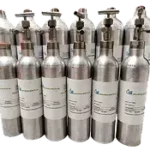
Overview
Not every combustible gas environment is a methane environment. In LPG handling facilities, fuel gas distribution networks, vehicle fuelling operations, refrigeration plant rooms, and marine engine rooms where liquefied petroleum gases are stored and used, isobutane and butane isomers are the primary flammable gas hazards — not methane. When an LEL detector in an isobutane-risk environment is calibrated exclusively with methane, the instrument’s displayed reading is referenced to a different gas’s LEL, and the relative response factor between the calibration gas and the target gas introduces a systematic measurement offset that affects how accurately the detector quantifies an actual isobutane release.
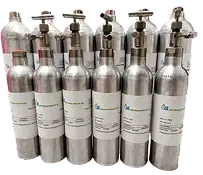
The HC – Hydrocarbon Isobutane 0.9% (50% LEL) Balance Air Calibration Gas Cylinder is a precision-blended isobutane-in-air span gas formulated specifically for span calibration and bump testing of combustible gas detectors in applications where isobutane is the target gas or where the calibration programme requires a gas-specific reference for accurate LEL sensor response verification. At 0.9% volume isobutane — exactly 50% of isobutane’s lower explosive limit of 1.8% — this mixture places the calibration point at mid-scale of the isobutane LEL measurement range, providing a direct and technically representative verification of detector performance in isobutane-risk environments.
Available in five C10 cylinder sizes — 34L, 58L, 103L, 110L, and 116 litres — this calibration gas gives HSE managers, calibration technicians, and procurement teams working in LPG, refrigeration, and petrochemical environments the correct reference gas for their specific gas hazard — not a generic substitute that introduces avoidable measurement uncertainty into a safety-critical instrument calibration.
Key Features
0.9% Vol Isobutane — Precisely 50% LEL Reference Concentration
Isobutane (iC4H10) has a lower explosive limit of 1.8% by volume in air. At 0.9%, this calibration gas sits at exactly the midpoint of the isobutane LEL measurement range — 50% LEL. Calibrating an LEL detector at 50% LEL with the actual target gas rather than a surrogate gas eliminates the response factor correction that would otherwise be required when using a different hydrocarbon as the calibration reference. For detectors deployed in isobutane-specific hazard environments, gas-specific calibration at 50% LEL gives the most technically accurate verification of alarm threshold performance at the concentration where the detector’s first-stage warning response is triggered.
Gas-Specific Calibration — Eliminates Response Factor Uncertainty
Catalytic bead and infrared LEL sensors respond differently to different hydrocarbon gases — a phenomenon characterised by gas-specific response factors. When a sensor calibrated on methane is used to measure isobutane, the displayed reading must be corrected by a response factor that relates the sensor’s methane response to its isobutane response. In practice, this correction is often not applied in the field, and even when it is, it introduces a layer of calculation and potential error into what should be a straightforward concentration reading. Calibrating directly with isobutane at 50% LEL removes this uncertainty — the sensor is set against the gas it will actually encounter, and the alarm threshold calibration is directly referenced to isobutane’s LEL rather than methane’s.
Balance Air Formulation — Accurate Sensor Response in Atmospheric Conditions
The balance gas is atmospheric air, providing the oxygen-nitrogen background required for accurate catalytic bead sensor response. Catalytic bead LEL sensors operate through the oxidation of combustible gas at a heated pellistor element — a reaction that requires oxygen to proceed. The air balance formulation ensures the calibration atmosphere matches the field conditions in which the detector will measure isobutane releases, producing a calibration result that genuinely represents how the sensor will respond when an actual LPG leak is present. Infrared LEL sensors also benefit from an air balance, as the oxygen content affects the measurement baseline of some IR absorption configurations.
Five Cylinder Sizes — 34L to 116L in C10 Format
The calibration gas is available in C10 cylinders across five volume options: 34L, 58L, 103L, 110L, and 116 litres. The 34L and 58L cylinders are suited for portable field use — practical for calibration technicians visiting LPG storage sites, refrigeration plant rooms, or marine vessel engine rooms where isobutane-specific calibration is required at the point of instrument deployment. The larger 103L to 116L cylinders serve fixed calibration benches and high-frequency calibration programmes where a larger supply volume reduces the cylinder changeover frequency and the procurement overhead associated with it.
Precision-Blended — Certified Concentration Accuracy for Gas-Specific Calibration
The technical value of a gas-specific calibration is only realised if the calibration gas concentration is accurate. An isobutane cylinder with poor concentration accuracy would introduce systematic calibration error that undermines the purpose of using the target gas in the first place. This mixture is produced by precision gravimetric blending to certified concentration tolerances, with each cylinder accompanied by a certificate of analysis documenting the verified isobutane concentration and its variance from the stated 0.9% value — providing the traceability required for calibration programmes where gas certificate documentation is part of the quality record.
Technical Specifications
Gas Type: Isobutane (iC4H10) — Hydrocarbon
Concentration: 0.9% Vol (50% LEL)
LEL Reference: Isobutane LEL = 1.8% Vol
Balance Gas: Air
Cylinder Format: C10
Available Cylinder Sizes: 34L / 58L / 103L / 110L / 116 Litres
Mixture Type: Span Gas (Single Component)
Application: Span Calibration, Bump Testing, LEL Sensor Verification (Isobutane-Specific)
Compatible Sensors: Catalytic Bead (Pellistor) LEL Sensors, Infrared (IR) LEL Sensors
Product Category: Span Gas and Regulator
Benefits
Removes the response factor correction from field calibration. In the field, response factor corrections are rarely applied consistently — technicians use the displayed % LEL reading without applying the mathematical correction that should theoretically account for the difference in sensor response between the calibration gas and the actual hazard gas. Calibrating with isobutane in an isobutane-risk environment means the alarm threshold is set directly against the target gas, and the displayed concentration reading is a direct measurement — not a methane-equivalent value that requires interpretation.
Delivers accurate alarm threshold calibration for LPG environments. In LPG storage, distribution, and handling environments, the first-stage alarm is typically set at 10–20% LEL — a concentration that corresponds to 0.18–0.36% isobutane by volume. Calibrating at 50% LEL with isobutane directly confirms that the sensor is accurately measuring isobutane at concentrations in and above this alarm range, giving HSE managers and safety engineers confidence that their alarm thresholds are referenced to the actual hazard gas rather than a methane surrogate.
Supports compliance documentation in LPG and petrochemical regulatory frameworks. Facilities operating under ATEX-related explosive atmosphere regulations, national LPG handling codes, and occupational safety regulations requiring verified gas detector performance benefit from calibration records that reference gas-specific span calibration. A calibration certificate that documents isobutane span calibration at 50% LEL is more technically defensible in a regulatory audit or post-incident investigation than a methane-calibrated detector deployed in an isobutane environment.
Correct cylinder sizing reduces gas wastage and procurement cost. Isobutane calibration gas is used in more specific and targeted applications than methane — typically in facilities with defined isobutane or LPG hazard zones rather than across an entire instrument fleet. The availability of smaller cylinder sizes, including 34L and 58L, means procurement teams can right-size the supply volume to actual consumption without over-ordering a specialised gas mixture that may expire before it is fully used.
Simplifies calibration documentation for gas-specific safety programmes. For safety programmes that document gas-specific calibration as part of their gas detection management plan — referencing the calibration gas used against the target gas monitored at each detector location — isobutane calibration gas provides a direct and clean documentary match between the calibration reference and the hazard gas. This alignment strengthens the technical integrity of the calibration record and reduces the explanatory burden when calibration documentation is reviewed by auditors or regulators.
Who It’s For
The HSE Officer at an LPG Storage, Bottling, or Distribution Facility
Your site handles bulk LPG — storage tanks, filling lines, loading bays, and distribution pipework where isobutane and propane are the primary flammable gas hazards. Your fixed gas detection system and portable personal monitors are all configured with isobutane or LPG response in mind. When your calibration technician asks what span gas to use for the quarterly detector calibration, the correct answer for your site is isobutane at 50% LEL — not methane. You need a certified isobutane balance air calibration gas supply in a cylinder size appropriate for your site calibration programme, from a supplier who can provide the gas certificate your safety management system documentation requires.
The Refrigeration Engineer or HVAC Technician Working with Hydrocarbon Refrigerants
Isobutane (R600a) is widely used as a refrigerant in domestic and light commercial refrigeration equipment, and its use in industrial refrigeration applications is growing as the industry transitions away from HFC refrigerants. You carry a portable LEL detector when working on equipment containing R600a, and your instrument needs to be calibrated against isobutane — not methane — to give you an accurate LEL reading when checking for refrigerant leaks in plant rooms, cold storage facilities, and retail refrigeration installations. A compact 34L or 58L isobutane calibration cylinder in your calibration kit gives you the gas-specific reference your detector and your application require.
The Gas Detection Instrument Service Technician Servicing LPG and Petrochemical Clients
Your client base includes LPG terminals, petrochemical plants, and facilities where isobutane, butane, or mixed LPG streams are the flammable gas hazard. When you calibrate their LEL detectors, you calibrate to the target gas — not methane — because your clients’ safety managers understand that gas-specific calibration is the technically correct approach for their hazard environment. You need a certified isobutane 50% LEL balance air supply on your calibration bench, in a cylinder size that matches your client visit frequency, with concentration documentation that supports the calibration certificates you issue. The 103L or 116L cylinder keeps your bench supplied across a full schedule of client calibrations without constant cylinder changeovers.
Possible Applications
- LPG storage terminals and bottling plants — Span calibration of fixed LEL detectors and portable monitors in areas where isobutane and mixed LPG are stored, transferred, and bottled
- Hydrocarbon refrigerant (R600a) plant rooms — Calibration of portable LEL detectors used by refrigeration engineers working on isobutane-refrigerant systems in cold storage, food retail, and light commercial refrigeration installations
- Marine LPG storage and bunkering operations — Calibration of combustible gas monitors on vessels carrying or bunkering LPG, where isobutane-specific detector response verification is required for cargo operations compliance
- Petrochemical and refinery C4 stream processing — LEL sensor calibration for detectors deployed in process areas handling butane isomers, isobutane-rich streams, and C4 fractions in refinery and petrochemical operations
- Aerosol manufacturing facilities — Calibration of fixed and portable LEL detectors in aerosol production environments where isobutane is used as a propellant gas, creating persistent flammable atmosphere risk in filling and packaging areas
- Gas detection instrument service workshops — Bench calibration reference gas for technicians providing gas-specific LEL calibration services to LPG industry and petrochemical clients
- Confined space entry in LPG infrastructure — Bump testing of portable LEL monitors before entry into LPG storage vessel internals, pipeline inspection chambers, and infrastructure maintenance environments where isobutane residues may be present
- Vehicle LPG system installation and service workshops — Calibration of leak detection equipment used during LPG vehicle conversion, system installation, and maintenance activities in enclosed workshop environments
Trust and Certifications
Isobutane — Recognised LEL Calibration Reference for LPG and C4 Hydrocarbon Applications
Isobutane at 50% LEL is the gas-specific calibration reference recognised by instrument manufacturers and safety standards for LEL detectors deployed in LPG, isobutane, and C4 hydrocarbon environments. Its use as the calibration gas in these applications is consistent with the principle of gas-specific detector calibration recommended by the IEC 60079-29-2 standard for the selection, installation, and use of flammable gas detectors — which advises that detectors should be calibrated with the target gas where practicable to achieve the most accurate field measurement.
Certified Concentration — Traceable Calibration Reference Documentation
Each cylinder is produced by precision gravimetric blending to certified concentration tolerances and is accompanied by a certificate of analysis documenting the verified isobutane concentration, tolerance range, and preparation standard. For calibration programmes subject to ATEX regulatory requirements, ISM Code safety management system documentation, ISO 17025-accredited calibration procedures, or post-incident investigation review, the certificate of analysis provides the traceable reference documentation required to demonstrate that the calibration was performed with a verified-accuracy reference gas.
Relevant to ATEX and LPG Handling Regulations
Facilities handling LPG and isobutane in classified explosive atmosphere zones operate under ATEX Directive requirements in Europe and equivalent national explosive atmosphere regulations in other jurisdictions. These frameworks require that gas detection instruments used in hazard assessment and alarm functions are maintained in calibrated and functional condition. Gas-specific span calibration with certified isobutane reference gas supports the technical defensibility of calibration records in regulatory inspections, third-party safety audits, and insurance assessments of gas detection programme compliance.
Supplied by Alright Engineering Solutions
The HC – Hydrocarbon Isobutane 0.9% (50% LEL) Balance Air Calibration Gas Cylinder is supplied through Alright Engineering Solutions Pte. Ltd., an authorised distributor of portable and fixed gas detection equipment, calibration gases, and span gas regulators in Singapore. Our team supports industrial, marine, and offshore clients with calibration gas sourcing, regulator supply, and gas detection programme advisory across Singapore and the regional market.
Accessories and Variants
Cylinder Size Variants
34 Litre (C10) — Compact portable cylinder for field calibration, refrigeration service kits, and low-frequency single-site use
58 Litre (C10) — Mid-size cylinder for regular site calibration and small instrument fleets in LPG environments
103 Litre (C10) — Large capacity cylinder for calibration benches serving medium-to-high frequency programmes
110 Litre (C10) — High-capacity option for instrument service workshops and large detector fleet programmes
116 Litre (C10) — Maximum C10 capacity for calibration laboratories and high-consumption industrial service operations
Compatible Span Gas Regulators
A correctly specified C10 regulator is required to connect the isobutane calibration cylinder to your detector or calibration adapter at the appropriate delivery flow rate. Regulator materials must be compatible with LPG service — Alright Engineering Solutions can confirm the appropriate regulator specification for isobutane calibration gas applications and your specific cylinder and instrument combination.
Related Calibration Gas Products
HC Methane 2.5% (50% LEL) Balance Air — Methane LEL span gas for detectors calibrated to the universal methane reference standard
CO 50 PPM Balance Air — Carbon monoxide span gas for CO sensor calibration in multi-gas monitors
CO 100 PPM Balance Air — Higher concentration CO span gas for upper working range calibration
N2 Pure Nitrogen 99.995% Vol — Grade 4.5 zero gas for sensor zeroing prior to LEL span calibration
Multi-Gas Calibration Mixtures — Combination span gas for calibrating multi-gas personal monitors covering LEL, CO, H₂S, and O₂ in a single calibration cycle
Get in Touch
If you are sourcing HC – Hydrocarbon Isobutane 0.9% (50% LEL) Balance Air calibration gas for an LPG facility, refrigeration application, petrochemical operation, or instrument service programme — contact Alright Engineering Solutions to confirm cylinder size availability and request a formal quotation.
Our team can advise on compatible regulator specifications, related calibration gas products, and supply arrangements matched to your instrument fleet and programme requirements.
📍 3791 Jalan Bukit Merah #06-01, E-Centre @ Redhill, Singapore 159471