Cart (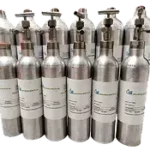
Overview
Combustible gas detection is one of the most operationally critical elements of any industrial or marine safety programme. Catalytic bead and infrared LEL sensors are the workhorses of flammable gas monitoring — deployed in everything from portable personal monitors to fixed-point detection systems across oil and gas, petrochemical, marine, and manufacturing environments. But like every sensor technology, LEL detectors drift over time. Catalytic bead sensors in particular are susceptible to poisoning from silicone compounds, lead, and sulphur — and a poisoned sensor can read significantly lower than the actual gas concentration present, giving a false sense of safety in a genuinely dangerous atmosphere.
The HC – Hydrocarbon Methane 2.5% (50% LEL) Balance Air Calibration Gas Cylinder is a precision-blended methane-in-air span gas formulated specifically for span calibration and bump testing of combustible gas detectors set to measure in % LEL. At 2.5% volume methane — exactly 50% of methane’s lower explosive limit of 5% — this mixture places the calibration point at the mid-scale of the LEL measurement range, providing a rigorous and meaningful verification of sensor response at a concentration that directly corresponds to a standard alarm threshold in most combustible gas detection applications.
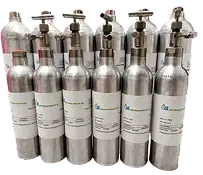
Available in five C10 cylinder sizes — 34L, 58L, 103L, 110L, and 116 litres — this calibration gas gives HSE managers, calibration technicians, and procurement teams the flexibility to match supply volume to their programme requirements, from compact portable cylinders for field teams to high-capacity bench cylinders for large-fleet calibration operations. Methane is the universal reference gas for LEL sensor calibration — used as the standard calibration gas by the majority of combustible gas detector manufacturers — making this mixture the practical first choice for any LEL calibration programme.
Key Features
2.5% Vol Methane — Precisely 50% LEL Reference Concentration
Methane’s lower explosive limit is 5.0% by volume in air. At 2.5%, this calibration gas sits at exactly the midpoint of the LEL measurement range — commonly expressed as 50% LEL. This is the standard reference concentration recommended by the majority of portable and fixed LEL detector manufacturers for span calibration, and it is the concentration at which most detectors are specified to trigger their first-stage warning alarm. Calibrating at 50% LEL gives the most practically relevant verification of detector performance: confirming that the instrument responds accurately at the alarm threshold where the first worker action — investigation or precautionary withdrawal — is triggered.
Balance Air Formulation — Accurate Catalytic Bead and IR Sensor Response
The balance gas is atmospheric air — providing the oxygen-rich background that catalytic bead LEL sensors require to function. Catalytic bead sensors operate through the oxidation of combustible gas at a heated pellistor element, and this oxidation reaction requires oxygen to proceed. A nitrogen-balanced methane mixture would suppress or eliminate the catalytic oxidation response, producing a calibration result that does not accurately represent how the sensor will respond in a real atmospheric environment. The balance-air formulation in this mixture ensures the calibration atmosphere is chemically representative of the field conditions in which the detector operates.
Methane as the Universal LEL Calibration Reference Gas
Methane (CH4) is the recognised standard reference gas for LEL sensor calibration across the gas detection industry. Most combustible gas detector manufacturers specify methane as the calibration gas for their LEL sensors — regardless of the target gas the detector is deployed to monitor — because methane produces a well-characterised, consistent, and reproducible sensor response. Using methane as the calibration reference gas allows a single cylinder specification to cover LEL sensor calibration across detectors used to monitor methane, LPG, hydrogen, solvent vapours, and other combustible gases, simplifying the calibration gas inventory for mixed-application detection programmes.
Five Cylinder Sizes — 34L to 116L in C10 Format
The calibration gas is available in C10 cylinders across five volume options: 34L, 58L, 103L, 110L, and 116 litres. The 34L and 58L cylinders are suited for portable use — practical for confined space entry teams and field maintenance crews who need to carry calibration gas to the point of use on site. The larger 103L to 116L cylinders are the appropriate choice for fixed calibration benches, gas detection instrument service workshops, and high-frequency programmes servicing large portable detector fleets, where the higher volume reduces cylinder changeover frequency and the associated procurement and handling activity.
Precision-Blended — Certified Concentration Accuracy
LEL sensor calibration accuracy is directly dependent on the accuracy of the calibration gas concentration. A cylinder nominally labelled 2.5% methane that is actually 2.1% or 2.9% will produce a calibrated detector that reads systematically low or high — a significant error when the detector’s first alarm threshold is set at 10% LEL and the second alarm at 25% LEL. This mixture is produced by precision gravimetric blending to certified concentration tolerances, with each cylinder accompanied by documentation confirming the actual methane concentration and its variance from the stated value — giving calibration technicians and quality managers the confidence that the reference gas they are using is accurate.
Technical Specifications
Gas Type: Methane (CH4) — Hydrocarbon
Concentration: 2.5% Vol (50% LEL)
LEL Reference: Methane LEL = 5.0% Vol
Balance Gas: Air
Cylinder Format: C10
Available Cylinder Sizes: 34L / 58L / 103L / 110L / 116 Litres
Mixture Type: Span Gas (Single Component)
Application: Span Calibration, Bump Testing, LEL Sensor Verification
Compatible Sensors: Catalytic Bead (Pellistor) LEL Sensors, Infrared (IR) LEL Sensors
Product Category: Span Gas and Regulator
Benefits
Catches sensor poisoning before it becomes a safety incident. Catalytic bead LEL sensors can be progressively poisoned by silicone compounds, lead, and sulphur without showing any visible fault indication. A poisoned sensor can read 30–50% of the true gas concentration — meaning it may not alarm until the actual concentration is already well above the alarm threshold. Regular bump testing and span calibration with a certified 2.5% methane balance air reference gas is the only reliable method of detecting sensitivity loss before a worker is exposed in an atmosphere the detector has failed to alarm on.
Confirms alarm threshold accuracy at the concentration that matters. Calibrating at 50% LEL directly verifies that the detector’s first alarm threshold — typically set between 10% and 25% LEL — is backed by a sensor that is responding accurately in the mid-range of its measurement span. A detector calibrated only at a low concentration may be accurate near zero but drift significantly at higher concentrations where alarm decisions are actually made.
Simplifies calibration gas inventory across mixed combustible gas programmes. Because methane is the universal LEL calibration reference gas accepted by the majority of detector manufacturers, a single 2.5% methane balance air specification covers LEL sensor calibration across detectors deployed for multiple target gases — methane, propane, butane, hydrogen, and solvent vapours. For procurement teams managing calibration gas supply for a mixed application detector fleet, a single gas SKU covering all LEL sensors is significantly more manageable than multiple gas-specific calibration mixtures.
Supports regulatory compliance in flammable gas monitoring programmes. Regulatory frameworks governing explosive atmosphere monitoring — including ATEX-related safe work procedures, OSHA 29 CFR 1910.146 confined space entry requirements, and equivalent national regulations — require that gas detection instruments are maintained in functional and calibrated condition. Regular span calibration with a certified reference gas provides the documentary evidence of instrument performance required to demonstrate compliance with these frameworks during inspections and audits.
Right-sized cylinder options reduce cost per calibration event. Matching the cylinder volume to your calibration frequency prevents paying for gas that will expire before it is used. The five available C10 cylinder sizes give procurement teams the granularity to optimise calibration gas spend — using smaller cylinders for low-frequency or portable programmes and larger volumes for high-consumption calibration stations — without compromising on the purity or concentration accuracy of the reference gas.
Who It’s For
The HSE Officer Running a Confined Space Entry Programme in a Petrochemical or Gas Processing Facility
Your team enters vessels, columns, tanks, and pipe trenches on a regular basis — environments where residual hydrocarbons, purge gas breakthrough, or process leaks can create flammable atmospheres without warning. Your confined space entry procedure requires a bump test of every personal multi-gas monitor’s LEL sensor before each entry, and a full span calibration on a defined schedule. You need a methane balance air calibration gas in a cylinder size that your team can carry to the work site, with a concentration that gives a genuine verification of LEL sensor response at your instrument’s first alarm threshold — not just a trace-level confirmation that the sensor is alive.
The Gas Detection Instrument Service Technician
You service and calibrate portable combustible gas detectors for industrial clients across multiple sites and industries. Your calibration bench handles instruments from multiple manufacturers — all of which specify methane as the reference gas for LEL sensor calibration. You need a consistent, certified 2.5% methane balance air supply in a cylinder size that gives your bench adequate capacity for a full working day of calibrations without a cylinder change, with concentration documentation that supports the calibration certificates you issue to clients. The 103L or 116L cylinder is your bench standard; the certified concentration accuracy is the foundation of your calibration certificate credibility.
The Offshore Platform Safety Coordinator
Your installation operates in a hydrocarbon-rich environment where flammable gas is both a process commodity and a persistent hazard. Every worker on the platform who enters a classified area or performs hot work carries a personal multi-gas monitor with an LEL sensor. Your calibration programme requires regular bump testing and span calibration of a large portable detector fleet, coordinated around crew rotations and platform operational schedules. You need a calibration gas supply — available in cylinder sizes suited to platform gas store capacity — that can be confirmed for replenishment through your Singapore supply chain contact before each crew rotation, with gas certificates that satisfy your offshore safety management system documentation requirements.
Possible Applications
- Confined space entry gas monitoring — Bump testing and span calibration of portable LEL sensors before entry into tanks, vessels, pipe trenches, and enclosed process infrastructure where flammable gas accumulation is a recognised hazard
- Oil and gas production facilities — Calibration of fixed and portable LEL detectors deployed across wellhead areas, gas processing trains, and compressor stations where hydrocarbon leak detection is a continuous operational requirement
- Marine engine rooms and pump rooms — Span calibration of portable LEL monitors used for pre-entry atmosphere testing and continuous monitoring in machinery spaces where fuel and lubricant vapours can accumulate
- LNG and LPG terminal operations — Calibration of combustible gas detectors used in bunkering operations, storage tank areas, and loading arm environments where methane, propane, and butane are the primary flammable gas hazards
- Chemical and solvent processing plants — LEL sensor verification for detectors deployed in areas where flammable solvent vapours and process gases create continuous explosive atmosphere risk
- Gas detection instrument service workshops — Bench calibration reference gas for service technicians calibrating and certifying portable combustible gas detectors across multiple client industries
- Mining and underground operations — Calibration of combustible gas monitors used in underground environments where methane liberation from coal seams or other geological sources creates ongoing flammable gas hazards
- Utilities and pipeline maintenance — Bump testing of LEL detectors carried by field crews working on natural gas distribution networks, meter stations, and pipeline maintenance where methane leak detection is a daily operational task
Trust and Certifications
Methane — Industry-Standard LEL Calibration Reference Gas
Methane is the gas detection industry’s standard reference gas for LEL sensor calibration, specified by the majority of portable and fixed combustible gas detector manufacturers as the calibration gas for catalytic bead and infrared LEL sensors. Its selection as the universal reference gas is based on its well-characterised electrochemical properties, consistent availability at certified purity levels, and the stable, reproducible sensor response it produces across the LEL sensor types commercially deployed in industrial safety programmes.
Certified Concentration — Traceable Calibration Reference
Each cylinder is produced to certified concentration tolerances using precision gravimetric blending, and is accompanied by a certificate of analysis documenting the verified methane concentration, tolerance range, and preparation standard. For calibration programmes operating under quality management frameworks — including ISO 17025-accredited calibration laboratories, ATEX-related safe work procedures, ISM Code safety management systems, and OSHA-regulated confined space entry programmes — the certificate of analysis provides the traceable reference documentation required to support calibration record integrity and regulatory audit readiness.
Relevant to ATEX, OSHA, and Flammable Atmosphere Regulations
Regulatory requirements governing work in explosive atmospheres — including the ATEX Directives in Europe, OSHA 29 CFR 1910.146 in the United States, and equivalent national regulations — require employers to verify that gas detection instruments used in flammable gas hazard assessment are functioning accurately. Regular span calibration with a certified methane reference gas is the recognised method of demonstrating LEL sensor accuracy, supporting compliance documentation for regulatory inspections and incident investigations where detector calibration records may be examined.
Supplied by Alright Engineering Solutions
The HC – Hydrocarbon Methane 2.5% (50% LEL) Balance Air Calibration Gas Cylinder is supplied through Alright Engineering Solutions Pte. Ltd., an authorised distributor of portable and fixed gas detection equipment, calibration gases, and span gas regulators in Singapore. Our team supports industrial, marine, and offshore clients with calibration gas sourcing, compatible regulator supply, and gas detection programme advisory across Singapore and the regional market.
Accessories and Variants
Cylinder Size Variants
34 Litre (C10) — Compact portable cylinder for field teams, confined space entry operations, and low-frequency single-site programmes
58 Litre (C10) — Mid-size cylinder for regular site calibration and small instrument fleets
103 Litre (C10) — Large capacity cylinder for calibration benches and medium-to-high frequency programmes
110 Litre (C10) — High-capacity option for programmes servicing large portable detector fleets
116 Litre (C10) — Maximum C10 capacity for calibration laboratories, instrument service workshops, and high-consumption industrial facilities
Compatible Span Gas Regulators
A correctly specified C10 regulator is required to connect the calibration cylinder to your detector or calibration adapter at the appropriate flow rate. Alright Engineering Solutions supplies compatible span gas regulators for the C10 cylinder format in flow rate configurations suited for portable bump testing and bench calibration applications. For methane calibration gas, regulator materials must be compatible with flammable gas service — our team can confirm the appropriate regulator specification for your cylinder and instrument combination.
Related Calibration Gas Products
CO 50 PPM Balance Air — Carbon monoxide span gas for CO sensor calibration in multi-gas monitors
CO 100 PPM Balance Air — Higher concentration CO span gas for upper working range calibration
H₂S Calibration Gas (Balance Air) — Hydrogen sulphide span gas for H₂S sensor verification
N2 Pure Nitrogen 99.995% Vol — Grade 4.5 nitrogen zero gas for sensor zeroing prior to span calibration
Multi-Gas Calibration Mixtures (CH4 / CO / H₂S / O₂) — Combination span gas for calibrating multi-gas personal monitors in a single bump test cycle
Get in Touch
If you are sourcing HC – Hydrocarbon Methane 2.5% (50% LEL) Balance Air calibration gas for your LEL detector calibration programme — whether for confined space entry operations, fixed system maintenance, offshore platform supply, or instrument service workshop use — contact Alright Engineering Solutions to confirm cylinder size availability and request a formal quotation.
Our team can advise on compatible regulators, zero gas supply, and related calibration gas mixtures suited to your detector fleet and programme requirements.
📍 3791 Jalan Bukit Merah #06-01, E-Centre @ Redhill, Singapore 159471