Cart (
Overview
Standard structural firefighting suits — even well-constructed aramid or Nomex garments — are designed to protect against the thermal exposures encountered in compartment and cargo fires: direct flame contact, hot gases, and moderate radiant heat from burning materials. But there are firefighting and emergency response scenarios where the radiant heat intensity exceeds what structural suits are designed to handle: fuel storage tank fires, aircraft rescue and firefighting, petrochemical plant flare incidents, and proximity work near high-temperature industrial equipment or open fire fronts. In these environments, the primary thermal threat is not flame contact but sustained high-intensity radiant heat — and the protective response to radiant heat requires a different material approach from standard structural firefighting fabrics.
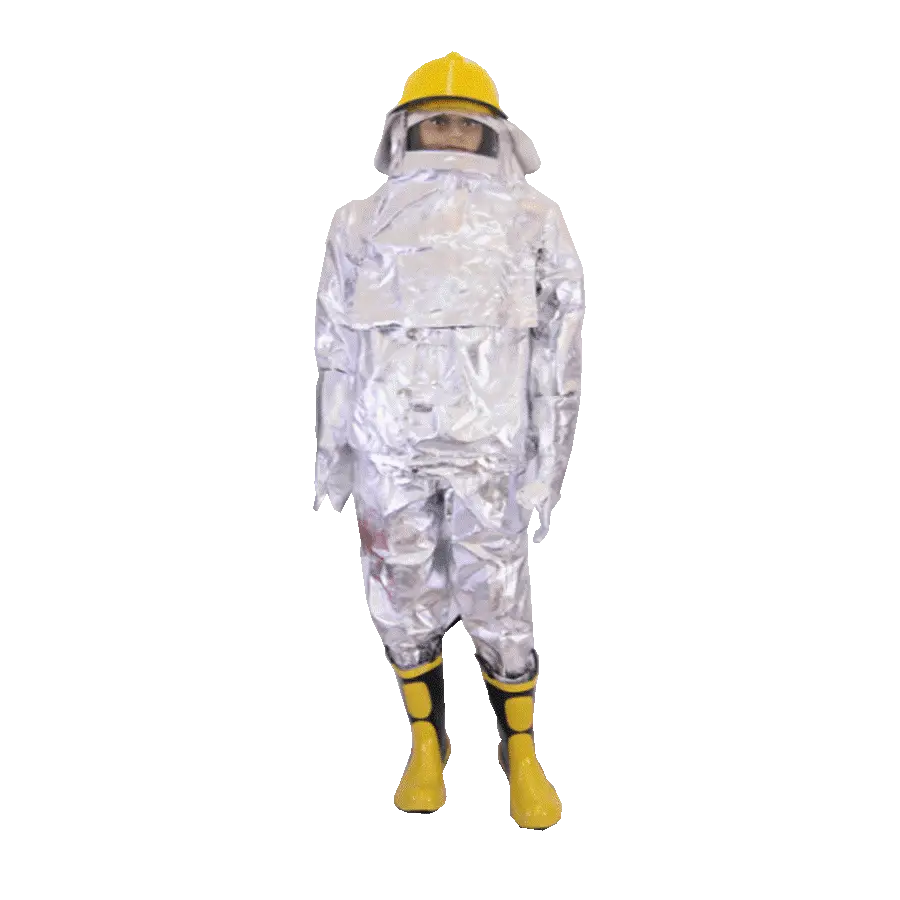
The Fire Protection Suit (Aluminized Type, Model DTXF-93-1) is an aluminized proximity fire protection suit constructed with aluminium foil outer facing, rated for heat radiation resistance up to 10kW/m². The aluminized outer surface reflects the majority of incident radiant heat away from the suit rather than absorbing it — the fundamental physical mechanism that makes aluminized proximity suits the correct PPE choice for high-radiant-heat firefighting environments where structural suits would transfer dangerous levels of heat to the wearer within the required operating time. The suit is asbestos-free, waterproof with anti-water permeability pressure greater than 4000 Pa, fold-proof for reliable donning and storage, and rated for tearing strength of ≥32N throughout.
The defining differentiator of an aluminized proximity suit over structural firefighting suits in high-radiant-heat environments is the physics of heat reflection. A dark or orange outer fabric absorbs radiant heat and transfers a portion of it inward — even with insulation layers beneath, the thermal load on the wearer increases rapidly in high-intensity radiant heat environments. An aluminized surface with high reflectivity reflects the majority of incident radiant energy away from the suit before it can be absorbed, dramatically reducing the rate at which heat reaches the insulation layers and the wearer’s body. The DTXF-93-1’s 10kW/m² heat radiation resistance rating quantifies the level of radiant heat the suit is designed to withstand — a practical specification reference for HSE managers and procurement teams matching suit specification to the expected radiant heat exposure levels of their response scenarios.
Key Features
Aluminized Aluminium Foil Outer Surface — Radiant Heat Reflection
The outer surface of the DTXF-93-1 is constructed with aluminium foil facing — the reflective silver outer layer that gives the suit its characteristic appearance and its primary protective mechanism against radiant heat. Aluminium’s high emissivity makes it an effective radiant heat reflector: a significant proportion of the incident radiant energy impinging on the suit surface is reflected away rather than absorbed, reducing the thermal load on the layers beneath and the rate of heat transfer to the wearer. In proximity firefighting and high-radiant-heat industrial emergency response, this reflection mechanism is what makes aluminized suits viable PPE at heat intensity levels that would overwhelm structural suits.
10kW/m² Heat Radiation Resistance Rating
The DTXF-93-1 is rated for heat radiation resistance up to 10kW/m² — the radiant heat flux level the suit is designed to withstand for the specified protective period. For HSE managers and safety engineers specifying proximity suit requirements, the kW/m² rating provides a direct reference point for matching suit specification to the anticipated radiant heat levels of the response scenarios for which the suit will be used. Fuel storage tank fires, aircraft fuel fires, and petrochemical process area incidents can generate sustained radiant heat fluxes in the range that the DTXF-93-1 is rated to handle — making this specification parameter the key selection criterion for proximity suit procurement in these environments.
Asbestos-Free Construction
The DTXF-93-1 is explicitly asbestos-free in its construction. Historically, some proximity and high-temperature protective suits used asbestos insulation for its heat resistance properties — a material that is now banned or severely restricted in most jurisdictions due to its carcinogenicity. For procurement teams and HSE managers in organisations operating under modern occupational health and safety regulations, asbestos-free confirmation is a compliance requirement for new PPE procurement, not merely a preference. The DTXF-93-1’s asbestos-free construction provides the necessary assurance for compliant procurement documentation and regulatory reporting.
Waterproof — Anti-Water Permeability Pressure >4000 Pa
The suit’s waterproof construction is rated at anti-water permeability pressure greater than 4000 Pa — confirming liquid water resistance under the hydrostatic pressure conditions encountered when the suit is exposed to water from firefighting hose streams, foam deluge systems, and water curtain protection during proximity firefighting operations. At 4000 Pa hydrostatic pressure resistance, the suit outer layer maintains water exclusion under sustained hose stream and spray conditions, preventing water penetration that would compromise the suit’s thermal insulation performance and increase the thermal load on the wearer from steam generation within the suit layers.
Tearing Strength ≥32N
The suit fabric maintains a tearing strength of ≥32N across the aluminized outer material. In proximity firefighting and industrial emergency response operations, suits are exposed to physical stress from movement through debris, contact with structural edges, and the handling demands of donning and doffing under time pressure. A minimum tearing strength specification ensures the aluminized outer facing does not tear under these operational physical stresses — maintaining the reflective surface integrity that is the primary protective mechanism of the suit. A torn or damaged aluminized outer surface compromises the reflective heat protection at the location of the damage.
Fold-Proof Construction — Reliable Storage and Donning
The DTXF-93-1 is fold-proof — the aluminized outer material does not develop permanent creases, cracks, or delamination damage from folding during storage and repeated donning and doffing cycles. Aluminized suits that are not fold-proof develop cracking in the foil layer at fold lines over time — progressively degrading the reflective surface and the physical integrity of the outer layer at the most-stressed areas of the garment. Fold-proof construction maintains the suit in serviceable condition through its full service life of storage, deployment, and use without the foil cracking that makes non-fold-proof aluminized suits unreliable after repeated storage cycles.
Full-Body Coverage — Suit, Hood, and Boot Cover Integration
The DTXF-93-1 provides full-body aluminized coverage including the suit body and hood — as visible in the product configuration with integrated head and face coverage over the safety helmet. Full-body aluminized coverage ensures there are no unprotected areas of the wearer’s body exposed to radiant heat during proximity operations, maintaining consistent reflective protection across the entire ensemble rather than leaving the head and neck areas in a lower-specification structural suit hood while the body is in a proximity suit.
Technical Specifications
Product Name: Fire Protection Suit (Aluminized Type)
Model: DTXF-93-1
Material: Aluminium Foil (aluminized fireman protective suit)
Color: Silver
Use: Flame Proof and Heat Protection (Proximity / High Radiant Heat)
Heat Radiation Resistance: 10kW/m²
Waterproof Properties: Anti-water permeability pressure >4000 Pa
Tearing Strength: ≥32N
Asbestos: Free
Fold Resistance: Fold-proof
Application: Proximity Firefighting, High-Radiant-Heat Industrial Emergency Response, Aircraft Rescue, Petrochemical Incident Response
Benefits
Extends safe operating time in high-radiant-heat environments beyond what structural suits permit. By reflecting rather than absorbing the majority of incident radiant heat, the aluminized outer surface of the DTXF-93-1 dramatically slows the rate at which heat reaches the insulation layers and the wearer’s body compared to dark or orange structural suit fabrics under the same radiant heat exposure. This translates directly to longer safe operating time in high-radiant-heat proximity scenarios — more time to complete rescue operations, valve closures, or emergency response tasks before the wearer must withdraw due to heat stress.
Asbestos-free confirmation supports compliant modern PPE procurement. Organisations operating under EU REACH regulation, UK COSHH regulations, US OSHA asbestos standards, or equivalent national occupational health regulations require asbestos-free confirmation for new PPE procurement documentation. The DTXF-93-1’s explicit asbestos-free construction provides this confirmation, avoiding the regulatory and health liability exposure that procurement of asbestos-containing PPE would create.
Fold-proof construction reduces suit replacement frequency from storage degradation. Aluminized suits that develop foil cracking at fold lines during storage require replacement or repair before the foil damage compromises the suit’s reflective performance below its rated specification. Fold-proof construction eliminates this storage-degradation failure mode, maintaining the suit in rated serviceable condition through repeated storage cycles without the progressive foil damage that shortens the usable service life of non-fold-proof aluminized suits.
4000 Pa waterproof rating maintains thermal performance under hose stream and foam application. Water penetration into a proximity suit’s insulation layers converts to steam under the thermal conditions of a proximity firefighting operation — generating internal steam that dramatically increases the rate of heat transfer to the wearer’s skin. The 4000 Pa waterproof rating confirms the suit maintains water exclusion under realistic firefighting hose pressure conditions, protecting the insulation layer’s thermal resistance performance and preventing the steam injury mechanism during water-intensive proximity operations.
Defined kW/m² specification supports informed procurement matching suit to scenario. The 10kW/m² heat radiation resistance rating gives HSE engineers and procurement managers a quantified specification to match against the radiant heat levels expected in their specific emergency response scenarios. This is more useful for specification-based procurement decisions than general claims of “high heat resistance” — it provides a direct reference point for comparing suit specification against the thermal hazard assessment of the intended application.
Who It’s For
The Fire Response Team Leader at a Petrochemical Plant or Fuel Storage Terminal
You manage the on-site fire response team at a refinery, petrochemical plant, or fuel storage terminal. Your team’s emergency response scenarios include flammable liquid pool fires, storage tank fires, and process equipment fires where sustained high-intensity radiant heat from burning hydrocarbon fuel is the primary thermal hazard — not just the flame contact and hot gas exposure that structural suits are designed for. You need proximity suits that are rated for the radiant heat levels your team will encounter, asbestos-free for regulatory compliance, and fold-proof for reliable storage and deployment from your fire response equipment stations. The DTXF-93-1’s 10kW/m² rating, asbestos-free construction, and fold-proof design address those requirements directly.
The ARFF (Aircraft Rescue and Firefighting) Team Equipment Manager
You equip an aircraft rescue and firefighting team at a commercial airport, military airfield, or offshore helipad. Aircraft fuel fires generate extremely high radiant heat intensities in the immediate fire area — structural firefighting suits provide inadequate protection for the proximity operations required to access aircraft and conduct passenger rescue in a burning fuel fire scenario. Your team needs aluminized proximity suits with documented radiant heat ratings, full-body coverage, and waterproof construction for the foam and water application that accompanies aircraft fire response. The DTXF-93-1 is designed for exactly this class of high-radiant-heat proximity emergency response.
The Vessel Safety Officer on a Tanker or LNG Carrier
Your vessel carries flammable liquid cargo — petroleum products, crude oil, or LNG — and your fire response equipment inventory needs to cover the scenario of a cargo tank fire or major cargo area fire where the radiant heat from burning cargo exceeds what standard structural firefighting suits can safely handle. Proximity suits are not required SOLAS equipment for all vessels, but for tanker operators and vessel operators with elevated radiant heat fire scenarios in their safety management system fire risk assessments, having aluminized proximity suits available as supplementary fire response PPE provides a response capability for high-intensity fire scenarios that structural suits cannot cover.
Possible Applications
- Petroleum storage tank fire response — floating roof tank fires, bund fires — Proximity firefighting operations at bulk liquid fuel storage terminals where burning petroleum products generate sustained high-intensity radiant heat requiring aluminized suit protection for approach and suppression operations.
- Aircraft rescue and firefighting (ARFF) — airport and helipad emergency response — Proximity operations in aircraft fuel fire scenarios at commercial airports, military airfields, and offshore platform helipads where aviation fuel combustion generates extreme radiant heat levels requiring full aluminized protective coverage.
- Petrochemical plant process fire and flare incident response — Emergency response to process area fires, flare system incidents, and hydrocarbon release fires at refineries and petrochemical complexes where sustained radiant heat from burning process fluids creates proximity suit requirement conditions.
- LNG terminal fire response — LNG pool fire and jet fire proximity operations — Aluminized suit use for emergency response teams at LNG import/export terminals where LNG fire scenarios generate high radiant heat intensity requiring proximity protection beyond structural suit capability.
- Marine tanker cargo area fire response — proximity operations near burning cargo — Supplementary proximity suit use for shipboard firefighting teams on tankers responding to cargo area fires where radiant heat from burning petroleum cargo exceeds structural suit protection thresholds.
- High-temperature industrial emergency response — steel mills, foundries, smelters — Proximity suit use for emergency response personnel working near open furnaces, molten metal, and high-temperature industrial processes where sustained radiant heat exposure requires aluminized reflective protection.
- Offshore platform fire and gas release emergency response — Proximity protection for offshore installation emergency response teams operating in the vicinity of high-intensity process fires and hydrocarbon release fires on oil and gas production platforms.
- Industrial hot work and furnace maintenance emergency standby — Proximity suit standby for emergency response personnel providing fire watch during high-temperature industrial maintenance operations near open furnaces, kilns, and high-temperature process equipment.
Trust & Certifications
10kW/m² Heat Radiation Resistance — Quantified Proximity Suit Performance Standard
The DTXF-93-1’s 10kW/m² heat radiation resistance specification provides a quantified thermal performance reference consistent with proximity firefighting suit testing standards. ISO 15538 (protective clothing for firefighters using reflecting materials) and EN 1486 (test methods for heat and flame protective clothing) both use radiant heat flux (kW/m²) as the primary performance measurement parameter for proximity and aluminized firefighting suits. A documented kW/m² rating gives procurement teams and HSE engineers the technical reference needed to match suit specification against the radiant heat flux levels in their emergency response scenario thermal hazard assessments.
Asbestos-Free — Regulatory Compliance for Modern PPE Procurement
Asbestos use in PPE and industrial products is banned or severely restricted under EU Regulation (EC) No 1907/2006 (REACH), UK Control of Asbestos Regulations 2012, US EPA and OSHA asbestos regulations, and equivalent national frameworks in most major jurisdictions. The DTXF-93-1’s asbestos-free construction confirmation provides the regulatory compliance documentation required for new PPE procurement under these frameworks — protecting purchasing organisations from the occupational health liability and regulatory non-compliance exposure that procurement of asbestos-containing materials would create.
Anti-Water Permeability Standard — Waterproof Performance Reference
The 4000 Pa anti-water permeability pressure specification provides a hydrostatic pressure resistance reference for the suit’s waterproof performance — consistent with the waterproof testing methodology used in EN 343 (protective clothing against rain) and related protective clothing standards. For procurement teams specifying proximity suits for environments involving foam and water application during fire response, a documented hydrostatic pressure resistance rating is more useful than a general waterproof claim for assessing whether the suit will maintain water exclusion under the pressure conditions of firefighting hose and spray application.
Supplied by Alright Engineering Solutions
The Fire Protection Suit (Aluminized Type, DTXF-93-1) is available through Alright Engineering Solutions Pte. Ltd., an authorised distributor of marine safety equipment, personal protective equipment, and fire response products in Singapore. Alright Engineering Solutions supports vessel operators, offshore operators, industrial facility safety teams, and maritime safety equipment procurement managers across the Singapore and regional market with PPE supply, technical product enquiries, and compliance documentation support.
Accessories & Variants
Aluminized Hood and Face Shield
The full-body DTXF-93-1 configuration includes head and face coverage over the safety helmet — ensuring aluminized reflective protection extends across the entire body including the head, face, and neck areas that are most directly exposed to radiant heat during proximity approach operations. Confirm with Alright Engineering Solutions whether the head coverage is integrated with the suit or supplied as a separate hood component for your required configuration.
Aluminized Gloves and Boot Covers
Aluminized gloves and boot covers extend the proximity suit’s reflective protection to the hands, wrists, feet, and ankles — completing the full-body aluminized ensemble. In a proximity firefighting operation, the extremities are often the closest body parts to the radiant heat source during approach and rescue operations, making aluminized hand and foot coverage a critical component of the complete proximity protective ensemble alongside the suit.
Structural Firefighting Suits — Aramid and Nomex Options
Firefighting Suit (Nomex) — 100% Nomex structural firefighting suit for standard compartment and cargo firefighting operations where radiant heat intensity is within structural suit protection parameters
Firefighting Suit Model No. 97 (Aramid Lattice) — Multi-layer aramid structural firefighting suit with breathable waterproof layer and heat insulation layer for general marine and industrial firefighting applications
Related Safety Equipment
Self-Contained Breathing Apparatus (SCBA) — Respiratory protection required alongside proximity suit for interior proximity firefighting operations in smoke and toxic atmosphere environments
GX-8000 Sample Draw Multi Gas Monitor — Pre-entry atmosphere testing before emergency response teams enter fire-affected or gas-release areas
RX-8700 Portable Gas Detector — Post-incident atmosphere monitoring and re-entry safety assessment
Get in Touch
If you need the Aluminized Fire Protection Suit (DTXF-93-1) for proximity firefighting operations at a petroleum terminal, petrochemical facility, offshore installation, or marine vessel — whether for immediate procurement, emergency response team outfitting, or guidance on matching suit specification to your thermal hazard assessment — contact Alright Engineering Solutions to confirm availability and request a formal quotation.
Our team can advise on complete proximity suit ensemble configuration, comparison with structural firefighting suit options, and documentation requirements for your hazardous area PPE compliance programme.
📍 3791 Jalan Bukit Merah #06-01, E-Centre @ Redhill, Singapore 159471