Cart (
Overview
Field gas monitoring rarely happens in one type of environment. A safety officer might carry out an open-area atmospheric survey in the morning and a pre-entry confined space check in the afternoon — two tasks that call for different detection methods. Natural diffusion works well when the worker is present at the point of measurement and the gas has time to reach the sensor. Pump-assisted sampling is necessary when the space cannot be entered yet, when the detection point is out of reach, or when faster response at a distance is required. Most portable multi-gas detectors force a choice between the two. The BH-4M does not.
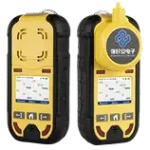
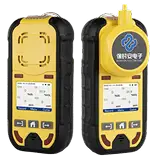
The BH-4M portable multi gas detector from Bosean supports both natural diffusion and micro vacuum pump-assisted sampling, with manual switching between the two modes at any time. This makes it one of the most practically flexible four-gas instruments available in its class — a single device that handles the full range of industrial gas monitoring tasks without requiring a second instrument or a pump attachment that has to be separately sourced, stored, and maintained.
Manufactured by Bosean Electronic Technology Co., Ltd. — a specialist gas detection manufacturer serving industrial, petrochemical, environmental, and safety markets internationally — and supplied by Alright Engineering Solutions Pte Ltd, Singapore-based authorised distributors of personal and portable gas detection equipment for the maritime and industrial sectors across the Asia-Pacific region, the BH-4M is designed around the practical realities of field safety work. The new GUI interface, Type-C charging, multi-point calibration support, and TWA/STEL alarm modes are all features that reflect how professional HSE teams actually use gas detection equipment day to day.
Key Features
1. Dual Sampling — Manual Switch Between Pump and Natural Diffusion
The BH-4M’s defining capability is its ability to operate in either natural diffusion or micro vacuum pump sampling mode, with the operator switching between them manually as the task demands. In diffusion mode — with the pump module removed — the device is compact, lightweight (335g), and draws gas passively from the surrounding atmosphere, making it ideal for personal clip-on monitoring during routine walk-arounds and area surveys. In pump mode, the attached micro vacuum pump actively draws a gas sample through a hose from a remote point — allowing the atmosphere inside a tank, vessel, or confined space to be assessed from the outside before entry. The pump dimension is slightly larger (160×89×7mm vs 150×89×55mm for diffusion) and the weight increases to approximately 372.5g, but the operational capability expands significantly. The pump flow is stable, low-noise, and long-life, with a sampling distance of up to 20 metres.
2. Simultaneous Detection of Up to 4 Gases — Configurable Combinations
The BH-4M can detect between one and four gas types simultaneously, with the standard configuration covering the four most common industrial hazards: hydrogen sulphide (H2S), combustible gases (LEL/EX), oxygen (O2), and carbon monoxide (CO). These four gases represent the baseline monitoring requirement for confined space entry under most international safety frameworks, making the BH-4M directly applicable to permit-to-work procedures without additional instrumentation. The device integrates multiple detection principles — electrochemical, catalytic, semiconductor, thermal conductivity, and optical — allowing a wide range of gas combinations to be specified at time of order to suit the buyer’s specific application and site hazards.
3. TWA and STEL Alarm Modes with Four-Channel Alert System
Beyond standard Low and High alarm setpoints, the BH-4M supports TWA (Time-Weighted Average) and STEL (Short-Term Exposure Limit) alarm modes — bringing the device’s alarm logic into direct alignment with how occupational exposure limits are actually defined and enforced under OSHA, UK EH40, Singapore WSH regulations, and equivalent Asia-Pacific frameworks. When any alarm threshold is breached, the device activates all four channels simultaneously: sound alarm, LED light flashing, vibration, and on-screen display notification. Alarm setpoints are user-adjustable for each gas channel, and the combination of TWA monitoring and real-time peak alarms means the BH-4M tracks both the pattern of exposure over a shift and the instantaneous concentration at any point.
4. 2.0-Inch High-Definition Colour Screen — New GUI Interface
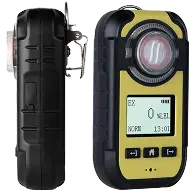
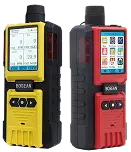
The BH-4M features a 2.0-inch high-definition colour display with a 120-degree wide viewing angle, presenting all monitored gas concentrations, alarm status, sampling mode indicator, battery level, and connectivity information on a single screen. The new GUI interface is designed for clarity at a glance — a worker should not need to navigate menus to understand what the device is currently reading and whether it is in alarm. Three-button operation keeps the device intuitive in the field, including when wearing gloves or working in conditions that make precise finger control difficult. The interface also supports gas concentration curve display for trend analysis within a monitoring session.
5. Type-C USB Charging with 2800mAh Lithium Battery
The BH-4M charges via a Type-C USB interface — the current universal standard across most modern electronics — with a charging time of under 5 hours and a rated working time of 8 hours or more under normal operating conditions. Type-C charging is a practical advantage for field teams who charge equipment from laptops, power banks, vehicle chargers, and shared charging stations: no proprietary cable is required, and the cable is the same as the one used for most other modern devices in the team’s kit. The 2800mAh lithium battery is sized for a standard working shift and the relatively lower power demands of the BH-4M’s sensor set compared with fully connected 4G devices.
6. Multi-Point Calibration with USB Data Transfer
The BH-4M supports multi-point calibration for each sensor channel — a more accurate calibration method than single-point calibration for sensors where response linearity varies across the detection range. This matters practically for sensors like LEL where the relationship between concentration and sensor output is not perfectly linear, and where a single-point calibration at one concentration may introduce meaningful error at others. Data transfer to a host computer is supported via USB connection, allowing alarm event logs and monitoring session data to be exported for compliance reporting, incident investigation, and HSE records without requiring wireless connectivity or cloud platform integration.
7. Waterproof, Dustproof, and Explosion-Proof Rugged Housing
The BH-4M’s outer casing uses high-strength engineering plastics combined with composite anti-slip rubber, providing a secure, comfortable grip in wet, oily, or contaminated hand conditions and meaningful resistance to impact from drops and knocks during active site work. The housing is rated waterproof, dustproof, and explosion-proof — suitable for deployment in petroleum, chemical, mining, and offshore environments where both physical working conditions and atmospheric hazards demand a device that maintains reliable operation under sustained stress.
8. Sensor Life of 2 Years with Factory Calibration
Sensors are rated for a 2-year operational life under normal usage conditions, and the device is supplied factory calibrated — ready to switch on and use immediately upon delivery without requiring a calibration event before first use. This reduces the time-to-deployment for new units and simplifies the process for procurement teams and HSE managers who need to commission equipment quickly. When recalibration is due, the multi-point calibration function can be performed by trained operators in the field using appropriate calibration gas.
Technical Specifications
Model: BH-4M Portable Multi Gas Detector (Bosean — Supplied by Alright Engineering Solutions Pte Ltd)
Display: 2.0-inch HD colour LCD, 120° wide viewing angle, GUI interface
Dimensions: Pump type: 160×89×7mm / Natural diffusion type: 150×89×55mm
Weight: Pump type: approximately 372.5g / Natural diffusion type: 335g
Sampling Method: Natural diffusion and micro vacuum pump type — manually switchable
Pumping Distance: Up to 20 metres
Gas Detection: 1 to 4 gas types simultaneously; default: H2S, LEL (EX), O2, CO
Battery: 2800mAh lithium battery; DC 3.7V
Charging Interface: Type-C USB
Charging Time: Under 5 hours
Working Time: ≥8 hours
Response Time: Pump type T90 ≤30s / Natural diffusion T90 ≤60s
Operating Temperature: -10°C to +55°C
Operating Humidity: ≤95% RH (no condensation)
Alarm Types: Sound, LED light, vibration, on-screen display; TWA and STEL alarm modes; adjustable Low/High setpoints per gas channel
Wireless Connectivity: None (USB data transfer to PC)
Data Transfer: USB connection to host computer for data viewing and export
Sensor Life: 2 years (dependent on specific usage environment)
Calibration: Multi-point calibration supported; factory calibrated on delivery
Safety / Housing: Waterproof, dustproof, explosion-proof; high-strength engineering plastics with composite anti-slip rubber
Benefits
The practical impact of the BH-4M’s dual sampling design is straightforward: one instrument covers tasks that would otherwise require two. A field engineer arriving at a confined space entry point can use the BH-4M in pump mode to sample the atmosphere inside the space before anyone enters — hose fed down the access point, readings taken from a safe distance. Once pre-entry conditions are confirmed and entry is permitted, the pump can be removed and the same device worn as a clip-on personal monitor in diffusion mode for the duration of the work inside the space. This eliminates the need for a separate pump detector alongside a personal diffusion monitor, reduces equipment costs, and simplifies the pre-entry procedure by using a single familiar instrument throughout.
From a regulatory compliance perspective, the TWA and STEL alarm modes mean the BH-4M actively monitors the exposure metrics that occupational health regulations actually measure — not just instantaneous peaks. A gas concentration that spikes briefly and subsides may not trigger a standard High alarm but may still accumulate into a TWA exceedance over a full shift. The BH-4M tracks both dimensions simultaneously, providing the data that HSE managers need to demonstrate that workers’ cumulative exposure has remained within regulatory limits.
The Type-C charging standard removes a category of equipment management friction that is often overlooked: proprietary cable dependency. When a charging cable for a proprietary-port gas detector is lost, damaged, or simply not available at a remote site, the device becomes unusable until the correct cable is sourced. Type-C cables are universally available and interchangeable with the majority of other devices a field team carries. Combined with the under-5-hour charge time and 8-hour working time, the BH-4M fits into a standard overnight charging routine without any special logistics.
For HSE teams managing equipment procurement budgets, the BH-4M’s dual functionality means a smaller number of instrument types need to be purchased, stored, calibrated, and maintained. Standardising on a single model for both diffusion monitoring and pump-assisted pre-entry checks simplifies training, reduces spare parts complexity, and provides a consistent user experience across the team — all of which reduce the operational overhead of running a gas detection programme.
Who It’s For
Confined Space Entry Supervisors in Utilities and Construction: If your team regularly issues confined space entry permits for tasks like sewer inspection, manhole work, underground cable installation, or plant maintenance, the BH-4M’s pump mode gives you the tool to conduct the mandatory pre-entry atmospheric check without sending a worker into the space first. Switch to diffusion mode for the entrant to wear inside, and you have used one instrument to complete the full entry procedure from pre-entry assessment through to continuous in-space monitoring.
HSE Officers in Petroleum, Petrochemical, and Offshore Environments: In environments where tank entry, vessel inspection, and equipment maintenance are regular activities — and where H2S, LEL, and O2 monitoring are baseline safety requirements — the BH-4M provides a calibrated, configurable four-gas instrument that supports both the atmospheric testing phase and the personal protection phase of each high-risk task. The multi-point calibration capability means the device can be accurately maintained by a trained in-house calibration team without returning equipment to a service centre for every calibration event.
Field Safety Inspectors and Environmental Surveyors: For professionals conducting atmospheric surveys, industrial hygiene assessments, or gas hazard investigations across varied site conditions, the ability to switch between diffusion mode for open-area monitoring and pump mode for sampling from specific locations — drainage channels, duct openings, process enclosures — makes the BH-4M a genuinely versatile field instrument. The USB data export and alarm logging capability means monitoring session records are available for client reports and regulatory submissions without additional manual data handling.
Possible Applications
Confined Space Entry — Pre-Entry Atmospheric Testing: Pump-mode remote sampling through an access hose to confirm H2S, LEL, O2, and CO conditions are within safe limits before a permit to work is issued and workers enter the space.
Sewerage and Wastewater Treatment Operations: H2S and methane (LEL) monitoring during sewer inspection, pump station maintenance, and treatment plant operations where toxic and combustible gas accumulation in enclosed infrastructure is a daily hazard.
Oil and Gas — Tank and Vessel Inspection: Pre-entry sampling and in-space personal monitoring during tank cleaning, vessel inspection, and maintenance operations in refineries, storage facilities, and upstream production environments.
Marine and Offshore — Enclosed Space Entry: Cargo hold entry, ballast tank inspection, engine room surveys, and any enclosed vessel space where O2 deficiency, H2S, CO, or combustible gas accumulation must be assessed before entry is permitted under SOLAS and ISM Code requirements.
Mining and Underground Construction: Multi-gas monitoring for O2, CO, H2S, and methane (LEL) in underground mining drifts, tunnels, and excavations — with pump mode enabling sampling ahead of crew advance in unventilated headings.
Chemical and Pharmaceutical Manufacturing: Atmospheric monitoring during process vessel inspections, maintenance shutdowns, and reactor entry procedures where toxic and combustible gas releases are process hazards requiring documented pre-entry checks.
Fire Investigation and Emergency Response: Post-incident atmospheric survey in structures or industrial spaces with unknown gas conditions following fire, explosion, or chemical release — pump mode allows sampling from outside the immediate hazard zone.
Environmental and Industrial Hygiene Surveys: Area monitoring and personal exposure assessment across industrial sites, with TWA logging providing the cumulative exposure data required for COSHH and occupational health compliance reports.
Trust and Certifications
Waterproof, Dustproof, and Explosion-Proof Design: The BH-4M’s housing is rated waterproof, dustproof, and explosion-proof — confirming suitability for deployment in hazardous area environments where both physical conditions and atmospheric gas hazards are present. The explosion-proof design is an essential requirement for any portable gas detector used in petroleum, chemical, or mining applications where the device itself must not be a potential ignition source.
TWA and STEL Alarm Compliance: The BH-4M’s alarm system supports Time-Weighted Average and Short-Term Exposure Limit monitoring — the two exposure metrics defined by OSHA (US), UK HSE EH40, Singapore Workplace Safety and Health Act regulations, and equivalent frameworks across Asia-Pacific jurisdictions. This alignment means monitoring data from the BH-4M is directly usable as evidence of compliance with occupational exposure limit requirements without additional data processing.
Multi-Detection Principle Integration: The BH-4M integrates electrochemical, catalytic combustion, semiconductor, thermal conductivity, and optical sensing principles across its gas channel configuration options — enabling accurate detection across a range of gas types that no single detection principle covers. This multi-principle design is characteristic of professional-grade industrial instruments and distinguishes the BH-4M from simpler single-principle personal monitors.
Bosean Electronic Technology Co., Ltd.: Bosean is an established specialist gas detection manufacturer producing a comprehensive range of portable, fixed, and multi-gas detection instruments for industrial, environmental, and commercial safety applications globally. The BH-4M is part of Bosean’s professional portable detector product line, with full product documentation, calibration support, and accessories available through their authorised distribution network.
Alright Engineering Solutions Pte Ltd — Authorised Distributor: Alright Engineering Solutions is a Singapore-based engineering solutions company serving the maritime and industrial sectors across the Asia-Pacific region. As an authorised distributor of personal and portable gas detection equipment, Alright Engineering Solutions provides full product support including supply, technical consultation, calibration guidance, and after-sales service. Full product portfolio available through alrightes.com.
Sensor Warranty: 2 years on sensors under normal usage conditions. Device warranty terms available on request through Alright Engineering Solutions.
Accessories and Variants
Micro Vacuum Sampling Pump Module (Optional / Included in Pump Configuration): The detachable pump module converts the BH-4M from a diffusion personal monitor to a pump-assisted remote sampling instrument. Stable flow, low noise, long service life. Pumping distance up to 20 metres. Removing the pump module immediately returns the device to diffusion mode — no tools required.
Sampling Hose: Used with the pump module for remote gas sampling in confined spaces, tanks, and other inaccessible locations. Available in standard lengths; longer hose configurations available on request for deep tank or extended-distance applications.
Type-C USB Charging Cable: Standard Type-C — compatible with most modern power banks, vehicle chargers, laptop USB-C ports, and mains adapters. No proprietary cable required.
USB Data Cable for PC Connection: For direct connection to a host computer for data export, alarm event log review, and compliance report generation.
Calibration Gas (Available on Request): Appropriate calibration gas mixtures for the BH-4M’s configured gas channels — available through Alright Engineering Solutions for field calibration use.
Available Gas Configurations (1–4 Gas Channels):
Standard 4-Gas: H2S, LEL (EX / Combustibles), O2, CO — default confined space entry configuration
Custom toxic gas options available including: NH3, NO2, SO2, HCN, PH3, Cl2, CO2, and others — detection principles include electrochemical, catalytic, semiconductor, thermal conductivity, and optical; contact Alright Engineering Solutions to specify the gas combination for your application
Ready to Configure the BH-4M for Your Application?
The BH-4M is available in configurations from a standard 4-gas confined space setup through to customised single or multi-gas combinations for specific industrial applications. Whether you need a versatile field instrument that covers both pre-entry sampling and personal monitoring, or you are looking to standardise your team’s gas detection equipment on a single platform, our technical team can help you identify the right configuration and confirm suitability for your site environment.
To request a formal quotation, discuss gas channel configuration options, or get technical advice on the BH-4M’s suitability for your specific application, contact the Alright Engineering Solutions team directly. We support the full procurement process — from specification and configuration through to delivery, calibration guidance, and ongoing after-sales support.