Cart (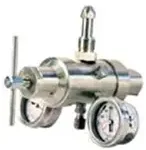

Overview
In gas delivery applications where output pressure stability is the primary requirement — calibration gas supply, laboratory instrument feed lines, analyser gas delivery — a single-stage regulator often falls short. Single-stage regulators reduce cylinder pressure to delivery pressure in one step, which means outlet pressure fluctuates as inlet (cylinder) pressure drops over the course of cylinder use. For applications where the downstream instrument or process requires a consistent, stable delivery pressure regardless of how full or depleted the supply cylinder is, that fluctuation introduces an uncontrolled variable that undermines measurement accuracy or process consistency.
The Double Stage SS316/Brass Regulator addresses this directly. By reducing cylinder pressure in two sequential stages — a first stage that drops high cylinder pressure to an intermediate pressure, and a second stage that reduces the intermediate pressure to the final delivery pressure — this regulator delivers a stable, regulated output pressure that remains consistent as cylinder pressure falls from full charge through to end of cylinder life. For span gas delivery to gas detectors, analyser supply in calibration laboratories, and precision gas flow control in industrial process environments, that two-stage stability is the difference between a regulator that works reliably throughout cylinder use and one that requires constant readjustment as the cylinder empties.
Constructed in SS316 stainless steel and brass — two materials with well-established track records in industrial gas service — this regulator covers nitrogen, oxygen, hydrogen, and CO₂ gas types across an inlet pressure range of 0–280 kg/cm² and delivers at an outlet range of 0–16 kg/cm² with a flow rate capacity of 0–200 LPM. What sets this unit apart from single-stage alternatives in the same pressure and gas service category is the inherent outlet pressure stability of its two-stage design: once the delivery pressure is set, it stays set — reducing the operational overhead of monitoring and correcting outlet pressure drift throughout cylinder life.
Key Features
Two-Stage Pressure Reduction — Stable Outlet Pressure Throughout Cylinder Life
The defining characteristic of this regulator is its two-stage reduction mechanism. The first stage reduces high cylinder pressure — up to 280 kg/cm² — to a stable intermediate pressure, isolating the second stage from the direct pressure swings of the depleting cylinder. The second stage then reduces the intermediate pressure to the final, user-set delivery pressure. Because the second stage operates from a stable intermediate pressure rather than directly from the variable cylinder pressure, the outlet delivery pressure remains consistent as cylinder pressure drops. For calibration gas delivery, this means the span gas concentration reaching the instrument inlet is delivered at a stable pressure from the first draw to the last — supporting repeatable calibration results across the full cylinder service life.
SS316 Stainless Steel and Brass Construction
The regulator body is constructed from 316-grade stainless steel and brass — two materials chosen for specific performance reasons in industrial gas service. SS316 offers superior corrosion resistance compared to standard 304-grade stainless, with added molybdenum content that improves resistance to chloride-related corrosion — relevant in coastal, offshore, and marine environments where atmospheric chloride exposure accelerates corrosion of standard stainless steel components. Brass wetted parts provide the dimensional stability, machinability, and gas compatibility required for precision valve seats and body components in medium-pressure gas service. The combination of SS316 for the external body and structural components and brass for internal gas-contact components is a construction standard recognised across industrial and laboratory gas equipment for its balance of durability, corrosion resistance, and gas compatibility.
Inlet Pressure Range: 0–280 kg/cm²
The regulator accepts inlet pressures across 0–280 kg/cm² — covering the fill pressures of standard high-pressure industrial and calibration gas cylinders. This inlet range accommodates the regulator throughout the full cylinder service life, from connection to a freshly filled cylinder at maximum pressure through to cylinder changeover at low residual pressure. For calibration gas cylinders, which are typically supplied at high fill pressures to maximise cylinder service life before changeover, inlet pressure coverage across this range ensures the regulator remains within its rated operating envelope for the entire cylinder use period.
Outlet Pressure Range: 0–16 kg/cm² — Precision Low-Pressure Delivery
The 0–16 kg/cm² outlet range positions this regulator for low-pressure precision delivery applications — the pressure range most commonly required for calibration gas supply to gas detectors, laboratory analyser supply, and controlled process gas injection where downstream instruments and equipment operate at low working pressures. Unlike high-pressure-delivery regulators where fine pressure adjustment at the low end of the outlet range is difficult to achieve accurately, the 0–16 kg/cm² outlet range of this two-stage unit allows precise delivery pressure setting within the operating window of sensitive downstream instruments, supporting accurate and repeatable gas delivery setpoint control.
Multi-Gas Compatibility: N₂, O₂, H₂, CO₂
Rated for service across nitrogen, oxygen, hydrogen, and carbon dioxide, this regulator covers the four gas types most commonly encountered in industrial gas detection calibration programmes and laboratory gas supply infrastructure. Multi-gas compatibility in SS316 and brass construction — materials with established compatibility profiles across this gas group — means a single regulator model can serve across multiple gas service points in a mixed-gas facility without requiring gas-specific regulator variants for each service. For HSE teams and procurement officers managing calibration gas supply across multiple detectors and gas types, this consolidation reduces the number of regulator models requiring stock, inspection, and maintenance management.
Flow Rate: 0–200 LPM
A flow range of 0–200 LPM covers the delivery requirements of gas detector calibration at controlled low flow rates through to higher-flow laboratory and process supply applications. The variable flow range gives the operator control over delivery rate independently of outlet pressure setting, supporting applications where both delivery pressure and flow rate require individual adjustment — such as multi-port calibration manifolds or analyser systems where flow rate to each instrument is controlled separately. The 200 LPM upper capacity accommodates moderate-volume process gas supply and multi-instrument distribution systems without requiring a separate high-flow regulator.
Dual-Gauge Configuration — Real-Time Cylinder and Delivery Pressure Monitoring
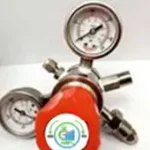
Two pressure gauges are fitted to the regulator — one reading inlet (cylinder) pressure and one reading outlet (delivery) pressure. The inlet gauge allows the operator to monitor cylinder depletion status and anticipate cylinder changeover before supply interruption, which is particularly relevant for calibration programmes running on scheduled service intervals where an unexpected cylinder runout can disrupt a time-critical calibration session. The outlet gauge provides real-time confirmation that the set delivery pressure is being maintained at the regulator outlet — the first verification point for delivery pressure before gas reaches the instrument or process connection.
Red Handwheel Adjustment — Positive, Tactile Pressure Setting
The regulator is fitted with a distinctive red handwheel for outlet pressure adjustment. The handwheel provides a positive, low-effort means of setting and fine-adjusting the delivery pressure — preferable to small-format adjustment screws or knobs in field conditions, where gloved hands and limited dexterity make fine-control adjustments on small components difficult. The red colour provides immediate visual identification of the pressure adjustment control on the regulator body, supporting correct operation in multi-regulator installations and by personnel unfamiliar with a specific regulator model’s layout.
Technical Specifications
Product Name: Double Stage SS316/Brass Regulator
Category: Span Gas and Regulator
Mechanism Type: Double Stage (Two-Stage Pressure Reduction)
Body Material: SS316 Stainless Steel / Brass
Inlet Pressure: 0–280 Kg/Cm²
Outlet Pressure: 0–16 Kg/Cm²
Flow Rate: 0–200 LPM
Gas Service: Nitrogen (N₂) / Oxygen (O₂) / Hydrogen (H₂) / Carbon Dioxide (CO₂)
Gauge Configuration: Dual Gauge (Inlet + Outlet)
Application: Calibration Gas Delivery, Laboratory Gas Supply, Industrial Process Gas Regulation
Benefits
The most tangible operational benefit of a two-stage regulator over a single-stage unit is that the operator sets the delivery pressure once and the regulator maintains it. With a single-stage regulator, delivery pressure rises or falls as cylinder pressure changes — a characteristic that requires monitoring and periodic re-adjustment throughout cylinder use, and that introduces the possibility of delivery pressure deviation between adjustments. For a calibration technician running bump tests or full calibration checks across a fleet of gas detectors, delivery pressure drift between adjustments means some tests may be conducted at a slightly different pressure than others — an inconsistency that cannot always be identified after the fact in the calibration record.
For HSE managers responsible for the integrity of a gas detection maintenance programme, the two-stage regulator removes an equipment-related variable from the calibration process. When a calibration result is questioned — at an audit, following an incident, or during regulatory inspection — the ability to demonstrate that calibration gas was delivered at a consistent, controlled pressure throughout the calibration session supports the defensibility of the calibration record in a way that single-stage delivery cannot.
SS316 construction provides meaningful durability advantages in coastal, offshore, and humid tropical operating environments where standard stainless or brass-only regulators suffer accelerated corrosion. For facilities in Southeast Asia, the Middle East, and other regions where salt-laden air and high ambient humidity are normal operating conditions, SS316 body construction extends service life and reduces the frequency of corrosion-related maintenance or replacement — reducing the total cost of ownership over the regulator’s service life.
Multi-gas compatibility across N₂, O₂, H₂, and CO₂ means procurement teams can standardise on a single two-stage regulator model across a mixed-gas calibration and process gas infrastructure, rather than managing separate two-stage regulator models per gas type. The procurement, stock management, and maintenance overhead of a multi-gas facility is reduced when the regulator inventory can be rationalised to a single compatible model.
Who It’s For
Gas Detection Service Engineers and Calibration Technicians
A gas detection service engineer calibrating a fleet of fixed CO₂ detectors across a refrigerated warehouse, or bumping a set of portable H₂S monitors before a confined space entry — needs span gas to arrive at the detector inlet at a stable, consistent pressure from the first instrument to the last. If the engineer is working from a cylinder that started at high pressure and is now at mid-life, a single-stage regulator will be delivering at a noticeably different pressure than it was at the start of the shift. The two-stage regulator eliminates that drift, so the same span gas concentration and delivery conditions apply to every instrument in the sequence — supporting a calibration record that will hold up under review.
Laboratory Managers and Analytical Instrument Technicians
A laboratory manager running a gas chromatograph, mass spectrometer, or other gas-supplied analytical instrument on a carrier or fuel gas supply from a high-pressure cylinder needs the instrument gas supply to remain at its set pressure setpoint without manual intervention between cylinder changes. Analytical instruments are sensitive to carrier gas pressure variation — even small delivery pressure changes can shift retention times and peak areas in chromatographic analysis, requiring repeat runs and compromising data integrity. A two-stage SS316/brass regulator on the cylinder supply line provides the stable instrument gas delivery that analytical instrument manufacturers specify for optimal instrument performance.
HSE Officers and Procurement Teams in Multi-Gas Industrial Facilities
For an HSE officer overseeing the gas detection calibration programme at a petrochemical facility running nitrogen, oxygen, and combustible gas detectors — or a procurement officer sourcing calibration gas supply equipment across multiple sites and gas types — a two-stage regulator rated for N₂, O₂, H₂, and CO₂ simplifies the equipment landscape. Rather than specifying and stocking separate regulator models for each gas service, a single model covers all four gas types, reducing the procurement decision to quantity and connection specification rather than gas-type-specific model selection. The SS316 body material provides the corrosion resistance appropriate for coastal or offshore facility environments without requiring a specialist exotic-material specification.
Possible Applications
Gas Detector Calibration — Portable and Fixed System Span Gas Delivery
Delivering N₂, O₂, H₂, or CO₂ calibration gas from high-pressure cylinders to portable gas detectors, fixed point gas detection heads, and multi-gas monitors during scheduled calibration and bump testing. The two-stage outlet pressure stability ensures consistent gas delivery across full calibration sessions, from the first instrument to the last, without delivery pressure drift requiring correction.
Gas Chromatography and Mass Spectrometry — Carrier and Fuel Gas Supply
Supplying carrier gas (typically nitrogen or hydrogen) or fuel gas (hydrogen) from high-pressure cylinders to GC and GC-MS instruments in analytical chemistry laboratories. Analytical instrument performance is sensitive to carrier gas pressure stability; two-stage regulation provides the delivery pressure consistency that these instruments require for repeatable analytical results.
Industrial Nitrogen Purging and Blanketing — Low-Pressure Delivery Control
Controlling nitrogen delivery from high-pressure cylinders at low, stable outlet pressures for vessel blanketing, pipeline purging ahead of maintenance, and inert atmosphere maintenance in storage tanks and process vessels. The 0–16 kg/cm² outlet range covers the low delivery pressure requirements of blanketing and purging applications without over-pressuring downstream connection points.
Oxygen Supply — Medical, Welding, and Cutting Applications
Regulating oxygen from high-pressure cylinders for welding and cutting torch supply, or oxygen-enriched breathing air delivery in medical support and confined space rescue applications. The SS316 body construction and oxygen-rated materials support service in oxygen environments where material compatibility with high-pressure oxygen is a safety requirement.
Hydrogen Supply — Fuel Cell Testing and Hydrogen Atmosphere Furnaces
Delivering hydrogen at stable low outlet pressures from high-pressure cylinders to fuel cell test benches, hydrogen atmosphere heat treatment furnaces, and hydrogen gas purity analysers. Hydrogen’s low molecular weight demands tight regulator leak integrity; SS316 and brass construction provides the dimensional precision in valve and seat components required for hydrogen service.
CO₂ Gas Supply — Incubators, Controlled Atmosphere, and Calibration
Regulating CO₂ delivery for laboratory incubators requiring precise CO₂ concentration control, calibration gas delivery to CO₂ detectors, and controlled atmosphere storage systems for perishable goods. CO₂ cylinder service involves phase-change behaviour at certain pressure and temperature conditions; two-stage regulation provides stable delivery across the CO₂ cylinder operating pressure range.
Multi-Point Laboratory Gas Distribution — Bench Supply Manifolds
Serving as the primary pressure reducing regulator on a cylinder supply feeding a laboratory bench manifold distributing gas to multiple instrument supply points. The 0–200 LPM flow capacity supports multi-instrument distribution systems, and the stable two-stage outlet pressure ensures consistent supply pressure across all bench connection points regardless of cylinder depletion state.
Trust & Certifications
SS316 Material Certification — Traceable Stainless Steel Grade
316-grade stainless steel is a defined material specification under ASTM A276 and equivalent international standards, with documented chemical composition and mechanical properties. For procurement teams and quality assurance programmes requiring material traceability on gas-handling equipment, SS316 designation provides a verifiable material specification basis — unlike generic “stainless steel” claims that may refer to lower-grade 304 or 201 stainless without the corrosion resistance properties that make 316 the appropriate choice for gas service in marine and corrosive environments. Buyers with material certification requirements should confirm material test report (MTR) availability with the supplier.
Oxygen Service Material Compatibility — Safety-Critical Requirement
For this regulator used in oxygen service, material compatibility with high-pressure oxygen is a safety-critical specification requirement. Oxygen-compatible regulators must be assembled from materials that do not sustain combustion in oxygen-enriched environments, must be free of hydrocarbon contamination at all gas-contact surfaces, and must use valve seat and seal materials rated for oxygen service. Buyers procuring this regulator for oxygen service should confirm oxygen-service suitability with the supplier and ensure installation, commissioning, and maintenance are performed by personnel with oxygen-service safety training.
Hydrogen Service Leak Integrity — Applicable Standards
Hydrogen gas presents specific leak integrity requirements due to its low molecular weight and wide flammable range (4–75% v/v in air). Regulators used in hydrogen service are expected to meet hydrogen-specific leak standards under applicable frameworks including ISO 15649 (piping and equipment for process plants) and equivalent standards in the gas industry. Buyers should confirm hydrogen service approval basis with the supplier before deploying this regulator in hydrogen service, particularly in enclosed spaces where hydrogen accumulation presents a risk.
Pressure Equipment Compliance — Regional Regulatory Requirements
Industrial gas regulators operating at the pressure ranges covered by this unit fall within the scope of pressure equipment regulations in most operating jurisdictions. Applicable frameworks include the EU Pressure Equipment Directive (PED 2014/68/EU), Singapore’s Pressure Vessels (Licensing) Act, and equivalent national standards across the Asia Pacific and Middle East regions. Buyers should confirm that the regulator meets the pressure equipment regulatory requirements applicable in their jurisdiction and that installation, inspection, and maintenance comply with local gas safety regulations and pressure equipment management requirements.
Span Gas and Regulator Category — Calibration Supply Chain Integration
This regulator is supplied within the Span Gas and Regulator product category — the supply category that underpins gas detection calibration infrastructure across oil and gas, marine, industrial safety, and laboratory environments. For buyers operating under formal calibration management systems — ISM Code-compliant vessel maintenance programmes, ISO 17025-accredited calibration laboratories, or OSHA-referenced industrial hygiene monitoring programmes — sourcing both calibration gas and delivery equipment within a coherent category from a single supplier simplifies supply chain management, reduces the risk of equipment-gas incompatibility, and supports the documentation requirements of calibration quality management systems.
Accessories & Variants
Compatible Span Gas Cylinders — N₂, O₂, H₂, CO₂ Calibration and Industrial Gas
Span Gas Cylinders (Nitrogen / Oxygen / Hydrogen / CO₂) — Pre-certified calibration gas mixtures and pure industrial gas cylinders for use with this regulator in gas detector calibration, analyser supply, and process gas delivery. Procuring cylinders and regulator from a single supplier ensures inlet connection compatibility between the cylinder valve and regulator inlet fitting — a detail that is easy to overlook and time-consuming to resolve in the field when a connection mismatch is discovered at installation.
High-Pressure Piston Type Regulator — High-Delivery-Pressure Alternative
High Pressure Piston Type Regulator — For applications requiring outlet delivery pressures above the 0–16 kg/cm² range of this double-stage regulator. Where downstream equipment or processes require elevated delivery pressures — high-pressure testing, gas injection, or manifold supply at elevated working pressures — the piston-type regulator covering 0–300 kg/cm² outlet range is the appropriate complementary product. Both units cover the same four gas types, supporting a consistent dual-regulator sourcing approach across high and low delivery pressure applications.
Cylinder Valve Connection Adapters — CGA / BS / DIN Standards
Cylinder Valve Connection Adapters — Thread adapters and connection fittings for matching the regulator inlet to the specific cylinder valve outlet standard of the cylinder in use. Cylinder valve connection standards vary by gas type, country of manufacture, and cylinder series — confirming the correct inlet connection for the specific cylinder before installation prevents mismatched connections that can result in gas leaks or installation delay.
Downstream Flexible Hose Assemblies
Gas-Rated Flexible Hose Assemblies — Flexible hose connections from regulator outlet to instrument inlet, process connection, or manifold header. Gas-rated hoses appropriate for the specific gas service — including oxygen-clean hoses for O₂ service and hydrogen-rated assemblies for H₂ service — maintain the safety and integrity of the complete gas delivery assembly from cylinder through to point of use.
Product Variants — Gas Service Configurations
Nitrogen (N₂) Service — Standard SS316/brass configuration for nitrogen purge, blanketing, and calibration gas delivery applications
Oxygen (O₂) Service — Oxygen-clean configuration for welding, cutting, breathing air, and O₂ calibration gas delivery; oxygen-service material and assembly requirements apply
Hydrogen (H₂) Service — Hydrogen-rated configuration for fuel cell, analytical instrument carrier gas, and H₂ calibration gas delivery; hydrogen leak integrity requirements apply
Carbon Dioxide (CO₂) Service — CO₂-compatible configuration for incubator gas supply, controlled atmosphere delivery, and CO₂ calibration gas applications
Get in Touch
If you are sourcing a double stage SS316/brass regulator for nitrogen, oxygen, hydrogen, or CO₂ gas service — whether for a calibration programme, laboratory gas supply infrastructure, or an industrial process gas delivery application — contact us to confirm the correct configuration for your cylinder connection type, outlet pressure requirement, and gas service, and to request a formal quotation.
Our team can assist with gas service compatibility confirmation, inlet connection specification for your cylinder valve type, and supply timelines for individual units and multi-site procurement orders.