Cart (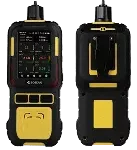
Overview
Multi-gas monitoring in confined spaces, industrial plant environments, and hazardous area inspections has always come with a practical tension: the more gases you need to detect, the more complex and cumbersome the equipment tends to become. Workers who need to monitor for oxygen deficiency, combustible gases, toxic gases, and VOCs simultaneously have historically been faced with a choice between carrying multiple single-gas devices or investing in multi-gas instruments that are either too large for comfortable daily wear or too limited in expandability to cover changing site requirements.
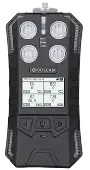
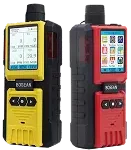
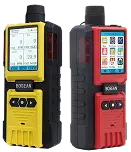
The K-600 Multi Portable Gas Detector with Built-In Pump addresses that tension directly. Designed as a compact, handheld multi-gas instrument, it supports detection of up to five gases simultaneously — including an optional PID sensor for volatile organic compound (VOC) monitoring — and combines that capability with an integrated sampling pump that draws gas from distances of up to 20 metres via hose. This makes it genuinely useful for pre-entry atmospheric testing in confined spaces, where the worker needs to assess conditions before going in, not just after.
What separates the K-600 from comparable multi-gas portables in its category is the combination of active pump sampling, PID sensor support, and expandability to five gases in a device weighing approximately 400 grams. For safety managers and HSE officers who need a single instrument to handle both diffusion monitoring during work tasks and remote pump sampling for confined space pre-entry checks, that combination covers a wider range of operational scenarios than fixed-configuration alternatives.
Key Features
Built-In Sampling Pump with 20m Hose Reach
The K-600’s integrated pump actively draws gas samples from the detection point to the sensor array, enabling atmospheric testing at distances of up to 20 metres via sampling hose. This is the feature that makes the K-600 applicable to confined space pre-entry checks — the worker can test the atmosphere inside a tank, vessel, or underground space before anyone physically enters, without relying on natural diffusion to carry the sample to the sensor. In practice, this single capability changes how a confined space entry programme operates, removing the need for a separate pump-draw instrument alongside a personal diffusion monitor.
Up to Five-Gas Expandable Detection
The K-600 supports simultaneous detection of up to five gases, with a configurable sensor configuration that can be specified to match site-specific hazard profiles. Typical configurations cover oxygen (O2), combustible gases (LEL), carbon monoxide (CO), hydrogen sulphide (H2S), and an additional toxic or VOC gas depending on the application. The expandability to five gases means the same instrument can serve across different monitoring requirements without procuring separate devices for different hazard scenarios.
PID Sensor Support for VOC Detection
The K-600 supports an optional photoionisation detector (PID) sensor, enabling detection of volatile organic compounds (VOCs) that electrochemical and catalytic bead sensors cannot measure. PID detection is relevant in petrochemical environments, solvent-handling operations, painting and coating facilities, and any workplace where VOC exposure is a credible health risk. Having PID capability integrated into a multi-gas instrument — rather than carried as a separate handheld — simplifies the monitoring workflow and reduces the number of devices a worker needs to manage.
Four-Mode Alarm System (Sound, Light, Vibration, Display)
When a gas alarm threshold is crossed, the K-600 activates four simultaneous alarm modes: audible alarm, LED visual indicators, vibrating alert, and an on-screen display notification. The multi-modal approach ensures the alarm reaches the worker regardless of the working conditions — whether they’re in a noisy plant environment, working with hearing protection, or in a situation where they may not be looking at the device screen. All four modes activate together, removing any dependency on a single alarm channel being perceived.
2.4-Inch Colour LCD with Curve Value and Multi-Unit Display
The K-600’s 2.4-inch colour LCD screen displays real-time gas readings across all active channels simultaneously, with curve value graphing that shows concentration trends over time. Multi-unit display support means readings can be shown in the most relevant unit for each gas type. For workers who need to interpret atmospheric conditions quickly — during a confined space pre-entry check, for example — having all gas readings visible on a single clear screen, along with trend data, supports faster and more informed decision-making than a scrolling single-channel display.
1,200 Alarm Records with Data Logging
The K-600 stores up to 1,200 alarm event records on board. For HSE officers and safety managers who need to demonstrate a functioning monitoring programme to regulators or auditors, this record provides a timestamped log of every alarm event across the instrument’s operational history. Combined with the curve display functionality, it also supports post-incident analysis — allowing safety teams to reconstruct what the atmospheric conditions were leading up to and during an event.
Bilingual Interface (Chinese and English)
The K-600 supports switching between Chinese and English language interfaces, making it suitable for multinational operations, international project sites, and supply chains that span both markets. For procurement teams sourcing equipment for globally distributed field teams, this removes the language barrier as a deployment consideration without requiring separate hardware variants for different regions.
10-Hour Continuous Operation
Powered by a 3600mAh lithium battery at 3.7V, the K-600 delivers a minimum of 10 hours of continuous operation on a single charge, with a charging time of under 6 hours. For shift-based operations and full-day site work, 10-hour battery life covers a standard working day without a mid-shift recharge. The combination of operational duration and relatively fast charge time supports a charge-between-shifts workflow without requiring a large inventory of spare batteries.
Technical Specifications
Model: K-600
Display: 2.4 inch colour LCD
Weight: Approximately 400g
Dimensions: 174 × 68 × 47mm
Battery Life: ≥10 hours continuous (3600mAh Lithium, DC 3.7V)
Charging Time: <6 hours
IP Rating: Not stated (working environment ≤95% RH, no dew)
Alarm Types: Sound, Light (LED), Vibration, Display — four simultaneous modes
Sampling Method: Pump type (active sampling)
Pumping Distance: ≤20m (with hose)
Response Time: T90 <30 seconds
Working Temperature: -10°C to 55°C
Sensor Life: 2 years (depending on usage environment)
Gas Channels: Up to 5 gases (expandable), PID sensor supported
Data Logging: 1,200 alarm records
Safety Approvals: II 2G Ex ib IIC T4 Gb
Language: Chinese / English (switchable)
Benefits
For workers carrying out confined space pre-entry atmospheric checks, the K-600’s pump sampling capability fundamentally changes the risk profile of the task. Testing the atmosphere remotely — before anyone enters — means hazardous conditions are identified at a safe distance, not discovered after entry. That’s not a marginal improvement in safety; it’s a qualitative change in how the confined space entry process works.
For HSE managers overseeing multi-hazard environments, a single instrument that covers O2, LEL, CO, H2S, and VOC monitoring eliminates the coordination complexity of managing separate devices for different gas types. Calibration schedules, battery management, and alarm event records are consolidated into one instrument per worker — simplifying both the day-to-day operational overhead and the compliance documentation burden.
For procurement teams evaluating multi-gas portable detectors against a site hazard profile, the K-600’s expandability to five gases means a single procurement decision covers a wider range of current and future monitoring requirements. Rather than committing to a fixed four-gas configuration and discovering a gap later, the five-gas expandability and PID support provide headroom for changing operational demands without triggering a full equipment replacement cycle.
Who It’s For
Confined Space Entry Supervisor — Utilities, Civil, and Industrial
You’re responsible for ensuring that atmospheric conditions in tanks, vessels, sewers, and underground chambers are verified as safe before any member of your team enters. You need a single instrument that can test for all credible hazards — oxygen deficiency, flammable gas, H2S, CO — from outside the space via sampling hose, and that can be relied on to alarm clearly if any parameter is outside safe limits. The K-600’s pump sampling capability and five-gas expandability cover that requirement in one device, removing the need to coordinate multiple instruments for a single pre-entry check.
HSE Officer — Petrochemical or Chemical Processing Site
Your site has a complex hazard profile: flammable gases, toxic gases, oxygen-deficient zones, and areas where VOC exposure from solvents or process chemicals is a credible risk. You need monitoring equipment that covers that full profile without asking workers to carry multiple devices, and you need the alarm event data to be recorded automatically for incident reporting and regulatory compliance. The K-600’s five-gas capability, PID sensor support, and 1,200-record data log address all three of those requirements in a single portable instrument.
Industrial Hygienist or Safety Consultant — Site Assessment
You carry out atmospheric assessments across varying site types — confined spaces, plant areas, storage facilities, and active process environments — where the specific hazards vary from site to site. You need an instrument flexible enough to be reconfigured for different gas profiles depending on the assessment, with data logging that supports post-assessment reporting. The K-600’s expandable sensor configuration and curve value display give you both the flexibility and the data capture you need for professional-grade site assessment work.
Possible Applications
Confined Space Pre-Entry Atmospheric Testing — The K-600’s integrated pump and 20m hose reach make it the appropriate instrument for testing the atmosphere inside tanks, vessels, sewers, and enclosed spaces before worker entry. All critical parameters — O2, LEL, CO, H2S — can be assessed simultaneously from outside the space.
Petrochemical Plant Maintenance and Inspection — Maintenance teams working in and around process plant, pipework, and enclosed modules on petrochemical sites require multi-gas monitoring covering flammable, toxic, and oxygen-related hazards. The K-600’s five-gas capability and ATEX-equivalent certification make it suited to these environments.
Wastewater Treatment and Sewer Maintenance — H2S, methane, CO, and oxygen deficiency are routine hazards in wastewater infrastructure. Workers entering pump stations, sewer networks, and treatment plant confined spaces require continuous multi-gas monitoring throughout their work task.
VOC Monitoring in Painting, Coating, and Solvent Handling — Facilities using solvent-based coatings, adhesives, or cleaning agents require VOC monitoring to manage worker exposure. The K-600’s PID sensor option provides this capability as part of a multi-gas instrument rather than requiring a separate standalone PID device.
Oil and Gas Platform Operations — Offshore and onshore oil and gas operations involve complex multi-gas hazard environments. Maintenance workers, permit-to-work holders, and area inspectors require portable multi-gas detection capable of covering LEL, H2S, CO, O2, and VOC scenarios in a single instrument.
Fire Investigation and Emergency Response — Post-incident atmospheric assessment requires rapid, multi-parameter gas detection. The K-600’s pump sampling capability allows remote assessment of enclosed or compromised spaces where direct entry is not yet cleared, supporting safer and faster incident management decisions.
Pharmaceutical and Chemical Laboratory Environments — Research and production facilities handling multiple chemical compounds require flexible gas monitoring that can be configured to the specific hazard profile of each area or process. The K-600’s expandable sensor configuration supports this requirement without procuring separate instruments for each application.
Trust & Certifications
ATEX-Compatible: II 2G Ex ib IIC T4 Gb
The K-600 carries an intrinsic safety classification of II 2G Ex ib IIC T4 Gb, indicating it is designed and certified for use in Zone 1 hazardous areas — environments where explosive atmospheres are likely to occur during normal operation. This classification covers the most demanding gas group (IIC, which includes hydrogen and acetylene) and confirms the device is appropriate for use in petrochemical, chemical, and gas processing environments where explosive atmosphere exposure is a routine operational condition.
PID Sensor Support — VOC Detection Capability
Photoionisation detector (PID) technology is the accepted method for detecting VOCs in occupational hygiene and industrial safety monitoring. The K-600’s support for PID sensor integration reflects alignment with established industry monitoring practices for VOC hazard environments, including those governed by COSHH regulations in the UK and equivalent occupational exposure frameworks internationally.
2-Year Sensor Life
Sensor life of two years (subject to usage environment) provides a predictable maintenance and replacement schedule, supporting accurate total cost of ownership calculations across the procurement lifecycle. Sensor replacement timelines can be built into HSE maintenance programmes without requiring instrument-level replacements on the same cycle.
Bilingual Compliance Support
Chinese/English language switching supports compliance documentation and operational use across international project environments, reducing the risk of operator error associated with language-mismatched interfaces in multinational teams.
Accessories & Variants
Sampling Hose (up to 20m)
Extends the K-600’s pump sampling capability for remote atmospheric testing in confined spaces and inaccessible areas. Essential for pre-entry checks where the worker needs to assess conditions from a safe distance before entering.
PID Sensor Module
Optional photoionisation detector sensor for VOC monitoring. Integrates directly into the K-600’s sensor configuration to add VOC detection capability without requiring a separate handheld PID instrument.
Calibration Gas (Multi-Gas)
Certified multi-gas calibration mixtures for bump testing and full span calibration across all active sensor channels. Regular bump testing is recommended best practice for pump-type instruments used in confined space entry applications.
Carry Case / Holster
Protective carry solution for the K-600 during transport and field use. Relevant for teams using the instrument across multiple sites or in physically demanding environments where the device may be subject to impacts or abrasion during transit.
Available Configuration Options
Standard 4-Gas Configuration — O2, LEL, CO, H2S (most common industrial configuration)
5-Gas with PID — O2, LEL, CO, H2S + VOC via PID sensor
Custom 5-Gas — Configuration available based on site-specific hazard requirements
Contact our technical team to discuss sensor configuration options for your specific application — the K-600’s expandability means the right specification for your site can be defined at procurement stage rather than retrofitted later.
Request a Quote or Technical Consultation
If you’re specifying multi-gas portable detectors for a confined space entry programme, a plant maintenance operation, or a site where VOC monitoring sits alongside conventional gas hazard requirements, the K-600 is worth a detailed assessment — particularly if pump sampling capability, five-gas expandability, and PID sensor support are on your requirements list.
Speak with our safety equipment team to discuss sensor configuration for your specific hazard profile, request pricing for individual units or fleet quantities, or arrange a product demonstration. We work directly with HSE managers, confined space coordinators, and procurement leads, and can provide technical guidance on configuration, calibration gas selection, and instrument setup from specification through to deployment.