Cart (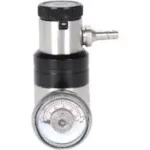
Overview
Calibration gas waste is one of the most overlooked costs in a gas detection programme. With a conventional fixed-flow regulator, gas flows continuously from the cylinder at a set rate — whether the detector’s pump is drawing or not. During the setup time between connections, during pauses in the calibration sequence, and during the time between bump tests, gas is flowing out and being wasted. On a high-frequency daily bump testing programme running multiple detectors, this continuous flow waste meaningfully reduces the usable life of every calibration gas cylinder. The solution is a demand-flow regulator: a device that delivers gas only when the detector’s internal pump is actively drawing, and stops flow the moment the pump stops.
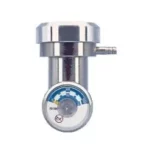
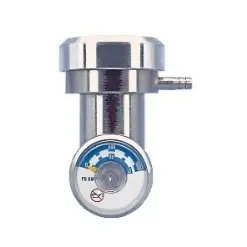
The 2000/2001 Series Demand Flow Regulators are single-stage Ni-Brass demand-flow regulators designed for direct attachment to standard calibration gas cylinders — 34L, 58L, 103L, and 116L steel canisters. With flow rates from 0.2 LPM through to 6.0 LPM, these regulators cover the draw rate range of the majority of portable pump-aspirated gas detectors used in industrial, marine, offshore, and confined space safety programmes. They are suitable for non-reactive gas mixtures as well as H2S and SO2-containing calibration gas — making the 713 Ni-Brass construction the correct specification for the corrosive toxic gas mixtures that calibrate H2S and SO2 sensors in standard four-gas monitors.
What sets the 2000/2001 Series apart from basic fixed-flow regulators is the demand-flow mechanism itself. Because gas is only released when the instrument pump creates a negative pressure at the regulator outlet, the calibration procedure requires no sample bags, no flow meters, and no manual flow adjustment — and no special operator training to use correctly. For safety teams where calibration is carried out daily by workers whose primary role is not instrument technician, a demand-flow regulator that simplifies the calibration procedure and eliminates variables from the process is a meaningful operational improvement over a fixed-flow setup that requires more attention to get right.
Key Features
Demand-Flow Mechanism — Gas Delivered Only When the Instrument Pump Draws
The defining feature of a demand-flow regulator is that it opens to deliver calibration gas only when the detector’s internal pump creates a demand — a negative pressure at the regulator outlet. When the pump is not running, the regulator is closed and no gas flows. This means the cylinder is not depleting during the time between detector connections, during setup, or during any pause in the calibration sequence. For a calibration gas programme running daily bump tests on multiple detectors, this on-demand delivery characteristic directly extends the usable life of every cylinder compared to a fixed-flow regulator running continuously.
Single-Stage Ni-Brass Construction — Suitable for Non-Reactive Gases, H2S, and SO2
The 2000/2001 Series regulators are constructed in Ni-Brass — nickel-plated brass — which provides the corrosion resistance required for use with H2S and SO2 calibration gas mixtures. Standard brass body regulators degrade over time when exposed to these corrosive gas species, which can compromise both regulator performance and the accuracy of the calibration gas concentration reaching the sensor. The Ni-Brass construction of the 713-variant regulators used with steel cylinders for non-reactive gases extends the material compatibility to include the H2S and SO2-containing four-gas span gas mixtures that are among the most commonly used calibration gases in industrial and marine safety programmes.
Flow Range 0.2 to 6.0 LPM — Covers the Pump Draw Rate of Most Portable Detectors
The 0.2–6.0 LPM flow range encompasses the internal pump draw rates of the majority of portable pump-aspirated gas detectors from major manufacturers including MSA, Honeywell BW, Industrial Scientific, Draeger, and Riken Keiki. Most portable four-gas monitors draw at 0.5–1.5 LPM during calibration. The 0.2–6.0 LPM range ensures the demand-flow regulator can supply gas at the detector’s actual draw rate without flow restriction at the lower end or over-supply at the higher end — both of which affect the accuracy of the calibration gas concentration delivered to the sensor.
Direct Cylinder Attachment — Compatible with 34L, 58L, 103L, and 116L Steel Canisters
The 2000/2001 Series regulators are designed to attach directly to standard 34L, 58L, 103L, and 116L steel calibration gas canisters — the cylinder sizes used across the span gas and calibration gas supply sector for portable detector calibration programmes. Direct cylinder attachment eliminates the need for intermediate fittings or adapters in most standard calibration gas setups, keeping the calibration connection simple and the potential for gas leaks or concentration loss between the cylinder and the detector minimal.
Eliminates Sample Bags, Flow Meters, and Special Operator Training
Conventional fixed-flow calibration setups can require sample bags to collect a measured volume of calibration gas, flow meters to verify the delivery rate, and trained operators who understand how to adjust and monitor the flow during calibration. A demand-flow regulator removes all three requirements — the instrument pump pulls exactly what it needs, at the rate it needs it, without any operator intervention. For organisations where calibration is performed by field workers, safety officers, or vessel crew rather than dedicated instrument technicians, this simplification meaningfully reduces the risk of calibration procedure errors that produce invalid results.
Integrated Pressure Gauge — Cylinder Contents Monitoring
The integrated pressure gauge displays the remaining cylinder pressure, allowing the operator to confirm that sufficient gas is available before beginning a calibration session. Running out of calibration gas mid-bump-test produces an incomplete calibration record and requires the procedure to be restarted with a new cylinder. Checking the gauge before each session — and replacing the cylinder when pressure is low — prevents this interruption and ensures every bump test produces a complete, valid calibration record.
Technical Specifications
Series: 2000/2001 Series Demand Flow Regulator
Regulator Type: Single-Stage Demand Flow
Body Material: Ni-Brass (Nickel-plated Brass)
Flow Range: 0.2 LPM to 6.0 LPM
Compatible Cylinders: 34L / 58L / 103L / 116L steel calibration gas canisters
Gas Compatibility: Non-reactive gas mixtures; H2S and SO2-containing mixtures (713 Ni-Brass)
Additional Features: Integrated pressure gauge; no sample bags, flow meters, or special training required
Benefits
Extends calibration gas cylinder life by eliminating waste between detector connections. Because gas only flows when the detector pump is drawing, a demand-flow regulator stops the cylinder depleting during setup time, between calibration events, and during any pause in the procedure. Across a programme running daily bump tests on multiple detectors, this on-demand delivery characteristic meaningfully extends the number of calibration events each cylinder supports compared to continuous fixed-flow delivery.
Simplifies the calibration procedure and reduces operator error risk. Removing sample bags, flow meters, and manual flow adjustment from the calibration process reduces the number of variables that an operator needs to manage correctly to produce a valid calibration result. For safety programmes where bump testing is carried out by workers who are not instrument specialists, a simpler calibration procedure with fewer steps and fewer opportunities for error produces more consistently valid calibration records.
Ni-Brass construction provides material compatibility for H2S and SO2 calibration gas. The majority of portable four-gas monitors used in industrial and marine applications are calibrated with gas mixtures containing H2S and often SO2. A demand-flow regulator in Ni-Brass construction provides the corrosion resistance needed to maintain accurate and reliable gas delivery with these mixtures over time, which a standard brass regulator cannot do consistently.
Direct cylinder attachment keeps the calibration setup compact and leak-point minimal. Fewer connection points between the cylinder and the detector mean fewer potential gas leak points — each of which would reduce the concentration of calibration gas reaching the sensor and affect the accuracy of the calibration result. Direct canister attachment reduces the calibration gas supply path to its simplest configuration.
Compatible with the full range of standard calibration gas cylinder sizes. The 2000/2001 Series’ compatibility with 34L, 58L, 103L, and 116L canisters means the same regulator works across the cylinder sizes stocked for a calibration programme — from the compact 34L cylinders used on vessels and in field kits to the 116L cylinders used in high-volume onshore calibration programmes.
Who It’s For
The Safety Officer or HSE Coordinator Running Daily Detector Bump Tests
Your site procedure requires every gas detector to be bump tested before use. You run multiple detectors each day, and the calibration gas cost per cylinder matters when you’re running through cylinders at the rate that a fixed-flow regulator produces. Switching to a demand-flow regulator for your bump testing programme reduces the gas wasted between detector connections — which adds up over the course of a month’s worth of daily bump tests — and simplifies the procedure for the team members carrying it out each morning.
The Vessel Safety Officer or Chief Officer Managing Detector Calibration on Board
Calibration gas cylinder storage and replenishment on a vessel is a logistics consideration — you can only carry what fits in the safety equipment store, and resupply depends on port calls or ship chandler availability. A demand-flow regulator that extends the usable life of each cylinder by eliminating continuous-flow waste means fewer cylinder changes and a lower risk of running out of calibration gas between supply opportunities. The direct canister attachment keeps the calibration kit compact for storage in a vessel’s safety locker.
The Gas Detection Service Technician or Instrument Engineer
You calibrate and service gas detection instruments across multiple client sites and vessel visits. Carrying a demand-flow regulator that attaches directly to the standard calibration gas canisters your clients stock means you have a reliable, consistent calibration gas delivery setup at every site — without needing to assess and manage each client’s regulator setup before you can start calibrating. The 0.2–6.0 LPM flow range covers the pump draw rates of the detector models you work with across your client base.
Possible Applications
- Daily portable gas detector bump testing programmes — Demand-flow calibration gas delivery for pre-use bump testing of four-gas monitors before confined space entry, hot work, and routine gas monitoring duties across any industry
- Scheduled detector calibration in industrial facilities — Periodic full calibration of portable gas monitors in refineries, petrochemical plants, utilities, and manufacturing facilities where large detector fleets require regular calibration maintenance
- Marine vessel confined space entry safety equipment calibration — On-board detector bump testing and calibration for vessels where calibration gas cylinder supply is limited by storage space and port call replenishment intervals
- Offshore platform safety equipment maintenance — Demand-flow calibration gas delivery for portable multi-gas monitor calibration during scheduled maintenance on drilling and production platforms
- H2S and SO2 sensor calibration in oil and gas and chemical facilities — Ni-Brass demand-flow regulator use with H2S and SO2-containing four-gas span gas mixtures for calibration of toxic gas sensors in upstream production, refining, and chemical processing environments
- Gas detection instrument service and repair operations — Field calibration gas supply for service technicians calibrating portable detectors across multiple client sites using a compact, direct-attach demand-flow setup
- Wastewater and utility confined space safety programmes — Bump testing of multi-gas monitors before entry into sewers, pump stations, and utility vaults where H2S, CO, CH4, and oxygen depletion are concurrent hazards
- Emergency response team equipment readiness checks — Pre-deployment bump testing of gas detection instruments by industrial fire brigades and HAZMAT response teams using demand-flow calibration gas delivery for rapid, reliable sensor verification
Trust and Certifications
Ni-Brass Material Standard for H2S and SO2 Gas Service
The 713 Ni-Brass construction of the 2000/2001 Series regulators used with steel calibration gas canisters is the material specification for H2S and SO2 gas service — gases that degrade standard brass regulators over time through internal corrosion of wetted components. Using the correct material specification for the gas service is not a preference but a technical requirement for reliable and safe calibration gas delivery. The Ni-Brass construction provides the corrosion resistance needed to maintain regulator performance over the service life of the device with these gas types.
Compatibility with Standard Calibration Gas Industry Cylinder Sizes
The 2000/2001 Series is designed and manufactured to attach to the industry-standard 34L, 58L, 103L, and 116L steel calibration gas canisters used across the span gas and portable detector calibration supply sector. This compatibility confirmation means the regulator works with the calibration gas cylinders that safety programmes are already stocking — no non-standard cylinder or special fitting required.
Supplied by Alright Engineering Solutions
The 2000/2001 Series Demand Flow Regulators are supplied by Alright Engineering Solutions Pte. Ltd., a Singapore-based distributor of portable and fixed gas detection equipment, certified calibration gas, and calibration accessories. Alright Engineering Solutions provides local technical support and procurement assistance for calibration gas programmes, gas detection instrument supply, and calibration accessory sourcing across Singapore and the regional market.
Accessories and Variants
Calibration Gas Cylinders — Four-Gas Span Gas Mixtures
The 2000/2001 Series Demand Flow Regulator is designed for direct attachment to standard calibration gas canisters. Alright Engineering Solutions supplies a range of four-gas span gas mixtures — including CO/H2S/CH4/O2 and CO/H2S/iC4H10/O2 combinations — in 34L, 58L, 103L, and 116L cylinder sizes, compatible with this regulator series.
Calibration Tubing and Instrument Adapters
Flexible calibration tubing connects the regulator’s outlet to the detector’s calibration inlet or calibration cup adapter. Instrument-specific calibration cup adapters create a sealed connection between the tubing and the sensor face of the portable detector, ensuring calibration gas reaches the sensor without ambient air dilution.
Multi-Flow Regulators
For applications requiring selectable fixed-flow delivery rather than demand-flow calibration gas supply, Alright Engineering Solutions also supplies Multi-Flow Regulators in brass and stainless steel body materials with outlet flow ranges from 0–3 L/min to 0–15 L/min.
Available Variants
Series 2000 — Demand flow regulator for standard calibration gas cylinder attachment
Series 2001 — Demand flow regulator variant; contact Alright Engineering Solutions for series-specific configuration details
713 Ni-Brass — Variant specified for use with steel cylinders containing non-reactive gases, H2S, and SO2 calibration mixtures
Get in Touch
If you need to source the 2000/2001 Series Demand Flow Regulator for your calibration gas programme — whether for a new detector fleet setup, a replacement for an existing regulator, or a vessel or site calibration kit — contact Alright Engineering Solutions to confirm the correct series variant for your cylinder size and gas type, and to request a formal quote.
Our team can also assist with matching calibration gas cylinder supply, tubing, and instrument-specific calibration accessories to complete your detector calibration setup.
📍 3791 Jalan Bukit Merah #06-01, E-Centre @ Redhill, Singapore 159471