Cart (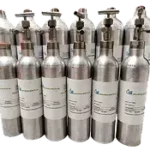
Overview
Not all oxygen deficiency calibration requirements are the same. A portable multi-gas monitor used for routine confined space entry can typically be spanned at 5% or 5.5% oxygen and perform reliably across the range of deficient atmospheres encountered in standard industrial maintenance. But there is a class of application — inert gas system operations on tankers, nitrogen-purged process vessels, cryogenic storage environments, and cargo tank entry on gas carriers — where the oxygen concentrations encountered during normal operations, and where personnel safety decisions must be made accurately, can fall well below 5%. In those environments, an oxygen monitor calibrated at 5% O2 has never had its response verified at the concentrations that are most operationally critical. That is where a 2.1% oxygen calibration gas becomes the appropriate standard.
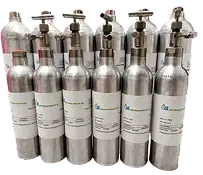
The 2.1% Oxygen (O2) Balanced Nitrogen Span Gas is a precision calibration gas mixture formulated at 2.1% oxygen by volume in a nitrogen balance, supplied in aluminium cylinders across five size options — 34L, 58L, 103L, 110L, and 116 litres. At 2.1% O2 — approximately one tenth of normal atmospheric oxygen — this calibration gas challenges the oxygen sensor at a concentration representative of severely inerted or near-fully oxygen-displaced atmospheres. For safety managers, marine safety officers, and instrument technicians who need to verify that their oxygen monitors will respond accurately in the most extreme oxygen-deficient conditions their personnel may encounter, this product provides that verification at the lowest practical calibration concentration.
The differentiating factor is the extreme low-end concentration. The 2.1% O2 formulation is one of the most technically demanding oxygen calibration gas concentrations commercially available — and it is the appropriate choice precisely because of that. An oxygen sensor verified at 2.1% O2 has demonstrated accurate response across the full range of deficient concentrations from atmospheric normal down to near-zero oxygen content. For applications where personnel may enter inerted spaces, work adjacent to cryogenic systems, or operate in environments where inert gas blanketing reduces oxygen to critically low levels, that full-range verification is not a precautionary extra — it is the calibration standard the hazard level demands.
Key Features
2.1% Oxygen Concentration — Verification at Near-Zero Oxygen Levels
At 2.1% O2, this calibration gas presents the oxygen sensor with a concentration that is approximately one tenth of the normal atmospheric oxygen level and roughly one third of the oxygen-deficient threshold (19.5%). This is the concentration range encountered in nitrogen-purged process vessels, inerted cargo tanks on tankers and gas carriers, liquid nitrogen storage environments, and other applications where oxygen has been substantially or fully displaced by inert gas. Calibrating at 2.1% O2 verifies the sensor’s response accuracy across the entire operationally relevant deficient range — from the first-alarm threshold through to near-complete oxygen depletion. An oxygen sensor that has only been calibrated at 5% O2 or above has never had its response confirmed below that concentration; one calibrated at 2.1% O2 has demonstrated accurate detection performance at the most severe end of the oxygen deficiency spectrum.
Nitrogen Balance Gas — Chemically Inert Diluent for Clean Calibration
Nitrogen is the balance gas for this mixture — the same inert gas used in the majority of oxygen-displacing industrial applications where 2.1% O2 span calibration is most relevant. A nitrogen-balanced oxygen calibration gas introduces no reactive chemical components, no cross-sensitivity effects on electrochemical oxygen sensors, and no foreign gas species that could interact with other sensor channels in a multi-gas instrument during the calibration event. For instruments with combustible gas sensor channels in particular, a nitrogen balance is important: it ensures the oxygen calibration event does not introduce a combustible gas challenge to the LEL sensor simultaneously, which would complicate the calibration sequence for multi-sensor instruments.
Five Cylinder Sizes — 34L, 58L, 103L, 110L, 116L — Matched to Operational Volume
The 2.1% O2 span gas is available across five cylinder sizes — from the 34L format suited to vessel-based storage or single-site confined space entry programmes, through to the 103L–116L formats appropriate for high-volume calibration service operations, instrument hire fleets, and multi-vessel marine operator maintenance programmes. Cylinder size selection directly affects calibration gas cost-per-event: specifying a cylinder capacity matched to actual consumption avoids the dead gas waste of an oversized cylinder and the procurement disruption of an undersized one running out before the scheduled calibration interval is complete. For operations with predictable calibration schedules and defined instrument counts, that specification decision is a straightforward cost optimisation with a measurable impact across the programme lifecycle.
Aluminium Cylinder — Lightweight for Vessel and Industrial Site Use
All cylinders are manufactured from aluminium — materially lighter than steel at equivalent gas capacity, and corrosion-resistant for use in marine, offshore, and industrial environments where humidity, salt air, and chemical exposure are routine. For the applications where 2.1% O2 calibration gas is most relevant — marine vessels, offshore platforms, and cryogenic facilities — the reduced weight of an aluminium cylinder relative to a steel equivalent is a genuine operational advantage. Instrument technicians carrying calibration equipment through vessel access ways, down tank entry ladders, or across offshore platform decks benefit directly from lighter cylinder handling, particularly when combined with the weight of entry equipment, personal protective equipment, and the instruments being calibrated.
Certified Concentration — Traceable Accuracy at a Technically Demanding Concentration
Each cylinder is supplied with a certificate of analysis confirming the verified oxygen concentration against traceable reference standards. Producing a certified gas mixture at 2.1% O2 with the analytical accuracy required for instrument calibration use is technically more demanding than producing higher-concentration oxygen calibration gas — the lower the target concentration, the more critical the manufacturing accuracy and the more important the analytical verification against traceable standards. The certificate of analysis provided with each cylinder documents that verification, providing the calibration record traceability required by confined space entry safety management systems, marine safety management systems, and regulatory compliance programmes where oxygen calibration records are subject to external review.
Technical Specifications
Cylinder: C10 — Aluminium
Available Sizes: 34L / 58L / 103L / 110L / 116 Litres
Oxygen (O2): 2.1% Vol
Balance Gas: Nitrogen (N2)
Benefits
Full-range oxygen sensor verification — from atmospheric normal to near-complete depletion. An oxygen monitor calibrated at 2.1% O2 has had its response verified across the full operationally relevant deficient range — not just at the upper deficiency boundary. For personnel working in or adjacent to environments where oxygen can be reduced to very low concentrations by nitrogen purging, inert gas blanketing, or cryogenic system leakage, a monitor calibrated only at 5% O2 or above provides an incomplete calibration assurance. The sensor may respond accurately at 5% but have an unverified response below that concentration — in the range most critical to personnel safety in the most severely inerted environments. Calibration at 2.1% O2 closes that gap.
Appropriate calibration standard for inert gas system and tank entry operations. Vessels operating inert gas systems maintain cargo tank atmospheres at very low oxygen concentrations — often well below 5% O2 — as a normal operational condition. Personnel entering inerted tanks for inspection or maintenance must carry oxygen monitors calibrated to respond accurately at those concentrations. A calibration at 2.1% O2 provides the sensor verification appropriate for the actual oxygen concentration range the instrument will be used to measure in those tank entry scenarios — not a calibration that was set at a concentration twice or three times higher than the atmospheres the instrument is deployed in.
Documented traceability supports marine SMS and port state control compliance. On commercially operated vessels, the calibration records for gas detection equipment used in enclosed and confined space entry are reviewed during port state control inspections and class society surveys as part of the vessel’s ISM Code safety management system documentation. A certified, traceable 2.1% O2 calibration gas certificate provides the documentary evidence that the oxygen monitor was calibrated against a verified low-concentration oxygen standard — demonstrating a calibration standard appropriate for the vessel’s inert gas system and confined space entry operations, rather than a minimum-threshold calibration that may not satisfy the scrutiny of an experienced surveyor familiar with the operational context.
Nitrogen balance prevents interference with combustible gas and other sensor channels during calibration. Multi-gas portable monitors used in inerted space entry programmes typically carry LEL combustible gas sensors alongside the oxygen channel. Introducing an air-balanced calibration gas to an instrument in a nitrogen-balanced calibration sequence changes the oxygen level presented to the combustible gas sensor, which can affect catalytic bead sensor response during the calibration event. A nitrogen-balanced oxygen calibration gas is chemically consistent with the nitrogen-heavy atmosphere the instrument is calibrated for and does not introduce the oxygen level change that an air-balanced alternative would — keeping the calibration event chemically clean across all sensor channels in the instrument.
Who It’s For
The Marine Safety Officer on a Tanker or Gas Carrier with Inert Gas System Operations
Your vessel operates an inert gas system that maintains cargo tank atmospheres at oxygen concentrations well below 5% during normal loaded operations. Personnel entering cargo tanks for inspection or maintenance during ballast voyages or intermediate stages must carry oxygen monitors calibrated to respond accurately at those concentrations. A 2.1% O2 calibration standard verifies the sensor’s response at oxygen levels consistent with the partially inerted tank atmospheres your crew may encounter during tank entry operations — providing a calibration assurance appropriate to the actual hazard rather than a calibration set at a concentration twice the range that matters in your operational context.
The Instrument Technician Maintaining Gas Detection Equipment for Cryogenic or Nitrogen-Intensive Industrial Facilities
You maintain oxygen deficiency monitors at a facility where liquid nitrogen, cryogenic storage, or nitrogen-blanketed process systems are in operation — a semiconductor fab, a food processing plant using nitrogen modified atmosphere packaging, a laboratory with liquid nitrogen storage, or a chemical plant with nitrogen-purged process vessels. In any of these environments, a localised nitrogen leak or cryogenic liquid spill can reduce atmospheric oxygen to near-zero concentrations in enclosed or low-ventilation areas. The oxygen monitors at these locations need to be calibrated at a concentration that verifies response in that extreme deficient range — and 2.1% O2 is the calibration standard that provides that verification.
Possible Applications
- Inerted cargo tank entry on oil tankers and gas carriers — Span calibration of portable oxygen monitors used by marine personnel entering cargo tanks maintained under inert gas during loaded passages, port operations, or ballast voyage maintenance periods
- Cryogenic liquid storage — liquid nitrogen and LNG facilities — Calibration of fixed and portable oxygen deficiency monitors deployed in cryogenic storage areas, vaporiser rooms, and liquid nitrogen distribution systems where oxygen displacement from cryogenic leakage can produce near-zero atmospheric oxygen concentrations
- Nitrogen-purged process vessel entry — petrochemical and chemical plants — Span calibration of oxygen monitors used by maintenance workers entering process vessels, reactors, and storage tanks that have been nitrogen-purged before maintenance entry, where residual nitrogen atmosphere produces very low oxygen concentrations during the entry and pre-entry testing phase
- Semiconductor and electronics manufacturing — cleanroom nitrogen environments — Calibration of oxygen deficiency monitors used in semiconductor fabrication facilities, cleanrooms, and electronics manufacturing environments where nitrogen is used extensively as a process gas and atmospheric oxygen levels can be significantly reduced in enclosed process areas
- Food and beverage — modified atmosphere and nitrogen packaging operations — Span calibration of oxygen monitors used in nitrogen flush packaging areas, modified atmosphere storage rooms, and controlled atmosphere fruit storage facilities where high-nitrogen, low-oxygen atmospheres are maintained as part of the production or storage process
- Offshore platform inert gas and nitrogen system maintenance — Calibration of oxygen monitors used during maintenance of inert gas generators, nitrogen systems, and inerted pipeline or vessel sections on offshore oil and gas production platforms
- Safety equipment hire and calibration service operations — specialist marine and cryogenic sectors — Bulk 2.1% O2 calibration gas supply for instrument hire companies and calibration service providers supporting marine operators, LNG facilities, and cryogenic industry clients with oxygen monitor fleets requiring low-concentration calibration standards
Trust and Certifications
Certified Calibration Gas — Traceable Accuracy at Low Oxygen Concentration
Each cylinder is supplied with a certificate of analysis confirming the verified oxygen concentration against traceable reference standards. Producing a certified calibration gas at 2.1% O2 requires greater analytical precision than higher-concentration oxygen calibration gas — at low concentrations, small absolute errors represent a larger proportional deviation from the target concentration, making manufacturing accuracy and independent analytical verification more critical. The certificate of analysis documents that verification, providing the traceable calibration record that ISM Code safety management systems, ISO 17025 accredited calibration programmes, and regulatory compliance frameworks require for oxygen monitor calibration documentation.
Aluminium Cylinder — Pressure Vessel Compliant Construction
Cylinders are manufactured and tested to applicable pressure vessel standards. They must be handled, stored, and transported in accordance with compressed gas cylinder safety requirements — secure upright storage away from heat and ignition sources, cylinder caps or valve guards fitted during transport, and connection only via compatible single-stage calibration gas regulators rated for the cylinder pressure and gas service. Cylinder re-qualification intervals must be observed in accordance with local compressed gas regulations applicable to the country of use.
Supplied by Alright Engineering Solutions
The 2.1% Oxygen Balanced Nitrogen span gas is supplied through Alright Engineering Solutions Pte. Ltd., an authorised distributor of portable and fixed gas detection equipment, calibration gas, and marine safety system components based in Singapore. Alright Engineering Solutions provides procurement support for calibration gas, gas detection instruments, and associated safety equipment across the Singapore and regional market, with particular experience in marine vessel and offshore platform safety equipment supply.
Accessories and Variants
Calibration Gas Regulator
A single-stage calibration gas regulator is required to connect the cylinder to the instrument under calibration. Regulator compatibility depends on the cylinder valve outlet and the instrument’s calibration gas inlet connection. Alright Engineering Solutions can advise on compatible regulator options for your specific instrument make, model, and cylinder configuration — contact our team before ordering to confirm regulator compatibility.
5.5% Oxygen Bal N2 — Standard Confined Space Entry Calibration Variant
For confined space entry programmes where the oxygen deficiency hazard does not extend to near-zero concentrations — standard industrial confined space entry, sewage and utility infrastructure, vessel enclosed space entry outside inerted tank operations — the 5.5% O2 Balanced Nitrogen calibration gas provides a suitable lower-range verification point without the extreme low-end concentration of the 2.1% formulation. Both variants are available from Alright Engineering Solutions. Contact our team if you need guidance on which concentration is appropriate for your specific application and instrument type.
Available Cylinder Size Variants
34L Aluminium Cylinder — For vessel-based storage, single-site programmes, or low-frequency calibration requirements
58L Aluminium Cylinder — For moderate-volume use across multi-instrument sites or regular scheduled calibration cycles
103L / 110L / 116L Aluminium Cylinders — For high-volume use: multi-vessel marine operators, large industrial facilities, instrument hire fleets, and calibration service operations
Related Products from Alright Engineering Solutions
5.5% Oxygen Bal N2 Span Gas — Standard lower-range oxygen deficiency calibration gas for routine confined space entry and industrial maintenance programmes
CO 5/10/50 ppm Bal Air Span Gas — Carbon monoxide calibration gas in three concentrations for portable and fixed CO monitor calibration
CO2 1%–15% Vol Bal N2 Span Gas Range — CO2 calibration gas across five concentrations for confined space and process atmosphere CO2 monitor calibration
GX-8000 Sample Draw Multi Gas Monitor — Portable marine sample draw multi-gas monitor with oxygen sensor for vessel confined space and inerted space entry
RX-8700 Portable Gas Detector — Portable multi-gas monitor with ATEX/IECEx/MED certification including oxygen deficiency detection for marine and industrial applications
Get in Touch
If you need to source 2.1% oxygen balanced nitrogen calibration gas — whether for a marine vessel inert gas system programme, a cryogenic facility oxygen monitoring requirement, or a nitrogen-intensive industrial confined space entry application — contact Alright Engineering Solutions to confirm availability and request a formal quotation.
Our team can advise on concentration selection between the 2.1% and 5.5% O2 variants, assist with cylinder size specification, and arrange calibration gas supply matched to your instrument inventory and programme calibration interval.
📍 3791 Jalan Bukit Merah #06-01, E-Centre @ Redhill, Singapore 159471