
 Cart (
ODME Calibration in Singapore
On-board calibration and service of oil discharge monitoring equipment for tankers alongside or at anchorage in Singapore. We check the oil content meter, flow meter, speed and position inputs, recorder and overboard valve control, then issue a calibration certificate for your survey.
- ISO 9001:2015
- ISO 45001:2018
- bizSAFE Level 4
- bizSAFE Star
- Alongside & anchorage
- Certificate for IOPP survey

ODME calibration in Singapore, in short: Alright Engineering Solutions (AES) calibrates and services oil discharge monitoring equipment on oil tankers in Singapore. We check the oil content meter at zero and span, verify the flow meter and ship's speed inputs, confirm the discharge rate calculation and the recorder, and test that the overboard valve closes on alarm. You get a certificate showing as-found and as-left results.
What We Calibrate on Your ODME System
An ODME is several instruments working as one. If any of them is wrong, the litres-per-nautical-mile figure is wrong, so we go through each part.
Oil content meter
Zero on clean water and span against the maker's reference, on the oil types the ODME is approved for.
Sampling system
Sample probe, pump, pipework and flushing checked for flow, leaks and response time from the discharge line to the meter.
Flow meter
Discharge flow signal checked against a reference input, so the flow rate the computer uses matches what's going overboard.
Speed & position inputs
Speed log and GPS signals into the ODME verified. A wrong speed gives a wrong discharge rate even with a perfect meter.
Control & recording unit
Discharge rate and total quantity calculation checked, alarm limits confirmed, and the recorder or printer proven to log.
Overboard valve control
Valve command, position feedback and starting interlock tested, so an alarm actually stops the discharge.
Looking for the engine room bilge side instead? See OWS 15ppm bilge alarm calibration in Singapore.
What Your ODME Has to Prove Before Anything Goes Overboard
Under MARPOL Annex I, oily mixtures from the cargo area of a tanker can only be discharged when every condition below is met. The ODME is the instrument that proves it.
| Condition | Limit | Which part of the ODME covers it |
|---|---|---|
| Instantaneous discharge rate | No more than 30 litres of oil per nautical mile | Oil content meter, flow meter and speed input together |
| Total oil discharged | No more than 1/30,000 of the cargo the residue came from | Computing unit totaliser |
| Distance from land | More than 50 nautical miles from the nearest land | GPS position recorded with the discharge |
| Ship's movement | Tanker is en route | Speed input |
| Location | Not inside a special area | GPS position recorded with the discharge |
| Equipment status | ODME and slop tank arrangement in operation | Control unit, alarms and valve interlock |
The discharge rate is a calculation: oil content (ppm) × flow rate ÷ ship's speed. An error in any one input carries straight into the result.
What Surveyors and Vetting Inspectors Look At on an ODME
IMO resolution MEPC.108(49) sets the specification for oil discharge monitoring and control systems on oil tankers. The system has to record each discharge and keep that record for at least three years, and it has to stop the discharge automatically when a limit is passed.
- A discharge record showing date and time, position, ship's speed, oil content, flow rate, discharge rate, total quantity and valve status
- Records kept on board for at least three years
- A calibration and service history that follows the maker's instructions
- The oil types on the ODME certificate matching the cargoes carried, including any bio-fuel blends
- A working alarm and automatic overboard valve stop
If the ODME fails, MARPOL allows one ballast voyage before the tanker has to go to a repair port. Calling Singapore is the practical place to get it fixed. For tankers under vetting, see our SIRE 2.0 calibration checklist.
How We Calibrate an ODME On Board
Planned around your cargo operations, following the maker's procedure for your model.
Send the details
ODME make and model, approved oil types, any current faults, and your berth or anchorage with ETA and ETD.
As-found check
We record the readings, settings and recent discharge records before touching anything.
Clean the sample path
Measuring cell, sample pump, probe and flushing line cleaned and checked for flow and leaks.
Zero & span
The oil content meter is zeroed on clean water and spanned against the maker's reference.
Inputs & calculation
Flow and speed signals are simulated or compared, and the litres-per-nautical-mile result is checked by hand.
Valve test & certificate
Alarm and overboard valve stop are proven, the recorder is checked, and the certificate is issued.
ODME in alarm or not recording? Message us the fault and your port window.
ODME Faults We Find During Calibration
Most of these stay hidden until the system is tested end to end.
Wrong oil type selected
The setting doesn't match the cargo, so the oil content reading and the discharge calculation are both off.
Fouled measuring cell
Oil film or scale on the cell windows pushes readings up and trips the alarm on clean ballast.
Sample pump or line fault
Low sample flow or a blocked probe means the meter is reading old water, not what's being discharged.
Flow meter signal drift
The transmitter reads low or high, so the totaliser and discharge rate are wrong.
Lost speed or GPS input
A broken signal from the log or GPS forces manual input, which inspectors notice in the record.
Valve not closing on alarm
A sticking actuator or failed feedback means the alarm sounds but the discharge continues.
What's on Your ODME Calibration Certificate
- ODME make, model and serial numbers of the main units
- Oil content meter zero and span results, as found and as left
- Flow meter and speed input check results
- Alarm limits and overboard valve stop test result
- Recorder check and any parts replaced
- Date, vessel name, IMO number and engineer's signature
See what inspectors check in our guide to marine calibration certificates.
Booking checklist — send us these
- Vessel name, IMO number and tanker type
- ODME make, model and approved oil types
- Recent alarms, faults or a photo of the display
- Berth or anchorage, ETA and ETD
- IOPP survey or vetting inspection date, if coming up
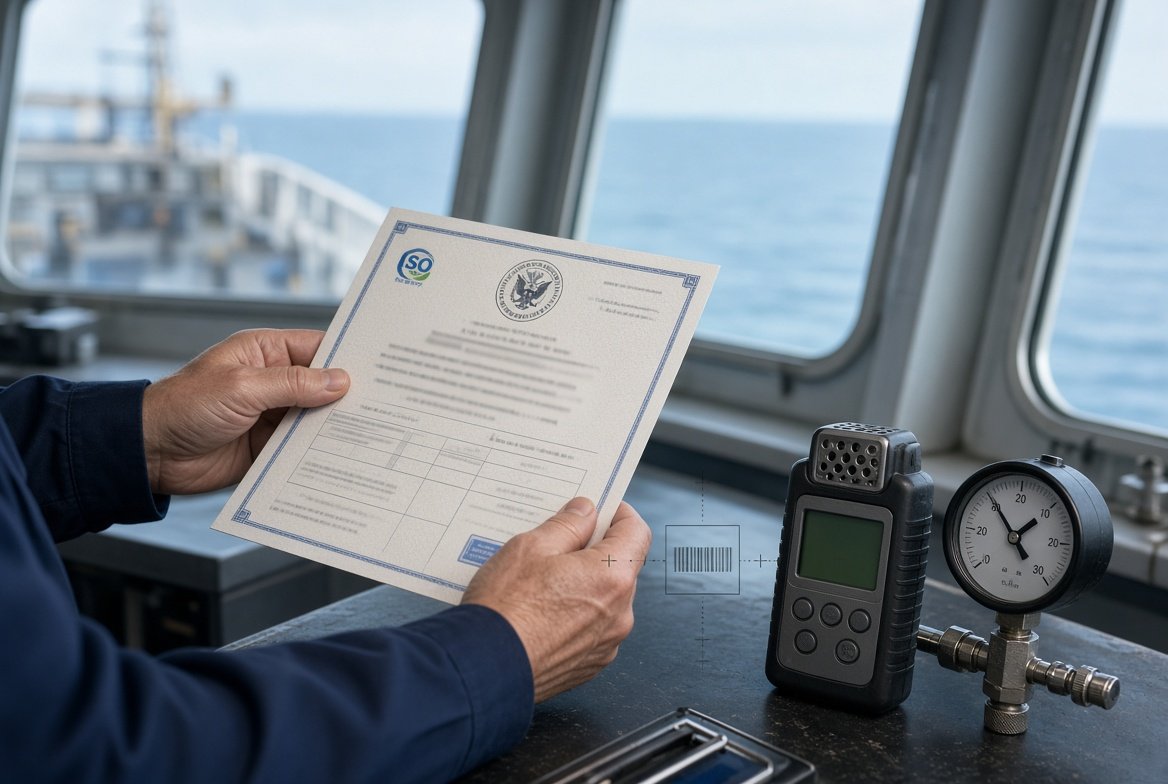
ODME Makes and Models We Work With
Send your model number and we'll confirm the method before booking. We also supply ODME units and spares in Singapore.
Browse all ODME equipment and spares.
ODME vs 15ppm Bilge Alarm
Both stop oil going overboard, but they sit on different systems. Tankers have both.
| ODME | OWS 15ppm bilge alarm | |
|---|---|---|
| Fitted on | Oil tankers, cargo area | Almost every ship, engine room |
| Monitors | Ballast and slop discharge from cargo tanks | Bilge water from the oily water separator |
| Limit | 30 litres of oil per nautical mile | 15 ppm oil content |
| IMO guideline | MEPC.108(49) | MEPC.107(49) |
| Record kept | At least three years | At least 18 months |
Need the bilge alarm done in the same port call? See OWS 15ppm bilge alarm calibration.
Why Tanker Operators Use AES for ODME Calibration
System-level checks
We test the meter, the inputs, the calculation and the valve, because the certificate has to cover the whole ODME.
Engineers who board
Alongside at terminals and shipyards, or at Singapore anchorages via your agent's launch.
Certified management systems
ISO 9001:2015 and ISO 45001:2018, bizSAFE Level 4 completed and bizSAFE Star.
Spares in Singapore
ODME units, measuring cells and spares supplied locally when a part can't be recovered.
One tanker visit
Combine with IG oxygen analyser, UTI meter and gas detector calibration.
Ready for inspection
See which equipment PSC flags most in our article on deficiencies linked to uncalibrated equipment.
See all our marine calibration services in Singapore.
ODME Calibration in Singapore: Common Questions
How often does an ODME need calibration?
Follow the maker's manual and your safety management system. Many operators calibrate yearly and before IOPP surveys and vetting inspections, with crew function tests before each discharge. Our calibration interval table lists common intervals.
Which ships need an ODME?
Oil tankers of 150 gross tonnage and above need an oil discharge monitoring and control system under MARPOL Annex I. Other ship types don't have one. They use an oily water separator with a 15ppm bilge alarm for engine room bilge water.
What gets calibrated on an ODME?
The oil content meter is zeroed and spanned, and the flow meter signal, speed and position inputs, discharge calculation, recorder and overboard valve control are all checked.
Can you calibrate an ODME at Singapore anchorage?
Yes. We attend tankers at anchorage as well as alongside at terminals and shipyards. Your agent usually arranges the launch, and we plan around cargo operations.
Our ODME has failed. Can we still sail?
MARPOL allows a tanker with a defective ODME to make one ballast voyage before going to a repair port, with manual methods used and the failure recorded in the Oil Record Book. Tell us the fault and your schedule and we'll see what can be done in Singapore.
We carry bio-fuel blends. Does that affect the ODME?
It can. The ODME has to be approved for the products you carry, and bio-fuel blends are listed separately on the equipment certificate. Send us the certificate and cargo list and we'll check before the job.
How much does ODME calibration cost in Singapore?
It depends on the model, the condition of the system and where the tanker is. Send the details through the contact form or WhatsApp and we'll price it before we board.
Get Your ODME Calibrated in Singapore
Send the vessel details and ODME model. We'll confirm the method, timing and price, then attend alongside or at anchorage.
Email sales@alrightes.com · 3791 Jalan Bukit Merah #06-01, E-Centre @ Redhill, Singapore 159471