Cart (
Overview
Every vessel discharging bilge water into the sea is legally obligated to ensure that oil content does not exceed 15 parts per million — a requirement enforced under MARPOL Annex I by port state control authorities worldwide. Failing that requirement does not just result in port detentions and fines; it exposes the operator, the chief engineer, and the company to criminal liability, class non-compliance, and reputational damage that can affect commercial operations long after the incident. The problem that ship operators face is not a lack of awareness — it is finding an Oil Discharge Monitoring Equipment system that is genuinely reliable in daily operation, straightforward enough for crew to operate without specialist intervention, and fully compliant with current MARPOL requirements including the latest MEPC 240(65) resolution covering bio fuel blends.
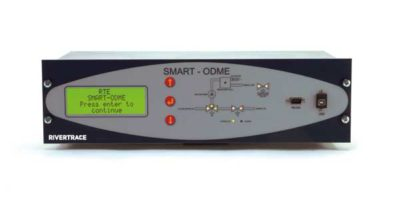
The Rivertrace Smart ODME is a complete, self-contained oil discharge monitoring and control system that includes every component required to meet both MEPC 108(49) and the current MEPC 240(65) requirements for bio fuels, effective 1 January 2016. Designed and manufactured by Rivertrace — a UK-based company with over 30 years of experience in marine pollution prevention instrumentation — the Smart ODME is built around one principle: give the crew a system that works accurately, survives the conditions of a working engine room, and keeps the vessel in compliance without demanding constant attention from engineers already stretched across other operational priorities.
What genuinely distinguishes the Smart ODME from comparable units in its class is the built-in simulation mode. When a Port State Control surveyor boards the vessel for a MARPOL compliance inspection, the crew can demonstrate the system’s operating logic and alarm responses in real time — without discharging overboard or creating a compliance event in the process. That single capability removes one of the most common sources of stress during PSC inspections and is a practical feature that experienced mariners and superintendents recognise immediately as a difference that matters.
Key Features
Full MEPC 240(65) Compliance — Including Bio Fuel Blends
The Smart ODME is type-approved to meet not only the original MEPC 108(49) performance standard but also the updated MEPC 240(65) resolution, which became mandatory from 1 January 2016 for vessels using bio fuel blends in their machinery spaces. Many older ODME units on the market were approved only under MEPC 108(49) and are not capable of accurately measuring oil content in bilge water contaminated with bio fuel components — a real operational problem on vessels running HVO, FAME-blended distillates, or other biofuel variants. The Smart ODME’s sensor technology handles the full range of oil types covered under both resolutions, ensuring the vessel remains in compliance regardless of what fuel the engine room is running.
Simulation Mode — PSC Demonstration Without Overboard Discharge
The Smart ODME incorporates a dedicated simulation mode that allows the crew to demonstrate the full operating sequence — including alarm activation, automatic overboard valve closure, and ORB logging — to Port State Control surveyors without initiating an actual discharge. This is a practical operational tool rather than a cosmetic feature. PSC surveyors conducting MARPOL equipment checks routinely request a system demonstration, and the ability to run through the complete operating logic without a discharge event simplifies the inspection process significantly. Chief engineers who have managed PSC inspections on vessels without simulation-capable ODME systems will appreciate how much this reduces inspection complexity.
Measurement Range 0–1000 ppm — Full Operational Span
The Smart ODME measures oil content across the full range of 0 to 1000 ppm with a resolution of 1 ppm, covering the complete operational spectrum from clean bilge water approaching the 15 ppm discharge limit through to heavily contaminated water requiring retention on board. The 15 ppm threshold at which the system triggers automatic overboard valve closure is measured continuously and accurately — giving the operator visibility of oil content well before it approaches the compliance limit, not just a binary alarm at the legal threshold. That 1 ppm resolution also matters during routine operation when engineers are monitoring bilge water quality during separator operation and need reliable trending data.
Automatic Clean Water Calibration — Consistent Accuracy Without Crew Intervention
The Smart ODME performs automatic clean water calibration internally, maintaining measurement accuracy without requiring the crew to carry out manual calibration procedures on a defined schedule. On a working vessel where the chief engineer and second engineer are managing multiple systems simultaneously, a self-calibrating ODME eliminates one more routine task from an already full maintenance schedule — and removes human error from the calibration process. Consistent measurement accuracy across the full 0–1000 ppm range is the direct result of reliable, automated calibration that does not depend on crew availability or procedural discipline.
Data Retrieval via LCD Display or PC Download — ORB-Ready Logging
Discharge data is retrievable directly from the unit’s LCD display during operation and can be downloaded to a PC using Hyperterminal for record-keeping and port state control documentation purposes. The system logs the data required to support Oil Record Book Part I entries under MARPOL Annex I — including discharge quantities, ppm readings during discharge, and automatic valve closure events. Accurate, retrievable discharge data is the primary evidence basis during a PSC inspection and the documentation that protects the operator and vessel master in the event of a MARPOL allegation. Having that data resident in the ODME itself, accessible without third-party software, simplifies the documentation process considerably.
Ease of Retrofitting — Designed for Installation Into Existing Systems
The Smart ODME is specifically designed for ease of retrofitting into existing bilge water treatment systems, with switchable 115/230V AC supply voltage accommodating different vessel electrical standards without requiring additional transformer equipment. The 3-phase motor supply at 380–440V AC, 50–60Hz covers the standard industrial motor specifications found on commercial vessels worldwide. For vessels replacing an older ODME unit that has reached the end of its service life or lost type approval under current MARPOL requirements, the Smart ODME’s design intent is to simplify the installation process and reduce the shipyard time required for the replacement.
Multi-Classification Society Approval — Global Trading Compliance
The Smart ODME holds type approval under MEPC 108(49) from DNV GL, GL, USCG, ABS, CCS, NKK, BV, and Russian Register — covering the flag states and classification societies relevant to the majority of the global commercial fleet. MEPC 240(65) approval is held from DNV GL. For vessel operators managing a mixed fleet trading globally across US ports, European terminals, Chinese facilities, and Russian Far East ports, multi-society approval means the same unit can be fitted across the fleet without flag state or class-specific variants. That simplifies procurement, spares holding, and crew familiarisation across a mixed fleet.
Technical Specifications
Model: Rivertrace Smart ODME
Type: Oil Discharge Monitoring Equipment (ODME)
Oil Measurement Range: 0 – 1000 ppm (all types)
Resolution: 1 ppm
Accuracy: As per MEPC 108(49) requirements
Calibration: Automatic clean water calibration
Display: LCD Display
Data Retrieval: LCD display or PC download via Hyperterminal
Supply Voltage (Control Unit): 115 / 230V AC, 50–60Hz (Switchable)
Zener Barrier / Computer Module: 115 / 230V AC, 50–60Hz (Switchable)
Motor Supply: 380–440V AC, 50–60Hz, 3 Phase, 250W
Supply Voltage Consumption: <50 VA Single Phase
MARPOL Compliance: MEPC 108(49) + MEPC 240(65) for Bio Fuels
Simulation Mode: Yes — PSC surveyor demonstration capability
Approvals: MEPC 108(49): DNV GL, GL, USCG, ABS, CCS, NKK, BV, Russian Register | MEPC 240(65): DNV GL
Benefits
The most immediate practical benefit of the Smart ODME is the elimination of MARPOL compliance uncertainty during routine bilge water discharge operations. When the system is operating correctly and the overboard valve control is functioning as designed, the chief engineer does not need to monitor oil content manually or make a judgment call about when to close the overboard — the system manages that automatically and logs the event. That removes the human factor from what is, in practice, the highest-risk MARPOL compliance decision that takes place in the engine room on a regular basis.
For operators running vessels on bio fuel blends, MEPC 240(65) compliance is not optional — it is a flag state and class requirement. Vessels fitted with ODME units approved only under MEPC 108(49) are technically operating with non-compliant equipment when using bio fuel blends. Replacing or upgrading to a Smart ODME closes that compliance gap without requiring a bespoke modification — the unit is type-approved for bio fuel operation as standard.
From a port state control perspective, the simulation mode is a genuine operational asset. PSC inspections under the Paris MOU, Tokyo MOU, and USCG inspection regimes routinely include ODME operational checks. A vessel that can demonstrate the complete system sequence to a surveyor in real time — including alarm response and valve closure — without a compliance event in the process is in a materially better position during an inspection than one that cannot. Detentions related to MARPOL equipment operability are avoidable with equipment that can be demonstrated on demand.
For ship management companies operating a fleet, the multi-society type approval profile of the Smart ODME simplifies procurement and fleet standardisation. One unit, one set of spares, one crew familiarisation programme — applicable across vessels classed with DNV GL, ABS, BV, NKK, CCS, or the Russian Register. That has measurable cost implications for procurement, technical superintendence, and crew training.
Who It’s For
Chief Engineers on MARPOL-Regulated Commercial Vessels
The chief engineer is the person ultimately responsible for ensuring that bilge water discharge operations comply with MARPOL Annex I — and for ensuring that the Oil Record Book accurately reflects every overboard discharge. If you are managing a busy engine room on a product tanker, bulk carrier, or container vessel trading across multiple port state control regimes, and your current ODME is ageing, no longer type-approved for bio fuel blends, or failing to produce reliable ppm readings, the Smart ODME is the unit your superintendent needs to see on the replacement specification. The automatic calibration, the 0–1000 ppm measurement range, and the simulation mode for PSC surveys address the practical operational frustrations that experienced chief engineers consistently raise with legacy ODME installations.
Fleet Technical Superintendents and Procurement Teams
If you are responsible for maintaining MARPOL compliance across a managed fleet and managing the ODME replacement cycle as units reach the end of service life or lose type approval validity, the Smart ODME’s multi-society approval profile and MEPC 240(65) compliance simplify the specification process significantly. A single product that is approved for DNV GL, ABS, BV, NKK, CCS, and Russian Register vessels and that meets the current bio fuel requirements eliminates the need for fleet-specific variants and gives your procurement team a consistent product to specify, order, and hold spares for. Rivertrace’s track record in the marine pollution prevention instrumentation market — over three decades of product development for the commercial fleet — supports the procurement decision with a documented history of performance in service.
Newbuilding Project Managers and Yard Outfitting Teams
For vessels under construction or major conversion where the ODME is being specified as part of the engine room outfitting package, the Smart ODME’s switchable voltage supply, retrofit-friendly design, and broad class approval profile mean it can be fitted and approved across a wide range of vessel types and flag states without requiring bespoke adaptations. The complete system — including all components required for MEPC 108(49) and MEPC 240(65) compliance — is supplied as a package, reducing the number of suppliers and approval documents the project team needs to manage.
Possible Applications
Product Tanker Engine Room Bilge Discharge Management — Continuous oil content monitoring during bilge pump overboard discharge operations on product tankers where cargo contamination of bilge water is a realistic risk and MARPOL compliance record-keeping is subject to heightened PSC scrutiny.
Bulk Carrier Bilge Water Operations in US Ports — USCG type approval makes the Smart ODME directly applicable for bulk carrier operators trading regularly to US ports, where USCG MARPOL inspections are thorough and discharge record discrepancies result in vessel detention and Department of Justice referral.
Container Vessel Fleet Standardisation — Container vessel operators with mixed-class fleets standardising on a single ODME unit across vessels classed with multiple societies, simplifying maintenance, spares, and crew training across the fleet.
ODME Replacement on Vessels Operating Bio Fuel Blends — Vessels transitioning to HVO or FAME-blended bio fuel operation requiring ODME upgrade to MEPC 240(65) type-approved equipment to maintain MARPOL compliance with current flag state requirements.
PSC High-Inspection-Regime Trading Routes — Vessels operating on routes with high PSC inspection frequency under Paris MOU or Tokyo MOU where ODME operability and documentation quality are consistently inspected, and simulation capability for surveyor demonstration is an operational advantage.
Offshore Support Vessel Operations — OSVs and platform supply vessels operating in environmentally sensitive offshore areas where overboard discharge limits are strictly enforced and the ability to demonstrate ODME compliance during offshore facility inspections is required.
Newbuilding Outfitting Across Multiple Classification Societies — Newbuilding projects at yards constructing vessels for multiple owners across different class societies, where a single ODME product covering DNV GL, ABS, BV, NKK, CCS, and Russian Register simplifies the outfitting approval process.
Trust & Certifications
MEPC 108(49) — IMO Performance Standard for ODME
Resolution MEPC 108(49) is the International Maritime Organization’s performance standard for oil discharge monitoring and control systems fitted on ships under MARPOL Annex I. Type approval to MEPC 108(49) confirms that the ODME meets IMO’s defined requirements for measurement accuracy, response time, automatic overboard valve control, and data recording — the baseline compliance requirement for ODME installation on regulated vessels. The Smart ODME holds MEPC 108(49) type approval from DNV GL, GL, USCG, ABS, CCS, NKK, BV, and the Russian Register, covering the class societies and flag states relevant to the vast majority of the world commercial fleet.
MEPC 240(65) — Updated Standard for Bio Fuel Compliance
Resolution MEPC 240(65) updates the ODME performance standard to address the measurement challenges presented by bio fuel blends in bilge water — a gap identified as bio fuel use in the commercial fleet grew substantially after 2008. Effective 1 January 2016, vessels using bio fuel blends are required to have ODME equipment that meets MEPC 240(65) requirements. The Smart ODME holds MEPC 240(65) type approval from DNV GL, making it directly suitable for vessels operating on bio fuel blends without additional equipment modification.
DNV GL Type Approval — Both MEPC 108(49) and MEPC 240(65)
DNV GL is one of the world’s leading classification societies and a recognised type approval authority for marine safety and pollution prevention equipment. Holding DNV GL type approval for both MEPC 108(49) and the current MEPC 240(65) standard means the Smart ODME has been independently tested and verified by one of the most respected technical authorities in the maritime industry. For technical superintendents, flag state surveyors, and class surveyors reviewing equipment compliance during periodical surveys, DNV GL type approval is the highest-weight single certification in the ODME approval hierarchy.
USCG Type Approval — US Port Trading Compliance
United States Coast Guard type approval under 33 CFR Part 151 is required for ODME installations on vessels trading to US ports. The USCG enforces MARPOL Annex I requirements rigorously, with inspections that include direct examination of the ODME, the Oil Record Book, and cross-referencing of discharge entries against GPS position data. USCG-approved ODME equipment with accurate, retrievable discharge records is the primary compliance evidence basis for vessels operating in US waters. The Smart ODME’s USCG type approval is directly relevant for operators with vessels on transatlantic routes, Gulf of Mexico trading, or US West Coast service.
ABS, BV, CCS, NKK, Russian Register Approvals
In addition to DNV GL and USCG, the Smart ODME holds type approval from ABS (American Bureau of Shipping), Bureau Veritas, China Classification Society, Nippon Kaiji Kyokai, and the Russian Register of Shipping — the classification societies covering the major vessel registration and trading areas across North America, Europe, China, Japan, and Russia. This breadth of class approval means fleet operators with vessels classed under different societies can standardise on the Smart ODME across the fleet without seeking individual class dispensation or fitting society-specific variants.
Rivertrace — 30+ Years in Marine Pollution Prevention Instrumentation
Rivertrace is a UK-based manufacturer with over three decades of experience developing oil-in-water monitoring and pollution prevention instrumentation specifically for the marine industry. The company’s product range is designed, tested, and approved for the conditions of commercial vessel engine room operation — not adapted from industrial process measurement equipment. For procurement teams and technical superintendents evaluating ODME suppliers, Rivertrace’s extended history in the marine sector, combined with the Smart ODME’s broad multi-society approval profile, represents a procurement decision supported by documented product performance in the commercial fleet.
Accessories & Variants
Complete System Package — All Components Included
The Smart ODME is supplied as a complete system including all components required to meet MEPC 108(49) and MEPC 240(65) requirements. This means the vessel does not need to source and integrate separate measurement, control, and logging components from multiple suppliers — the Smart ODME package covers the full system requirement. Confirm with your supplier which specific components are included in the supplied package for your vessel’s installation configuration.
Overboard Control Valve Interface
The Smart ODME is designed to interface with the vessel’s overboard discharge valve for automatic closure when oil content exceeds 15 ppm. For vessels where the existing overboard valve control interface requires adaptation for connection to the Smart ODME control output, confirm interface compatibility requirements with Rivertrace or your supplier at the specification stage to ensure a clean installation without field modifications.
PC Data Download Interface — Hyperterminal Compatible
The Smart ODME supports data download to PC via Hyperterminal for discharge record documentation, ORB entry support, and long-term data archiving. For vessels with specific fleet management system requirements for ODME data integration, confirm data format compatibility with your fleet management system supplier during the procurement process.
Variants and Related Products
Rivertrace Smart ODME — MEPC 108(49) + MEPC 240(65) — Standard configuration covering all vessel types using conventional and bio fuel blends | Complete system supply | Multi-society type approved
For vessels with specific installation requirements, trading area class obligations, or fleet standardisation needs across other Rivertrace product lines — including bilge alarm units and oil-in-water monitors for other applications — contact your supplier to confirm the correct product configuration and available accessories for your specific vessel type and installation.
Get in Touch
If you are specifying a replacement ODME for a vessel transitioning to bio fuel operation, outfitting a newbuilding across multiple classification societies, or managing a fleet ODME replacement programme — or if you need to confirm MEPC 240(65) compliance requirements for your specific vessel type and trading area — contact us to discuss your requirement and request a formal procurement quotation.
Our technical team can assist with product selection against your MARPOL compliance specification, confirm class approval requirements for your flag state and trading route, and support procurement documentation for your vessel file and class survey records.
📍 3791 Jalan Bukit Merah #06-01, E-Centre @ Redhill, Singapore 159471