Cart (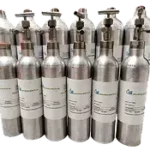
Overview
Confined space entry is one of the highest-risk activities in industrial and marine safety — and the multi-gas personal monitor is the primary instrument that tells a worker whether it is safe to enter, stay inside, or evacuate. But a multi-gas monitor that has not been verified against a known reference concentration before use is not a safety instrument; it is a false assurance. Sensors drift. Electrochemical cells consume themselves over time. A catalytic bead LEL sensor that was fully functional three months ago may have been silently poisoned by a single exposure to a silicone-containing cleaning agent. Without a bump test or calibration against a certified multi-gas reference, none of this is detectable until the instrument fails to alarm in a genuinely hazardous atmosphere.
The 4-Gas Calibration Mixture — Propane 25% LEL / CO 100 ppm / H₂S 25 ppm / O₂ 18% Vol Balance N₂ is a precision-blended four-component span gas specifically formulated for simultaneous calibration and bump testing of the four sensor channels that define the standard multi-gas personal monitor: LEL combustible gas, carbon monoxide, hydrogen sulphide, and oxygen. A single cylinder, a single application, and all four sensors verified in one calibration cycle — this is the multi-gas calibration approach that most portable gas detector manufacturers recommend, and that most competent confined space entry programmes actually use.
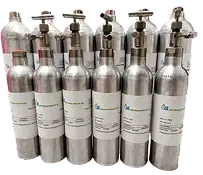
What makes this specific mixture stand out is the component concentration selection. Propane at 25% LEL, CO at 100 ppm, H₂S at 25 ppm, and O₂ at 18% Vol are concentrations deliberately chosen to sit within the working measurement range of each sensor channel — not at the extremes where measurement accuracy is harder to verify. The nitrogen balance provides long-term mixture stability across all four components. Available in five C10 cylinder sizes — 34L, 58L, 103L, 110L, and 116 litres — this calibration gas gives multi-gas detector programmes the flexibility to match cylinder volume to fleet size and calibration frequency without compromise on mixture accuracy.
Key Features
Four-Component Mixture — Single Cylinder Calibrates All Standard Multi-Gas Channels
The four components in this mixture correspond directly to the four sensor channels present in virtually every standard portable multi-gas monitor deployed in confined space entry and industrial safety programmes: an LEL combustible gas sensor, a CO electrochemical sensor, an H₂S electrochemical sensor, and an O₂ electrochemical sensor. Using a single four-component calibration gas eliminates the need to perform separate single-gas calibrations on each channel — reducing calibration time, the number of cylinders required per calibration event, and the handling complexity of managing multiple single-gas cylinders alongside each other in a calibration programme.
Propane at 25% LEL — Mid-Range Combustible Gas Reference
Propane has a lower explosive limit of 2.1% by volume in air. At 25% LEL, this component places the LEL calibration point at a quarter of the measurement range — a concentration that provides a meaningful verification of catalytic bead or infrared LEL sensor response well above the low-end trace level while remaining well within the sensor’s linear measurement range. Propane is widely accepted as a calibration reference gas for LEL sensors in many multi-gas monitor configurations, particularly for instruments deployed in oil and gas, LPG, and general petrochemical environments where propane-family hydrocarbons are the primary combustible gas hazard.
CO at 100 ppm — Upper Working Range Carbon Monoxide Reference
At 100 ppm — twice OSHA’s permissible exposure limit for CO — the carbon monoxide component provides a mid-to-upper range calibration reference that verifies sensor response at a concentration representing a genuine occupational health alarm condition. Calibrating the CO sensor channel at this concentration confirms that the sensor will respond accurately at and above the first alarm threshold (typically 25–35 ppm), giving safety managers confidence that the instrument will alarm correctly in a real CO exposure event rather than having been verified only at a trace-level concentration.
H₂S at 25 ppm — Alarm-Threshold Hydrogen Sulphide Reference
Hydrogen sulphide is acutely toxic at concentrations that can be reached rapidly in sewer systems, oil and gas operations, pulp and paper facilities, and marine cargo spaces. OSHA’s ceiling limit for H₂S is 20 ppm; most portable detector first-stage alarms are set at 10 ppm or below. At 25 ppm, the H₂S calibration component verifies sensor response at a concentration just above the common alarm threshold range — confirming that the sensor is measuring accurately in the range where alarm activation decisions matter most, without applying a dangerously high test concentration to the sensor during routine calibration.
O₂ at 18% Vol — Oxygen Deficiency Sensor Verification
The oxygen component at 18% Vol — slightly below the normal atmospheric oxygen concentration of 20.9% — verifies oxygen sensor response in the deficiency direction where confined space entry alarms are triggered. Most multi-gas monitors are configured with an oxygen deficiency alarm at 19.5% Vol (OSHA threshold for oxygen-deficient atmosphere). Calibrating with 18% O₂ confirms that the sensor will respond accurately at concentrations below the alarm threshold — providing direct verification that the instrument will alarm when a worker enters an oxygen-deficient atmosphere, not just when the sensor is exposed to normal air.
Balance Nitrogen — Mixture Stability Across All Four Components
Nitrogen is the correct balance gas for a multi-component mixture containing reactive gases such as CO, H₂S, and a sub-atmospheric O₂ concentration. Unlike air-balanced mixtures, which introduce oxygen that can react with H₂S and CO over time and degrade the mixture accuracy, nitrogen balance provides an inert carrier that preserves the stated concentration of each reactive component throughout the cylinder’s shelf life. For a four-component mixture where concentration accuracy is critical across all components simultaneously, nitrogen balance is a meaningful quality attribute — not a minor formulation detail.
Technical Specifications
Mixture Type: 4-Component Multi-Gas Span Gas
Component 1: Propane (C3H8) — 25% LEL (approximately 0.525% Vol)
Component 2: Carbon Monoxide (CO) — 100 ppm
Component 3: Hydrogen Sulphide (H₂S) — 25 ppm
Component 4: Oxygen (O₂) — 18% Vol
Balance Gas: Nitrogen (N2)
Cylinder Format: C10
Available Cylinder Sizes: 34L / 58L / 103L / 110L / 116 Litres
Application: Span Calibration, Bump Testing, 4-Gas Multi-Sensor Verification
Compatible Sensors: Catalytic Bead / IR LEL, Electrochemical CO, Electrochemical H₂S, Electrochemical O₂
Product Category: Span Gas and Regulator
Benefits
One cylinder replaces four — simplifying calibration gas procurement and handling. Managing separate single-gas cylinders for LEL, CO, H₂S, and O₂ calibration means four different gas SKUs, four different expiry dates, four different regulator connections, and four separate steps in every calibration event. A single four-component calibration gas eliminates all of that — one cylinder, one connection, one calibration cycle that simultaneously verifies all four sensor channels. For safety managers and calibration technicians running multi-gas monitor programmes across large teams, the operational simplification is significant.
Reduces calibration time per instrument — critical for large fleet programmes. In a confined space entry programme deploying 20, 50, or 100 portable multi-gas monitors, calibration time per instrument compounds into a substantial programme overhead. A single-connection four-gas calibration cycle is faster than sequential single-gas calibrations on each channel — reducing the time and technician effort required to clear an entire fleet for the day’s operations and making the calibration programme practically sustainable without cutting corners.
Verifies the sensors most likely to be silently degraded. LEL sensor poisoning, electrochemical CO and H₂S cell consumption, and O₂ sensor membrane degradation are all failure modes that develop without any visible instrument fault indication. The only way to detect them before a worker depends on an instrument that has failed silently is to apply a known concentration of each target gas and confirm the instrument’s response. A four-component bump test does exactly this — simultaneously, efficiently, and with a single certified reference.
Supports compliance with confined space entry regulatory requirements. OSHA 29 CFR 1910.146, the IMO’s guidelines on confined space entry in shipping, and equivalent national safety regulations require atmosphere testing with calibrated instruments before confined space entry. Maintaining bump test and calibration records that document multi-gas sensor verification with a certified reference gas provides the regulatory evidence required to demonstrate programme compliance during inspections and incident investigations.
Nitrogen balance preserves mixture accuracy across the full cylinder life. A four-component mixture where one component has degraded — even slightly — produces a systematic calibration error on that sensor channel for every instrument calibrated with that cylinder. The nitrogen balance formulation prevents the oxidative degradation of CO and H₂S components that air-balanced mixtures are susceptible to, ensuring that the mixture concentration is consistent from first use to last and that every calibration performed with the cylinder is based on an accurate reference.
Who It’s For
The HSE Officer Managing a Confined Space Entry Programme
Your team enters confined spaces daily — tanks, sewers, process vessels, cable ducts, and enclosed plant areas where any combination of combustible gas, CO, H₂S, and oxygen deficiency could be present. Your procedure requires a bump test of every multi-gas monitor before each entry shift, and a full calibration on a defined schedule. You need a calibration gas that covers all four sensor channels simultaneously, in a cylinder that one of your team can carry to the entry point or keep at the site calibration station. The four-component mixture means your pre-entry bump test takes one connection and one gas application — not four separate steps that field teams will shortcut under time pressure.
The Offshore Platform Safety Coordinator or Marine Safety Officer
Your installation or vessel requires multi-gas personal monitors across a workforce that includes confined space entry teams, hot work permit holders, and workers entering enclosed machinery and cargo spaces. Your calibration programme needs to service a large portable detector fleet within tight operational windows — around crew rotations, port calls, and permit-to-work schedules. A single four-component calibration gas for your entire multi-gas monitor fleet simplifies supply logistics, reduces the number of gas cylinder types to manage in your gas store, and ensures every instrument is verified against all four hazard channels before issue — not just the channels that are easy to check with a single-component gas on hand.
The Gas Detection Instrument Service Technician
You service and calibrate portable multi-gas monitors for a client base across construction, industrial maintenance, oil and gas, and marine sectors. The majority of the instruments in your service portfolio are standard four-gas monitors — LEL, CO, H₂S, and O₂. Using a single four-component calibration gas across your client base standardises your calibration procedure, reduces the number of gas cylinders you carry on your service vehicle, and ensures every four-gas monitor you calibrate and certify has been verified on all channels with a single, traceable reference mixture. A 103L or 116L cylinder on your calibration bench handles a full day’s work without a cylinder change.
Possible Applications
- Confined space entry programmes across all industries — Bump testing and span calibration of portable four-gas monitors before entry into any enclosed space where LEL, CO, H₂S, or oxygen hazards may be present
- Oil and gas production and refinery operations — Multi-gas monitor calibration for workers in process areas where combustible hydrocarbon, CO, and H₂S hazards coexist across production, processing, and maintenance operations
- Marine vessel confined spaces and cargo operations — Calibration of personal multi-gas monitors used by seafarers entering tanks, voids, pump rooms, and cargo holds where oxygen deficiency, combustible gas, and toxic gas hazards are recognised entry risks
- Wastewater treatment and sewer infrastructure — Multi-gas sensor verification for personal monitors used in sewer entry and wastewater process areas where H₂S, methane, CO, and oxygen deficiency are the primary gas hazards
- Construction and civil engineering confined space work — Bump testing of four-gas monitors before entry into excavations, tunnels, utility vaults, and enclosed civil structures where atmospheric hazards may develop unpredictably
- Petrochemical and chemical processing facilities — Calibration of personal monitors for workers in process areas and confined space entry operations where multiple gas hazards are simultaneously present
- Gas detection instrument service and calibration workshops — Bench calibration reference gas for technicians servicing, calibrating, and certifying four-gas portable monitors across multiple client industries
- Mining and underground infrastructure maintenance — Multi-gas monitor calibration for underground workers where combustible gas, CO from diesel equipment, and oxygen deficiency are concurrent hazards in enclosed working environments
Trust and Certifications
Four-Component Precision Blending — Certified Accuracy Across All Components
Producing a four-component calibration gas mixture to accurate concentration tolerances across all components simultaneously is more technically demanding than single-component mixtures — each component must be blended to its stated concentration without interfering with the others, and the mixture must remain stable at those concentrations throughout its shelf life. This mixture is produced by precision gravimetric blending with cylinder preparation appropriate for reactive multi-component gas mixtures, with each cylinder accompanied by a certificate of analysis documenting the verified concentration of all four components — providing the traceable reference required for quality-managed calibration programmes.
Nitrogen Balance — Long-Term Mixture Stability for Reactive Components
The nitrogen balance formulation is consistent with the requirements of ISO 6142 and the gas mixture industry’s established practice for reactive multi-component mixtures containing CO, H₂S, and sub-atmospheric O₂. The chemical inertness of nitrogen prevents the oxidative degradation of CO and H₂S components that can occur in air-balanced mixtures over extended storage periods — maintaining mixture accuracy throughout the cylinder’s certified shelf life and ensuring that calibration results remain reliable from the first cylinder use to the last.
Relevant to OSHA, IMO, and Confined Space Entry Regulations
Confined space entry safety regulations across most jurisdictions — including OSHA 29 CFR 1910.146, the IMO’s MSC-CIRC.1401 guidelines on confined space entry in shipping, and equivalent national codes — require pre-entry atmosphere testing with calibrated and functional gas detection instruments. Regular bump testing and span calibration of multi-gas monitors with a certified four-component reference gas provides the instrument performance verification and documentary evidence required to demonstrate compliance with these frameworks. The component concentrations in this mixture are directly relevant to the regulatory reference levels that define alarm thresholds in confined space entry programmes.
Supplied by Alright Engineering Solutions
The 4-Gas Calibration Mixture — Propane 25% LEL / CO 100 ppm / H₂S 25 ppm / O₂ 18% Vol Balance N₂ is supplied through Alright Engineering Solutions Pte. Ltd., an authorised distributor of portable and fixed gas detection equipment, calibration gases, and span gas regulators in Singapore. Our team supports industrial, marine, and offshore clients with calibration gas sourcing, regulator supply, and gas detection programme advisory across Singapore and the regional market.
Accessories and Variants
Cylinder Size Variants
34 Litre (C10) — Compact portable cylinder for field calibration kits, confined space entry teams, and low-frequency single-site use
58 Litre (C10) — Mid-size cylinder for regular site calibration and small multi-gas monitor fleets
103 Litre (C10) — Large capacity cylinder for calibration benches and medium-to-high frequency programmes
110 Litre (C10) — High-capacity option for instrument service workshops and large detector fleet programmes
116 Litre (C10) — Maximum C10 capacity for calibration laboratories and high-consumption industrial operations
Compatible Span Gas Regulators
A correctly specified C10 regulator compatible with multi-component reactive gas service is required for this mixture. The regulator must be compatible with H₂S and CO service — Alright Engineering Solutions can confirm the appropriate regulator specification for this four-component mixture and your instrument connection requirement, ensuring accurate gas delivery and regulator material compatibility across all components.
Related Single-Component Calibration Gas Products
CO 50 PPM Balance Air — Single-component CO span gas for CO-only detector calibration
CO 100 PPM Balance Air — Single-component CO span gas for upper range CO sensor verification
HC Methane 2.5% (50% LEL) Balance Air — Methane LEL span gas for combustible gas detectors calibrated to the methane reference standard
HC Isobutane 0.9% (50% LEL) Balance Air — Gas-specific LEL calibration for LPG environments
NH3 Ammonia 5/10/50 ppm Balance N2 — Ammonia span gas for facilities with NH3 monitoring requirements
N2 Pure Nitrogen 99.995% Vol — Grade 4.5 zero gas for sensor zeroing prior to multi-gas span calibration
Get in Touch
If you are sourcing a four-component multi-gas calibration mixture — Propane 25% LEL / CO 100 ppm / H₂S 25 ppm / O₂ 18% Vol Balance N₂ — for a confined space entry programme, offshore platform, marine vessel, or instrument service operation, contact Alright Engineering Solutions to confirm cylinder size availability and request a formal quotation.
Our team can advise on regulator compatibility, related single-component calibration gas products, and supply arrangements suited to your multi-gas monitor fleet and calibration programme requirements.
📍 3791 Jalan Bukit Merah #06-01, E-Centre @ Redhill, Singapore 159471