Cart (
Overview
Every vessel operating in international waters faces the same non-negotiable requirement: bilge water discharged overboard must not exceed 15 parts per million of oil content. MARPOL Annex I Regulation 14 makes this a legal obligation, and port state control inspectors across every major maritime authority treat non-compliance seriously — detentions, fines, and vessel delays are the direct operational consequence of a bilge alarm system that fails, malfunctions, or produces unreliable readings. For chief engineers and vessel owners, this is not simply a regulatory checkbox. It is a liability that depends entirely on the accuracy and reliability of one piece of onboard equipment.
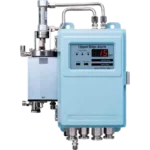
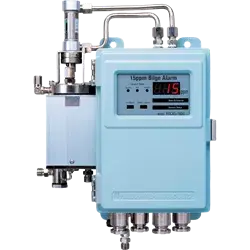
The FOCAS-1800 15ppm Bilge Alarm from FELLOW KOGYO is a purpose-built oil content monitor designed specifically to meet the operational and regulatory demands of MARPOL-compliant vessel operations. FELLOW KOGYO has been manufacturing marine safety and monitoring equipment in Japan for decades, and the FOCAS-1800 reflects the engineering precision and reliability standards that Japanese marine equipment manufacturers are internationally recognised for. Where generic or low-cost alternatives may compromise on response time, measurement accuracy, or long-term operational stability, the FOCAS-1800 is built to provide consistent, verifiable performance across the full service life of the unit.
What sets the FOCAS-1800 apart from competing bilge alarm systems is its full compliance with IMO Resolution MEPC.107(49) — the current international standard governing 15ppm bilge alarms — combined with the build quality and after-sales support of an established Japanese OEM. For vessels trading on routes subject to rigorous PSC inspection, particularly in the Tokyo MOU and Paris MOU regions, having a bilge alarm system from a recognised, type-approved manufacturer substantially reduces the risk of equipment-related PSC deficiencies during port inspections.
Key Features
Real-Time Oil Content Measurement
The FOCAS-1800 continuously monitors the oil content of bilge water as it passes through the oily water separator, providing live readings of oil concentration in ppm. This real-time measurement gives the engineer on watch immediate visibility of the discharge water quality before it exits the vessel — allowing intervention before a MARPOL violation occurs rather than after the fact. In practical terms, this means the 15ppm threshold is enforced at the point of discharge, not discovered during a subsequent log review.
Automatic Shut-Off on Alarm Activation
When oil content exceeds 15ppm, the FOCAS-1800 triggers an automatic alarm and initiates shut-off of the overboard discharge valve, redirecting the bilge water back to the bilge holding tank. This automatic response removes the dependency on manual operator intervention in the critical moment — a significant safeguard on vessels with reduced watch staffing or during periods of high operational workload. The automatic shut-off mechanism is a core requirement of MEPC.107(49) and is essential for type approval compliance.
Swift Response to Changes in Oil Concentration
The FOCAS-1800 is engineered for rapid response to sudden changes in oil concentration — a characteristic that matters in real operating conditions where oil breakthrough in the separator can occur quickly and without warning. Slow-response systems may allow a period of non-compliant discharge before the alarm triggers; the FOCAS-1800’s response characteristics are designed to minimise this window to the greatest extent the technology permits. For vessels with older or less efficient oily water separators where performance can be inconsistent, a fast-response bilge alarm provides an additional layer of operational protection.
Digital Display — Continuous Visibility of ppm Reading
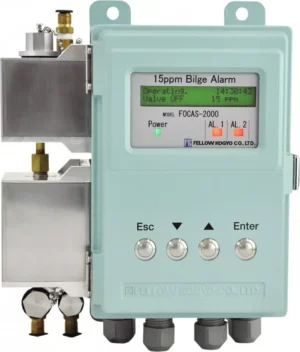
The unit features a clear digital display showing the current oil content reading in ppm. This gives the duty engineer immediate, unambiguous visibility of the system status without requiring interpretation of analogue scales or indicator lights. The displayed reading also supports the recording requirements of MARPOL’s Oil Record Book — engineers can cross-reference displayed readings with log entries during routine record-keeping and during PSC inspections where ORB accuracy is checked against equipment performance.
MEPC.107(49) Type Approval Compliance
The FOCAS-1800 is designed and tested to meet IMO Resolution MEPC.107(49), the international performance standard for 15ppm bilge alarms that has been mandatory for new installations since 2005. Type approval to MEPC.107(49) is a flag state requirement for bilge alarm equipment on MARPOL-applicable vessels, and PSC inspectors verify type approval status as part of equipment inspections. A bilge alarm without current type approval certification exposes the vessel to immediate PSC deficiency and potential detention — the FOCAS-1800’s MEPC.107(49) compliance removes this exposure entirely.
Compact, Panel-Mount Design for Engine Room Installation
The FOCAS-1800 is engineered for practical engine room installation — a compact unit designed to integrate into the engine room monitoring panel or to be bulkhead-mounted in the vicinity of the oily water separator. Engine rooms on commercial vessels are space-constrained environments where equipment placement involves real practical trade-offs; the FOCAS-1800’s form factor is suited to the installation constraints typical of the vessel types it serves. The unit’s construction reflects the marine-grade build standard required for the temperature, vibration, and humidity conditions of a working engine room.
Reliable Performance in Commercial Vessel Operating Conditions
Commercial vessel operation places demanding requirements on onboard equipment — continuous duty cycles, variable sea states, wide ambient temperature ranges, and the vibration environment of a working engine room. The FOCAS-1800 is built to operate reliably under these conditions over extended periods between drydock service intervals. For vessel managers responsible for maintaining equipment serviceability across trading voyages, reliability of the bilge alarm is not a secondary consideration — it is the primary factor that determines whether MARPOL compliance can be maintained continuously or only when conditions are favourable.
Technical Specifications
Model: FOCAS-1800
Manufacturer: FELLOW KOGYO Co., Ltd., Japan
Function: Oil content monitoring — 15ppm bilge alarm
Measurement Range: 0–15 ppm (oil in water)
Alarm Threshold: 15 ppm (automatic alarm and shut-off)
Display: Digital ppm readout
Alarm Output: Automatic shut-off of overboard discharge valve; audible/visual alarm
Compliance Standard: IMO Resolution MEPC.107(49)
Application: MARPOL Annex I — oily water separator discharge monitoring
Installation: Engine room panel-mount / bulkhead-mount
Country of Manufacture: Japan
Benefits
The most direct benefit of the FOCAS-1800 is straightforward: it keeps the vessel on the right side of MARPOL. For ship owners and vessel managers, that means avoiding the PSC deficiencies, flag state notifications, port detentions, and potential criminal liability that follow confirmed MARPOL violations in oil discharge. The financial exposure from a single MARPOL violation — including legal costs, port authority fines, and vessel off-hire during detention — is substantially greater than the cost of maintaining the bilge alarm system to the correct specification.
For the chief engineer and the engineering team on watch, the FOCAS-1800 provides operational confidence. The automatic shut-off means that a momentary lapse in attention during a busy watch does not result in a compliance breach — the system acts on behalf of the operator when the threshold is crossed. This reduces the individual liability exposure of the duty engineer in situations where manual monitoring alone is insufficient.
From a fleet management perspective, specifying type-approved equipment from an established Japanese OEM simplifies the compliance documentation process. Flag state inspections, class society surveys, and PSC inspections all require evidence of type-approved bilge alarm equipment — having a unit with clear MEPC.107(49) credentials and manufacturer documentation in order reduces the administrative burden on the vessel’s compliance team and eliminates equipment-related findings during surveys.
Over the operational life of the vessel, the reliability and build quality of a Japanese-manufactured unit like the FOCAS-1800 reduces the frequency and cost of unscheduled maintenance, sensor replacements, and system failures that create compliance gaps during voyage. This has a measurable impact on the total cost of ownership over a vessel’s trading life compared with lower-cost alternatives that require more frequent service intervention.
Who It’s For
Chief Engineers on MARPOL-Applicable Vessels
The chief engineer is the individual directly responsible for the operational compliance of the engine room bilge system — and personally accountable if a MARPOL violation occurs on their watch. For a chief engineer managing an ageing OWS system on a vessel trading in waters with active PSC inspection regimes, the bilge alarm is the last line of defence between routine bilge management and a compliance incident. The FOCAS-1800 provides the automatic shut-off response and reliable real-time monitoring that gives the chief engineer confidence that the 15ppm threshold is being enforced even when attention is divided across the full range of engine room responsibilities during a port entry or departure sequence.
Ship Owners and Technical Superintendents Maintaining MARPOL Compliance Across a Fleet
For a technical superintendent managing compliance across multiple vessels — particularly a fleet of Japanese-built vessels already fitted with FELLOW KOGYO equipment or operating in the Tokyo MOU inspection region — the FOCAS-1800 represents a known, type-approved specification that can be standardised across the fleet. Standardisation simplifies spare parts management, service intervals, and compliance documentation. A superintendent specifying MEPC.107(49)-compliant equipment from an established Japanese OEM has a defensible procurement rationale for audits and inspections that a lower-cost alternative without the same credentials cannot provide.
Marine Equipment Suppliers and Ship Chandlers Serving Asian Port Markets
For a marine equipment supplier serving vessels calling at Singapore, regional Asian ports, or drydock yards in the region, stocking the FOCAS-1800 addresses a consistent demand for bilge alarm replacement units from Japanese-built vessels — particularly those operating under flags where MEPC.107(49) type approval is a survey requirement. The FELLOW KOGYO brand recognition among Japanese vessel operators and technical staff simplifies the sales process; crew and engineers familiar with the brand are confident in specifying original equipment rather than seeking alternatives.
Possible Applications
Commercial Cargo Vessels and Bulk Carriers
Bulk carriers and general cargo vessels generate significant volumes of engine room bilge water over long ocean passages. The oily water separator and bilge alarm are in continuous use during bilge pumping operations — applications where the reliability and measurement accuracy of the FOCAS-1800 directly support MARPOL compliance through extended trading voyages.
Tankers and Chemical Carriers
Tanker operations involve some of the most scrutinised MARPOL compliance environments in commercial shipping — both because of the cargo carried and because tanker flag states and charterers maintain rigorous compliance oversight. A type-approved, reliable bilge alarm system is a baseline requirement for tanker operators where compliance documentation is subject to detailed review by charterers, vetting inspectors (SIRE, CDI), and flag state surveyors.
Offshore Support Vessels and Platform Supply Vessels
OSVs and PSVs operating in offshore oil and gas support roles typically operate under particularly strict environmental compliance requirements set by the offshore field operator in addition to MARPOL requirements. The FOCAS-1800’s reliable oil content monitoring supports compliance with both the regulatory minimum and the additional discharge standards that may be imposed by field operators in environmentally sensitive offshore areas.
Japanese-Built Vessels Undergoing Drydock Refit or Survey
Class society surveys and flag state inspections conducted at drydock typically require bilge alarm systems to be tested and verified against type approval documentation. Japanese-built vessels fitted with FELLOW KOGYO equipment are well served by original OEM replacement units during drydock — particularly where class surveyors are familiar with the FELLOW KOGYO type approval certificates and the equipment has a documented service history onboard.
Vessels Operating in Tokyo MOU and Paris MOU Inspection Regions
Both the Tokyo MOU (Asia Pacific) and Paris MOU (Europe and North Atlantic) port state control regimes conduct targeted inspections of MARPOL compliance equipment including bilge alarm systems. Vessels regularly calling at ports within these regions face the highest frequency of PSC inspections and the most rigorous equipment checks. MEPC.107(49)-compliant equipment from a recognised manufacturer substantially reduces the risk of equipment-related PSC deficiencies in these high-inspection-frequency trading areas.
Newbuild Vessel Equipment Specifications
Shipyards and vessel owners specifying equipment for newbuild vessels require bilge alarm systems that meet MEPC.107(49) type approval as a condition of flag state and class approval. The FOCAS-1800 is suitable for newbuild specification — providing a type-approved, Japanese-manufactured unit for vessels entering service with compliant bilge monitoring equipment from delivery.
Trust & Certifications
IMO Resolution MEPC.107(49) — International Type Approval Standard
MEPC.107(49) is the IMO performance and testing standard for 15ppm bilge alarms that has been mandatory for new installations on MARPOL-applicable vessels since 2005. It defines the measurement accuracy, response time, alarm trigger performance, automatic shut-off requirements, and environmental testing conditions that a bilge alarm must meet to be approved for use on board. Type approval to this standard, issued by a recognised flag state authority or classification society, is the documentation that PSC inspectors and class surveyors check when verifying bilge alarm compliance. The FOCAS-1800 is designed and tested to meet MEPC.107(49) requirements — providing the compliance foundation that the international regulatory framework requires.
MARPOL Annex I Compliance Support
MARPOL Annex I Regulation 14 prohibits the discharge of bilge water with oil content exceeding 15ppm from vessels operating outside special areas. The FOCAS-1800 is specifically designed to enforce this limit through real-time monitoring and automatic shut-off — providing the technical means of compliance with this core MARPOL requirement. For vessels flagged under states with active enforcement and survey programmes, equipment compliance with MARPOL Annex I is a prerequisite for trading without regulatory restriction.
FELLOW KOGYO — Japanese Marine Safety Equipment Manufacturer
FELLOW KOGYO Co., Ltd. is a Japanese manufacturer of marine safety and monitoring equipment with an established presence in the international marine equipment market. Japanese marine equipment manufacturers operate within a manufacturing quality and certification framework that is internationally recognised within the shipping industry — flag states, classification societies, and ship operators in major maritime markets are familiar with Japanese OEM equipment standards and type approval processes. For procurement teams evaluating bilge alarm options, FELLOW KOGYO’s manufacturer credentials and the FOCAS-1800’s type approval documentation provide a clear and verifiable compliance basis for the purchasing decision.
Classification Society Survey Compatibility
The major classification societies — including Lloyd’s Register, Bureau Veritas, DNV, ClassNK, and ABS — require type-approved bilge alarm equipment as part of their survey requirements for MARPOL-applicable vessels. Equipment compliance with MEPC.107(49) and the availability of type approval documentation from a recognised authority are the two factors that classification surveyors verify. The FOCAS-1800’s compliance credentials support a straightforward survey process without the complications that arise from non-type-approved or poorly documented bilge alarm installations.
Accessories & Variants
Oily Water Separator Systems — OWS Integration
The FOCAS-1800 bilge alarm is designed to operate in conjunction with a 15ppm oily water separator as part of a complete bilge management system. It is compatible with the standard OWS configurations typically found on commercial vessels — the bilge alarm monitors the separator output and controls the overboard discharge valve based on ppm readings. Vessels requiring a complete OWS and bilge alarm system can inquire about compatible separator units alongside the FOCAS-1800.
Related MARPOL Compliance Products
Oil Record Book (MARPOL ORB) — MARPOL Annex I Oil Record Book for recording all bilge water discharge operations, OWS use, and bilge alarm activations as required by Regulation 17. An essential companion document for any vessel operating a bilge alarm system.
Bilge Alarm Sensor Replacement Kits — Replacement sensor components for bilge alarm maintenance at scheduled service intervals. Maintaining sensor condition is critical for accurate ppm measurement and type approval compliance.
OWS Servicing and Spare Parts — Service kits and replacement components for oily water separator maintenance, supporting the complete bilge treatment and monitoring system that the FOCAS-1800 forms part of.
Product Variants — Available Configurations
FOCAS-1800 — Standard 15ppm bilge alarm unit for MARPOL Annex I compliance on MARPOL-applicable vessels. Contact us to confirm the configuration and installation requirements for your specific vessel type and OWS arrangement.
FELLOW KOGYO Bilge Alarm Range — FELLOW KOGYO produces bilge alarm equipment across a range of vessel sizes and OWS configurations. Contact us to discuss model selection for your specific vessel class and installation requirements if the FOCAS-1800 standard specification requires review against your vessel’s existing OWS system.
Get in Touch
If you are sourcing a replacement 15ppm bilge alarm for a vessel refit, drydock programme, or new installation — or if you need to verify MEPC.107(49) type approval documentation for a PSC inspection or class survey — contact us to discuss the FOCAS-1800 and confirm the correct specification for your vessel.
Our team can assist with type approval documentation, installation requirements for your OWS system configuration, and supply timelines for vessels calling at Singapore or for regional delivery.
📍 3791 Jalan Bukit Merah #06-01, E-Centre @ Redhill, Singapore 159471