Cart (

Overview
In the engine room of any commercial vessel, an undetected rise in oil mist concentration inside a crankcase can escalate from a minor mechanical issue to a catastrophic crankcase explosion within seconds. Oil mist detectors exist precisely to prevent that outcome — and among the detection systems trusted by marine engineers worldwide, the Daihatsu MD-9M stands as one of the most field-proven units in active service across merchant fleets globally.
The Daihatsu Oil Mist Detector MD-9M (Part No. S110800280A) is a continuous-monitoring crankcase oil mist detection system manufactured by Daihatsu Diesel Mfg. Co. Ltd., Osaka, Japan. Designed to monitor oil mist concentration in diesel engine crankcases and trigger pre-alarm and high-alarm outputs before concentrations reach explosive levels, the MD-9M is a safety-critical system that directly protects both vessel and crew from one of the most serious hazards in marine engine room operations.
What sets the MD-9M apart from comparable oil mist detection systems is its optical dispersion detection principle combined with a suction-type continuous sampling architecture — a combination that ensures a response time of under one second and consistent detection accuracy across a concentration range of 0 to 1.2 mg/l. For chief engineers and marine superintendents who have dealt with false alarms or sluggish response from older rotary valve-type detectors, the MD-9M’s optical system and sub-second response represent a meaningful operational upgrade in detection reliability.
Key Features
Optical Dispersion Detection System
The MD-9M uses an optical dispersion method to measure oil mist concentration rather than relying on mechanical or thermal detection principles. A beam of light is passed through a sample of crankcase atmosphere drawn into the detector; the degree to which the beam is scattered by oil mist particles is measured and converted into a concentration reading. This method is not subject to the mechanical wear or calibration drift that affects older rotary valve indicators, and it provides a quantified mist concentration value rather than a simple threshold trigger — giving the ship’s engineer actionable information about the rate of mist development, not just a binary alarm state.
Suction-Type Continuous Sampling with Sub-Second Response
The MD-9M continuously draws crankcase atmosphere samples through the detection unit using a suction-type sampling system. Unlike sampling systems that cycle through multiple detection points sequentially, continuous sampling means that a sudden or rapid increase in mist concentration — which can precede crankcase explosion by very little time — is detected within one second of occurrence. In the context of crankcase explosion prevention, where the difference between pre-alarm and catastrophic event can be measured in seconds, response time is not a secondary specification — it is the primary performance criterion.
Multi-Point Detection Capability (Up to 16 Sensor Units)
A single MD-9M controller can connect and monitor up to 16 sensor units simultaneously, making the system scalable to large-bore, multi-cylinder engines where multiple crankcase monitoring points are required. For vessels with large slow-speed two-stroke main engines or multi-engine installations, the ability to expand a single controller installation to cover up to 16 detection points reduces overall system cost and complexity compared to installing separate detection units per monitoring point. Each sensor unit consumes a maximum of 60 mA — a low power demand that allows full 16-unit configurations to operate within practical ship power distribution constraints.
Three-Colour LED and Bar-Graph Mist Level Display
The MD-9M provides real-time mist level indication via a three-colour bar-graph display at the controller, with separate LED indicators for power status, pre-alarm, high alarm, and failure conditions. The bar-graph display gives the engine room officer a continuous, at-a-glance indication of current mist level relative to alarm thresholds — not just a static reading, but a visual representation of trend and proximity to alarm condition. This matters in practice: an officer who can see that mist levels are rising steadily toward pre-alarm has more time to investigate the source of the problem than one who receives only a binary alarm output with no indication of how quickly conditions are developing.
Dual Alarm Stage Output — Pre-Alarm and High Alarm
The MD-9M provides two independent alarm stages: a pre-alarm output that activates at a lower mist concentration threshold to give advance warning, and a high-alarm output that activates at the critical concentration level requiring immediate action. The five-point contact output (2 × pre-alarm, 2 × high alarm, 1 × failure) allows the detection system to interface with engine room alarm management systems, automatic engine slowdown or shutdown circuits, and bridge alarm panels as required by class rules and SOLAS requirements. The dual-stage alarm architecture is specifically designed to give the engine room crew time to reduce engine load and investigate the mist source before conditions reach the level requiring emergency shutdown.
IP55 Protection Rating
Both the controller unit and the sensor units carry an IP55 ingress protection rating (with the exception of the fan hood), confirming resistance to dust ingress and protection against low-pressure water jets from any direction. In a marine engine room environment where the detector is exposed to oil vapour, cleaning water spray, and condensation, IP55 protection is the minimum practical requirement for reliable long-term operation. A detection system that degrades in the engine room environment it is intended to monitor is not a reliable safety system — the IP55 rating confirms the MD-9M is built for the conditions it will face in service.
DC 24V Power Supply with Wide Tolerance Range
The MD-9M operates on a DC 24V supply with a tolerance range of +30% to -25%, meaning it will operate correctly from supply voltages between approximately 18V and 31V. This wide tolerance is significant on vessels where battery-backed emergency power supplies may deliver voltages outside nominal levels during fault conditions. A detection system that operates correctly across the full range of realistic supply voltages encountered on a vessel provides greater operational reliability in the conditions where reliable detection matters most — during and after system fault events.
Technical Specifications
Manufacturer: Daihatsu Diesel Mfg. Co. Ltd., Osaka, Japan
Model: MD-9M
Part Number: S110800280A
Detection System: Optical dispersion system
Sampling Method: Suction type, continuous
Response Time: ≦ 1 second
Detection Range: 0 – 1.2 mg/l oil mist concentration
Max. Sensor Units: 16 units per controller
Display: 3-colour LED bar-graph (mist level); LCD; 4-colour LED status indicators (Run, Pre-Alarm, High Alarm, Failure)
Alarm Outputs: 5 contact points: 2 × Pre-Alarm, 2 × High Alarm, 1 × Failure (AC 125V / 0.4A or DC 24V / 2A)
Power Supply: DC 24V (+30% / -25%), supplied from controller
Power Consumption: Controller: 4.2A max (internal 0.5A); Sensor unit: 60mA max / unit; 230mA max / 1 set
IP Rating: IP55 (controller and sensor units; fan hood excluded)
Weight: Controller: approx. 4.0 kg; Sensor unit: approx. 500 g each
Paint Colour: Munsell N1.0 (Black)
Benefits
Crankcase explosion prevention — the primary safety outcome. A crankcase explosion on a large marine diesel engine can destroy the engine, breach the engine room, injure or kill crew members, and put the vessel at serious risk. The MD-9M’s sub-second response time and continuous sampling mean that rising oil mist concentrations are detected and alarmed before they reach explosive levels — giving the crew time to reduce engine load, identify the source of mist generation, and take corrective action before a catastrophic event occurs. This is not an incremental safety improvement; it is the core reason the system exists.
SOLAS and class rule compliance. Oil mist detectors are required by SOLAS and the rules of all major classification societies for diesel engines above a certain bore size. The MD-9M’s dual-stage alarm contact outputs and its compatibility with engine alarm and safety systems support the interface requirements typically specified by classification society rules for crankcase oil mist monitoring. For vessels under class survey, a properly installed and maintained MD-9M directly supports compliance with survey requirements for crankcase explosion protection systems.
Early fault indication before mechanical damage becomes serious. Elevated oil mist levels in a crankcase are typically a symptom of a developing mechanical problem — a failing bearing, piston ring blow-by, or lubrication system fault. The MD-9M’s continuous monitoring and bar-graph trend display allow engine room staff to identify abnormal mist levels developing over time, before the condition reaches pre-alarm threshold. Early identification of developing mechanical issues allows planned intervention rather than reactive emergency shutdown — reducing unplanned downtime and potentially avoiding the cost of major engine damage.
Scalable to large engine installations without multiple controller units. A single MD-9M controller managing up to 16 sensor units simplifies the electrical installation and maintenance of oil mist monitoring on large or multi-point installations compared to solutions requiring one controller per detection point. For fleet operators standardising on a single detection system across multiple vessel types, the MD-9M’s scalability reduces the range of spare parts and trained technician knowledge required to support the fleet.
Daihatsu factory support and genuine spare parts availability. As a Daihatsu OEM product with a long service history in the marine industry, the MD-9M benefits from established factory support, genuine spare parts availability, and a supplier network with the technical knowledge to carry out function tests, repair, and rebuild of both complete units and individual spare parts. For fleet operators and ship managers who require both new unit supply and after-sales support for oil mist detection systems, Daihatsu’s established supply infrastructure provides long-term maintenance support confidence.
Who It’s For
The Chief Engineer Managing Planned Maintenance on a Daihatsu-Engined Vessel
You’re responsible for maintaining the oil mist detection system on a vessel fitted with a Daihatsu diesel main engine or generator. Your current MD-9M unit is approaching the end of its service life, or you’ve identified a sensor unit fault during a function test and need a replacement before the next class survey. You need a supplier who holds genuine MD-9M units and spare parts in stock, can provide function-tested units with the correct part number (S110800280A), and can support you with after-sales technical assistance if required during installation or commissioning.
The Marine Superintendent Overseeing Newbuild or Retrofit Safety System Specifications
You’re specifying crankcase oil mist detection systems for a newbuild programme or a vessel safety system upgrade. You need a detection system that meets classification society requirements, integrates cleanly with the vessel’s engine alarm and safety system, and is supported by a supplier with the inventory depth and technical capability to support the fleet over the long term. The MD-9M’s established class acceptance record, dual-stage alarm architecture, and multi-point scalability make it a straightforward specification for diesel engine installations requiring SOLAS-compliant crankcase explosion protection.
The Ship Management Company Procurement Team Sourcing Fleet Spare Parts
You manage spare parts procurement across a fleet of vessels with Daihatsu engine installations, and you need to source MD-9M spare parts or replacement units for vessels on different schedules across different ports. You need a supplier with confirmed stock of the correct part numbers, the ability to provide function-tested units with documentation, and the commercial flexibility to support both individual vessel orders and fleet provisioning programmes. Confirm part number S110800280A and available stock with your supplier contact before raising the purchase order.
Possible Applications
- Bulk carriers and general cargo vessels with Daihatsu main engines — Continuous crankcase oil mist monitoring on large slow-speed or medium-speed diesel main propulsion engines as required by SOLAS and classification society rules
- Container vessels and tankers — Multi-point oil mist monitoring on large-bore two-stroke main engines with multiple crankcase monitoring points, using a single MD-9M controller with multiple sensor units
- Diesel generator sets on any vessel type — Oil mist monitoring on auxiliary diesel generator engines where crankcase explosion protection is required by class or flag state regulation
- Offshore support vessels and platform supply vessels — Crankcase protection on medium-speed diesel engines in vessels operating in demanding offshore environments where IP55 protection is a practical operating requirement
- Ferry and passenger vessel engine rooms — High-availability oil mist monitoring with alarm integration to bridge and safety control panels where passenger safety requirements demand rapid alarm escalation and engine safety system integration
- Dredgers and workboats with Daihatsu installations — Replacement and spare parts sourcing for vessels with older MD-9M installations requiring maintenance support beyond the original installation warranty period
- Ship repair yards and drydock refit programmes — Supply of new or function-tested replacement MD-9M units as part of planned safety system overhauls during scheduled drydocking and class renewal surveys
Trust and Certifications
Daihatsu Diesel Mfg. Co. Ltd. — Established Marine Engine OEM
Daihatsu Diesel Mfg. Co. Ltd. of Osaka, Japan is a well-established manufacturer of marine and industrial diesel engines and associated equipment, with a long service history across commercial shipping fleets globally. The MD-9M oil mist detector is a Daihatsu OEM product — designed and manufactured to support the safe operation of Daihatsu diesel engine installations and supplied with full Daihatsu factory support for sales, function testing, spare parts, and after-sales service.
IP55 Ingress Protection Certification
The MD-9M controller and sensor units carry an IP55 ingress protection rating, independently verifying the enclosure’s resistance to dust ingress and protection against low-pressure water jets from any direction. In the marine engine room environment, IP55 is the practical minimum protection level for electronic safety equipment exposed to oil mist, water spray, and cleaning operations. The IP55 rating provides procurement teams and class surveyors with independently verified confirmation that the detector’s environmental protection is appropriate for its installation environment.
Classification Society Acceptance
The Daihatsu MD-9M has an established acceptance record with major classification societies for installation on vessels subject to SOLAS and class requirements for crankcase explosion protection on diesel engines. For procurement teams and marine superintendents specifying safety systems for classed vessels, the MD-9M’s long-standing record of class acceptance provides confidence that the system will meet survey requirements without the uncertainty associated with newer or less widely adopted alternatives.
Factory Function Testing and After-Sales Support
Daihatsu provides complete after-sales support for the MD-9M, including function testing of complete units and individual spare parts, repair and rebuild services, and genuine spare parts supply. For ship managers and fleet operators, the availability of factory-backed function testing and repair support means that MD-9M units can be maintained to manufacturer’s specification throughout their service life — providing a clear and defensible maintenance record for class survey purposes.
Accessories and Variants
MD-9M Sensor Units (Individual Replacement)
Individual MD-9M sensor units (approx. 500g each) are available as replacement components for existing MD-9M installations where a single sensor unit has failed or reached its service life limit. A single controller supports up to 16 sensor units, so sensor unit replacement can be carried out without replacing the complete system — reducing maintenance cost and system downtime on vessels with multi-point monitoring installations.
MD-14M Oil Mist Detector
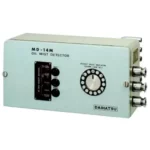
The MD-14M is the related Daihatsu oil mist detector model visible in some MD-9M installation configurations and product imagery. For vessel operators with MD-14M installations requiring spare parts or replacement units, the MD-14M is available through the same Daihatsu supply and support infrastructure as the MD-9M. Contact our team with your engine type and installation details to confirm the correct model and part number for your specific installation.
Complete Oil Mist Detector System (Controller + Sensor Unit Set)
For newbuild installations or complete system replacement on vessels with failed or obsolete oil mist detection equipment, the MD-9M is available as a complete system package comprising the controller unit and the required number of sensor units for the specific engine installation. Contact our team with your engine make, model, and the number of crankcase monitoring points required to receive a correct system configuration recommendation and quotation.
Spare Parts and Consumables
Replacement sensor units — Individual sensor unit replacements for existing MD-9M multi-point installations
Internal PCB and electronic components — Controller board and sensor unit circuit board replacements for repair and overhaul
Optical components — Replacement optical elements for the dispersion detection system, available through Daihatsu factory service
Sampling system components — Replacement suction fan, filter elements, and sampling line fittings for preventive maintenance programmes
Get in Touch
If you need to source the Daihatsu Oil Mist Detector MD-9M (Part No. S110800280A) — whether for a new installation, a replacement unit, individual sensor units, or spare parts for an existing MD-9M installation — contact our team to confirm stock availability and request a formal quotation.
We maintain a large inventory of complete MD-9M units and spare parts, and our technical team is experienced in function testing, repair, and after-sales support for Daihatsu oil mist detectors. Reach out with your vessel details and requirements for a prompt response.
📍 3791 Jalan Bukit Merah #06-01, E-Centre @ Redhill, Singapore 159471