Cart (
Overview
Calibration gas delivery is only useful when the flow can actually be controlled. With compact C10 type aluminium calibration gas canisters — widely used for portable detector bump testing and span calibration in the field — the challenge is not finding the gas, it is controlling how it exits. A poorly matched or oversized regulator on a small calibration canister introduces unnecessary bulk, makes one-handed operation awkward in confined or elevated workspaces, and often provides more flow adjustment range than the task actually requires. For field technicians carrying calibration equipment to the job site rather than calibrating in a fixed workshop, those practical details matter.
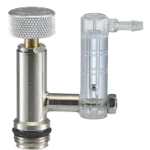
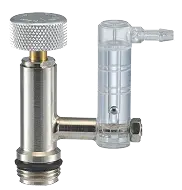
Mini flow valves are designed specifically for this application. Compact, purpose-built for C10 aluminium calibration canisters, and fitted with a rotameter for direct flow rate reading, these valves give the calibration technician precise, visible control over gas delivery without the physical footprint of a full-size regulator. The rotameter markings at 0, 0.5, and 1 L/min cover the flow rates required for the majority of portable gas detector bump test and span calibration procedures, and the brass N.P. (normal pressure) construction is matched to the operating characteristics of small calibration canisters.
These Mini Flow Valves for C10 Calibration Gas Canisters are a practical, purpose-matched flow control solution for field calibration programmes — offering the rotameter visibility and adjustability that fixed-flow regulators do not, in a form factor genuinely suited to compact calibration canister use. For safety officers, gas detection service contractors, and confined space entry teams who calibrate in the field rather than at a fixed station, the combination of compact size, visible flow indication, and simple adjustment makes this a more practical fit than adapting a standard regulator to a small canister.
Key Features
Designed for C10 Type Aluminium Calibration Canisters
The valve is specifically designed for connection to C10 type aluminium calibration gas canisters — the compact, lightweight disposable calibration cylinders used widely for portable detector bump testing and field span calibration. C10 canisters are a common format across gas detection service contractors, confined space entry programmes, and vessel safety teams because of their portability and the range of gas mixtures available in this cylinder format. A valve matched specifically to the C10 canister connection provides a direct, reliable interface without adapters or improvised fittings that can introduce leakage points or complicate the connection in field conditions.
Rotameter with 0, 0.5 & 1 L/Min Calibrations — Direct Flow Rate Visibility
The integrated rotameter provides direct, visible flow rate indication at the three calibration points most relevant for portable gas detector calibration: 0 (closed), 0.5 L/min, and 1.0 L/min. Unlike fixed flow regulators where the output rate is set at manufacture and cannot be visually confirmed during use, the rotameter float position gives the technician a real-time confirmation that gas is flowing and at approximately the intended rate. This is particularly relevant for bump testing, where confirming that gas is actually reaching the detector sensor is as important as confirming the detector’s alarm response. The three calibration marks simplify flow rate selection — most portable detector manufacturers specify bump test flow rates in the 0.5–1.0 L/min range, so the valve’s markings directly correspond to the most common field calibration flow requirements.
Brass N.P. (Normal Pressure) Construction
The valve body is constructed in brass to a normal pressure specification matched to C10 calibration canister operating pressures. Brass is the standard body material for calibration gas equipment used with common non-reactive gas mixtures — oxygen, LEL combustible gases, carbon monoxide, hydrogen sulphide, and standard multi-gas calibration blends — providing the chemical compatibility, dimensional stability, and thread integrity required for a reliable, leak-free canister connection across the service life of the valve. The N.P. pressure rating is appropriate for the low-pressure delivery characteristics of C10 format calibration canisters, which operate at significantly lower pressures than full-size high-pressure calibration cylinders.
Compact Form Factor — Practical for Field Use
The mini valve form factor is noticeably smaller than a standard demand flow or fixed flow regulator, making the canister and valve assembly genuinely portable — a consideration that matters when calibration equipment is carried to the job site rather than used at a fixed calibration station. For vessel crew conducting pre-entry gas detector checks in a pump room, confined space entry teams working at height or in restricted access environments, or safety contractors moving between multiple calibration points in a facility, the reduced assembly footprint of a mini valve on a C10 canister simplifies equipment carry and handling without compromising flow control functionality.
Needle Valve Adjustment — Variable Flow Within the Operating Range
The knurled adjustment knob visible on the valve body allows the technician to set flow rate within the operating range, with the rotameter providing continuous visual feedback of the current flow setting. This variable adjustment capability, within the 0–1 L/min range indicated on the rotameter, allows the valve to be matched to the specific flow rate requirement of different detector models rather than being locked to a single fixed output rate. For service contractors maintaining detector fleets across instruments from multiple manufacturers with different specified calibration flow rates, a single adjustable valve with rotameter visibility is a more flexible field calibration tool than a set of fixed-flow regulators at discrete flow rates.
Technical Specifications
Product Name: Mini Flow Valve
Product Category: Span Gas and Regulator
Compatible Cylinder Type: C10 Type Aluminium Calibration Gas Canisters
Body Material: Brass N.P. (Normal Pressure)
Flow Indicator: Integrated Rotameter
Rotameter Calibration Points: 0, 0.5 & 1 L/min
Flow Adjustment: Variable — needle valve with knurled adjustment knob
Pressure Rating: Normal Pressure (N.P.) — matched to C10 canister operating pressure
Primary Application: Bump testing and span calibration of portable gas detectors
Outlet Connection: Hose barb outlet for flexible tubing connection to detector inlet
Benefits
The most immediate benefit is visible confirmation of gas flow during calibration. When a technician connects a calibration canister and opens the valve, the rotameter float rising to the target marking provides direct visual confirmation that gas is flowing at the intended rate before the detector inlet is connected. In a bump test, this matters — if the canister is nearly empty, the connection is leaking, or the valve is not fully open, the rotameter will show it immediately rather than leaving the technician to discover a failed bump test after the fact.
For organisations running gas detector calibration programmes across multiple technicians, the rotameter reduces the dependency on technician experience for flow rate setting. A new or less experienced technician can set the flow to the 0.5 or 1.0 L/min mark on the rotameter with confidence, without needing to estimate or memorise a valve turn count. This lowers the training burden for calibration programmes and reduces the risk of calibration errors caused by incorrect flow rate delivery.
The compact assembly — mini valve on C10 canister — is genuinely portable in a way that a full-size calibration cylinder with a standard regulator is not. Field workers conducting pre-entry checks in confined spaces, vessel crew calibrating before pump room entry, and safety contractors moving between calibration points across a large facility all benefit from calibration equipment that fits in a tool bag or safety kit without adding significant weight or bulk. The C10 canister plus mini valve combination is the most practical configuration for single-technician field calibration use.
From a procurement and inventory management perspective, a single adjustable valve covering the 0–1 L/min range replaces the need to stock fixed-flow regulators at multiple discrete flow rates for different detector models. For safety equipment stores and calibration kit inventories, that simplification reduces the number of line items to maintain and the risk of using an incorrectly rated regulator on a detector with a specific flow rate requirement.
Who It’s For
Confined Space Entry Teams and Safety Supervisors
A safety supervisor managing confined space entry on a construction site, in a wastewater treatment plant, or on a commercial vessel carries a portable multi-gas detector as standard equipment. Before each entry, that detector needs to be bump tested — a quick gas challenge confirming the sensors respond to target gases and the alarm activates. With a C10 calibration canister and mini flow valve, the bump test takes under two minutes in the field and requires no fixed calibration station. The rotameter confirms gas is flowing, the detector alarms at the appropriate concentration, the entry is authorised. For teams conducting multiple entries across a shift or across multiple sites in a day, the compact and self-contained nature of the C10 plus mini valve setup makes the bump test a practical routine rather than a logistical exercise.
Gas Detection Service Contractors
A gas detection service contractor maintaining portable detector fleets for vessel operators, offshore clients, or industrial facilities carries calibration equipment across a range of detector models with different manufacturer-specified calibration flow rates. A mini flow valve with rotameter allows the contractor to adjust and confirm flow rate for each detector model encountered in service, without carrying a separate fixed-flow regulator for each flow rate specification. Combined with C10 calibration canisters in the specific gas mixes required for the detector fleet, the mini valve provides a compact, flexible field calibration kit that can be carried in a standard service bag across vessel port call visits, facility maintenance rounds, and offshore crew change calibration schedules.
Vessel Safety Officers and Marine Maintenance Crews
On commercial vessels, portable gas detectors are required equipment for engine room maintenance, pump room entry, cargo tank operations, and hotwork permits. ISM Code requirements mean calibration and bump test records must be maintained as part of the vessel’s safety management documentation. A vessel safety officer managing the calibration programme for a fleet of portable detectors needs equipment that can be used on board without a fixed calibration station — the C10 canister plus mini flow valve is a practical on-board calibration setup that takes up minimal storage space in the safety equipment locker and can be used by any trained crew member with confidence in the flow rate delivery.
Possible Applications
Pre-entry bump testing on commercial vessels — Confined space entry bump tests for pump rooms, void spaces, cargo tanks, and engine room areas on tankers, bulk carriers, and offshore supply vessels; C10 canister plus mini valve as a compact on-board calibration tool
Offshore platform pre-entry gas checks — Bump testing of personal gas monitors before entry into enclosed equipment spaces, valve rooms, and utility areas on production platforms and FPSO units
Construction site confined space entry — Daily bump tests for portable four-gas detectors (O₂, LEL, H₂S, CO) before manholes, storage tanks, and underground utility entry; field-portable calibration equipment for site safety supervisors
Wastewater treatment plant maintenance — Pre-entry gas checks before entry into wet wells, digesters, and sewer structures; compact calibration equipment suited to multi-point entry programmes across large treatment facilities
Gas detection service contractor field calibration — Field span calibration of portable detectors across client sites; adjustable flow with rotameter confirmation allows a single valve to serve multiple detector models with different specified calibration flow rates
Refinery and petrochemical turnaround maintenance — High-frequency pre-entry bump testing during planned shutdowns where large numbers of personal gas monitors are in simultaneous use; compact C10 calibration setups at multiple entry points across the facility
Hotwork permit gas verification — Pre-hotwork gas checks confirming combustible gas detector function before issuing hotwork permits on vessels, in industrial facilities, and at construction sites; field-use calibration equipment suited to the point-of-work permit process
Trust & Certifications
Compatibility with ISM Code and SOLAS Calibration Requirements
The ISM Code requires portable gas detectors on commercial vessels to be maintained in serviceable condition and tested at defined intervals documented in the vessel’s Safety Management System. SOLAS Chapter II-2 and III requirements for gas detection equipment maintenance mean that calibration and bump test records are subject to review during port state control inspections. Using equipment — including flow valves — that correctly delivers calibration gas at the specified flow rate supports the technical validity of bump test and calibration records. A rotameter-equipped mini flow valve provides visual confirmation of gas delivery that can be noted in the calibration record, strengthening the traceability of the calibration process.
Brass N.P. Construction — Material Compatibility with Standard Calibration Gas Mixtures
Brass normal pressure construction is the appropriate material specification for mini flow valves used with the standard calibration gas mixtures used for portable detector bump testing — oxygen, LEL combustible gases, carbon monoxide, and hydrogen sulphide in air balance. Brass provides the chemical compatibility and mechanical durability required for a reliable, leak-free connection across repeated canister connections and the handling conditions of field calibration use. For applications involving reactive or corrosive calibration gases where brass compatibility is a concern, contact Alright Engineering Solutions to confirm the appropriate valve specification.
Supplied by Alright Engineering Solutions
Mini Flow Valves are supplied through Alright Engineering Solutions Pte. Ltd., a fire safety and gas detection equipment distributor based in Singapore. Alright Engineering Solutions supplies calibration gas flow control equipment alongside C10 calibration canisters, fixed flow regulators, portable gas detectors, and fire safety equipment across marine, offshore, and industrial safety applications — providing a consolidated regional supply source for complete calibration programme equipment procurement in the Asia Pacific region.
Accessories and Variants
Compatible Calibration Equipment
C10 Type Aluminium Calibration Gas Canisters — Compact disposable calibration cylinders in single-gas and multi-gas compositions for portable detector bump testing and span calibration; the primary cylinder format for use with the mini flow valve
Fixed Flow Regulators (Brass / SS) — Factory-set fixed flow output regulators for full-size calibration cylinders; for calibration programmes where a fixed, non-adjustable flow rate is preferred and full-size cylinder supply is used
Flexible Calibration Tubing — Short lengths of flexible tubing for connecting the mini flow valve outlet to the detector calibration inlet port; required for most field bump test setups
Related Products — Span Gas and Gas Detection
Span Gas Cylinders (Standard Size) — Full-size calibration cylinders for fixed station calibration programmes and high-volume span calibration use; used with standard demand flow or fixed flow regulators
Portable Gas Detectors — Personal and portable multi-gas monitors for confined space entry, hotwork, and industrial gas monitoring; supplied alongside calibration equipment as a complete field gas detection solution
Get in Touch
If you need mini flow valves for C10 calibration canister use — whether for a vessel calibration programme, a confined space entry operation, a gas detection service contract, or a facility safety equipment procurement — contact Alright Engineering Solutions to confirm the correct specification for your calibration gas mixtures and detector models, and request a formal quotation.
Our team can assist with valve selection for your specific C10 canister and detector combination, advise on compatible calibration gas mixtures, and support supply timelines for vessel port calls, offshore deliveries, and regional facility procurement programmes.
📍 3791 Jalan Bukit Merah #06-01, E-Centre @ Redhill, Singapore 159471