Cart (
Overview
In industrial facilities where combustible gases are present as part of normal operations, gas leak detection cannot be a periodic manual task. A leak that develops between checks, in an unmonitored corner of a process area, or during a shift when attention is focused elsewhere, can reach explosive concentrations before anyone notices. The only effective answer is continuous, fixed-point monitoring — instruments permanently installed at the locations where leaks are most likely to occur, running around the clock, and connected directly into a facility’s alarm and control infrastructure.
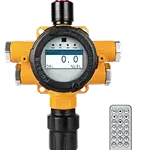
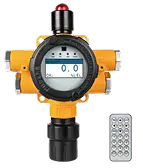
The GT-K90 fixed combustible gas detector is a wall-mounted, continuously operating gas transmitter designed for exactly this purpose. Manufactured by Beijing Zetron Technology Co., Ltd. — a specialist gas detection equipment manufacturer — and supplied by Alright Engineering Solutions Pte Ltd, Singapore-based authorised distributors of fixed and portable gas detection equipment for the maritime and industrial sectors across the Asia-Pacific region, the GT-K90 monitors combustible gas concentrations from 0–100% LEL in real time, outputting a 4–20mA analogue signal and relay contacts directly into a facility’s safety management system, PLC, or DCS.
What sets the GT-K90 apart from comparable fixed LEL detectors in its category is the combination of its modular sensor design with no-calibration-required sensor replacement, an independent real-time clock (RTC) for timestamped data logging, and an infrared remote control that allows alarm setpoint adjustment, zero calibration, and address modification without opening the detector enclosure. In hazardous area installations, the ability to perform these operations without breaking the enclosure seal is a meaningful safety and maintenance advantage that most fixed detectors in this class do not offer.
Key Features
1. Continuous 0–100% LEL Combustible Gas Detection via Natural Diffusion
The GT-K90 monitors combustible gas concentration continuously across a 0–100% LEL detection range, using natural diffusion to draw gas from the surrounding atmosphere across the sensor. The resolution is 0.1% LEL with an accuracy of better than ±5% full scale, and the response time is under 30 seconds — fast enough to trigger alarms and relay outputs before a developing leak can reach the lower explosive limit in the monitored area. The 4–20mA output signal maps linearly across the full detection range, allowing the signal to be read directly by any compatible controller, PLC, or safety system without signal conditioning. Two independently settable alarm setpoints — Low at 20.0% LEL and High at 50.0% LEL by default — can be adjusted via the infrared remote or front panel controls to match site-specific alarm protocols or facility safety management plans.
2. Modular Sensor Design — Replace Without Recalibration
The GT-K90’s sensor module is designed for field replacement without requiring a recalibration event after the swap. In most fixed gas detectors, a sensor replacement triggers a mandatory recalibration procedure that takes the instrument offline during the process and requires calibration gas, trained personnel, and time. The GT-K90’s modular design eliminates this requirement — the replacement sensor module is pre-calibrated and slots into the detector housing, restoring full measurement capability immediately. For facilities managing large numbers of fixed detectors across an extended site, this design significantly reduces planned and unplanned downtime during sensor maintenance cycles and removes the need for on-site calibration gas and equipment at every detector location.
3. OLED Display with 32-Bit High-Performance Processor
The GT-K90 features a 2.4-inch industrial-grade OLED display that shows real-time combustible gas concentration, alarm status, unit identifier, and system diagnostics on a single screen. OLED technology provides significantly better contrast, readability in direct sunlight, and viewing angle performance compared with the LCD displays used in most comparable fixed detectors — important for instruments installed at height, in bright outdoor environments, or in locations where the display must be read from a distance or at an angle. The 32-bit high-performance processor provides the computational capacity for full temperature compensation across the operating range, over-range protection, and 16-bit ADC sampling accuracy — ensuring measurement precision is maintained across the full range of environmental conditions the instrument may encounter over its operational life.
4. Infrared Remote Control — No-Cover-Open Operation
The GT-K90 includes an infrared remote control with an effective range of up to 8 metres. Using the remote, operators can adjust alarm setpoints, perform zero calibration, and modify the device address without needing to open the detector enclosure. In explosion-proof or ingress-protected installations, opening an enclosure introduces both safety and protection integrity risks — particularly in environments where the detector is mounted in a location that requires working at height or in a hazardous zone to access. The remote control removes this requirement entirely for routine operational adjustments, allowing maintenance to be performed from a safe distance and keeping the enclosure sealed during normal service operations.
5. Three Relay Outputs — Direct Integration with Alarms, Ventilation, and Shutdown Systems
The GT-K90 provides three relay outputs as standard, rated at 30V DC / 2A. These relay contacts can be wired directly to audible and visual alarm devices, automatic ventilation systems, solenoid valves, emergency shutdown systems, or any other output device that the facility’s safety management plan requires to activate on gas alarm. Having three independent relay channels — typically configured as Low alarm, High alarm, and fault — allows the facility to implement a staged response: activating local warning alarms at Low, triggering automatic ventilation at a configurable intermediate level, and initiating emergency shutdown or evacuation procedures at High. This direct hardware integration with the plant’s safety infrastructure is what makes fixed gas detectors an active safety system rather than a passive indicator.
6. Independent RTC Clock — Timestamped Alarm and Event Logging
The GT-K90 incorporates an independent real-time clock (RTC) that maintains accurate time independently of the device’s power supply — meaning timestamped alarm event records remain accurate even after a power interruption or restart. Combined with SD card data storage and on-board FLASH memory, the GT-K90 logs alarm events with accurate timestamps that can be exported for incident investigation, regulatory reporting, and safety management system documentation. For facilities operating under process safety management (PSM) requirements, COSHH documentation obligations, or internal HSE audit frameworks, this automatic, timestamped event record is produced continuously as a by-product of normal device operation.
7. Full Temperature Compensation and Over-Range Protection
The GT-K90 applies full-scale temperature compensation to sensor readings across the operating temperature range of -40°C to +70°C, correcting for the sensor output variation that occurs as ambient temperature changes. Without temperature compensation, a detector operating in an environment subject to significant temperature swings — outdoor installations, unheated warehouses, process areas adjacent to heat sources — may produce measurement errors that are large enough to cause false alarms or missed alarm conditions. The GT-K90’s compensation algorithm maintains measurement accuracy within the ±5% specification across the full temperature range. Over-range protection prevents sensor damage or signal errors when gas concentrations exceed 100% LEL during a significant leak event.
8. IP66 Weatherproof Housing — M27×1.5mm Conduit Entry
The GT-K90’s housing carries an IP66 ingress protection rating — fully dustproof and protected against powerful water jets from any direction without the need for a rain cover. The M27×1.5mm wiring port accepts standard industrial conduit fittings, making installation consistent with conventional industrial electrical wiring practice and compatible with standard cable glands and conduit systems. The housing is constructed from materials suitable for permanent outdoor installation and harsh indoor industrial environments, including areas subject to regular wash-down, high humidity, and airborne particulates. The IP66 rating eliminates the need for separate weather protection enclosures and allows direct installation at the intended measurement point without additional housing infrastructure.
Technical Specifications
Model: GT-K90 Fixed Combustible Gas Detector (Beijing Zetron Technology — Supplied by Alright Engineering Solutions Pte Ltd)
Detected Gas: Combustible gas (LEL) — natural diffusion sampling
Detection Range: 3.0–100.0% LEL
Resolution: 0.1% LEL
Accuracy: ≤±5% LEL
Zero Drift: <±2% FS/year
Response Time: ≤30 seconds
Display: 2.4-inch industrial-grade OLED
Processor: 32-bit high-performance MCU; 16-bit ADC sampling accuracy
Alarm Setpoints: Low alarm: 20.0% LEL (default) / High alarm: 50.0% LEL (default) — user adjustable
Relay Output: 3 relay outputs — free contact; 30V DC, 2A
Analogue Output: 4–20mA
Wiring Port: M27×1.5mm
Wiring: 3×1.5mm shielding wire + 4×1.5mm shielding wire
Supply Voltage: DC24V (13.6V)
Working Temperature: -40°C to +70°C
Working Humidity: ≤85% RH (no condensation)
Working Pressure: 86–106kPa
IP Rating: IP66
Dimensions: 260×191×13.5mm (approximately 2100g)
Weight: Approximately 2100g
Sensor Life: 2 years (dependent on specific usage environment)
Data Logging: SD memory card + on-board FLASH; independent RTC clock for timestamped logging
Wireless Connectivity: Infrared remote control (up to 8m range) — not network connected
Safety Approvals: IP66; explosion-proof design for hazardous area installation
Warranty: Available on request through Alright Engineering Solutions
Benefits
The most fundamental benefit of deploying the GT-K90 at critical monitoring points within a facility is the shift from intermittent manual checking to continuous automated detection. A fixed combustible gas detector that is properly positioned, correctly set, and wired into the facility’s alarm and control infrastructure responds to a developing gas leak within 30 seconds — at any time of day or night, regardless of whether a worker is present in the area. This continuous coverage is not achievable through any programme of manual gas checks, regardless of frequency.
The modular no-calibration-required sensor replacement design has a direct impact on the total cost of ownership and operational uptime of a fixed detector installation. Traditional fixed detector sensor replacement typically requires the instrument to be taken offline, a calibration gas cylinder and regulator to be brought to the detector location, and a trained technician to complete a full calibration procedure before the instrument is returned to service. With the GT-K90, sensor replacement restores the instrument to service immediately — reducing maintenance time, eliminating the need for calibration gas at each detector location, and returning the monitoring point to full operation faster.
The 4–20mA output and three relay channels make the GT-K90 directly integrable with virtually any existing safety management infrastructure — from simple standalone alarm panels to complex DCS or PLC-based process safety systems. For facilities that already have a control room, central alarm panel, or building management system, the GT-K90 connects into this existing infrastructure without requiring proprietary controllers or gateway devices. This compatibility with standard industrial signal and relay infrastructure is a practical procurement advantage for facilities where integration complexity and cost are factors in the equipment selection decision.
The independent RTC and SD card logging mean that alarm event records are available for post-incident investigation, regulatory audit, and internal safety review without requiring integration with a central data management system. For facilities that do not have a central historian or data management platform, the GT-K90 provides its own standalone event log — timestamped, exportable, and maintained independently of the facility’s network infrastructure.
Who It’s For
Process Safety Engineers in Oil, Gas, and Petrochemical Facilities: If you are responsible for specifying and maintaining the fixed gas detection layer of a facility’s safety instrumented system, the GT-K90’s 4–20mA output, three-relay hardware integration, and IP66-rated weatherproof housing cover the basic technical requirements for a fixed LEL detector installation at process area monitoring points. The modular sensor replacement design is particularly relevant for large installations where the maintenance cost and downtime associated with conventional sensor replacement across multiple detector locations is a significant operational overhead.
HSE Managers in Chemical Manufacturing and Storage: For facilities storing or processing flammable chemicals — solvents, LPG, natural gas, hydrogen, or any other combustible substance above the minimum threshold quantities that trigger regulatory requirements — continuous fixed-point LEL monitoring is typically a regulatory requirement rather than an optional safety measure. The GT-K90’s relay outputs allow direct automatic activation of ventilation, shutdown, and evacuation systems when gas concentrations reach alarm thresholds — shifting the facility’s response to a gas alarm from a human-dependent manual process to an automatic hardware response.
Facility Safety and Maintenance Teams in Marine, Industrial, and Commercial Buildings: For engine rooms, pump rooms, generator rooms, LPG storage areas, and any enclosed space in a marine vessel or commercial building where combustible gas accumulation is a credible risk, the GT-K90 provides the continuous monitoring capability that periodic manual checks cannot deliver. The infrared remote control means alarm setpoints and calibration can be managed without removing the instrument from service or opening the enclosure — a practical advantage in installations where the detector is mounted in a location that is awkward or time-consuming to access physically.
Possible Applications
Oil and Gas Processing Facilities — Process Area Monitoring: Fixed LEL detection at compressor stations, pump rooms, separator areas, and metering skids where hydrocarbon gas leaks from process equipment, flanges, and valve glands are a continuous risk.
LPG and Natural Gas Storage and Distribution: Continuous combustible gas monitoring in LPG cylinder storage areas, gas metering stations, underground pipeline valve pits, and distribution infrastructure where methane and propane accumulation creates explosion risk in enclosed or semi-enclosed spaces.
Marine Engine Rooms and Pump Rooms: Fixed LEL monitoring in vessel engine rooms, cargo pump rooms, battery rooms (for hydrogen from charging), and fuel storage areas where combustible gas accumulation in an enclosed below-waterline space creates a critical explosion hazard.
Chemical and Pharmaceutical Manufacturing Plants: Fixed monitoring in solvent storage areas, reaction vessel enclosures, filling lines, and any process area where flammable solvents or gases are handled — providing continuous alarm and automatic shutdown capability as part of the facility’s ATEX zone management.
Paint Booths and Surface Treatment Facilities: Continuous LEL monitoring in spray painting booths, coating application areas, and solvent storage rooms where flammable vapour concentrations can build rapidly during spraying operations and where automatic ventilation activation is a standard safety control.
Wastewater Treatment Plants — Digester and Pump Station Areas: Fixed methane and combustible gas monitoring in digester buildings, sludge handling areas, and pump stations where biogas production and accumulation creates ongoing explosion risk in enclosed infrastructure.
Cold Storage and Refrigeration Plant Rooms: Fixed monitoring for ammonia (NH3) as a refrigerant gas — though the GT-K90 is configured for LEL/combustible detection, the platform supports over 300 gas types; combustible gas monitoring in refrigeration plant rooms containing hydrocarbon refrigerants (R290, R600a) is a growing requirement as HFC phase-out drives adoption of flammable natural refrigerants.
Power Generation — Hydrogen-Cooled Generators: Fixed LEL monitoring for hydrogen gas in generator hall environments and hydrogen storage areas associated with hydrogen-cooled power generation equipment, where hydrogen accumulation in an enclosed space creates a severe explosion risk.
Trust and Certifications
IP66 Protection Rating: IP66 is the highest standard protection rating for solid particle ingress (fully dustproof) and provides protection against powerful water jets from any direction. For fixed detectors installed in outdoor process areas, chemical plants, or wash-down environments, IP66 protection means the instrument operates reliably without a separate weather enclosure and without ingress protection degrading over time from exposure to rain, steam cleaning, or high-pressure wash-down operations. This rating removes the need for rain covers or protective housings that many IP54 or IP65-rated fixed detectors require for outdoor or wash-down environments.
Explosion-Proof Design: The GT-K90 is designed for installation in hazardous areas where combustible gases may be present — making its own electrical and electronic design a critical safety consideration. The instrument’s construction prevents internal electrical arcing or heat generation from acting as an ignition source for the gases it is designed to detect. This is a fundamental requirement for any fixed gas detector installed in a classified hazardous area under ATEX, IECEx, or equivalent Asia-Pacific hazardous area classification standards.
4–20mA Industry-Standard Output: The 4–20mA analogue output is the universal standard signal for process instrumentation in industrial safety and control systems globally. It is directly compatible with safety controllers, PLCs, DCS systems, alarm panels, and data historians from virtually every major automation and safety system manufacturer — without requiring signal conversion, proprietary interfaces, or additional gateway equipment. This compatibility is a procurement requirement for most fixed gas detector installations in industrial facilities with existing instrumentation infrastructure.
Beijing Zetron Technology Co., Ltd.: Zetron is a specialist gas detection manufacturer producing a range of fixed and portable gas detection instruments for industrial, commercial, and safety-critical applications. The GT-K90 is part of Zetron’s fixed detector product line, with full product documentation and technical support available through the authorised distribution network.
Alright Engineering Solutions Pte Ltd — Authorised Distributor: Alright Engineering Solutions is a Singapore-based engineering solutions company serving the maritime and industrial sectors across the Asia-Pacific region. As an authorised distributor of fixed and portable gas detection equipment, Alright Engineering Solutions provides full product support including supply, installation guidance, technical consultation, and after-sales service. Full product portfolio available through alrightes.com.
Sensor Warranty: 2-year sensor life under normal usage conditions. Device and installation warranty terms available on request through Alright Engineering Solutions.
Accessories and Variants
Infrared Remote Control (Included): Allows alarm setpoint adjustment, zero calibration, and device address modification from up to 8 metres distance without opening the detector enclosure — essential for safe and efficient maintenance in hazardous area installations.
SD Memory Card (Optional): For extended on-device data logging beyond the internal FLASH capacity. Recommended for installations where long-term continuous data archiving is required for regulatory compliance or internal HSE records.
Replacement Sensor Module: Pre-calibrated replacement sensor modules for the GT-K90 — user-replaceable in the field without requiring a post-replacement calibration event. Available through Alright Engineering Solutions with full documentation.
Cable Glands and Conduit Fittings (M27×1.5mm): Compatible industrial cable glands and conduit fittings for the GT-K90’s M27×1.5mm wiring port — required for sealed, weatherproof wiring entry consistent with the device’s IP66 rating.
Compatible Controller and Alarm Panel Integration: The GT-K90’s 4–20mA output and relay contacts are compatible with standard industrial alarm controllers, safety PLCs, DCS systems, and building management systems. Alright Engineering Solutions can advise on integration requirements for specific control system platforms.
Available Gas Configurations:
Standard configuration: Combustible gas (LEL), 3.0–100.0% LEL detection range
Extended gas type support: The GT-K90 platform supports customisation for over 300 gas types including CO, H2S, CO2, O2, CH4, O3, SO2, HCl, and many others — contact Alright Engineering Solutions to specify the gas type and detection range required for your application
Custom detection ranges: Available on request for applications requiring detection below 3.0% LEL or specific ppm-range configurations for toxic gas variants
Ready to Specify the GT-K90 for Your Facility?
Whether you are designing a new fixed gas detection system from scratch, replacing ageing fixed detectors in an existing installation, or extending monitoring coverage to additional points in a classified hazardous area, the GT-K90 offers a technically solid, cost-effective platform with the IP66 protection, standard 4–20mA output, and three-relay hardware integration that industrial fixed detector installations require.
To request a formal quotation, discuss installation requirements and gas type configuration, or get technical advice on detector placement, zoning, and integration with your existing safety and control infrastructure, contact the Alright Engineering Solutions team directly. We support the full specification and procurement process — from initial hazardous area assessment through to installation guidance and ongoing sensor maintenance support.