Cart (
Overview
Natural gas leaks in domestic and light commercial settings are one of the most preventable causes of property damage, injury, and fatality — and also one of the most underestimated. Methane (CH4) is odourless in its natural state; the characteristic smell associated with natural gas comes from an additive (mercaptan) introduced specifically to make leaks detectable. But that additive can dissipate, degrade over time, or be undetected by occupants with diminished sense of smell — particularly the elderly. By the time a gas leak becomes obvious to a person in a room, concentrations may already be approaching the lower explosive limit.
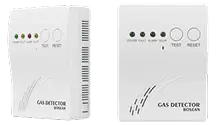
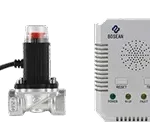
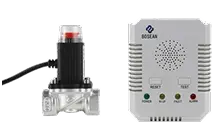
The BH-H3 Household Gas Alarm is a fixed methane gas detector designed for wall-mounted installation in domestic kitchens, utility rooms, and light commercial spaces where natural gas appliances are in regular use. It detects CH4 at an alarm threshold of 10% LEL — well below the concentration at which the gas becomes flammable — and triggers a combined audible (≥70 dB) and light alarm to alert occupants in time to act. The product image shows the BH-H3 alongside a compatible automatic gas shutoff valve, enabling an integrated detection-and-isolation system that physically closes the gas supply when the alarm activates.
What separates the BH-H3 from comparable domestic gas alarms is the combination of a five-year sensor life and compatibility with an automatic shutoff valve. Most domestic gas alarms alert occupants but take no action to stop the leak — the BH-H3 system can do both, providing a level of protection that is particularly relevant for properties where occupants may not be able to respond immediately to an alarm, such as elderly residents, rental properties with overnight guests, or commercial kitchens operating at times when staff are temporarily absent from the kitchen area.
Key Features
CH4 Detection at 10% LEL — Early Warning Threshold
The BH-H3 alarms at 10% of the Lower Explosive Limit for methane — a concentration well below the point at which the gas becomes an ignition risk (100% LEL). Detecting at 10% LEL provides a meaningful safety margin: the alarm activates while concentrations are still at a level where ventilation and evacuation can prevent the situation from escalating. Waiting until gas is detectable by smell or visible combustion risk is already at an unacceptable level; the 10% LEL threshold is the recognised safety standard for early-warning fixed gas alarms in residential and light commercial settings.
Combined Audible and Light Alarm (≥70 dB)
When CH4 is detected at or above the alarm threshold, the BH-H3 activates a ≥70 dB audible alarm alongside a visual light alert simultaneously. The 70 dB minimum is sufficient to alert occupants in an adjacent room or a sleeping person in a nearby bedroom — the level of audible performance needed for a domestic gas alarm to be effective as a genuine warning system rather than a quiet indicator. The combined sound and light output ensures the alarm reaches occupants across different sensory channels, improving the probability of a timely response.
Automatic Gas Shutoff Valve Integration
The BH-H3 is designed to operate with a compatible automatic gas shutoff valve — shown alongside the detector in the product image. When the alarm activates, the valve closes automatically, physically isolating the gas supply to the appliances it controls. This integrated response is the critical functional advantage over alarm-only detectors: in a situation where an occupant cannot respond immediately — because they are asleep, have left the property, or are incapacitated — the gas supply is shut off by the system rather than relying entirely on human action. For properties where unattended gas appliance risk is a concern, this integration changes the safety profile of the installation fundamentally.
Five-Year Sensor Life
The BH-H3 uses a catalytic or semiconductor sensor with a rated life of five years under normal operating conditions. For a fixed domestic gas alarm, sensor longevity directly affects the total cost of ownership and the maintenance overhead associated with the installation. A five-year sensor life means the detector can serve a full replacement cycle without requiring sensor servicing — longer than the two to three year typical sensor life of many comparable domestic gas alarms. At end of sensor life, replacement or unit renewal is straightforward to plan for in a property maintenance schedule.
Mains Powered — AC 90-264V Wide Voltage Range
The BH-H3 operates from mains power across a wide voltage input range of AC 90-264V, with a total power consumption of under 2W. Mains operation eliminates the battery management requirement of portable or battery-backed detectors — there is no battery to replace, no low-battery warning to respond to, and no risk of the detector failing due to a flat battery at the critical moment. The wide voltage input range makes the BH-H3 suitable for installation in properties across different regional electrical standards without requiring voltage-specific variants.
3-Minute Warm-Up Time
After power-on, the BH-H3 requires a 3-minute warm-up period before it begins active monitoring. This is a standard characteristic of catalytic and semiconductor gas sensors, which require a brief stabilisation period after energisation before producing reliable readings. The 3-minute warm-up is relevant to understand for installation — the unit should be powered and given time to stabilise before it is considered to be in active service. Once warmed up, monitoring is continuous and automatic without further intervention required.
Natural Diffusion Sampling — Passive Continuous Monitoring
The BH-H3 uses natural diffusion sampling — the sensor is exposed directly to the ambient atmosphere at the detection face, with no pump or active air movement required. Natural diffusion is the standard and appropriate sampling method for fixed domestic and light commercial gas alarms, providing continuous passive monitoring of the installation area throughout the operating period. Correct positioning of the unit — at an appropriate height for methane detection, typically near the ceiling since CH4 is lighter than air — is important for effective diffusion sampling performance.
Technical Specifications
Model: BH-H3
Target Gas: CH4 (Methane / Natural Gas)
Alarm Setting Value: 10% LEL
Power Supply: AC 90–264V (mains powered)
Power Consumption: <2W
Alarm Method: Sound (≥70 dB) and Light alarm
Sampling Method: Natural diffusion
Response Time: T90 ≤30 seconds
Warm-Up Time: 3 minutes
Sensor Life: 5 years (depending on usage environment)
Working Temperature: 0°C to 55°C
Humidity: <95% RH (no dew)
IP Rating: Not specified — for indoor installation
Wireless Connectivity: Not specified
Safety Approvals: Not stated on listing — confirm with supplier for regional installation compliance requirements
Compatible Accessory: Automatic gas shutoff valve (shown in product image)
Benefits
For homeowners and property managers, the most significant benefit of the BH-H3 is protection that operates independently of whether anyone is present and awake to respond. A gas alarm that only alerts occupants is a useful safety measure when someone is home and conscious. An alarm system that also closes the gas supply when triggered continues to function as a safety measure when the property is empty, when occupants are asleep, or in any scenario where a person cannot immediately respond to an audible alert. That extension of protection into unattended scenarios is what makes the BH-H3’s shutoff valve compatibility practically valuable rather than theoretically interesting.
For landlords and property management companies with residential or commercial property portfolios, the BH-H3 provides a documented gas safety installation with a five-year sensor life that can be incorporated into a routine maintenance schedule. The combination of early detection at 10% LEL, automatic shutoff valve integration, and a long sensor life reduces both the insurance risk associated with undetected gas leaks and the ongoing maintenance cost of the gas safety installation over the property lifecycle.
For commercial kitchen operators and facilities managers responsible for catering and food service environments, the BH-H3 system — detector plus automatic shutoff valve — provides a fixed gas safety installation that can be incorporated into a HACCP or fire safety management plan. In a commercial kitchen where gas appliances may be left on standby, where staff movement means the kitchen area is not continuously occupied, and where a gas leak undetected overnight represents a serious risk to a commercial premises, an integrated detection and isolation system addresses a genuine operational safety gap.
Who It’s For
Residential Property Landlord or Managing Agent
You manage multiple residential properties with gas heating and cooking appliances. Your annual gas safety inspection covers boiler servicing and appliance checks, but a fixed gas alarm with automatic shutoff capability adds a continuous safety layer between annual inspections — one that operates around the clock without requiring tenant action or awareness. The BH-H3’s five-year sensor life fits neatly into a biennial property maintenance cycle, and the automatic shutoff valve integration reduces the risk of a gas leak escalating into a serious incident in a tenant-occupied or vacant property.
Commercial Kitchen Facilities Manager
You’re responsible for the safety of a commercial kitchen environment where multiple gas appliances operate throughout service periods and where the kitchen may be unoccupied for significant periods outside service hours. A fixed CH4 alarm at the 10% LEL threshold provides early warning of any gas escape before concentrations build to a dangerous level. With automatic shutoff valve integration, a leak detected outside staffed hours triggers gas isolation automatically — reducing the window between a leak developing and the gas supply being stopped, regardless of whether anyone is present to respond.
Building Safety Manager — Residential Development or Sheltered Housing
You manage the safety infrastructure of a residential development or sheltered housing complex where residents may include elderly occupants with reduced ability to detect gas by smell or respond quickly to an audible alarm. Fixed gas detection with automatic shutoff valve integration provides a safety backstop that doesn’t rely on resident awareness or response speed. The ≥70 dB alarm is audible enough to alert staff or other occupants in adjacent areas, and the shutoff valve integration means a gas event is contained at the supply point even if the resident in the affected property cannot act immediately.
Possible Applications
Domestic Kitchens and Utility Rooms — Residential Gas Safety — The primary application for the BH-H3 is wall-mounted installation in residential kitchens and utility rooms where natural gas appliances are installed. Fixed detection at 10% LEL provides continuous monitoring throughout the day and night without requiring occupant action.
Rental Properties and HMOs — Landlord Gas Safety Compliance — Landlords with gas appliances in rental properties have a legal obligation to maintain gas safety. Fixed gas alarms with automatic shutoff capability provide a continuous safety layer that supports landlord duty of care and reduces the risk of gas incidents between annual gas safety inspections.
Commercial Kitchens and Catering Facilities — Commercial kitchens using natural gas ranges, ovens, and catering equipment benefit from fixed CH4 detection as part of their fire safety and health and safety management plan. Automatic shutoff valve integration is particularly valuable in commercial kitchens that operate a closed-kitchen policy outside service hours.
Sheltered Housing and Care Facilities — Properties housing elderly or vulnerable residents where gas appliances are in use benefit from fixed gas detection with automatic shutoff capability as a safeguard against the reduced ability of some residents to detect gas by smell or respond promptly to an alarm.
Hotel and Serviced Accommodation — Guest Rooms with Gas Appliances — Where guest accommodation includes gas heating or cooking appliances, fixed gas detection provides a guest safety measure that operates independently of guest awareness or behaviour, and automatic shutoff integration provides protection when rooms are unoccupied.
Light Commercial and Retail Premises — Back-of-House Gas Safety — Small commercial premises with gas appliances in staff areas, storerooms, or back-of-house facilities benefit from fixed CH4 monitoring that extends gas safety coverage beyond the main trading area into areas that may not be continuously staffed.
Residential New Build and Renovation Projects — Developers and builders fitting out new residential units or refurbishing existing properties with gas installations can specify the BH-H3 as part of the gas safety infrastructure, providing buyers or tenants with a fixed detection system from first occupation.
Trust & Certifications
10% LEL Alarm Threshold — Recognised Safety Standard
The 10% LEL alarm threshold used in the BH-H3 is consistent with the detection sensitivity specified in gas alarm standards for residential and commercial fixed gas detection. Alarming at 10% LEL provides a safety margin of 90% of the explosive range of methane before the alarm activates, ensuring early warning at a concentration level where ventilation and evacuation remain straightforward protective responses. This threshold is referenced in guidance from gas safety authorities and forms the basis of alarm sensitivity requirements in fixed domestic gas detector standards across multiple regulatory frameworks.
Five-Year Sensor Life — Documented Maintenance Planning Horizon
The BH-H3’s five-year rated sensor life is longer than the two to three year typical life of many comparable domestic gas alarms, providing a documented maintenance planning horizon that reduces the frequency of sensor replacement or unit renewal. For property managers and facilities teams maintaining gas safety records across multiple properties, a predictable and extended replacement cycle simplifies maintenance scheduling and reduces the administrative overhead of gas safety compliance.
≥70 dB Alarm Output — Audible Performance Standard
The BH-H3’s minimum 70 dB audible alarm output is consistent with the sound level requirements specified for domestic gas alarms in safety standards, providing sufficient volume to alert occupants in adjacent rooms or sleeping areas. This documented performance specification allows installers and property managers to confirm the alarm meets the audible performance requirement relevant to their specific installation without relying on unspecified general descriptions of alarm loudness.
Note on Regional Certification
Fixed gas alarms for domestic and commercial installation are subject to regional approval requirements that vary by country and jurisdiction — including CE marking in the EU, UKCA marking in the UK, and equivalent regional standards elsewhere. Buyers should confirm applicable certification for their region with the supplier before installation to ensure the BH-H3 meets the regulatory requirements of their specific market.
Accessories & Variants
Automatic Gas Shutoff Valve (compatible, shown in product image)
The automatic shutoff valve integrates with the BH-H3 to physically close the gas supply when the alarm activates. This is the accessory that transforms the BH-H3 from an alarm-only detector into an active gas safety system — one that takes protective action regardless of whether an occupant is present to respond. Valve sizing should be matched to the gas supply pipe diameter at the installation point; confirm compatible valve specifications with the supplier.
Wall Mounting Hardware
The BH-H3 is designed for wall-mounted fixed installation. Mounting hardware appropriate to the wall surface type may be required depending on the installation environment. For methane (CH4) detection, the unit should be positioned near the ceiling of the monitored area, since methane is lighter than air and accumulates at height.
Available Variants
The BH-H3 is specified for CH4 (methane / natural gas) detection. For applications requiring detection of LPG (propane or butane), which is heavier than air and accumulates at floor level, a different sensor configuration and installation height are required — contact our technical team to confirm the appropriate variant for LPG or mixed gas applications.
Request a Quote or Installation Consultation
If you’re specifying fixed gas detection for a residential property, a managed building portfolio, or a commercial kitchen environment — and particularly if automatic gas shutoff valve integration is part of your safety requirements — the BH-H3 is worth a detailed assessment against your installation and compliance needs.
Speak with our team to discuss your specific installation requirements, confirm regional certification applicability, request pricing for single units or multi-property supply, or get technical guidance on shutoff valve compatibility and installation positioning. We work with landlords, property managers, facilities teams, and building safety professionals, and can support the full specification process from product selection through to installation guidance.