Cart (
Overview
Oxygen monitoring is one of the most critical — and most underestimated — requirements in industrial safety. Unlike toxic gas detection, where the hazard is something added to the atmosphere, oxygen monitoring works in both directions: too little, and workers face asphyxiation risk in confined spaces; too much, and materials that wouldn’t normally ignite become serious fire and explosion hazards. Getting O2 monitoring right means having a sensor that’s consistently accurate, long-lasting, and fit for purpose across a wide range of environments.
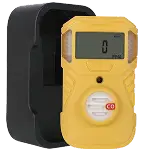
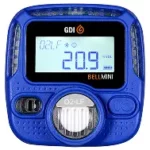
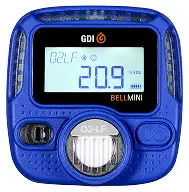
The BELL MINI O2-LF Single Gas Detector (POR-GDIS-O2LF) addresses a specific and growing requirement in oxygen monitoring: a lead-free electrochemical sensor. Traditional oxygen sensors use lead as part of their electrochemical cell construction. The O2-LF variant eliminates lead from that process entirely — making it the appropriate choice for organisations with environmental compliance obligations, lead-restricted procurement policies, or operations in regions with strict RoHS and WEEE compliance requirements.
Built by International Gas Detectors (IGD) on the same proven BELL MINI platform, the O2-LF variant carries the same IP68 weatherproof housing, two-year battery life, and BELLCONNECT app integration as the rest of the BELL MINI range — while adding the environmental and regulatory advantage of a lead-free sensor architecture. For procurement teams balancing safety performance against environmental commitments, this is the O2 monitor that covers both requirements without compromise.
Key Features
Lead-Free Electrochemical O2 Sensor (0–30% Vol)
The defining feature of the O2-LF variant is its lead-free sensor construction. Standard electrochemical oxygen sensors use a lead anode as part of the galvanic cell that generates the detection signal. The O2-LF sensor replaces this with a lead-free alternative, maintaining accurate O2 detection across the full 0–30% Vol range while eliminating the environmental concerns associated with lead-containing components at end of life. For organisations operating under RoHS compliance requirements or with explicit lead-free procurement mandates, this matters at specification stage — not just at disposal.
Accurate Oxygen Monitoring Across the Full Range
The BELL MINI O2-LF monitors oxygen concentration from 0% Vol through to 30% Vol — covering both oxygen-deficient environments (below the 19.5% safety threshold) and oxygen-enriched atmospheres (above the 23.5% upper threshold). Both conditions carry serious risks that require early warning: deficiency causes rapid incapacitation with little subjective warning to the worker, while enrichment dramatically increases the flammability of materials in the environment. Accurate monitoring across this full range is what makes a personal O2 detector genuinely useful rather than just compliant.
Triple-Mode Alarm System (Audible, Visual, Vibrating)
When oxygen levels move outside safe parameters, the BELL MINI O2-LF triggers a 100 dB audible alarm, flashing LED indicators, and a physical vibration alert — all simultaneously. This is particularly important for oxygen deficiency scenarios, where cognitive impairment can occur before the worker is consciously aware of their condition. A multi-modal alarm that is impossible to miss — even through hearing protection or in a noisy environment — gives the maximum possible warning time for the worker to respond and evacuate.
Two-Year Battery Life — Always Ready
The BELL MINI O2-LF runs on a single 3.6V lithium 2/3 AA battery for up to 24 months without recharging or battery replacement. For confined space entry programmes and industrial monitoring operations, a device that doesn’t need daily charging is a device that will actually be worn. A confidence beep at regular intervals confirms the unit is powered and active — removing any ambiguity about whether the device is operational before a work task begins.
IP68 Weatherproof and Dustproof Housing
The O2-LF shares the BELL MINI’s IP68-rated enclosure — fully sealed against dust and tested for continuous immersion in water. Oxygen monitoring is frequently required in environments that are far from clean: sewers, tunnels, confined tanks, marine environments, and outdoor plant areas. IP68 protection ensures the device performs reliably in these conditions without ingress affecting the sensor or electronics, and without the housing degrading under repeated moisture exposure.
BELLCONNECT App — Full Compliance and Fleet Management
Via Bluetooth Low Energy (BLE) and NFC, the BELL MINI O2-LF connects to the BELLCONNECT app on iOS and Android. The app provides calibration management with automatic certificate generation, bump test logging, alarm setpoint configuration, real-time gas readings, and device assignment to named personnel or site areas. For HSE teams managing portable oxygen monitors across multiple sites or teams, BELLCONNECT provides the fleet-level oversight and documentation that manual records simply can’t match at scale.
200-Event Log and 5,000-Point Data Log
The device stores up to 200 alarm events and 5,000 individual oxygen concentration readings on board, with configurable logging intervals. This data is accessible through the BELLCONNECT app and can be used for incident investigation, exposure trend analysis, confined space entry records, and regulatory compliance documentation. For a personal monitor this compact, that’s a data management capability that removes the need for separate logging equipment in many monitoring scenarios.
Single-Button Operation and Field-Replaceable Sensor
The BELL MINI’s one-button interface keeps daily operation straightforward for workers in the field, reducing the risk of operational errors under pressure. When the O2-LF sensor reaches end of life — which for electrochemical oxygen sensors is typically measured in years from commissioning — it can be replaced in the field, keeping instrument downtime and total replacement costs manageable over the device’s full operational lifespan.
Technical Specifications
Model: BELLMINI
Target Gas: Oxygen — Lead Free Sensor (O2-LF)
Detection Range: 0–30% Vol
Weight: 105g (with belt clip)
Display: FSTN LCD (1.6 inch)
Battery Life: 24 months (3.6V Lithium, size 2/3 AA)
IP Rating: IP68
Alarm Types: Visual (LED), Audible (100dB@10cm), Vibration — Low, High, TWA, STEL
Wireless: Bluetooth Low Energy (BLE), NFC
Response Time: 10 seconds (Oxygen)
Data Logging: Up to 200 alarm events, 5,000 data logs
Humidity Range: 5%–95% RH (non-condensing)
Self-Test: Breakdown of sensor and circuitry, Battery
Safety Approvals: ATEX, IECEx, KCs
App: BELLCONNECT (iOS & Android)
Warranty: 2 years (please refer to sensor data sheet)
Benefits
For workers entering confined spaces or oxygen-sensitive environments, the BELL MINI O2-LF means carrying a monitor they can trust to be working when they need it. The two-year battery removes the risk of a flat device at shift start, and the triple-mode alarm ensures a genuine O2 event — whether deficiency or enrichment — is communicated clearly and immediately, even in the moments when cognitive function may already be starting to be affected by low oxygen levels.
For HSE managers and safety programme owners, the lead-free specification closes a procurement gap that is increasingly relevant as environmental compliance obligations tighten across industrial sectors. Selecting the O2-LF variant now means the monitoring fleet is already aligned with lead-restricted procurement frameworks — avoiding a future replacement cycle driven by regulatory change rather than product end of life.
For procurement teams, the combination of a lead-free sensor, two-year battery life, IP68 durability, and the BELLCONNECT management platform represents a total cost of ownership argument that holds up across a multi-year fleet lifecycle. Fewer charging-related failures, fewer damage-related replacements, reduced manual record-keeping overhead, and compliance documentation that’s generated automatically rather than assembled retrospectively.
Who It’s For
Confined Space Entry Supervisor — Utilities and Infrastructure
You manage entry into sewers, culverts, utility chambers, and underground vaults where oxygen deficiency is a credible and recurring risk. Before anyone goes in, you need a personal O2 monitor that’s been calibrated, bump tested, and assigned to that individual — and you need a record of all of it. The BELL MINI O2-LF gives each worker a reliable personal monitor, and BELLCONNECT gives you the compliance documentation for every entry in your programme. The lead-free sensor also fits your organisation’s environmental procurement policy without requiring a separate product specification.
Environmental Health and Safety Manager — Manufacturing or Pharmaceutical
Your organisation operates under strict environmental compliance frameworks — RoHS adherence, lead-free procurement requirements, or internal sustainability commitments that extend to PPE and monitoring equipment. You need oxygen monitoring that performs to the same standard as conventional sensors but without the lead-containing components that create end-of-life disposal obligations. The O2-LF variant meets that requirement directly, without any trade-off in detection performance or device durability.
Marine and Offshore HSE Officer
Oxygen deficiency is a persistent risk in enclosed spaces on vessels and offshore platforms — cargo holds, ballast tanks, engine rooms, and pump rooms where oxygen can be displaced by inert gases, cargo vapours, or biological oxygen consumption. Workers entering these spaces need personal O2 monitoring that can withstand marine conditions: humidity, spray, condensation, and the physical demands of working in tight, wet spaces. IP68 protection and a two-year battery make the BELL MINI O2-LF suited to marine environments in a way that less robust devices simply aren’t.
Possible Applications
Confined Space Entry — Sewers and Underground Infrastructure — Oxygen deficiency is one of the leading causes of confined space fatalities. Personal O2 monitoring is a mandatory element of safe systems of work for utility workers, drainage engineers, and infrastructure maintenance teams entering enclosed underground spaces.
Inert Gas Blanketing in Storage Tanks — Industrial storage tanks are frequently blanketed with nitrogen or other inert gases to prevent combustion risk. Workers entering these tanks for inspection, cleaning, or maintenance face immediate oxygen deficiency risk. Personal O2-LF monitors provide the first line of protection before fixed detection systems can respond.
Shipbuilding and Marine Vessel Maintenance — Ballast tanks, cargo holds, and enclosed compartments on vessels present repeated oxygen monitoring requirements for shipyard workers, marine surveyors, and vessel maintenance crews. IP68 construction makes the BELL MINI O2-LF appropriate for the wet, physically demanding conditions these environments present.
Cryogenic Storage and Liquid Gas Handling — Liquid nitrogen and liquid oxygen storage facilities carry both oxygen deficiency risk (from nitrogen vapour displacement) and oxygen enrichment risk (from LOX evaporation). Workers in these environments require personal O2 monitoring that covers the full 0–30% Vol range with reliable alarm response at both ends of the scale.
Pharmaceutical and Life Sciences Manufacturing — Clean-room environments and process areas using inert atmosphere techniques carry oxygen monitoring requirements for personnel safety. The lead-free sensor specification aligns the O2-LF with the environmental and material compliance standards common in pharmaceutical manufacturing procurement.
Fire and Rescue Service Breathing Apparatus Teams — BA entry teams operating in post-incident or hazardous atmosphere environments use personal gas detection as a secondary atmospheric monitoring layer. Compact, robust, and long-battery-life devices like the BELL MINI O2-LF fit operational requirements without adding burden to already heavily equipped personnel.
Offshore Oil and Gas Platform Operations — Oxygen monitoring in confined spaces, enclosed modules, and process areas on offshore platforms is a standard safety requirement. ATEX certification, IP68 housing, and two-year battery life make the BELL MINI O2-LF appropriate for offshore deployment without modification.
Trust & Certifications
ATEX: Ex II 1G Ex ia IIC T4 Ga
ATEX certification is the mandatory European standard for equipment used in potentially explosive atmospheres. The BELL MINI O2-LF’s Zone 0 classification — the highest ATEX hazard category — confirms it is approved for continuous deployment in environments where explosive atmospheres may be present at all times. For procurement on offshore, petrochemical, refinery, or chemical processing sites in the EU and UK, ATEX certification is a non-negotiable baseline requirement.
IECEx: Ex ia IIC T4 Ga
IECEx is the internationally recognised equivalent of ATEX, accepted across Australia, the Middle East, Asia-Pacific, and other global industrial markets. For organisations operating across multiple countries, IECEx certification ensures the BELL MINI O2-LF meets local intrinsic safety requirements without needing region-specific product variants.
KCs Certification
Korean Certification (KCs) confirms compliance with South Korean industrial safety and electrical standards — relevant for organisations with operations or supply relationships in Korean industrial and petrochemical sectors.
Lead-Free Sensor — RoHS Aligned
The O2-LF variant’s lead-free sensor construction aligns with RoHS (Restriction of Hazardous Substances) principles, supporting organisations with lead-restricted procurement policies or environmental compliance obligations relating to equipment disposal and end-of-life material management.
Two-Year Instrument Warranty
IGD backs the BELL MINI O2-LF with a two-year warranty on the instrument, with sensor-specific warranty terms documented in the sensor data sheet. This warranty commitment reflects manufacturer confidence in the long-term reliability of both the device and the lead-free sensor technology.
International Gas Detectors (IGD)
IGD is a UK-based gas detection manufacturer with decades of experience designing and producing fixed and portable detection systems for industrial, utility, offshore, and defence customers globally. The BELL MINI is an IGD-exclusive product, engineered and supported in-house. When technical questions arise during specification, deployment, or ongoing operation, you’re engaging directly with the manufacturer — not a reseller interpreting someone else’s documentation.
Accessories & Variants
BELLCONNECT App (iOS / Android)
Free and exclusive to the BELL product line. Provides complete device management — calibration workflows, bump test logging with automatic certificate generation, alarm setpoint configuration, real-time readings, data download, and personnel assignment. For confined space entry programmes and compliance-driven HSE operations, BELLCONNECT is the difference between a personal monitor and a managed safety instrument.
Alligator Belt Clip
Supplied with every unit. Attaches securely to clothing, harnesses, or lapels, positioning the sensor face outward at breathing zone level for representative atmospheric readings throughout the work task.
Calibration Gas (O2)
Certified oxygen calibration gas for bump testing and full span calibration is available from IGD and approved gas suppliers. Calibration reminders and certificate generation are managed through the BELLCONNECT app, keeping compliance records current without manual administration overhead.
Available BELL MINI Variants
POR-GDIS-O2LF — O₂ Lead-Free Sensor | 0–30% Vol
POR-GDIS-O2 — O₂ (Oxygen) Standard | 0–30% Vol
POR-GDIS-CO — CO (Carbon Monoxide) | 1–1,000 ppm
POR-GDIS-CO-H — CO H₂ Compensated | 1–500 ppm
POR-GDIS-COEX — CO Extended Range | 1–2,000 ppm
POR-GDIS-H2S — H₂S (Hydrogen Sulphide) | 0.1–100 ppm
POR-GDIS-HCN — HCN (Hydrogen Cyanide) | 1–50 ppm
POR-GDIS-NH3 — NH₃ (Ammonia) | 1–100 ppm
POR-GDIS-H2 — H₂ (Hydrogen) | 1–1,000 ppm
POR-GDIS-SO2 — SO₂ (Sulphur Dioxide) | 0.1–20 ppm
All BELL MINI variants share the same BELLCONNECT platform, physical form factor, and IP68 housing — so adding O2-LF monitors to an existing BELL MINI fleet requires no additional training, infrastructure, or management overhead.
Request a Quote or Procurement Consultation
If you’re specifying oxygen monitors for a confined space entry programme, an inert atmosphere application, or a fleet update driven by environmental compliance requirements, the BELL MINI O2-LF is a device worth evaluating in detail — particularly if lead-free procurement, long battery life, and audit-ready data management are on your specification checklist.
Speak with our safety equipment team to discuss your specific site requirements, request technical guidance on sensor selection, or get pricing for a fleet deployment. We work directly with HSE managers, confined space coordinators, and procurement leads — and can advise on calibration gas supply, BELLCONNECT configuration, and fleet management setup as part of the consultation process.