Cart (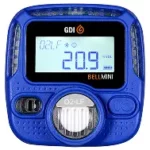
Overview
Nitrogen dioxide is one of the more insidious industrial gases a worker can encounter. At low concentrations, its faint acrid smell gives a brief warning — but at around 4 ppm, NO2 begins to anaesthetise the nasal passages, eliminating that warning entirely and creating a dangerous false sense of security. By the time a worker realises they are being overexposed, meaningful physiological damage may already be underway. OSHA sets the permissible exposure limit for NO2 at just 5 ppm over an 8-hour working day — a threshold that can be reached and exceeded quickly in enclosed environments where diesel engines are running, blasting operations are underway, or combustion processes are taking place.
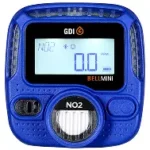
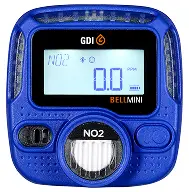
The GDI BELL MINI NO2 portable gas detector was built to solve this problem at the personal level. Developed by GDI Solution and supplied by Alright Engineering Solutions Pte Ltd — Singapore-based authorised distributors of GDI Solution portable gas detectors — the BELL MINI NO2 is a compact, clip-on personal monitor that tracks nitrogen dioxide concentration in real time throughout a worker’s shift. At 105g with the belt clip attached, it is light enough to wear all day without noticing it, and with a 24-month battery life, there is no charging routine to manage and no risk of a flat device at the start of a confined space entry or tunnelling shift.
What sets the BELL MINI NO2 apart from comparable personal monitors in its category is the BELLCONNECT App ecosystem — the most advanced Bluetooth companion app available for any portable gas detector currently on the market. While most devices in this class offer basic alarm functionality, the BELL MINI NO2 supports full remote calibration, personnel assignment, calibration certificate generation, cloud-connected data logging, and adjustable alarm thresholds — all managed from a smartphone. For HSE teams overseeing multiple workers across a site, this level of fleet control is a substantial operational advantage.
Key Features
1. Dedicated NO2 (Nitrogen Dioxide) Sensor with Real-Time PPM Display
The BELL MINI NO2 is configured specifically for nitrogen dioxide detection, displaying live ppm concentration readings on a clear 1.6-inch FSTN LCD screen throughout the working day. NO2 is produced as a by-product of diesel engine combustion, blasting operations, welding, and various chemical processes — and because it is heavier than air, it accumulates at low levels in enclosed spaces, trenches, and poorly ventilated areas. The dedicated sensor continuously monitors the breathing zone of the person wearing it, providing the most accurate form of personal exposure data available: real-time, location-specific readings at worker level rather than averaged area measurements from a fixed monitor some distance away.
2. Triple Alarm System — Audible, Visual, and Vibrating
When NO2 concentrations reach alarm thresholds, the BELL MINI triggers across three simultaneous channels: a 100dB audible buzzer, multi-directional LED visual indicators, and a vibrating alarm. Alarm modes cover Low, High, TWA (Time-Weighted Average), and STEL (Short-Term Exposure Limit) thresholds. In mining operations, underground tunnels, engine testing facilities, or loading bays where ambient noise levels are high and hearing protection is worn, the combination of vibrating and visual alarms ensures no alert is missed even when the audible signal cannot be heard. The TWA and STEL modes are particularly relevant for NO2, where regulatory limits are measured as time-averaged exposures rather than single peak events.
3. IP68 Weatherproof and Dustproof Rated Housing
The BELL MINI NO2 carries an IP68 ingress protection rating — fully dustproof and rated for continuous submersion in water. For workers in tunnelling, mining, underground utilities, or construction environments where the device is regularly exposed to dust, moisture, mud, and condensation, this level of protection is a baseline requirement for reliable daily operation. The compact, rounded housing is also built to withstand the knocks and drops that come with active site work, without compromising sensor performance or display readability.
4. BELLCONNECT App — Remote Calibration, Configuration, and Fleet Management
Via Bluetooth Low Energy (BLE) and Near Field Communication (NFC), the BELL MINI NO2 connects wirelessly to the BELLCONNECT App on any compatible iOS or Android smartphone. Through the app, safety managers can remotely calibrate devices, conduct bump tests with live NO2 readings, generate calibration certificates for compliance records, adjust Low and High alarm setpoints, configure TWA and STEL thresholds, assign units to named personnel or site zones, set policy reminders, and push firmware updates. For organisations managing a team of workers entering NO2-risk environments — underground construction crews, diesel-powered mining teams, engine test facility staff — the ability to manage every device in the fleet from a single phone removes significant administrative burden and improves site accountability.
5. 2-Year Battery Life with No Charging Required
The BELL MINI NO2 runs on a Lithium 2/3 AA 3.6V battery rated for up to 24 months of continuous operation under normal conditions. There is no USB port, no charging dock, and no daily charging routine. A periodic confidence beep confirms the device is powered and operational without requiring any action from the wearer. When the battery does eventually need replacing, it is a user-serviceable swap — no need to return the unit to the manufacturer. For safety programmes relying on consistent device readiness, the absence of a charging dependency removes one of the most common causes of preventable protection failures.
6. Data Logging — 200 Alarm Events and 5,000 Continuous Data Records
The BELL MINI NO2 stores up to 200 alarm event logs and 5,000 continuous data log entries on-device. These records are accessible and downloadable via the BELLCONNECT App and can be used to generate reports for regulatory compliance audits, incident investigations, insurance requirements, or internal HSE reviews. In industries where NO2 exposure monitoring is subject to formal documentation requirements — mining, construction, engine testing, and chemical manufacturing among them — having a timestamped, worker-specific exposure history is a meaningful compliance asset, not just a useful feature.
7. One-Button Operation with SAFE Mode Confirmation
The entire BELL MINI NO2 is operated with a single button, making it straightforward for any worker regardless of technical experience. When SAFE Mode is activated through the BELLCONNECT App, the LCD screen displays a clear confirmation that no hazardous NO2 concentration is currently detected — giving workers entering and exiting high-risk zones a rapid, unambiguous status check without needing to read and interpret a numerical ppm figure under time pressure.
8. Automatic Self-Test on Power-Up
Each time the BELL MINI NO2 is switched on, it automatically runs a self-diagnostic check covering sensor integrity, circuit functionality, and battery condition. This built-in verification step reduces the risk of deploying a device with an undetected fault and gives shift supervisors and HSE officers confidence that every unit issued at the start of a day or entry procedure is operating correctly.
Technical Specifications
Model: BELL MINI NO2 (GDI Solution — Supplied by Alright Engineering Solutions Pte Ltd)
Target Gas: Nitrogen Dioxide (NO2)
Detection Range: 0–250 ppm (as per product page approvals note)
Size: 66×69×24mm (without clip) / 66×69×41mm (with belt clip)
Weight: 105g (with belt clip)
Display: FSTN LCD, 1.6 inch
Battery: Lithium 2/3 AA 3.6V — up to 24 months
Operating Temperature: -30°C to +50°C
IP Rating: IP68 (fully dustproof and waterproof)
Humidity Range: 5% to 95% RH (non-condensing)
Alarm Types: Visual (LEDs), Audible Buzzer (100dB @ 10cm), Vibrating — Low, High, TWA, STEL
Wireless Connectivity: Bluetooth Low Energy (BLE), Near Field Communication (NFC), BELLCONNECT App, Cloud Connection
Wireless Range: Up to 10 metres
Response Time: Toxic gas: approximately 20 seconds
Data Logging: Up to 200 alarm event logs; up to 5,000 continuous data log entries
Self-Test: Automatic on power-up — sensor, circuitry, and battery
Safety Approvals: ATEX: Ex II 1G Ex ia IIC T4 Ga / IECEx: Ex ia IIC T4 Ga / KCs: Ex ia IIC T4
Warranty: 2 years on device hardware (sensor warranty per sensor datasheet)
Benefits
Deploying the BELL MINI NO2 gives safety teams something that fixed area monitors cannot: personal-level exposure data that travels with the worker. In environments like underground construction sites, mine drifts, diesel-powered maintenance facilities, and engine testing cells, the highest NO2 concentrations occur closest to the source — at worker breathing level, not at a wall-mounted sensor two metres away. A personal detector worn on the body provides the most accurate and meaningful exposure data for each individual, which is exactly what COSHH and occupational health monitoring frameworks require.
From a regulatory standpoint, the BELL MINI NO2’s TWA and STEL alarm modes map directly onto OSHA’s PEL of 5 ppm (8-hour TWA) and the UK HSE’s WEL of 0.5 ppm (15-minute STEL as per EH40), ensuring workers receive active alerts before regulatory thresholds are breached rather than after the fact. The BELLCONNECT App’s automatic logging and certificate generation means compliance documentation is produced as a by-product of normal monitoring activity — with no additional administrative effort from HSE teams.
The 24-month battery life eliminates device readiness as a variable in your safety programme. Workers arriving at the start of a shift do not need to check charge levels or wait for a device to power up from low battery — the BELL MINI NO2 is either on and operational, or it needs a battery swap, and the confidence beep confirms which. For organisations where personal gas detectors are issued to large teams, removing the charging dependency simplifies logistics considerably and reduces the number of devices that go into service in a degraded state.
Who It’s For
Underground Construction and Tunnelling Engineers: If your team operates diesel-powered equipment in tunnels, cut-and-cover excavations, or underground service corridors, NO2 from engine exhaust is a constant and cumulative exposure risk. Ventilation helps but does not eliminate the hazard, particularly at the face or near equipment. Every worker operating in these environments should be wearing personal NO2 monitoring — and the BELL MINI NO2 provides exactly that, clipped to a jacket or helmet strap, running continuously through the shift without any input from the wearer.
HSE Officers in Mining Operations: In mechanised metal mining environments, virtually all mobile equipment runs on diesel — and every diesel engine produces NO2 as a combustion by-product. Blasting adds a further NO2 source. If you are responsible for ensuring your mine’s NO2 exposure programme is documented, auditable, and actually protecting workers rather than just ticking a box, the BELL MINI NO2’s data logging and BELLCONNECT App give you the tools to manage a fleet of personal monitors, assign them to named workers, and export shift-by-shift exposure records as part of your occupational health documentation.
Engine Test Facility and Fleet Maintenance Managers: Enclosed vehicle testing cells, maintenance garages, fire station bays, loading docks, and indoor vehicle storage facilities are all environments where diesel or petrol engine exhaust creates elevated NO2 concentrations during operation. Workers carrying out maintenance, inspections, or testing in these spaces during or after engine running need personal NO2 monitoring. The BELL MINI NO2’s compact form factor means it does not interfere with physical maintenance work, and its IP68 housing handles the greasy, dusty, sometimes wet conditions of a working workshop without complaint.
Possible Applications
Underground Mining and Tunnelling: NO2 from diesel-powered drilling, haulage, and utility vehicles accumulates in confined underground workings. Personal monitoring is the primary protection method for workers operating near the source, especially at the working face where ventilation is least effective.
Road and Rail Tunnel Construction: Tunnel boring machine (TBM) operations, drill-and-blast sequences, and diesel-powered logistics vehicles all generate NO2 in enclosed tunnel environments. Workers at all stages of the construction process — face crews, surveyors, logistics drivers — require personal NO2 protection.
Enclosed Car Parks and Underground Parking Structures: Vehicle exhaust in multi-storey and underground car parks creates sustained NO2 accumulation, particularly during peak entry and exit periods. Attendants, maintenance staff, and workers in adjacent spaces are at risk from prolonged exposure.
Fire Stations and Emergency Vehicle Bays: Diesel fire appliances and ambulances running in enclosed bays generate significant NO2 concentrations during warm-up and departure. Station personnel in the vehicle bay during these periods benefit from personal monitoring.
Engine Testing and Automotive R&D Facilities: Test cells running diesel or petrol engines at varying load conditions produce concentrated exhaust emissions. Technicians and engineers entering or working adjacent to active test cells require NO2 personal protection.
Industrial Boiler Rooms and Power Generation Plant: Combustion processes in boiler rooms, diesel generators, and thermal power stations generate NO2 as a standard by-product. Maintenance engineers and operators working in these environments require continuous personal monitoring.
Welding and Metal Fabrication: High-temperature welding processes, particularly those involving nitrogen-rich base metals or shielding gases, produce NO2 in the welding fume. Fabricators and welders working in enclosed shops or poorly ventilated bays benefit from personal NO2 detection.
Chemical Manufacturing and Processing Plants: Nitric acid production, nitration processes, and various chemical synthesis routes produce NO2 as either a feedstock, by-product, or decomposition product. Workers in proximity to these processes require personal monitoring as part of their hazardous substance control programme.
Trust and Certifications
ATEX Certification (Ex II 1G Ex ia IIC T4 Ga): The BELL MINI NO2 is ATEX certified for Zone 1 explosive atmospheres — environments where flammable or explosive gases are present under normal operating conditions. This is a legal requirement for electrical equipment used in many EU and UK industrial environments under the ATEX Directive (2014/34/EU). The Ex ia designation confirms intrinsic safety — the most stringent protection concept available for portable electrical equipment used in hazardous areas, making the device suitable for simultaneous use in NO2 and potentially flammable gas environments.
IECEx Certification (Ex ia IIC T4 Ga): The IECEx scheme is the globally recognised standard for equipment used in explosive atmospheres. IECEx approval allows the BELL MINI NO2 to be deployed across international operations — offshore platforms, overseas mining projects, and export-market industrial facilities — without requiring additional regional approval in most jurisdictions. For multinational organisations standardising their personal gas detection fleet, IECEx approval is a meaningful procurement criterion.
KCs Approval (Ex ia IIC T4): South Korean national safety certification, relevant for organisations with operations, manufacturing partnerships, or project sites in the Asia-Pacific region where Korean regulatory standards apply.
Alright Engineering Solutions Pte Ltd — Authorised Distributor: Alright Engineering Solutions is a Singapore-based engineering solutions company serving the maritime and industrial sectors. As an authorised distributor of GDI Solution portable and personal gas detectors, Alright Engineering Solutions provides full product support including supply, technical consultation, and after-sales service. The company operates across the Asia-Pacific region and maintains a comprehensive portfolio of safety, marine, and engineering products available through alrightes.com.
Regulatory Alignment — COSHH and EH40 (UK): In the UK, NO2 is listed as a substance hazardous to health under COSHH regulations. The HSE’s EH40 workplace exposure limits set a long-term WEL and a short-term WEL for NO2. The BELL MINI NO2’s TWA and STEL alarm modes are directly aligned to these threshold types, supporting documented compliance with EH40 monitoring requirements.
Device Warranty: 2 years on device hardware. NO2 sensor warranty is specified separately in the sensor datasheet, available from Alright Engineering Solutions on request.
Accessories and Variants
Belt Clip / Alligator Clip (Included): The integrated alligator-style clip attaches the BELL MINI NO2 to a belt, lapel, chest pocket, or clothing strap — keeping the unit stable, correctly oriented, and positioned at breathing zone level throughout the working day.
BELLCONNECT App (Free — iOS and Android): The companion app provides full device management including remote calibration, bump testing with live readings, calibration certificate generation, alarm threshold adjustment, data log download and export, SAFE Mode configuration, personnel assignment, and firmware updates. Connects via Bluetooth Low Energy for standard use and NFC for close-range pairing.
Replacement NO2 Sensor Module: The NO2 sensor is user-replaceable, allowing the device to be returned to full operational status without manufacturer servicing. Replacement sensors are available through Alright Engineering Solutions with full documentation and traceability.
Available BELL MINI Variants by Gas Type:
NO2 — Nitrogen Dioxide — this variant
POR-GDIS-CO — Carbon Monoxide (CO): 1–1000 PPM
POR-GDIS-H2S — Hydrogen Sulphide (H2S): 0.1–100 PPM
POR-GDIS-COEX — Carbon Monoxide Extended Range: 1–2000 PPM
POR-GDIS-CO-H — Carbon Monoxide H2 Compensated: 1–500 PPM
POR-GDIS-O2 — Oxygen (O2): 0.1–30% VOL
POR-GDIS-O2LF — Oxygen Long-Life: 0.1–30% VOL
POR-GDIS-H2 — Hydrogen (H2): 1–1000 PPM
POR-GDIS-NH3 — Ammonia (NH3): 1–100 PPM
POR-GDIS-HCN — Hydrogen Cyanide (HCN): 1–50 PPM
POR-GDIS-SO2 — Sulphur Dioxide (SO2): 0.1–20 PPM
C12 — Carbon Dioxide (CO2)
Ready to Specify the BELL MINI NO2 for Your Site?
Whether you need to protect a single maintenance engineer in a diesel plant room or equip an entire underground construction crew with personal NO2 monitors, our technical team can help you confirm suitability for your specific environment, advise on ATEX zone requirements, and provide full procurement documentation.
To request a formal quotation, arrange a product demonstration, or discuss your NO2 monitoring requirements with a specialist, contact the Alright Engineering Solutions team directly. We support the full procurement process from initial specification through to commissioning and ongoing calibration — not just the initial sale.