Cart (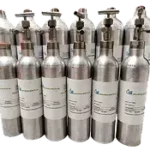
Overview
In facilities where butane or LPG is the primary hazard gas — storage terminals, marine gas carriers, refinery C4 processing units, commercial bottling plants — the accuracy of the combustible gas detector is not a maintenance technicality. It is a process safety control. A detector that has not been calibrated against a butane-specific reference gas may read correctly on its calibration gas but systematically under- or over-read when exposed to butane vapour in the field. The difference between a 40% LEL reading and an actual 55% LEL condition can be the difference between a controlled response and an uncontrolled event — and that gap is exactly what gas-specific calibration is designed to close.
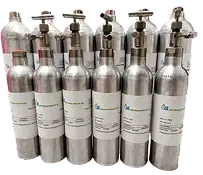
The 8%Vol Butane Balance Nitrogen (8% C4H10 Bal N2) span gas cylinder is a certified calibration gas mixture formulated specifically for combustible gas detectors requiring a butane-specific calibration reference at 8% volume concentration. Balanced in high-purity nitrogen, this mixture is the correct span gas format for infrared (IR) combustible gas sensors — the sensor technology widely used in fixed detection systems across LPG, petrochemical, and marine cargo environments — and for any instrument where the manufacturer’s service documentation specifies 8%Vol C4H10 as the recommended span gas concentration.
The distinction between 8%Vol and 10%Vol butane calibration gas is not arbitrary. Some IR sensor instruments are specifically calibrated to read correctly at an 8%Vol span reference, and using the wrong concentration introduces a systematic offset into the calibration. For procurement teams specifying calibration gas for a fleet of butane-configured instruments, confirming the manufacturer’s recommended span gas concentration before ordering — and sourcing the cylinder that matches that specification — is the step that determines whether the calibration is actually valid for the instruments in use.
Key Features
8% Volume Butane Concentration — Instrument-Specific Calibration Reference
The 8%Vol C4H10 concentration is the manufacturer-specified span gas level for a range of IR-based combustible gas detectors used in butane and LPG detection applications. Calibrating at the instrument manufacturer’s recommended concentration — rather than substituting a higher or lower concentration mixture — ensures the calibration sets the sensor response curve correctly across the working detection range. For detectors configured to read in %Vol C4H10 or to trigger alarms at specific butane concentration thresholds, the span gas concentration directly determines the accuracy of every reading the instrument makes in service. Using 8%Vol when 8%Vol is specified is not a minor preference; it is the technically correct calibration input for those instruments.
Balance Gas: Nitrogen (N2) — Compatible with IR Sensor Technology
Nitrogen is used as the balance gas in this mixture, making it the correct calibration gas format for infrared (IR) combustible gas sensors. IR sensors detect gas by measuring the absorption of infrared light by gas molecules — a detection mechanism that does not require oxygen and functions reliably in oxygen-depleted, inerted, or nitrogen-padded environments. This makes IR sensors the preferred technology for fixed gas detection in LPG storage areas, cargo tank environments, and enclosed process vessels where oxygen concentration may be reduced or variable. Calibrating IR sensors against a CH4/N2 mixture is consistent with the sensor’s operating chemistry and avoids the complications that air-balance calibration gas can introduce in low-oxygen calibration environments.
Multiple Cylinder Sizes — 34L to 116L
This mixture is available in five cylinder sizes: 34L, 58L, 103L, 110L, and 116L. The 34L cylinder suits a portable field calibration kit or a vessel on-board supply where storage space is a genuine constraint. The 58L cylinder provides a slightly larger supply appropriate for a small maintenance team calibrating instruments on a periodic schedule. The 103L to 116L cylinders are the practical choice for a calibration workshop, a large LPG facility maintaining a significant fixed detector estate, or a gas detection service company running a regular butane-configured instrument calibration programme. The ability to select the cylinder volume that matches actual consumption is a straightforward way to manage calibration gas cost and avoid the write-off expense of unused gas in expired cylinders.
Certified Concentration Accuracy with Certificate of Analysis
This mixture is prepared and supplied as a certified calibration gas with the actual C4H10 concentration verified against the declared 8%Vol specification before supply. A certificate of analysis is available with each cylinder — providing the traceable reference documentation required for calibration programme records, safety management system audit support, and the maintenance record entries that regulatory inspections and permit-to-work systems will look for when reviewing gas detection calibration documentation. For any facility where calibration records form part of a formal safety management system or a process safety programme, a CoA is not optional — it is the standard of documentary evidence the record requires.
Compatible with Standard Span Gas Regulators
The cylinder valve is compatible with standard demand-flow and constant-flow span gas regulators used for portable and fixed gas detector calibration. No specialist fittings or adaptors are required for most common instrument calibration setups, simplifying the setup process and ensuring compatibility with existing regulator stock when 8%Vol C4H10 Bal N2 is added to an existing calibration gas programme.
Technical Specifications
Product: Span Gas — Calibration Gas Mixture
Category: Span Gas and Regulator
Gas Mixture: 8%Vol Butane (C4H10), Balance Nitrogen (N2)
Butane Concentration: 8% v/v (volume percent)
Balance Gas: Nitrogen (N2)
Cylinder Sizes (C10): 34L / 58L / 103L / 110L / 116L
Application: Butane / LPG combustible gas detector span calibration (%Vol C4H10; IR sensor type)
Compatible Instruments: Infrared (IR) combustible gas detectors and butane-specific instruments configured for C4H10/N2 calibration at 8%Vol
Mixture Type: Binary (C4H10 / N2)
Benefits
Matches the instrument manufacturer’s recommended span gas concentration for accurate calibration. Where the gas detector manufacturer specifies 8%Vol C4H10 as the recommended span gas concentration for a particular instrument model or sensor type, this certified mixture provides exactly the reference point required. Substituting a 10%Vol mixture when 8%Vol is specified introduces a calibration offset that the instrument’s internal linearisation cannot fully compensate for — producing a detector that appears correctly calibrated but reads with systematic inaccuracy across the working detection range.
Provides direct butane-specific verification — no cross-sensitivity correction uncertainty. Detectors factory-calibrated on methane and used with a butane cross-sensitivity factor introduce an approximation that varies with sensor age, temperature, and instrument model. Direct calibration on certified 8%Vol C4H10 Bal N2 eliminates that approximation, producing a calibration result that is specific to butane and traceable to a verified reference concentration rather than a calculated conversion factor.
Supports process safety and confined space entry compliance with a certified, auditable calibration record. Facilities handling butane and LPG under process safety management frameworks require documented gas detector calibration against certified reference gas as part of the mechanical integrity programme for safety instrumentation. The certificate of analysis supplied with each cylinder provides the documentary evidence required for process safety audits, regulatory inspections, and permit-to-work system calibration record requirements.
Nitrogen balance gas is compatible with low-oxygen and inerted calibration environments. In LPG storage areas, nitrogen-padded vessels, and inerted cargo tank environments where performing a calibration in a locally oxygen-depleted atmosphere is a practical reality, the nitrogen balance gas in this mixture is compatible with the calibration environment and does not introduce an oxygen-containing reference gas into a space where oxygen management is an active safety control.
Who It’s For
The Fixed Gas Detection Maintenance Technician at an LPG Terminal
You maintain fixed IR combustible gas detectors installed across an LPG storage and distribution terminal — in pump rooms, loading bays, compressor buildings, and storage vessel areas. Your instruments are configured for butane detection, your calibration procedure specifies 8%Vol C4H10 Bal N2, and your safety management system requires a completed calibration record with a certificate of analysis for each cylinder used. You need a reliable, consistently available supply of certified 8%Vol C4H10 Bal N2 as a standard item in your calibration gas stock — in a cylinder size that suits your instrument count and calibration frequency without running out mid-programme or expiring unused.
The Marine Cargo Engineer on an LPG Carrier
Your vessel carries liquefied butane or mixed LPG as cargo, and your on-board gas detection programme includes portable instruments and fixed IR sensors configured for C4H10 detection. Before each cargo operation and confined space entry, your calibration procedure requires verification of detector accuracy against a certified butane span gas — and your instrument’s service documentation specifies 8%Vol C4H10 Bal N2 as the correct calibration reference. You need a cylinder that fits your on-board storage space and provides sufficient supply for the voyage calibration schedule, with a CoA available for inclusion in the vessel’s safety management system maintenance records.
The Gas Detection Service Technician Maintaining LPG Industry Client Instruments
You provide gas detection maintenance services for LPG storage, distribution, or petrochemical clients whose instrument fleets include butane-configured IR detectors. Your calibration workshop maintains a stock of butane-specific calibration gas mixtures to cover client instruments with different manufacturer-specified span gas concentrations — including both 8%Vol and 10%Vol C4H10 Bal N2 — and you issue calibration certificates with CoA references to support your clients’ safety management system records. Having both concentrations available in appropriate cylinder sizes allows you to calibrate each instrument to its specific manufacturer specification rather than applying a single concentration across instruments with different calibration requirements.
Possible Applications
- LPG storage terminals and bulk distribution depots — Calibration of fixed IR butane detectors installed in storage vessel areas, pump rooms, loading bays, and vehicle filling stations at LPG bulk storage and distribution facilities
- Marine LPG and butane gas carrier operations — On-board calibration of IR fixed detectors and portable combustible gas monitors during cargo operations, tank inspection, and confined space entry on LPG carriers and butane tankers
- Refinery C4 and LPG processing units — Calibration of fixed gas detection systems in refinery sections handling butane, isobutane, and LPG streams — debutaniser columns, alkylation units, and LPG product rundown systems
- LPG cylinder and aerosol propellant filling plants — Calibration of gas detectors in enclosed filling hall environments where butane vapour accumulation from filling and handling operations requires continuous combustible gas monitoring
- Petrochemical plant C4 feedstock handling — Calibration of combustible gas monitors in petrochemical facilities processing butane or mixed C3/C4 streams as feedstocks, with butane-specific detection requirements in process and storage areas
- Offshore platform condensate and LPG handling areas — Calibration of IR fixed detectors in offshore production platform areas where C4 hydrocarbons are present in condensate or LPG product streams
- Commercial refrigeration and cold storage facilities — Calibration of combustible gas monitors in facilities using butane as a refrigerant or in cold storage areas adjacent to LPG supply infrastructure
- Gas detection service workshops — Calibration gas supply for service technicians maintaining butane-configured IR detectors for LPG industry, marine, and petrochemical clients where 8%Vol C4H10 Bal N2 is the instrument-specified span gas
Trust and Certifications
Certified Calibration Gas — Verified 8%Vol C4H10 Concentration
This 8%Vol C4H10 Bal N2 mixture is supplied as a certified calibration gas with the actual butane concentration verified against the declared 8%Vol specification before supply. Certified calibration gas provides the traceable reference standard required for gas detector calibration to be valid under safety management system frameworks, regulatory requirements, and gas detector manufacturer service guidance. A certificate of analysis confirming the verified concentration is available with each cylinder for inclusion in calibration programme documentation, maintenance records, and audit evidence files.
Compliance with Process Safety and Gas Detector Calibration Requirements
Combustible gas detectors used in LPG handling, petrochemical processing, and marine cargo operations are subject to calibration requirements under process safety management frameworks and regulatory standards including OSHA PSM regulations, EPA RMP requirements, IMO gas carrier code maintenance requirements, and gas detector manufacturer service manuals. Using a certified, butane-specific span gas at the manufacturer’s recommended concentration — and retaining the CoA as part of the calibration record — meets the evidentiary standard required for process safety management audits, regulatory inspections, and incident investigation reviews of gas detection maintenance records.
Supplied by Alright Engineering Solutions
The 8%Vol Butane Balance Nitrogen span gas cylinder is supplied through Alright Engineering Solutions Pte. Ltd., an authorised distributor of portable and fixed gas detection equipment, calibration gas, and safety products in Singapore. Alright Engineering Solutions supports LPG industry, marine, petrochemical, and industrial clients across the Singapore and regional market with gas detection equipment procurement, calibration gas supply, and safety product sourcing.
Accessories and Variants
Span Gas Regulator
A compatible span gas regulator — demand-flow or constant-flow configuration — is available to use with this cylinder, providing the controlled low-pressure output required for portable and fixed gas detector calibration. Contact Alright Engineering Solutions to confirm the correct regulator type and outlet fitting for your specific instrument model before ordering.
Available Cylinder Sizes
34 Litres (C10) — Compact portable size for vessel on-board kits and individual field calibration sets
58 Litres (C10) — Mid-range size for small-fleet programmes and site maintenance calibration kits
103 Litres (C10) — Standard industrial volume for shore-based calibration stations and medium-frequency programmes
110 Litres (C10) — High-volume option for large instrument fleets and high-frequency calibration schedules
116 Litres (C10) — Maximum volume for centralised calibration workshops and ongoing high-throughput programmes
Related Calibration Gas Products
10%Vol Butane Bal N2 — Higher-concentration butane/nitrogen span gas for instruments specifying a 10%Vol C4H10 calibration reference
10%Vol Methane Bal N2 — Methane-specific span gas for CH4-configured IR combustible gas detectors
8%Vol Methane Bal N2 — Methane/nitrogen span gas for instruments specifying an 8%Vol CH4 calibration reference
Multi-gas calibration mixtures (LPG/CO/H2S/O2 Bal Air) — Combination span cylinders for multi-gas portable monitor calibration
Zero gas — High-purity Nitrogen — Inert zero gas for instrument zero-point verification before span calibration
Get in Touch
If you need to source 8%Vol Butane Balance Nitrogen span gas — for an LPG terminal fixed detector calibration programme, a marine gas carrier on-board kit, a refinery process safety maintenance schedule, or a gas detection service workshop maintaining butane-configured IR instruments — contact Alright Engineering Solutions to confirm cylinder availability, select the right cylinder size, and request a formal quote.
Our team can advise on calibration gas concentration selection for butane and LPG detection applications, assist with span gas regulator specification, and support broader portable and fixed gas detection equipment procurement for marine, industrial, and petrochemical safety programmes.
📍 3791 Jalan Bukit Merah #06-01, E-Centre @ Redhill, Singapore 159471