Cart (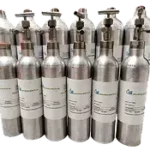
Overview
Hydrogen is one of the most challenging combustible gases to detect reliably. It has the smallest molecular size of any element, the widest flammable range of any common industrial gas — 4% to 75% by volume in air — and it diffuses rapidly through most environments, including confined spaces, battery rooms, and electrolyser enclosures. For facilities where hydrogen is present as a process gas, a by-product, or an energy carrier, the accurate detection of hydrogen at concentrations approaching its Lower Explosive Limit is not a procedural checkbox. It is a fundamental explosion prevention requirement.
The 2% Vol (50% LEL) Hydrogen Balance Air is a precision-formulated span gas cylinder designed for the span calibration of combustible gas detectors configured to detect hydrogen. At 2% by volume, this calibration gas sits at exactly 50% of hydrogen’s Lower Explosive Limit — the industry-standard calibration point that confirms your detector is reading hydrogen concentration accurately within the working range most relevant to explosion risk monitoring. The balance gas is air, providing a carrier matrix that closely matches the real-world atmospheric conditions in which most hydrogen detectors operate.
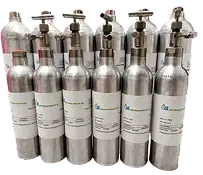
Supplied by Alright Engineering Solutions as part of their span gas and regulator range, this cylinder is available in five sizes from 34 litres to 116 litres — covering everything from portable field calibration kits to fixed calibration stations serving multi-detector maintenance programmes. For HSE managers and instrument technicians working with hydrogen-handling facilities, fuel cell installations, battery storage systems, or electrolyser operations, this calibration gas provides the certified reference point your detector calibration procedure requires.
Key Features
Certified 2% Vol Hydrogen Concentration — 50% LEL Reference Point
Hydrogen has a Lower Explosive Limit of 4% by volume in air — meaning 2% Vol corresponds exactly to 50% LEL, the midpoint of the detection range and the most widely used span calibration point for combustible gas detectors. Calibrating at 50% LEL confirms the sensor is responding accurately at a concentration that is operationally critical: high enough to confirm the sensor is active and reading correctly, but well below the flammable threshold. For safety managers specifying calibration procedures for hydrogen-risk environments, this concentration meets the calibration point requirement of IEC 60079-29 and most site-specific instrument maintenance procedures.
Air Balance Gas — Real-World Atmospheric Match
Unlike nitrogen-balance calibration gases, the balance gas in this cylinder is synthetic air — a clean, moisture-controlled mixture that closely replicates the atmospheric conditions in which most portable and fixed hydrogen detectors are deployed. For catalytic bead (pellistor) sensors, which require oxygen to complete the combustion reaction that produces the detector’s measurement signal, an air-balance calibration gas ensures the sensor operates under calibration conditions that reflect actual field use. This produces a more representative calibration result than nitrogen-balance gases, which deprive the sensor of the oxygen it needs for its normal detection mechanism.
Multiple Cylinder Sizes — 34L to 116L
The cylinder is available in five sizes under the C10 specification: 34L, 58L, 103L, 110L, and 116L. The 34L and 58L sizes suit portable field calibration applications — compact enough for a technician’s calibration kit bag and providing sufficient gas volume for multiple calibration events before changeout. The 103L, 110L, and 116L sizes are suited to fixed calibration stations and fleet instrument maintenance programmes where multiple detectors are calibrated on a regular schedule and frequent cylinder replacement is operationally disruptive and cost-inefficient.
Precision-Formulated Concentration — Traceable Calibration Accuracy
The certified 2% Vol hydrogen concentration is prepared to an accuracy level appropriate for safety-critical gas detector calibration, with concentration traceability documentation to support calibration records and quality management system audit requirements. For organisations operating under ISO 9001, OHSAS 18001 / ISO 45001, or site-specific calibration control procedures, certified concentration documentation provides the evidence base required to demonstrate that calibration was performed against a traceable reference standard — not an unverified gas mixture of uncertain accuracy.
Aluminium Cylinder Construction — Lightweight and Corrosion-Resistant
Calibration gas cylinders used in field and industrial settings need to withstand repeated handling, transportation, and exposure to humid and potentially corrosive environments. Aluminium construction provides significant weight savings over steel cylinders of equivalent volume — a meaningful benefit for technicians carrying calibration equipment across large facilities, to elevated work platforms, or on vessels and offshore installations where weight and portability directly affect the practicality of the calibration task. Aluminium’s corrosion resistance also extends cylinder service life in marine and coastal environments where steel cylinder surfaces deteriorate rapidly.
Compatible with Standard Calibration Regulators and Detector Inlets
The cylinder valve configuration is compatible with standard calibration gas regulators and detector calibration adapters for leading portable gas detector brands, including MSA, Industrial Scientific, Honeywell BW, Dräger, GMI, and others. This ensures straightforward integration into existing calibration workflows without specialist connection equipment or cylinder-specific adapters, reducing setup time and the risk of connection errors that could introduce calibration inaccuracy or gas waste.
Technical Specifications
Product: 2% Vol (50% LEL) Hydrogen Balance Air Calibration Gas
Gas Component: Hydrogen (H₂)
Concentration: 2% Vol
LEL Equivalent: 50% LEL (based on hydrogen LEL of 4% Vol in air)
Balance Gas: Air
Cylinder Specification: C10
Available Cylinder Sizes: 34L / 58L / 103L / 110L / 116L
Cylinder Material: Aluminium
Product Category: Span Gas and Regulator
Supplied By: Alright Engineering Solutions Pte. Ltd.
Benefits
Confirm hydrogen detector accuracy before every high-risk task. Hydrogen sensors — particularly catalytic bead sensors — are susceptible to poisoning by silicones, halogenated compounds, and other common industrial chemicals that inhibit the catalyst and cause the sensor to under-read. A sensor that has been inhibited may show a normal reading on a self-test but fail to respond correctly to actual hydrogen exposure. Regular bump testing and span calibration with certified 2% Vol (50% LEL) hydrogen span gas is the only reliable method to confirm that your detector’s sensor is functioning correctly — not just powered on.
Meet regulatory and industry standard calibration requirements. Workplace safety regulations in Singapore and internationally require that gas detectors used in hazardous area monitoring and confined space entry procedures be maintained in accordance with the manufacturer’s specifications and relevant safety standards. IEC 60079-29, OSHA 1910.146 (confined space), and equivalent regulations specify that portable combustible gas detectors must be calibrated using certified reference gas at appropriate intervals. Using certified 50% LEL hydrogen span gas provides the documented evidence that your calibration procedure meets the gas type and concentration requirements of these standards.
Protect workers in hydrogen-risk environments. Battery rooms, electrolyser facilities, hydrogen fuel cell installations, and industrial processes that generate hydrogen as a by-product represent environments where a missed alarm due to an uncalibrated detector could contribute directly to a fire or explosion incident. Regular calibration with certified hydrogen span gas is one of the simplest and most cost-effective controls available to maintain detector reliability — and one of the most clearly auditable demonstrations that your organisation has discharged its duty of care for worker safety in hydrogen-risk areas.
Reduce total calibration cost with larger cylinder formats. Smaller aerosol-format calibration gas canisters are convenient for occasional use but become disproportionately expensive per calibration event when multiple detectors are calibrated on a regular schedule. The 103L to 116L cylinder formats provide a significantly lower cost per calibration compared to small canister formats, reducing the ongoing operational cost of a structured gas detector maintenance programme without compromising calibration frequency or quality.
Local supply and documentation support from a Singapore-based specialist. Alright Engineering Solutions maintains span gas stock locally in Singapore, supporting prompt supply for scheduled calibration programmes and urgent replacement requirements. Local availability eliminates the extended lead times associated with importing calibration gas from overseas suppliers — an important operational consideration for facilities with fixed calibration schedules and vessels with tight port turnaround times.
Who It’s For
The HSE Manager or Safety Officer Overseeing Hydrogen-Risk Facilities
You’re responsible for maintaining a gas detection programme at a facility where hydrogen is present — a battery backup room at a data centre or substation, an industrial electrolyser, a hydrogen fuel cell installation, or a petrochemical process area where hydrogen is generated as a by-product. Your maintenance procedure requires periodic bump testing and span calibration of hydrogen-configured detectors using certified reference gas. You need a reliable, documented source of 2% Vol (50% LEL) hydrogen span gas in the cylinder size that matches your calibration workflow, with concentration certification that supports your calibration records and HSE audit requirements.
The Instrument Technician Performing Field Detector Calibrations
You calibrate portable gas detectors on-site across a facility or vessel — in confined space entry programmes, battery compartments, or process plant areas. You carry a calibration kit to the detector location and need a cylinder that is light enough to transport, compatible with your existing regulator, and reliable enough to complete multiple calibrations per cylinder without running short mid-programme. The 34L or 58L cylinder size fits your field calibration kit and gives you enough gas volume for a full day’s calibration round without requiring a cylinder changeout.
The Procurement Officer Managing Span Gas Supply for a Fleet or Multi-Site Programme
You source calibration gas for a managed fleet of vessels, a multi-site industrial operation, or a gas detector rental company. You need consistent supply of 2% Vol hydrogen span gas in larger cylinder sizes, with competitive pricing per calibration event and reliable availability to support fixed calibration schedules. Alright Engineering Solutions can provide formal quotations for regular or bulk span gas supply arrangements and assist with multi-gas calibration mixture requirements across your detector fleet.
Possible Applications
- Battery rooms and UPS facilities — Calibration of hydrogen detectors installed or used in battery backup rooms at data centres, substations, telecommunications facilities, and industrial plants, where lead-acid batteries generate hydrogen during charging
- Hydrogen fuel cell installations — Span calibration of combustible gas detectors used in fuel cell power generation facilities, hydrogen vehicle refuelling stations, and stationary fuel cell systems where hydrogen leakage monitoring is a continuous safety requirement
- Electrolyser and green hydrogen production facilities — Calibration of fixed and portable hydrogen detectors at water electrolysis installations producing hydrogen for industrial or energy storage applications
- Petrochemical and refinery operations — Span calibration of hydrogen-configured LEL detectors used in hydroprocessing units, hydrogen compression systems, and pipeline areas where hydrogen is a primary process gas
- Confined space entry programmes — Pre-entry bump testing and calibration of portable gas detectors in industrial confined space entry procedures where hydrogen may be present as a by-product of industrial processes or battery discharge
- Marine vessels and offshore platforms — Calibration of portable gas detectors used in battery compartment monitoring, engine room confined space entry, and hydrogen-risk areas on vessels with battery propulsion or backup power systems
- Semiconductor and electronics manufacturing — Calibration of hydrogen detectors in cleanroom and process gas environments where hydrogen is used as a process gas in chemical vapour deposition and other semiconductor fabrication processes
- Gas detector service and rental companies — Calibration gas supply for companies providing portable gas detector rental, calibration, and maintenance services to end users across multiple industries and sites
Trust and Certifications
Certified Calibration Gas — Traceable Concentration Documentation
The 2% Vol hydrogen concentration is certified with traceability to recognised national or international measurement standards, providing the documented evidence required for safety instrument calibration records under ISO 9001, ISO 45001, and equivalent quality and safety management system standards. For organisations subject to regulatory inspection or third-party audit of their gas detector maintenance programme, certified span gas with traceable concentration documentation is the appropriate standard — not uncertified or informally prepared gas mixtures of unverified accuracy.
Compliance Support for IEC 60079-29 Portable Gas Detector Maintenance
IEC 60079-29 is the international standard governing the use and maintenance of portable gas detectors for explosive atmospheres. Part 2 of the standard requires that detectors be bump tested before each use in hazardous areas and span calibrated at appropriate intervals using certified reference gas. The 2% Vol (50% LEL) concentration of this span gas meets the calibration concentration requirement for hydrogen-configured detectors maintained under IEC 60079-29 — supporting maintenance procedures that are defensible under regulatory scrutiny and consistent with international safety practice.
Suitable for Use with ATEX, IECEx, and MED-Certified Hydrogen Detectors
Portable and fixed gas detectors used in explosive atmospheres must carry ATEX (European), IECEx (international), or equivalent third-party safety certifications confirming they are designed and manufactured to be safe for use in potentially explosive environments. Maintaining these detectors in calibration using certified span gas is a condition of their continued safe use — an uncalibrated detector cannot be considered to be operating within its certified performance specification, regardless of the certification it carries. This span gas is suitable for use in the calibration of ATEX, IECEx, and MED-certified hydrogen detectors used in industrial and marine applications.
Supplied by Alright Engineering Solutions — Singapore Gas Detection and Span Gas Specialist
The 2% Vol (50% LEL) Hydrogen Balance Air calibration gas is supplied by Alright Engineering Solutions Pte. Ltd., a Singapore-based authorised distributor of portable and fixed gas detection equipment, calibration gases, and safety instrumentation. Alright Engineering Solutions supports industrial facilities, vessel operators, and safety equipment service companies across Singapore and the Southeast Asian region with gas detection equipment supply, span gas sourcing, and calibration support services.
Accessories and Variants
Calibration Gas Regulators
A compatible calibration regulator is required to connect the span gas cylinder to your detector’s calibration inlet. Alright Engineering Solutions supplies fixed-flow and demand-flow calibration regulators compatible with the C10 cylinder valve configuration of this span gas. Selecting the correct flow rate regulator for your detector model ensures accurate gas delivery and prevents over-pressurisation of the calibration inlet — which can damage the sensor or produce an inaccurate calibration result.
Calibration Adapters and Flexible Tubing
Detector-specific calibration adapters are available to connect regulator output to the calibration inlet of specific portable detector models from MSA, Honeywell BW, Industrial Scientific, Dräger, and other manufacturers. Flexible calibration tubing allows the cylinder and regulator to be positioned at a convenient distance from the detector during calibration, reducing the risk of accidentally disturbing the detector or calibration connection during the calibration sequence.
Additional Span Gas Variants
Alright Engineering Solutions supplies span gas across a range of gas types and concentrations. Contact our team for availability of:
25% LEL Hydrogen Balance Air — Lower concentration option for bump testing procedures specifying sub-50% LEL challenge gas
Multi-gas calibration mixtures — Combined H₂S, CO, O₂, and LEL calibration gas mixtures for four-gas detector calibration in confined space entry programmes
Methane and propane LEL span gases — 50% LEL calibration gas for methane-configured and propane-configured combustible gas detectors
Single-gas toxic calibration cylinders — H₂S, CO, SO₂, NH₃, and other toxic gas calibration standards for single-gas and multi-gas portable detector calibration
Get in Touch
If you need to source 2% Vol (50% LEL) Hydrogen Balance Air span gas for your gas detector calibration programme — whether for a battery room, electrolyser facility, hydrogen fuel cell installation, confined space entry programme, or vessel maintenance schedule — contact Alright Engineering Solutions to confirm cylinder size availability and request a formal quotation.
Our team can also assist with calibration regulator selection, multi-gas mixture sourcing, and hydrogen detector equipment supply for your safety programme requirements.
📍 3791 Jalan Bukit Merah #06-01, E-Centre @ Redhill, Singapore 159471