Cart (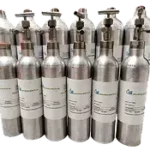
Overview
Oxygen sensor calibration sits at the centre of every confined space entry gas detection programme — and the calibration gas concentration selected has a direct bearing on where in the measurement range the instrument’s span accuracy is verified. While lower-concentration oxygen calibration gas products are designed to verify sensor performance deep into the oxygen-deficient range, there is a distinct and legitimate calibration requirement at the upper end of the deficiency threshold — and that is precisely where 18% oxygen calibration gas is positioned.
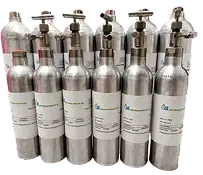
The 18% Oxygen (O2) Balanced Nitrogen Span Gas is a precision calibration gas mixture formulated at 18% oxygen by volume in a nitrogen balance, supplied in aluminium cylinders across five size options — 34L, 58L, 103L, 110L, and 116 litres. At 18% O2, this calibration gas sits just below the oxygen-deficient threshold of 19.5% — making it the appropriate span concentration for verifying the oxygen sensor’s response accuracy at the critical alarm boundary where the instrument transitions from a safe atmosphere reading to an oxygen deficiency alarm. For instrument types where the manufacturer specifies an 18% O2 calibration point, this product delivers the certified concentration and documented traceability that the calibration procedure requires.
The differentiating role of the 18% concentration within a broader oxygen calibration gas programme is that it tests the sensor in the range that most workers are most likely to encounter as the first indicator of an emerging oxygen hazard. The oxygen-deficient alarm threshold on most portable monitors is set between 18% and 19.5% O2 — the range where atmospheric oxygen has begun to fall but personnel may not yet recognise an environmental change. A sensor calibrated at 18% O2 has had its response accuracy verified precisely at that alarm threshold boundary, confirming that the instrument will alarm correctly when it matters most: at the earliest point at which a developing oxygen deficiency should trigger a personnel response.
Key Features
18% Oxygen Concentration — Span Calibration at the Alarm Threshold Boundary
The 18% O2 concentration is positioned immediately below the internationally recognised oxygen-deficient threshold of 19.5% — the boundary at which most portable gas detector manufacturers set their first-level oxygen deficiency alarm. Calibrating at 18% O2 verifies the sensor’s response accuracy at this operationally critical point: the concentration at which the instrument should transition from a safe atmosphere reading to an active alarm. For programmes where the primary oxygen monitoring concern is detecting the onset of oxygen deficiency in normally occupied or intermittently entered spaces — rather than verifying sensor performance at severely depleted concentrations — the 18% calibration point provides targeted span verification at the threshold that is most directly relevant to the alarm activation the programme depends on.
Nitrogen Balance Gas — Inert Diluent with No Sensor Cross-Sensitivity
Nitrogen is the balance gas for this mixture, providing a chemically inert diluent that introduces no reactive components and no cross-sensitivity effects on the electrochemical oxygen sensor during the calibration event. For multi-gas instruments carrying combustible gas, CO, H2S, and other sensor channels alongside the oxygen channel, the nitrogen balance gas does not present a foreign chemical challenge to those sensors during the oxygen calibration procedure. The result is a clean calibration event focused on the oxygen sensor alone, without the chemical interactions that a reactive balance gas could introduce to adjacent sensor channels in the same instrument.
Five Cylinder Sizes — 34L, 58L, 103L, 110L, 116L — Scaled to Programme Volume
The 18% O2 span gas is available across five cylinder sizes from 34 litres to 116 litres, covering calibration gas requirements from single-instrument site programmes through to large-scale instrument hire fleets and multi-site safety equipment maintenance operations. Cylinder size selection should be matched to the programme’s actual gas consumption rate — determined by the number of instruments being calibrated, the calibration and bump-test frequency, and the gas volume consumed per event. For low-volume applications such as a single-site confined space entry programme with a small instrument count, the 34L or 58L cylinder format provides practical capacity without the cost of large volumes of residual gas. High-volume operations benefit from the 103L–116L formats, which reduce cylinder replacement frequency and the associated procurement overhead.
Aluminium Cylinder — Lightweight and Field-Appropriate Construction
All cylinders are manufactured from aluminium — lighter than steel equivalents at the same gas capacity and corrosion-resistant for use in industrial, marine, and outdoor field environments where humidity and chemical exposure are routine. For instrument technicians carrying calibration equipment to field locations — confined space access points, vessel spaces, plant maintenance areas — the weight advantage of aluminium over steel is a practical handling benefit, particularly when combined with the other equipment and personal protective gear typically carried during confined space entry calibration rounds. Aluminium construction also eliminates the surface corrosion concern that can affect steel cylinders stored in high-humidity environments over extended periods.
Certified Concentration — Traceable for Calibration Record Compliance
Each cylinder is supplied with a certificate of analysis confirming the verified oxygen concentration against traceable reference standards. For oxygen sensor calibration in confined space entry and safety monitoring programmes, the certificate of analysis is the documentary foundation of the calibration record — providing evidence that the instrument was spanned against a gas of known and verified composition. That traceability is the standard expected by regulatory bodies, classification societies, and management system auditors reviewing confined space entry programme documentation. Without it, the calibration event cannot be demonstrated to meet the requirement for calibration against a certified reference standard, regardless of the care taken during the calibration procedure itself.
Technical Specifications
Cylinder: C10 — Aluminium
Available Sizes: 34L / 58L / 103L / 110L / 116 Litres
Oxygen (O2): 18% Vol
Balance Gas: Nitrogen (N2)
Benefits
Alarm threshold calibration verifies the instrument response at the concentration most likely to trigger the first personnel action. In most confined space entry programmes, the practical purpose of the oxygen monitor is to alarm before the atmosphere becomes immediately dangerous — giving personnel time to evacuate or take action before oxygen depletion reaches life-threatening levels. The first alarm threshold on most instruments is set in the 18%–19.5% O2 range. Calibrating at 18% O2 verifies the sensor’s response accuracy precisely at that threshold, confirming that when the atmosphere drops to the concentration at which the alarm is supposed to activate, the instrument will respond correctly. That is the calibration verification that most directly supports the instrument’s intended protective function in a standard confined space entry programme.
Manufacturer-specified calibration concentration reduces instrument-specific procedure complexity. Some portable gas detector manufacturers specify 18% O2 as the recommended oxygen calibration concentration in their instrument calibration procedures — a specification that reflects the instrument’s sensor design, range, and alarm threshold settings. For those instrument types, using a calibration gas at the manufacturer-specified concentration is not a preference; it is a procedure compliance requirement. A calibration record showing the instrument was spanned at the correct manufacturer-specified concentration is a stronger compliance document than one showing calibration at a different concentration that required additional correction or justification.
Nitrogen balance keeps the calibration event chemically clean across all sensor channels. Multi-gas monitors used in confined space entry programmes carry several sensor types simultaneously. Introducing a calibration gas balanced in air during an oxygen-only calibration event changes the oxygen level and introduces atmospheric nitrogen and trace components that were not part of the intended calibration gas. A nitrogen-balanced oxygen calibration gas limits the calibration event to the intended oxygen concentration challenge, without the chemical side-effects that an air-balanced alternative introduces to adjacent sensors. For programmes where all sensor channels are calibrated in a defined sequence, keeping each calibration event chemically focused on the target sensor simplifies the calibration procedure and reduces the risk of cross-channel calibration interactions.
Consistent certified supply simplifies procurement documentation and calibration record management. Calibration gas procurement for a multi-instrument programme involves managing cylinder certificates, expiry dates, lot numbers, and concentration verifications across the full consumable inventory. Sourcing oxygen calibration gas from a consistent certified supply — same concentration, same balance gas, same documentary standard — keeps that management straightforward. When calibration records are reviewed during an audit, a consistent supply chain with traceable certificates across all calibration events is easier to present and easier to defend than a mixed-source consumable history with varying documentation standards.
Who It’s For
The Safety Manager or HSE Officer Specifying Calibration Gas for a Standard Confined Space Entry Programme
Your confined space entry programme covers industrial maintenance, vessel spaces, or utility infrastructure where oxygen deficiency is a credible hazard but the atmospheres encountered are not typically in the severely depleted range associated with fully inerted or cryogenic environments. Your instrument manufacturer specifies 18% O2 as the calibration concentration, your calibration records are reviewed during annual safety audits, and you need a reliable, consistently available supply of certified 18% O2 calibration gas in a cylinder size that covers your instrument count and calibration frequency without constant reordering. A product that is straightforward to specify, consistent in supply, and comes with the documentation your audit trail requires.
The Instrument Technician Maintaining a Portable Gas Detector Fleet on a Defined Calibration Schedule
You calibrate portable multi-gas monitors across a facility, project site, or vessel fleet on a monthly or quarterly schedule. Each monitor has an oxygen channel that requires span calibration at the manufacturer-specified concentration — 18% O2 for the instruments in your programme. You need the correct certified calibration gas available at the right cylinder size for your calibration volume, and you need it consistently in stock so the calibration schedule does not get disrupted by a procurement gap. The calibration records you produce go into the safety management system and may be reviewed by an external auditor; the certificate of analysis from each cylinder is part of that record.
Possible Applications
- Standard industrial confined space entry programmes — Span calibration of portable multi-gas monitors with oxygen channels used for pre-entry atmosphere testing in tanks, vessels, manholes, and enclosed plant spaces across petrochemical, manufacturing, and utility infrastructure industries
- Marine vessel enclosed space entry — routine maintenance operations — Calibration of portable oxygen monitors used by vessel crew and contractors for atmosphere testing in enclosed spaces during routine maintenance, drydock operations, and vessel inspection programmes where instrument manufacturer specifications call for 18% O2 calibration
- Construction and civil engineering — underground and enclosed structure entry — Span calibration of oxygen monitors used by workers entering underground structures, tunnels, excavations, and enclosed construction spaces where oxygen deficiency from biological activity, groundwater, or construction processes is a credible hazard
- Waste water treatment — sewer and wet well entry — Calibration of portable gas monitors with oxygen channels used for atmosphere testing in sewers, wet wells, lift stations, and treatment plant confined spaces where oxygen consumption from biological oxygen demand can produce deficient atmospheres
- Fire service and emergency response — pre-entry atmosphere assessment — Span calibration of oxygen monitors carried by fire service personnel for atmosphere assessment before structural entry in post-incident or hazmat response scenarios, where manufacturer-specified calibration concentrations are followed as part of equipment maintenance protocols
- Offshore platform and vessel maintenance — general enclosed space entry — Calibration of multi-gas monitors used for enclosed space entry during routine offshore platform maintenance, equipment inspection, and structural access where oxygen deficiency from inert gas purging or biological sources is a documented hazard requiring pre-entry verification
- Safety equipment hire and calibration service operations — Certified 18% O2 calibration gas supply for instrument hire companies and third-party calibration service providers maintaining portable gas monitor fleets where oxygen channel calibration at 18% O2 is specified by the instrument manufacturers in the fleet
Trust and Certifications
Certified Calibration Gas — Traceable Concentration Accuracy
Each cylinder is supplied with a certificate of analysis confirming the verified oxygen concentration against traceable reference standards. Certified calibration gas traceability is the standard expected by ISO 17025 accredited calibration programmes, ISM Code safety management systems, and occupational safety regulatory frameworks globally. The certificate provides the documented basis for the calibration record that safety managers, HSE officers, and auditors need to verify that the instrument was spanned against a gas of known and verified composition — and that the calibration event meets the requirements of the applicable safety management or regulatory framework.
Aluminium Cylinder — Pressure Vessel Compliant Construction
Cylinders are manufactured and tested to applicable pressure vessel standards. They must be handled, stored, and transported in accordance with compressed gas cylinder safety requirements — secure upright storage away from heat and ignition sources, cylinder caps or valve guards fitted during transport, and connection only via compatible single-stage calibration gas regulators rated for the cylinder pressure and gas service. Cylinder re-qualification intervals must be observed in accordance with local compressed gas regulations applicable to the country of use.
Supplied by Alright Engineering Solutions
The 18% Oxygen Balanced Nitrogen span gas is supplied through Alright Engineering Solutions Pte. Ltd., an authorised distributor of portable and fixed gas detection equipment, calibration gas, and marine safety system components based in Singapore. Alright Engineering Solutions provides procurement support for calibration gas, gas detection instruments, and associated safety equipment across the Singapore and regional market.
Accessories and Variants
Calibration Gas Regulator
A single-stage calibration gas regulator is required to connect the cylinder to the instrument under calibration. Alright Engineering Solutions can advise on compatible regulator options for your specific instrument make, model, and cylinder configuration — contact our team before ordering to confirm compatibility.
Additional Oxygen Calibration Gas Variants — Lower Concentration Options
5.5% O2 Bal N2 — For confined space entry programmes requiring sensor verification further into the deficient range, covering standard industrial and marine confined space entry applications where oxygen can be significantly depleted below the alarm threshold
2.1% O2 Bal N2 — For inert gas system operations, cryogenic facilities, and nitrogen-purged vessel entry where oxygen concentrations can reach near-zero levels and sensor verification across the full deficient range is required
Available Cylinder Size Variants
34L Aluminium Cylinder — For low-volume use: single-site programmes, small instrument counts, or vessel-based storage
58L Aluminium Cylinder — For moderate-volume use: multi-instrument sites or regular scheduled calibration cycles
103L / 110L / 116L Aluminium Cylinders — For high-volume use: instrument hire fleets, multi-site programmes, and calibration service operations
Related Products from Alright Engineering Solutions
CO 5/10/50 ppm Bal Air Span Gas — Carbon monoxide calibration gas in three concentrations for portable and fixed CO monitor calibration
CO2 1%–15% Vol Bal N2 Span Gas Range — CO2 calibration gas across five concentrations for confined space, process, and cargo atmosphere monitor calibration
Isobutylene 100 ppm Bal Air Span Gas — Standard PID calibration gas for VOC monitor span calibration
GX-8000 Sample Draw Multi Gas Monitor — Portable marine sample draw multi-gas monitor with oxygen sensor for vessel confined space entry
RX-8700 Portable Gas Detector — Portable multi-gas monitor with ATEX/IECEx/MED certification including oxygen deficiency detection for marine and industrial applications
Get in Touch
If you need to source 18% oxygen balanced nitrogen calibration gas — whether for a standard confined space entry programme, a scheduled instrument maintenance cycle, or ongoing consumable supply across multiple sites or vessels — contact Alright Engineering Solutions to confirm availability and request a formal quotation.
Our team can advise on which oxygen calibration concentration is appropriate for your specific instrument models and operational environment, and assist with cylinder size selection and compatible regulator sourcing.
📍 3791 Jalan Bukit Merah #06-01, E-Centre @ Redhill, Singapore 159471