Cart (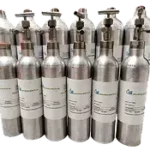
Overview
The Lower Explosive Limit calibration point is the most operationally critical reference in combustible gas detection. It is the concentration at which a gas mixture becomes capable of ignition — and the point that every %LEL alarm threshold is referenced against. A catalytic bead combustible gas detector calibrated at 50% LEL has its sensor response curve set at the midpoint of the explosion hazard range, providing a verified, traceable reference that confirms the instrument will alarm correctly before conditions reach the point of ignition. But the accuracy of that 50% LEL reference depends entirely on the calibration gas used to establish it — and for butane or LPG detection applications, that calibration gas must be a butane-specific mixture at the correct concentration, not a methane surrogate with a conversion factor applied.
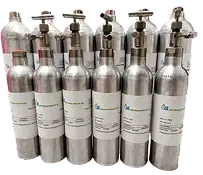
The 0.75% (50%LEL) Butane Balance Air span gas cylinder provides exactly that reference: a certified calibration gas mixture containing 0.75% by volume of butane (C4H10) in a synthetic air balance — which, given butane’s LEL of approximately 1.5%Vol in air, represents 50% of the lower explosive limit. This is the standard mid-scale span gas concentration used for catalytic bead (pellistor) combustible gas sensor calibration in %LEL detection instruments configured for butane and LPG hazard environments.
The key differentiator versus butane/nitrogen calibration gas is the balance gas: air rather than nitrogen. Catalytic bead sensors require oxygen to function — the sensor’s detection mechanism is based on the catalytic oxidation of the combustible gas on a heated pellistor bead, and without sufficient oxygen in the carrier gas, the sensor will not generate a valid response. For this reason, 50% LEL butane calibration gas for catalytic bead instruments is always formulated with an air balance — and using the correct balance gas format is not a detail that can be substituted without affecting the validity of the calibration result.
Key Features
0.75% C4H10 Concentration — 50% LEL Butane Calibration Reference
The 0.75%Vol C4H10 concentration in this mixture represents exactly 50% of butane’s lower explosive limit — the standard mid-scale calibration reference used for %LEL combustible gas detectors with catalytic bead sensors. Calibrating at 50% LEL sets the sensor response curve at the midpoint of the explosion hazard range, confirming that the instrument’s alarm thresholds — typically set at 10% and 20% LEL for the first and second alarm levels — are correctly positioned relative to the verified sensor response. For facilities where butane or LPG is the primary hazard gas and the detection instrument reads in %LEL, this mixture provides the butane-specific 50% LEL reference the calibration requires.
Balance Gas: Synthetic Air — Essential for Catalytic Bead Sensor Calibration
The balance gas in this mixture is synthetic air — a precisely formulated blend of oxygen and nitrogen at the same proportions as clean atmospheric air. Synthetic air is used rather than ambient atmospheric air to eliminate variability from humidity, background gas contamination, and local atmospheric composition that can affect the calibration result when ambient air is used as the balance gas. For catalytic bead combustible gas sensors, oxygen in the carrier gas is not optional — it is what drives the oxidation reaction that generates the sensor signal. A calibration gas with a nitrogen balance will not produce a valid calibration result on a pellistor sensor, making the air-balance format of this mixture the correct and only appropriate choice for catalytic bead instrument calibration.
50% LEL Span Point — Industry-Standard Calibration Level
The 50% LEL span point is the gas detection industry’s standard calibration reference for %LEL combustible gas detectors — used by the majority of gas detector manufacturers as the recommended span gas concentration for catalytic bead sensor calibration. Calibrating at 50% LEL rather than at a higher or lower concentration provides the best balance between calibration accuracy and practical safety margin: the span gas concentration is high enough to produce a clear, stable sensor response, but far enough from the 100% LEL explosive concentration to allow calibration in a safe environment without special precautions. For procurement teams and safety managers specifying calibration gas, a 50% LEL mixture at the correct concentration for the target gas is the specification that matches the manufacturer’s calibration procedure for virtually all commercially available %LEL catalytic bead instruments.
Multiple Cylinder Sizes — 34L to 116L
This mixture is available in five cylinder sizes: 34L, 58L, 103L, 110L, and 116L. The 34L cylinder is the standard compact size for a portable field calibration kit, a vessel on-board gas detection kit, or a maintenance team carrying calibration gas alongside portable instruments on site. The 58L cylinder suits a small workshop or a maintenance programme calibrating a modest instrument count on a regular schedule. The 103L to 116L cylinders are the appropriate choice for a centralised calibration station, a large LPG facility maintaining a significant catalytic bead detector estate, or a gas detection service company running high-volume butane-configured instrument calibration programmes. Selecting the cylinder size that matches actual consumption rate prevents both premature supply exhaustion and the cost of gas expiring unused.
Certified Concentration Accuracy with Certificate of Analysis
This mixture is prepared and supplied as a certified calibration gas with the actual C4H10 concentration verified against the declared 0.75%Vol (50% LEL) specification before supply. A certificate of analysis is available with each cylinder, providing the traceable reference documentation required for calibration programme records, safety management system audit support, and permit-to-work system calibration record entries. For facilities where calibration documentation is subject to regulatory inspection or process safety audit review, the CoA is the documentary link between the calibration event and the verified reference gas concentration — and is a standard procurement requirement for any serious gas detection maintenance programme.
Compatible with Standard Span Gas Regulators
The cylinder valve is compatible with standard demand-flow and constant-flow span gas regulators used for portable gas detector calibration. No specialist fittings or adaptors are required for most common instrument setups, ensuring compatibility with existing regulator stock and simplifying the setup at the calibration point.
Technical Specifications
Product: Span Gas — Calibration Gas Mixture
Category: Span Gas and Regulator
Gas Mixture: 0.75%Vol Butane (C4H10), Balance Synthetic Air
Butane Concentration: 0.75% v/v (50% LEL)
LEL Equivalent: 50% LEL (Butane LEL ≈ 1.5%Vol in air)
Balance Gas: Synthetic Air
Cylinder Sizes (C10): 34L / 58L / 103L / 110L / 116L
Application: Butane / LPG combustible gas detector %LEL span calibration; catalytic bead (pellistor) sensor instruments
Compatible Instruments: Catalytic bead (%LEL) combustible gas detectors configured for butane or LPG detection
Mixture Type: Binary (C4H10 / Synthetic Air)
Benefits
Provides a butane-specific 50% LEL reference that directly validates alarm threshold accuracy. The alarm thresholds on a %LEL combustible gas detector — typically 10% and 20% LEL — are only as reliable as the calibration that set them. A 50% LEL calibration using a certified butane-specific mixture verifies the sensor response at the mid-scale point most relevant to explosion risk management, confirming that the detector will alarm at the correct concentration thresholds for butane rather than for a surrogate gas with an applied conversion factor. For LPG facilities and marine operations where butane is the actual hazard gas, this is the difference between a calibrated instrument and a correctly calibrated instrument.
Air balance ensures valid catalytic bead sensor calibration — no oxygen starvation effects. Using a nitrogen-balance calibration gas on a catalytic bead instrument suppresses the sensor’s oxidation reaction and produces an artificially low sensor response — resulting in a detector that is under-calibrated and will under-read in the field. The synthetic air balance in this mixture provides the oxygen environment the catalytic bead sensor requires to generate its full, correct signal during calibration, ensuring the calibration result reflects the instrument’s actual field response to butane vapour.
Supports regulatory compliance and permit-to-work documentation for butane and LPG hazard sites. Facilities handling butane and LPG under process safety management frameworks, confined space entry programmes, and hot work permit systems require documented combustible gas detector calibration against certified reference gas as a prerequisite for work authorisation. The CoA supplied with each cylinder provides the reference documentation for calibration records that safety audits, regulatory inspections, and incident investigations will review — and confirms the calibration gas concentration was verified before use.
Eliminates the systematic error of methane-surrogate calibration in butane hazard environments. A catalytic bead detector calibrated on 50% LEL methane and then used in a butane environment reads with a cross-sensitivity offset that the manufacturer’s correction factor approximates but does not eliminate. Direct calibration on 50% LEL butane — 0.75%Vol C4H10 Bal Air — removes that approximation and produces an instrument whose %LEL reading for butane is as accurate as the certified calibration gas concentration allows.
Who It’s For
The HSE Officer Running a Permit-to-Work Programme at an LPG Facility
Your facility handles bulk butane or LPG — in storage, loading, or process operations — and your permit-to-work system requires verified combustible gas detector calibration before any hot work, confined space entry, or maintenance activity is authorised. Your portable monitors use catalytic bead sensors and read in %LEL, and your calibration procedure specifies 50% LEL butane span gas. You need a reliable, consistently available supply of certified 0.75%Vol C4H10 Bal Air and a CoA with each cylinder to support the calibration records your safety management system requires. Getting the calibration gas wrong — using a methane mixture or a nitrogen-balance butane gas on a pellistor sensor — is not a technicality your audit programme will overlook.
The Marine Safety Officer on a Gas Carrier or LPG Product Tanker
Your vessel carries butane or LPG, and your portable combustible gas monitors — used for pre-entry tank atmosphere checks, hotwork area monitoring, and deck safety during cargo operations — use catalytic bead sensors calibrated in %LEL. Your on-board calibration kit includes 50% LEL butane span gas as the standard calibration reference for these instruments, and you need a compact cylinder size (34L or 58L) that fits your on-board storage and provides sufficient supply for the voyage and port call calibration schedule. Your safety management system maintenance records require a CoA reference for each calibration gas cylinder used on board.
The Gas Detection Equipment Service Technician
You maintain and calibrate portable %LEL combustible gas detectors for LPG industry, marine, and industrial clients whose instruments are configured for butane detection. Your calibration workshop stocks both butane-balance-air (50% LEL) and butane-balance-nitrogen mixtures to cover clients with catalytic bead instruments and IR sensor instruments respectively — and you understand that substituting one for the other is not acceptable for either sensor type. Your clients’ calibration certificates reference the specific calibration gas mixture and concentration used, and your CoA records support the traceability chain from the cylinder to the certificate issued to the client.
Possible Applications
- LPG bulk storage terminals and distribution depots — Pre-shift and pre-work calibration of portable %LEL catalytic bead monitors carried by workers in storage vessel areas, loading bays, pump rooms, and vehicle filling stations
- Marine LPG carrier and butane tanker operations — On-board calibration of portable combustible gas detectors used for cargo tank atmosphere checking, confined space entry, and deck monitoring during loading and discharge operations
- LPG cylinder filling and bottling plants — Calibration of portable %LEL monitors used by workers in filling hall environments where butane vapour accumulation from cylinder handling creates a continuous LEL monitoring requirement
- Refinery LPG and C4 product handling areas — Calibration of portable combustible gas monitors used for confined space entry and hot work authorisation in refinery sections handling butane, isobutane, and mixed LPG streams
- Petrochemical plant C4 feedstock areas — Calibration of %LEL monitors used by maintenance and operations teams in petrochemical process areas where butane or C4 hydrocarbons are present as feedstocks or by-products
- Commercial LPG autogas and vehicle refuelling stations — Calibration of LEL monitors used for gas leak detection and safety monitoring at LPG autogas dispensing and vehicle refuelling installations
- Offshore platform process areas — Calibration of portable %LEL monitors used during maintenance, confined space entry, and hot work in offshore platform areas where C4 or LPG streams are present in condensate or fuel gas systems
- Gas detection service and calibration workshops — Standard calibration gas supply for service technicians calibrating catalytic bead combustible gas detectors configured for butane or LPG detection on behalf of industrial, marine, and petrochemical clients
Trust and Certifications
Certified Calibration Gas — Verified 0.75%Vol C4H10 (50% LEL) Concentration
This 0.75%Vol C4H10 Bal Air mixture is supplied as a certified calibration gas with the actual butane concentration verified against the declared 50% LEL specification before supply. Certified calibration gas provides the traceable reference standard required for %LEL combustible gas detector calibration to be valid under safety management system frameworks, regulatory requirements, and gas detector manufacturer service guidance. A certificate of analysis confirming the verified concentration is available with each cylinder for inclusion in calibration programme documentation, permit-to-work records, and safety audit evidence files.
Compliance with LEL Detector Calibration Standards
Catalytic bead %LEL combustible gas detectors used in LPG handling, confined space entry, and marine cargo operations are subject to calibration requirements under regulatory frameworks including OSHA confined space and process safety standards, IMO requirements for vessel gas detection maintenance, and the calibration procedures defined in gas detector manufacturer service manuals. Using a certified 50% LEL butane span gas in the correct air-balance format — and retaining the CoA as the calibration record reference — meets the evidentiary standard required for process safety audits, regulatory inspections, and incident investigation reviews of gas detection maintenance documentation.
Supplied by Alright Engineering Solutions
The 0.75% (50%LEL) Butane Balance Air span gas cylinder is supplied through Alright Engineering Solutions Pte. Ltd., an authorised distributor of portable and fixed gas detection equipment, calibration gas, and safety products in Singapore. Alright Engineering Solutions supports LPG industry, marine, petrochemical, and industrial clients across the Singapore and regional market with gas detection equipment procurement, calibration gas supply, and safety product sourcing.
Accessories and Variants
Span Gas Regulator
A compatible span gas regulator — demand-flow or constant-flow configuration — is available to use with this cylinder, providing the controlled low-pressure output required for portable catalytic bead detector calibration. Contact Alright Engineering Solutions to confirm the correct regulator type and outlet fitting for your specific instrument model before ordering.
Available Cylinder Sizes
34 Litres (C10) — Compact portable size for vessel on-board kits and field calibration sets
58 Litres (C10) — Mid-range size for small-fleet programmes and site maintenance calibration kits
103 Litres (C10) — Standard industrial volume for shore-based calibration stations and medium-frequency programmes
110 Litres (C10) — High-volume option for large instrument fleets and high-frequency calibration schedules
116 Litres (C10) — Maximum volume for centralised calibration workshops and ongoing high-throughput programmes
Related Calibration Gas Products
8%Vol Butane Bal N2 — Butane/nitrogen span gas for IR sensor combustible gas detectors requiring an 8%Vol C4H10 calibration reference
10%Vol Butane Bal N2 — Higher-concentration butane/nitrogen span gas for IR sensor instruments specifying 10%Vol C4H10
50% LEL Methane Bal Air (2.5%Vol CH4) — Standard 50% LEL methane span gas for catalytic bead detectors configured for methane or natural gas detection
Multi-gas calibration mixtures (LEL/CO/H2S/O2 Bal Air) — Four-gas combination span cylinders for multi-gas portable monitor calibration covering combustible gas, oxygen, CO, and H2S
12% Oxygen Bal N2 — Low-alarm oxygen span gas for O2 sensor calibration in multi-gas instruments
Get in Touch
If you need to source 0.75% (50%LEL) Butane Balance Air span gas — for a permit-to-work calibration programme at an LPG facility, a marine gas carrier on-board calibration kit, a refinery hot work safety programme, or a gas detection service workshop calibrating catalytic bead butane monitors — contact Alright Engineering Solutions to confirm cylinder availability, select the right cylinder size, and request a formal quote.
Our team can advise on the correct calibration gas format — air balance versus nitrogen balance — for your specific instrument sensor type, assist with span gas regulator selection, and support broader gas detection equipment procurement for LPG, marine, and industrial safety programmes.
📍 3791 Jalan Bukit Merah #06-01, E-Centre @ Redhill, Singapore 159471
Done