Cart (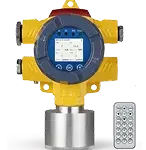
Overview
Airborne dust in industrial environments is a hazard that is easy to underestimate and difficult to manage without measurement. Visible dust — the kind that settles on surfaces and coats equipment — is only part of the picture. The particles that present the greatest risk to respiratory health and combustion safety are often the ones you can’t see with the naked eye: fine particulate matter in the PM2.5 and PM10 size fractions that remain suspended in the air for extended periods and penetrate deep into the lungs. Managing dust risk without continuous, accurate measurement of actual airborne concentrations means managing in the dark.
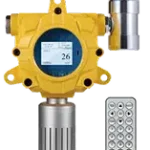
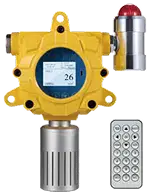
The K-G60-TSP Fixed Dust Detector is a permanently installed particulate monitoring instrument that uses laser scattering technology to continuously measure airborne dust concentrations across a detection range of 1–1000 μg/m³ (standard configuration) or up to 3–6000 μg/m³ (extended range), with a resolution of 1 μg/m³. It detects PM2.5, PM10, and total suspended particulate (TSP) simultaneously, providing a complete picture of the airborne dust profile in the monitored area rather than a single fraction measurement.
What sets the K-G60-TSP apart from comparable fixed particulate monitors is the combination of laser scattering measurement — a more stable and accurate detection principle than the optical scattering methods used in lower-cost dust monitors — with ATEX-compatible dual certification (II 2G Ex d IIC T6 Gb and II 2G Ex d IIb IP65 T80°C Db) that makes it deployable in Zone 1 hazardous areas where combustible dust or flammable gas atmospheres are a credible operational risk. For industrial environments where dust hazard and explosive atmosphere hazard coexist, this dual certification covers both in a single fixed instrument.
Key Features
Laser Scattering Detection — PM2.5, PM10, and TSP
The K-G60-TSP uses laser scattering as its detection principle — a particle counter method that directs a laser beam through the sampled air and measures the light scattered by particles passing through the beam. Laser scattering provides higher measurement stability and repeatability than the infrared optical scattering methods used in lower-cost dust monitors, particularly at low concentrations where accurate measurement is most important for occupational health management. Simultaneous detection of PM2.5, PM10, and TSP fractions gives the monitoring system complete visibility of the particulate profile rather than a single size fraction measurement.
Wide Detection Range — 1 to 6000 μg/m³
The K-G60-TSP covers a detection range of 1–1000 μg/m³ in standard configuration, with extended range capability up to 3–6000 μg/m³. This span covers environments from clean manufacturing areas where even low particulate concentrations trigger occupational health concerns, through to heavy industrial processing environments where dust concentrations can reach levels that present immediate respiratory and combustion risk. A single instrument that covers this full range eliminates the need to specify different devices for different concentration environments within the same site.
Dual ATEX Certification — Zone 1 Gas and Dust Hazardous Areas
The K-G60-TSP carries dual ATEX certification: II 2G Ex d IIC T6 Gb for Zone 1 flammable gas hazardous areas (gas group IIC — the highest classification, covering hydrogen), and II 2G Ex d IIb IP65 T80°C Db for Zone 1 combustible dust environments. For industrial sites where airborne dust is both a respiratory hazard being monitored and a potential explosion fuel, the ability to install a certified dust detector in a classified hazardous area is a practical requirement that many dust monitors cannot meet. The K-G60-TSP’s dual certification addresses this directly.
Two-Relay Output — Alarm and Control Integration
The K-G60-TSP includes two relay outputs with free contact rated at 30V DC 2A / 125V AC 1A, supporting two independent control or alarm functions. In practice, this allows the detector to trigger two separate responses at different concentration thresholds — for example, a first relay activating a local alarm at a warning level, and a second relay activating a ventilation system or process shutdown at a higher alarm level. The relay output capability makes the K-G60-TSP a control point in a wider dust management system, not just a passive monitoring instrument.
1 μg/m³ Resolution — Occupational Health Grade Sensitivity
With a measurement resolution of 1 μg/m³, the K-G60-TSP can discriminate between concentration levels that are meaningful for occupational health management — including the WHO and national regulatory air quality standards that define exposure limits for PM2.5 and PM10 in occupational and environmental contexts. This resolution level is necessary for monitoring programmes where the goal is not just detecting alarm-level concentrations but tracking exposure trends and confirming that control measures are maintaining concentrations within acceptable limits throughout the working day.
Shielded Cable Wiring — Signal Integrity in Industrial Environments
The K-G60-TSP specifies wiring cable of greater than 3×1.5mm² shielded wire, using M20×1.5 (internal thread) G1/2 (inner tube) wiring ports. Shielded cable specification is relevant in industrial environments where electromagnetic interference from motors, drives, and switching equipment can corrupt the low-level signals from sensitive measurement instruments. The shielding requirement reflects a design decision to maintain signal integrity in real industrial electrical environments — not just in a test environment — ensuring the concentration readings the instrument reports are accurate rather than corrupted by electrical noise.
Wide Operating Conditions — Pressure, Temperature, and Humidity
The K-G60-TSP operates across a working temperature range of -20°C to 55°C, humidity up to 95% RH (no dew), and atmospheric pressure of 86–106 kPa. The -20°C lower temperature limit extends the instrument’s applicability to outdoor installations in cold climates and refrigerated industrial environments — conditions that eliminate many indoor-only dust monitors from consideration. The wide pressure range accommodates installations at altitude or in slightly pressurised environments without requiring pressure correction.
Technical Specifications
Model: K-G60-TSP
Detect Gas / Particulate: PM2.5, PM10, TSP (Total Suspended Particulate)
Sampling Method: Laser scattering
Resolution: 1 μg/m³
Detection Range: 1–1000 μg/m³ (standard) / 3–6000 μg/m³ (extended)
Weight: Approximately 1600g
Dimensions: 236.5 × 172 × 90mm
Display: Not specified — confirm with supplier
Power Supply: DC 24V ± 3.6V
Relay Output: Two relays, free contact: 30V DC 2A / 125V AC 1A
Wiring Port: M20×1.5 (internal thread), G1/2 (inner tube thread)
Using Cable: >3×1.5mm² shielded wire
Working Temperature: -20°C to 55°C
Working Humidity: ≤95% RH (no dew)
Working Pressure: 86–106 kPa
IP Rating: IP65
Safety Approvals: II 2G Ex d IIC T6 Gb; II 2G Ex d IIb IP65 T80°C Db
Wireless Connectivity: Not specified
Battery / Backup: Not applicable — fixed mains/DC powered installation
Data Logging: Not specified — confirm with supplier or connected monitoring system
Benefits
For industrial hygienists and occupational health teams, the K-G60-TSP’s 1 μg/m³ resolution and simultaneous PM2.5/PM10/TSP measurement transforms dust monitoring from a binary alarm function into a continuous exposure management tool. Rather than knowing only when dust has exceeded a set point, the monitoring system generates the concentration data needed to assess whether control measures are working, identify peak exposure periods within a shift, and build the exposure records that occupational health surveillance programmes require.
For site safety managers and HSE officers, the dual ATEX certification resolves a specification problem that arises on many industrial sites where combustible dust and flammable gas hazards coexist in the same area. A dust detector that cannot be installed in a Zone 1 classified area is not a viable solution for these environments — the K-G60-TSP’s Zone 1 certification for both gas and dust hazardous areas removes that limitation.
For facilities engineers and control system integrators, the two-relay output with configurable threshold activation provides the control interface needed to connect dust monitoring to ventilation systems, process controls, and building management systems. A fixed particulate monitoring instrument that can directly trigger a ventilation response or process interlock at a specified concentration threshold is a component in an active dust management system — not just a passive recording instrument that generates data for someone else to act on later.
Who It’s For
Industrial Hygienist — Manufacturing or Processing Facility
You’re responsible for monitoring worker exposure to airborne dust across a production facility and demonstrating that concentrations remain within occupational exposure limits throughout operational periods. You need continuous, accurate PM2.5 and PM10 measurement at the 1 μg/m³ resolution level that allows you to track trends and identify exceedances — not just alarm events. The K-G60-TSP’s laser scattering detection and wide measurement range give you the data quality needed to support a credible occupational health monitoring programme, and the relay outputs allow you to integrate the monitoring directly into the facility’s ventilation control system.
HSE Manager — Combustible Dust Environment (Grain, Wood, Chemical, or Pharmaceutical)
Your facility handles materials that generate combustible dust as a byproduct of processing — grain milling, woodworking, chemical synthesis, or pharmaceutical manufacturing. You need fixed dust monitoring that operates reliably in the process environment, triggers an alarm before concentrations reach explosive risk levels, and can be installed in a classified hazardous area without requiring a separate non-hazardous area enclosure. The K-G60-TSP’s ATEX dual certification for Zone 1 gas and dust environments addresses that installation requirement directly.
Control Systems Engineer — Process Plant or Building Management System Integration
You’re designing or commissioning a dust management system for an industrial facility that requires particulate monitoring to be integrated with ventilation control, process interlocks, or a building management system. You need a fixed dust detector with relay outputs that can be wired directly into the control system, with concentration thresholds mapped to specific relay activations. The K-G60-TSP’s two-relay output architecture and DC 24V supply voltage are specified for direct integration into industrial control environments.
Possible Applications
Grain Handling and Flour Milling Facilities — Grain dust is a classified combustible dust with a well-documented explosion risk. Fixed particulate monitoring in grain elevators, milling plants, and storage facilities provides continuous concentration data for both occupational health management and explosion risk control, with relay outputs enabling ventilation or process interlocks at defined thresholds.
Woodworking and Timber Processing Plants — Wood dust is both a respiratory hazard (COSHH-regulated in the UK with a WEL of 5 mg/m³ for hardwoods) and a combustible dust explosion risk. Fixed dust monitoring in woodworking facilities tracks PM2.5 and PM10 concentrations throughout production for both occupational health compliance and dust extraction system performance verification.
Pharmaceutical Manufacturing — Clean Area Particulate Monitoring — Pharmaceutical production environments require particulate monitoring to control both product contamination risk and worker exposure to active pharmaceutical ingredients in dust form. The K-G60-TSP’s 1 μg/m³ resolution and simultaneous particle fraction measurement support the continuous environmental monitoring requirements of GMP-regulated manufacturing areas.
Chemical Processing Plants — Hazardous Area Dust Monitoring — Chemical production environments often have both flammable gas and combustible dust hazards present simultaneously. The K-G60-TSP’s dual ATEX certification allows installation in Zone 1 areas where standard dust monitors cannot be deployed, providing continuous particulate monitoring without requiring a non-hazardous enclosure or purge system.
Mining and Mineral Processing — Respirable Dust Monitoring — Silica dust in mining and quarrying environments is a serious respiratory health risk (silicosis). Fixed monitoring of PM2.5 and PM10 fractions in processing areas, crusher buildings, and conveyor transfer points provides the continuous concentration data needed to manage respirable dust exposure and verify the effectiveness of dust suppression measures.
Cement and Concrete Production — Cement dust contains respirable crystalline silica and presents both occupational health and combustion hazards in production environments. Fixed dust monitoring across production areas, conveyor systems, and bagging lines tracks concentration levels and supports ventilation system performance management.
Metal Fabrication and Welding Environments — Metallic fume and welding particulate in fabrication environments include hazardous fine particle fractions. Fixed monitoring of PM2.5 and PM10 in welding bays and fabrication workshops supports COSHH compliance monitoring and ventilation adequacy verification for occupational health management.
Trust & Certifications
II 2G Ex d IIC T6 Gb — Zone 1, Gas Group IIC Flameproof Certification
This ATEX classification certifies the K-G60-TSP for use in Zone 1 flammable gas hazardous areas across gas group IIC — the highest gas group classification, covering hydrogen and acetylene alongside all IIA and IIB gases. The Ex d (flameproof) protection concept means the instrument’s enclosure is designed to contain any internal ignition without propagating it to the surrounding atmosphere. T6 temperature class (maximum surface temperature 85°C) confirms the enclosure does not reach ignition temperatures for the gases it is certified for use with. For procurement on petrochemical, chemical, or hydrogen handling sites where Zone 1 fixed instrument installation requires IIC certification, this classification confirms the K-G60-TSP meets that requirement.
II 2G Ex d IIb IP65 T80°C Db — Zone 1, Combustible Dust Flameproof Certification
The second ATEX classification covers Zone 1 combustible dust environments (Zone 21 equivalent in dust zone terminology), with IP65 ingress protection confirming full dust exclusion and water jet resistance. This certification is the requirement for installing electrical equipment in areas where combustible dust atmospheres may be present during normal operation — including grain handling, pharmaceutical, chemical, and food processing environments where dust is both a product or byproduct of the process and a potential explosion fuel. Dual certification covering both gas and dust Zone 1 hazardous areas in a single instrument simplifies specification on sites with combined hazard classifications.
IP65 Ingress Protection
IP65 independently confirms full dustproof protection and resistance to water jets from any direction. For a fixed dust monitoring instrument installed in active processing environments where dust, moisture, and cleaning operations are routine, IP65 protection is a necessary baseline for reliable long-term operation — not just an optional durability feature.
Laser Scattering Detection Principle — Measurement Stability
Laser scattering is a recognised and established detection principle for industrial particulate monitoring, providing measurement stability and repeatability superior to the infrared optical scattering methods used in lower-cost dust monitors. The detection principle is referenced in ISO and CEN standards for airborne particle measurement, and instruments using laser scattering are appropriate for use in occupational health monitoring programmes that require documented measurement performance.
Accessories & Variants
Shielded Signal Cable (3×1.5mm² minimum)
The K-G60-TSP installation requires shielded cable for signal wiring to maintain measurement accuracy in electrically noisy industrial environments. Appropriate cable should be sourced to specification for the installation — confirm cable requirements and conduit compatibility with your electrical contractor or control systems integrator at the installation design stage.
Compatible Relay-Controlled Ventilation or Process Interlock
The two-relay outputs on the K-G60-TSP are designed to interface with external ventilation systems, process controls, or alarm panels. Integration with existing building management systems or safety PLC infrastructure should be engineered at the installation design stage — contact our technical team for wiring and integration guidance.
Mounting Bracket and Enclosure Hardware
Fixed installation hardware for the K-G60-TSP enclosure, appropriate for wall or pole mounting in indoor or outdoor industrial environments. Confirm mounting configuration and enclosure orientation requirements with the supplier to ensure correct sensor positioning relative to the monitored air volume.
Available Variants
The K-G60-TSP is available in standard range (1–1000 μg/m³) and extended range (3–6000 μg/m³) configurations. The appropriate range should be selected based on the expected dust concentration levels in the monitored environment — contact our technical team to discuss range selection for your specific application, along with relay threshold configuration and integration requirements.
Request a Quote or Technical Consultation
If you’re specifying fixed dust monitoring for a hazardous area installation, an occupational health monitoring programme, or a process control integration where particulate concentration needs to trigger a ventilation or interlock response, the K-G60-TSP is worth a detailed technical evaluation.
Speak with our team to discuss your specific installation environment, confirm ATEX certification applicability for your hazardous area classification, advise on detection range selection and relay threshold configuration, or request pricing for single units or multi-point monitoring installations. We work with HSE managers, industrial hygienists, control systems engineers, and facilities procurement teams across industrial, pharmaceutical, and process industry applications.