Cart (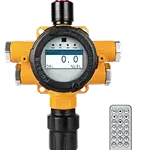
Overview
A facility that handles multiple gas hazards simultaneously — combustible gases alongside toxic gases and oxygen deficiency risk — needs a fixed monitoring solution that addresses all of them from a single installed instrument. Deploying separate detectors for each gas type at every monitoring point multiplies hardware costs, installation complexity, wiring requirements, and maintenance overhead without necessarily improving protection. The more practical and cost-effective solution is a single fixed transmitter that covers all four primary industrial gas hazards at one location, integrates into the facility’s existing alarm and control infrastructure through standard relay and analogue outputs, and does so in an enclosure rated for continuous outdoor or harsh indoor deployment.
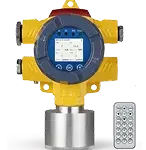
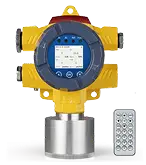
The GTQ-DX401 fixed multi gas detector from Bosean Electronic Technology Co., Ltd. is designed around exactly this requirement. A wall-mounted or pipeline-type fixed transmitter, the GTQ-DX401 simultaneously monitors methane (CH4 / LEL combustibles), carbon monoxide (CO), oxygen (O2), and hydrogen sulphide (H2S) — the four-gas combination that represents the baseline hazard profile for confined space entry, petrochemical processing, wastewater treatment, and a broad range of other industrial environments. It outputs a 4–20mA analogue signal per channel and provides two relay outputs for direct hardware integration with alarm panels, ventilation systems, and emergency shutdown infrastructure, all within a die-cast aluminium explosion-proof housing rated to IP65.
Supplied by Alright Engineering Solutions Pte Ltd — Singapore-based authorised distributors of fixed and portable gas detection equipment serving the maritime and industrial sectors across the Asia-Pacific region — the GTQ-DX401 differentiates itself from comparable fixed four-gas detectors through its high-definition colour display and multi-point calibration capability. Most fixed transmitters in this category use simple LED or basic LCD displays that communicate alarm status but provide limited operational information at the detector head. The GTQ-DX401’s colour screen displays real-time concentration readings for all four gas channels simultaneously, making it a genuine field-readable instrument as well as a signal source for a central monitoring system.
Key Features
1. Simultaneous Four-Gas Detection — CH4, CO, O2, and H2S
The GTQ-DX401 monitors all four primary industrial gas hazards continuously from a single detector head: methane and combustible gases (CH4 / LEL) across 0–100% LEL with 1% LEL resolution; carbon monoxide (CO) from 0–1,000 µmol/mol with 1 µmol/mol resolution; oxygen (O2) across 0–30% VOL with 0.1% VOL resolution; and hydrogen sulphide (H2S) from 0–100 µmol/mol with 1 µmol/mol resolution. The sensor array supports electrochemical, catalytic combustion, semiconductor, PID, and infrared sensor technologies across its configurable channels, allowing the detector to be specified for alternative gas combinations beyond the standard four-gas configuration. For facilities where the same four gases represent the primary hazard profile across multiple monitoring points — oil and gas processing areas, wastewater pump stations, confined space entry points — the GTQ-DX401 provides a standardised four-gas monitoring solution that simplifies installation, calibration, and spare parts management across the installation.
2. High-Definition Colour Display Screen
The GTQ-DX401 features a high-definition colour display that presents real-time concentration readings for all four monitored gas channels simultaneously, alongside alarm status indicators and system diagnostics. Most fixed gas transmitters at this price point use simple LED indicators or basic monochrome LCD screens that show only alarm state — requiring a separate control room readout to view actual concentration values. The GTQ-DX401’s colour display means that any technician or operator walking past the detector can read the current gas concentrations directly from the instrument head without accessing a central monitoring panel. This is practically useful during maintenance activities, pre-entry atmospheric checks, and incident investigations where field-level concentration data is needed quickly and directly.
3. Integrated Sound and Light Alarm with Two-Stage Alert
The GTQ-DX401 incorporates an integrated audible and visual alarm system directly in the detector head, providing local alarm indication at the monitoring point independent of the central alarm panel. Two independently configurable alarm setpoints — Low and High — allow the facility to implement a graduated response: local warning at the Low setpoint to prompt investigation, and full alarm activation with relay output triggering at the High setpoint to initiate automatic safety responses. The integrated local alarm means workers in the immediate area receive an immediate alert even if there is a delay in the central control room response, and it provides confirmation of alarm activation at the detector location during incident investigation. The sound and light alarm combination ensures the alert is effective in both high-noise environments and situations where workers are wearing hearing protection.
4. Two Relay Outputs — Direct Hardware Integration with Safety Systems
The GTQ-DX401 provides two sets of relay outputs rated at 30V DC / 3A and 250V AC / 3A, suitable for direct connection to audible alarms, visual beacon systems, automatic ventilation controls, solenoid valves, emergency shutdown systems, or any other safety-critical device the facility requires to activate on gas alarm. The higher current rating of 3A (compared with the 2A relay outputs typical of smaller fixed detectors) makes the GTQ-DX401 directly capable of driving a wider range of industrial-rated external devices without relay amplification or intermediate switching. Two independent relay channels allow a Low alarm relay and a High alarm relay to be wired to different output devices — for example, activating local ventilation at Low and triggering emergency shutdown at High — creating a staged automatic response to developing gas hazard conditions.
5. Multi-Point Calibration for All Four Gas Channels
The GTQ-DX401 supports multi-point calibration for each of its four gas detection channels — a more accurate calibration method than single-point calibration for sensors where the relationship between concentration and output signal is non-linear across the detection range. Multi-point calibration is particularly relevant for LEL combustible gas sensors and electrochemical toxic gas sensors, where a single calibration point at mid-range may introduce meaningful measurement error at the low end of the range where alarm setpoints are typically configured. For facilities with formal calibration management programmes and documented calibration procedures, multi-point calibration capability is often a specification requirement. The calibration process is accessible through the instrument’s front panel interface without requiring the enclosure to be opened.
6. Explosion-Proof Die-Cast Aluminium Housing — Ex db IIC T6 Gb
The GTQ-DX401’s housing is constructed from die-cast aluminium with a corrosion-resistant finish — a material combination that provides both the structural strength needed for explosion-proof enclosure integrity and the corrosion resistance required for long-term installation in chemical, marine, and outdoor industrial environments. The explosion-proof marking Ex db IIC T6 Gb certifies the instrument for use in Group IIC hazardous areas — the highest gas group classification, covering gases including hydrogen and acetylene in addition to the IIB and IIA gases. The T6 temperature class limits the maximum surface temperature of the enclosure to 85°C, preventing the instrument’s surface from acting as an ignition source for even the most sensitive explosive gas mixtures. This is the highest explosion-proof classification available for fixed gas detection instruments, making the GTQ-DX401 suitable for deployment in the most demanding hazardous area classifications.
7. IP65 Protection Rating — Weatherproof and Dustproof
The GTQ-DX401 carries an IP65 ingress protection rating — fully dustproof and protected against water jets from any direction. This level of protection is suitable for outdoor installation, installation in wash-down areas, and deployment in humid or condensation-prone environments without the need for additional weather protection enclosures. The M20×1.5 and G1/2 cable entry ports accept standard industrial cable glands and conduit fittings, making wiring installation consistent with conventional industrial electrical practice. Combined with the die-cast aluminium housing’s corrosion resistance, the IP65 rating supports long-term permanent installation at outdoor process monitoring points, tank farm perimeters, and other exposed locations without significant maintenance of the enclosure itself.
8. Long-Term Continuous Operation — Natural Diffusion, DC 24V Powered
The GTQ-DX401 is designed for long-term continuous operation, powered from a standard DC 24V (13.6V) supply — the industry-standard power rail for fixed gas detection instruments in industrial installations. Natural diffusion sampling means there are no moving parts in the sampling system, removing the maintenance requirements and potential failure modes associated with pump-assisted sampling. The working temperature range of -10°C to +55°C covers the ambient conditions of most industrial indoor and outdoor installation environments in the Asia-Pacific region. The working pressure range of 85–106 kPa accommodates installations at moderate elevation without recalibration. Operating humidity is rated to 95% RH (no condensation), covering high-humidity environments including coastal installations, tropical climates, and indoor environments with steam or condensation.
Technical Specifications
Model: GTQ-DX401 Fixed Multi Gas Detector (Bosean — Supplied by Alright Engineering Solutions Pte Ltd)
Detected Gases (Standard): CH4 (0–100% LEL, res. 1% LEL) / O2 (0–30% VOL, res. 0.1% VOL) / CO (0–1,000 µmol/mol, res. 1 µmol/mol) / H2S (0–100 µmol/mol, res. 1 µmol/mol)
Sensor Types Supported: Electrochemical, catalytic combustion, semiconductor, PID, infrared
Display: High-definition colour display screen
Sampling Method: Natural diffusion
Operating Mode: Long-term continuous operation
Response Time: T90 ≤60 seconds
Analogue Output: 4–20mA (per channel)
Relay Output: 2 sets — contact capacity 30V DC / 3A and 250V AC / 3A
Cable Entry Ports: M20×1.5 and G1/2
Supply Voltage: DC 24V (13.6V)
Working Temperature: -10°C to +55°C
Working Humidity: ≤95% RH (no condensation)
Working Pressure: 85–106 kPa
IP Rating: IP65 (fully dustproof, protected against water jets)
Explosion-Proof Rating: Ex db IIC T6 Gb / Ex tb IIC T80°C Db
Housing Material: Die-cast aluminium, explosion-proof and corrosion-resistant
Installation: Wall-mounted or pipeline type
Dimensions: 327×154×106mm (approximately 9.5kg)
Weight: Approximately 9.5kg
Alarm Types: Integrated sound and light alarm; two-stage Low/High setpoints; relay outputs
Wireless Connectivity: None (4–20mA and relay hardwired outputs)
Data Logging: Via connected control system through 4–20mA / relay outputs
Calibration: Multi-point calibration; front panel accessible
Benefits
The core operational benefit of the GTQ-DX401 is consolidating four-gas monitoring into a single installed instrument at each monitoring point. In a facility with ten monitoring locations — a refinery unit, a wastewater treatment plant, a chemical storage area — replacing four single-gas detectors per location with one GTQ-DX401 reduces the number of installed instruments from forty to ten. This directly reduces hardware procurement costs, installation wiring, conduit runs, cable gland counts, junction box requirements, and the ongoing maintenance burden of managing calibration schedules across a larger instrument population. The simplification of the installation is a meaningful cost benefit that compounds across larger installations.
The Ex db IIC T6 Gb explosion-proof rating is the most significant certification differentiator of the GTQ-DX401 in its category. Group IIC covers gases with the lowest minimum ignition energy — hydrogen and acetylene — and T6 is the most restrictive surface temperature class. A detector certified to Ex db IIC T6 Gb can be installed in any hazardous area Zone 1 or Zone 2 classification without restriction on gas group or temperature class, covering the full range of gases the GTQ-DX401 monitors and any other flammable gases that may be co-present in the installation environment. For facilities where multiple flammable gases with different ignition energy characteristics may be present simultaneously, this maximum classification provides complete coverage without requiring separate assessment of whether the instrument’s certification covers each specific gas hazard.
The colour display screen provides a practical operational benefit that is easy to overlook in a fixed detector specification: it makes the GTQ-DX401 a usable field instrument in addition to a signal source. Operators and maintenance technicians can read actual gas concentrations at the detector head during rounds, pre-entry checks, and maintenance activities — without going back to a control room or pulling out a handheld monitor. In facilities where the cost and complexity of a central monitoring system has not yet been invested, the GTQ-DX401’s local display provides meaningful monitoring capability as a standalone instrument, with the relay outputs available for connection to simple local alarm devices.
The two AC/DC relay outputs rated at 3A provide the driving capacity to connect directly to most industrial-rated alarm beacons, ventilation fan contactors, and solenoid valves without intermediate relay panels — reducing the hardware BOM for each detector installation point and simplifying commissioning.
Who It’s For
Process Safety Engineers Specifying Fixed Gas Detection for Hazardous Area Installations: If you are designing or reviewing a fixed gas detection system for a classified hazardous area — Zone 1 or Zone 2 — and the site hazard assessment includes gases from Group IIA through Group IIC, the GTQ-DX401’s Ex db IIC T6 Gb certification covers the full classification range without requiring a separate instrument specification for each gas group. The four-channel detection capability, standard 4–20mA outputs, and two relay contacts give you the signal types needed to integrate into virtually any safety instrumented system or alarm management platform.
HSE Managers in Petrochemical, Marine, and Industrial Facilities: If you are responsible for continuous gas monitoring at multiple points across a facility where CH4, CO, O2, and H2S are concurrent hazards — refinery units, offshore platform processing areas, ship engine rooms, wastewater treatment plants — the GTQ-DX401 gives you a single-instrument solution per monitoring point that covers all four hazards, with a local colour display for field verification and relay outputs for automatic safety system activation. Managing one instrument type per location simplifies calibration scheduling, spare parts, and maintenance training across the monitoring network.
Procurement Teams in Oil and Gas, Marine, and Chemical Industries: If you are evaluating fixed multi-gas detector options for a capital project or an existing facility upgrade, the GTQ-DX401 offers a technically credible four-gas platform at a competitive price point, with the explosion-proof rating, IP65 enclosure, and standard signal outputs that most project specifications require. Bosean’s established OEM/ODM supply capability and Alright Engineering Solutions’ regional distribution presence in Singapore provide a procurement supply chain that supports both initial project supply and ongoing replacement parts and sensor availability across the Asia-Pacific region.
Possible Applications
Oil and Gas Processing Areas — Continuous Four-Gas Monitoring: Fixed monitoring at compressor stations, heat exchanger areas, pump skids, and process pipe racks where CH4, H2S, CO, and O2 deficiency are simultaneous hazards from equipment leaks and process operations.
Offshore Platforms — Process Deck and Module Monitoring: Four-gas fixed detection at module corners, equipment bay entries, and process deck monitoring points on offshore oil and gas platforms — environments where Ex IIC T6 Gb certification is a standard specification requirement for fixed gas detectors.
Marine Vessel Engine Rooms and Pump Rooms: Fixed four-gas monitoring in enclosed ship spaces where diesel combustion produces CO, fuel system leaks produce LEL hazards, and enclosed space O2 depletion is a concurrent risk — with the corrosion-resistant aluminium housing suited to the marine environment.
Wastewater Treatment Plants — Digester and Pump Station Monitoring: Continuous CH4 (biogas), H2S, CO, and O2 monitoring in digester buildings, sludge handling facilities, and underground pump stations where biological decomposition produces all four primary gas hazards simultaneously.
Chemical Manufacturing — Process Area and Storage Monitoring: Fixed four-gas detection in chemical production units, solvent storage areas, and reagent handling facilities where the combination of flammable solvents, toxic process gases, CO from combustion, and O2 enrichment or depletion requires simultaneous multi-gas monitoring.
Confined Space Entry Points — Pre-Entry and Continuous Monitoring: Fixed installation at confined space access points — manhole entries, tank entry hatches, tunnel portals — providing continuous atmospheric monitoring at the entry point and data for the permit-to-work system.
Mining — Underground Working Area Monitoring: Fixed four-gas monitoring in underground mining drifts, decline tunnels, and working headings where CH4 from geological sources, CO from blasting and diesel equipment, H2S from sulphide ore bodies, and O2 deficiency in poorly ventilated areas represent concurrent hazards.
Power Generation — Turbine Hall and Fuel Gas Areas: Fixed monitoring in gas turbine halls, fuel gas conditioning skids, and hydrogen seal oil systems where methane, hydrogen (covered by IIC rating), CO, and O2 monitoring are required at permanent fixed monitoring points.
Trust and Certifications
Ex db IIC T6 Gb — Maximum Explosion-Proof Classification: The GTQ-DX401 carries the Ex db IIC T6 Gb certification — the highest explosion-proof classification available for fixed gas detection instruments. Group IIC covers the most energetically sensitive explosive gases including hydrogen (H2) and acetylene (C2H2), in addition to all Group IIB and IIA gases. T6 is the most restrictive temperature class, limiting maximum enclosure surface temperature to 85°C and covering even the most easily ignited gas mixtures. The Gb equipment protection level confirms Zone 1 suitability — the most demanding normally hazardous area classification. A GTQ-DX401 certified to this standard can be installed without restriction in any Zone 1 or Zone 2 area regardless of the gas group classification assigned to that area, providing complete coverage for the most complex multi-hazard facility environments.
Ex tb IIC T80°C Db — Dust Explosion-Proof Certification: In addition to gas explosion-proof certification, the GTQ-DX401 also carries the Ex tb IIC T80°C Db dust explosion-proof marking, confirming suitability for installation in areas where combustible dust creates an explosive atmosphere risk alongside gas hazards. This dual gas and dust explosion-proof certification is relevant for facilities including grain handling, coal processing, pharmaceutical manufacturing, and certain chemical production environments where both gas and dust explosion hazards may be co-present.
IP65 Protection Rating: Fully dustproof and protected against water jets from any direction — suitable for outdoor installation, wash-down environments, and high-humidity industrial locations without additional weather protection enclosures.
4–20mA Industry-Standard Analogue Output: The 4–20mA signal is the universal standard for process instrumentation signal transmission in industrial safety and control systems, compatible with safety controllers, PLCs, DCS systems, and alarm panels from all major automation system manufacturers — without proprietary interfaces or signal conditioning.
Bosean Electronic Technology Co., Ltd.: Bosean is a specialist gas detection manufacturer producing fixed, portable, and multi-gas detection instruments for industrial, environmental, and commercial safety applications globally, with OEM/ODM service capability. The GTQ-DX401 is part of Bosean’s fixed multi-gas detector product line, with full technical documentation available through the authorised distribution network.
Alright Engineering Solutions Pte Ltd — Authorised Distributor: Alright Engineering Solutions is a Singapore-based engineering solutions company serving the maritime and industrial sectors across the Asia-Pacific region. As an authorised distributor of fixed and portable gas detection equipment, Alright Engineering Solutions provides full product support including supply, installation guidance, technical consultation, and after-sales service. Full product portfolio available through alrightes.com.
Warranty: Available on request through Alright Engineering Solutions. Sensor life and replacement intervals documented in the product’s sensor datasheet.
Accessories and Variants
Cable Glands — M20×1.5 and G1/2 (Field Supply): Explosion-proof and IP65-rated cable glands for the GTQ-DX401’s conduit entry ports — required for sealed weatherproof wiring entry consistent with the instrument’s IP65 and explosion-proof ratings. Available in brass, stainless steel, and nylon versions for different environmental and chemical compatibility requirements.
Replacement Sensor Modules: Individual sensor modules for each of the four gas channels — electrochemical sensors for CO, O2, and H2S; catalytic sensor for CH4/LEL. Available through Alright Engineering Solutions with full documentation and traceability for maintenance record compliance.
Calibration Gas Mixtures: Four-gas calibration mixtures covering CH4, CO, O2, and H2S in appropriate balance gas — available through Alright Engineering Solutions for scheduled field calibration and bump testing of the GTQ-DX401 installation.
Central Alarm Controller / Gas Alarm Panel: The GTQ-DX401’s 4–20mA outputs and relay contacts are compatible with standard multi-channel gas alarm controllers and safety panels. Alright Engineering Solutions can advise on compatible alarm panel options for installations requiring a centralised monitoring and alarm management solution.
Available Gas Configurations:
Standard 4-Gas: CH4 (LEL), CO, O2, H2S — default industrial and confined space configuration
Alternative gas combinations available on request including: H2, NH3, NO2, SO2, CO2, Cl2, HCN, PH3, and other toxic or combustible gases — sensor type (electrochemical, catalytic, PID, infrared) and detection range configurable to application requirements; contact Alright Engineering Solutions to specify
Installation variants: Wall-mounted or pipeline-type installation — specify at time of order
Ready to Specify the GTQ-DX401 for Your Facility?
Whether you are designing a new fixed gas detection installation, extending coverage in an existing facility, or replacing ageing single-gas detectors with a multi-gas solution, the GTQ-DX401 offers a technically complete four-gas platform with the explosion-proof certification, IP65 enclosure, and standard 4–20mA / relay signal outputs that industrial fixed detector specifications require.
To request a formal quotation, discuss gas channel configuration and installation requirements, or get technical advice on hazardous area classification and detector placement for your specific application, contact the Alright Engineering Solutions team directly. We support the full specification and procurement process — from initial hazard assessment and detector selection through to installation guidance, commissioning support, and ongoing calibration and sensor maintenance.