Cart (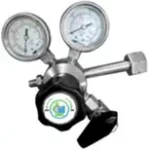
Overview
Industrial gas applications demand pressure regulation equipment that can handle the full working pressure of a charged cylinder — reliably, consistently, and without becoming a maintenance problem in service. A standard nitrogen cylinder can hold supply pressure upward of 200 Kg/Cm²; an oxygen cylinder in high-pressure service may be higher still. The regulator installed at the cylinder valve connection is the single component responsible for stepping that pressure down to a usable delivery range — and in industrial environments where these gases are in daily use across welding, purging, analytical, and process applications, the working demands on that component are significant.
Material selection matters across the working pressure range. For nitrogen, oxygen, hydrogen, and CO2 service, SS316 stainless steel and brass construction offer the combination of mechanical strength, corrosion resistance, and compatibility with these gas types that general-purpose regulators cannot reliably deliver across all four. SS316 provides oxidation and corrosion resistance that brass alone does not — relevant in oxygen and hydrogen service where material compatibility is not a secondary specification concern but a fundamental safety requirement. Brass provides the machinability and sealing characteristics needed for precision gas control at the fitting and seat level.
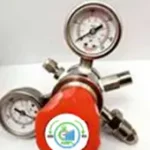
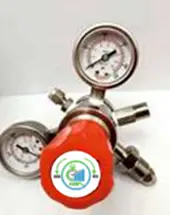
This Single Stage SS316/Brass Regulator is designed for nitrogen, oxygen, hydrogen, and CO2 gas service — handling inlet pressures from 0–280 Kg/Cm², delivering regulated outlet pressure across 0–16 Kg/Cm², and providing flow capacity up to 200 LPM. The dual-gauge configuration gives clear, immediate visibility of both supply and delivery pressure at the point of regulation. For industrial and laboratory gas users who need a dependable, multi-gas-compatible single stage regulator with the pressure range to handle high-pressure cylinder supply, this is the correctly specified instrument.
Key Features
SS316 Stainless Steel and Brass Construction — Compatible Across Four Gas Types
The regulator body and wetted components are constructed from SS316 stainless steel and brass — a material combination selected for compatibility across nitrogen, oxygen, hydrogen, and CO2 service. SS316 offers superior corrosion and oxidation resistance compared to standard 304 stainless, making it the appropriate grade for oxygen and hydrogen applications where material reactivity and contamination are real engineering concerns. Brass provides the precision machining characteristics required for gas-tight seat and fitting construction. Together, the two materials cover the working requirements of this multi-gas regulator across all four listed gas services.
High-Pressure Inlet Range — 0–280 Kg/Cm²
An inlet pressure range of 0–280 Kg/Cm² covers the full working pressure of nitrogen and oxygen high-pressure cylinders used in industrial and laboratory supply configurations. Many single stage regulators in the general-purpose market are rated to lower inlet pressures — adequate for lower-pressure service but not correctly rated for high-pressure nitrogen or oxygen cylinders at full charge. A regulator rated to 280 Kg/Cm² inlet can be installed at the cylinder valve with confidence across the full cylinder pressure range, without the risk of operating outside the regulator’s rated inlet pressure at the start of each cylinder.
Dual Pressure Gauges — Inlet and Outlet Visibility at the Regulator
Two integrated pressure gauges — one covering the inlet (supply) pressure range and one covering the outlet (delivery) pressure range — provide direct, simultaneous visibility of both pressures at the point of regulation. For cylinder-supplied gas systems, the inlet gauge functions as a cylinder content indicator as well as a supply pressure reference: a declining inlet reading indicates a cylinder approaching depletion, allowing cylinder change scheduling before supply interruption. The outlet gauge provides a real-time delivery pressure reading for process verification and set-point confirmation. Both readings are available without secondary instrumentation or remote monitoring.
Regulated Outlet Pressure — 0–16 Kg/Cm²
The 0–16 Kg/Cm² outlet pressure range covers the delivery pressure requirements of industrial welding and cutting gas supply, laboratory analytical instrumentation, purging and inerting systems, and CO2 process and beverage gas applications. Delivery pressure is controlled at the regulator adjustment knob, allowing operators to set the required process delivery pressure within the outlet range and maintain that set point across the working cylinder pressure range. Single stage regulation at this outlet range provides responsive, direct pressure control appropriate for the majority of industrial and laboratory gas supply applications using the four listed gas types.
Flow Capacity to 200 LPM — Suited to Industrial Process and Multi-Point Supply
A regulated flow capacity of 0–200 LPM supports industrial-scale gas demand — including multi-station welding gas manifolds, high-flow purging operations, industrial analytical instrument supply, and process gas feed applications where single-point cylinder supply serves multiple downstream use points. The 200 LPM upper limit positions this regulator appropriately for industrial facility gas supply configurations rather than laboratory-only or single-instrument supply, where lower flow capacity regulators may be the more closely matched specification.
Single Stage Regulation — Direct Pressure Control with Minimal Complexity
Single stage pressure regulation reduces supply pressure to the delivery set point in a single step, with fewer internal components than a two-stage design. For applications where supply pressure is relatively stable — standard cylinder supply across the gas types listed — and where delivery pressure requirements are within the 0–16 Kg/Cm² outlet range, single stage regulation provides adequate delivery pressure stability with simpler internal construction and reduced points of potential failure or maintenance attention. For applications with highly variable supply pressure or requiring exceptionally tight outlet pressure control across a wide supply pressure range, a two-stage regulator should be evaluated.
Technical Specifications
Product Name: Single Stage SS316/Brass Regulator
Body Material: SS316 Stainless Steel / Brass
Regulator Type: Single Stage
Gas Service: Nitrogen (N2) / Oxygen (O2) / Hydrogen (H2) / Carbon Dioxide (CO2)
Inlet Pressure: 0–280 Kg/Cm²
Outlet Pressure: 0–16 Kg/Cm²
Flow Rate: 0–200 LPM
Gauges: Dual (Inlet + Outlet)
Product Category: Span Gas and Regulator
Application: Industrial gas supply, welding, purging, laboratory, analytical instrumentation, CO2 process
Benefits
One Regulator Across Four Gas Types — Simplified Inventory and Procurement
For facilities and vessels that use nitrogen, oxygen, hydrogen, and CO2 across different applications — purging, welding, analytical, and process — having a single regulator model compatible with all four gas types reduces the number of regulator variants that need to be stocked, procured, and maintained. Rather than specifying separate regulator models for nitrogen service, oxygen service, and CO2 service, a procurement team can specify this SS316/Brass model across all four gas types and manage a single part number for regulator supply and spares. This is a meaningful operational simplification for facilities managers and vessel technical departments managing gas equipment across multiple applications.
Confidence at Full Cylinder Pressure — No Inlet Pressure Margin Concerns
A regulator rated to 280 Kg/Cm² inlet can be connected to a fully charged high-pressure nitrogen or oxygen cylinder without concern about operating within the regulator’s rated pressure range. Lower-rated regulators installed on high-pressure cylinders may be technically outside their rated inlet pressure range when the cylinder is at full charge — a specification gap that can affect regulator performance and creates a documented compliance gap in equipment records. The 280 Kg/Cm² inlet rating removes this consideration entirely.
Clear Process Verification at the Regulator — No Secondary Instrumentation Required
Dual integrated gauges mean that operators can read both supply pressure and delivery pressure at the regulator without separate pressure gauges installed elsewhere in the gas line. For routine operational checks — confirming delivery pressure before starting a process, verifying cylinder content before a work shift — the information is available immediately at the regulator. This reduces the instrumentation complexity of the gas supply installation and speeds up the daily verification checks that are part of routine gas system operation in industrial and laboratory settings.
Appropriate Material Selection for Oxygen and Hydrogen Service
Oxygen and hydrogen gas service both carry material compatibility requirements that are more specific than for nitrogen or CO2. Oxygen at pressure is a serious ignition hazard in contact with hydrocarbon contamination; hydrogen embrittlement is a known degradation mechanism in certain steels at pressure. SS316 stainless steel wetted construction provides the oxidation resistance and material integrity appropriate for these service conditions — supporting the use of this regulator across oxygen and hydrogen applications with the material basis expected by gas system safety standards.
Who It’s For
Industrial Gas Supply and Welding Equipment Managers
A facilities manager at an engineering workshop or fabrication facility is responsible for supplying nitrogen, oxygen, and CO2 to welding stations, cutting equipment, and purging operations across the site. Managing separate regulator models for each gas type creates a procurement and maintenance overhead — and the risk that the wrong regulator ends up on the wrong cylinder during a busy shift. A single SS316/Brass regulator compatible with nitrogen, oxygen, hydrogen, and CO2 simplifies the inventory and reduces the risk of mismatched equipment. With a 280 Kg/Cm² inlet rating and 200 LPM flow capacity, this regulator covers the pressure and flow demands of a multi-station industrial gas supply without being undersized for the application.
Laboratory Gas Supply Technicians and Analytical Instrument Managers
A laboratory gas supply technician maintaining cylinder-based gas supply to analytical instruments — gas chromatographs, mass spectrometers, ICP instruments — needs regulators that deliver stable, clean outlet pressure across gas types including nitrogen carrier gas, hydrogen fuel gas, and oxygen combustion gas. The SS316 construction of this regulator is appropriate for the cleanliness requirements of analytical gas supply, and the 0–16 Kg/Cm² outlet range covers the delivery pressure requirements of most laboratory analytical instruments. A single regulator model usable across multiple analytical gas types reduces the spares holding required and simplifies gas system maintenance for laboratory technical staff.
Vessel Technical Superintendents and Marine Gas System Engineers
On commercial vessels, nitrogen is used for inerting and purging, CO2 for fire suppression system testing and maintenance, and oxygen for cutting and welding during drydock and running maintenance. A vessel technical superintendent specifying replacement gas regulators for shipboard gas system maintenance needs equipment rated for the pressure range of marine compressed gas cylinders and compatible with the range of gas types in use across vessel maintenance operations. The 280 Kg/Cm² inlet rating and multi-gas compatibility of this regulator make it a practical specification for vessel gas system maintenance kits and spare equipment holdings.
Possible Applications
Nitrogen Purging and Inerting in Pipeline and Vessel Maintenance
Nitrogen is widely used to purge pipelines, pressure vessels, and storage tanks before maintenance, inspection, or commissioning — displacing oxygen and flammable vapours to create a safe working atmosphere. Single stage nitrogen regulators with high inlet pressure ratings are used at the cylinder connection point to deliver nitrogen at controlled pressure into purging systems and manifolds. The 0–280 Kg/Cm² inlet rating of this regulator covers standard nitrogen cylinder supply pressures for purging and inerting operations.
Oxygen and Fuel Gas Supply for Industrial Welding and Cutting
Oxy-fuel welding, cutting, and brazing operations require cylinder-supplied oxygen at regulated delivery pressure matched to the torch and process requirements. Oxygen regulators in welding applications must be rated for high cylinder supply pressures and constructed from oxygen-compatible materials. The SS316/brass construction and 280 Kg/Cm² inlet rating of this regulator meet the material and pressure requirements for oxygen welding and cutting gas supply.
Hydrogen Gas Supply for Laboratory Analytical Instrumentation
Gas chromatographs and other analytical instruments using hydrogen as a carrier or fuel gas require cylinder-supplied hydrogen at regulated, stable delivery pressure. SS316 stainless steel construction is appropriate for hydrogen service, providing material integrity at the pressures and flow rates required for laboratory analytical gas supply from standard hydrogen cylinders.
CO2 Supply for Beverage Carbonation and Food Processing
Carbon dioxide is used in beverage carbonation, food packaging atmosphere control, and pH adjustment in water treatment. CO2 regulators in food and beverage applications are required to maintain consistent delivery pressure across varying cylinder supply levels — ensuring consistent carbonation rates and process control. The single stage design and 0–16 Kg/Cm² outlet range of this regulator cover standard CO2 delivery pressure requirements for beverage and food processing gas supply.
Nitrogen Blanket Gas Supply for Chemical Storage Tanks
Chemical storage tanks holding flammable or oxidation-sensitive liquids are commonly blanketed with nitrogen to prevent vapour space oxygen ingress and reduce fire and explosion risk. Nitrogen blanket gas supply systems use regulators at the cylinder or manifold connection to maintain the blanket gas pressure within the required range. High inlet pressure rating and reliable delivery pressure control are the key regulator requirements for nitrogen blanketing applications.
Calibration Gas Delivery for Industrial Gas Detectors
Fixed and portable gas detectors used for nitrogen asphyxiation monitoring, oxygen depletion detection, and hydrogen combustible gas detection require regular calibration against certified span gas mixtures. Span gas cylinders for nitrogen, oxygen, and hydrogen calibration applications use standard cylinder connections and supply pressures compatible with this regulator’s inlet range. Consistent, stable delivery pressure is essential for repeatable calibration results and accurate detector response.
CO2 Fire Suppression System Testing and Maintenance
CO2 fire suppression systems on vessels and in industrial facilities require periodic testing and maintenance procedures involving CO2 gas supply from cylinders. Regulators used in CO2 system testing and maintenance applications must handle the supply pressures of CO2 cylinders and deliver controlled flow for system testing without over-pressurising test equipment or system components.
Trust & Certifications
SS316 Stainless Steel — Recognised Material Standard for Multi-Gas Regulator Service
SS316 (316L grade stainless steel) is specified in international compressed gas standards and gas equipment safety guidelines as an appropriate wetted material for oxygen, hydrogen, nitrogen, and CO2 regulator service. The material’s resistance to oxidation, corrosion, and stress corrosion cracking — particularly in the presence of chlorides and oxygen at pressure — makes it the industry-standard specification for gas regulators required to handle multiple gas types across varying service conditions. SS316 construction is a verifiable material specification that can be confirmed against material certification documentation for procurement and safety audit purposes.
Oxygen Service Compatibility — Material Safety Requirements
Oxygen gas regulators are subject to specific material safety requirements under international standards including CGA G-4.1 (Cleaning of Equipment for Oxygen Service), ISO 10156 (Gases and gas mixtures — determination of fire potential and oxidizing ability), and relevant national standards. SS316 stainless steel and brass are both recognised as compatible materials for oxygen service when correctly cleaned and free of hydrocarbon contamination. Users should confirm cleaning and service standards applicable to their jurisdiction and application for oxygen regulator installations.
Hydrogen Compatibility — Material Integrity Considerations
Hydrogen service regulators require material selection that accounts for hydrogen embrittlement risk — a degradation mechanism that affects certain steels under hydrogen pressure. SS316 austenitic stainless steel is recognised as having good resistance to hydrogen embrittlement at the pressures relevant to cylinder supply applications, making it the appropriate grade for hydrogen gas regulator service at the pressure ranges covered by this regulator.
Span Gas and Regulator Category — Purpose-Specified Gas Control Equipment
Supplied within the Span Gas and Regulator product category, this regulator is selected and specified for industrial gas service applications — not drawn from general-purpose compressed air or utility gas equipment inventories. Equipment specified within this category is selected with attention to gas compatibility, pressure range, material construction, and application fit — providing procurement teams with a clear basis for documenting the specification rationale for gas handling equipment in safety management systems and engineering equipment registers.
Accessories & Variants
Span Gas Cylinders — Nitrogen, Oxygen, Hydrogen, and CO2 Calibration Gas
Calibration Gas Cylinders (N2, O2, H2, CO2 mixtures) — Certified span gas mixtures for gas detector calibration in nitrogen asphyxiation, oxygen depletion, hydrogen combustible gas, and CO2 monitoring applications. When used with this SS316/Brass regulator, span gas cylinders provide a material-compatible, pressure-matched calibration gas supply solution for fixed and portable gas detection equipment across all four gas types.
Regulator Variants — Configuration and Connection Options
Single Stage SS316/Brass Regulator — Standard (0–280 Kg/Cm² inlet / 0–16 Kg/Cm² outlet / 0–200 LPM) — Standard configuration for nitrogen, oxygen, hydrogen, and CO2 cylinder supply in industrial and laboratory applications.
Two Stage SS316/Brass Regulator (where available) — For applications requiring tighter outlet pressure stability across a wide cylinder supply pressure range, or where delivery pressure consistency is critical to process or analytical instrument performance.
Single Stage Monel Regulator for HCL/CL Gas — For hydrogen chloride and chlorine gas service requiring Monel wetted construction; a complementary product for facilities managing both corrosive and non-corrosive specialty gas supply.
Custom Inlet Connection Variants — Available for specific cylinder valve connection standards; confirm your cylinder valve type and connection specification when placing an order to ensure correct inlet fitting.
Compatible Gas Detection Equipment
Portable Oxygen Deficiency Detectors — For confined space entry and nitrogen-blanketed area monitoring; require regular span gas calibration using nitrogen/oxygen calibration gas with a compatible regulator.
Portable Combustible Gas Detectors (Hydrogen) — For hydrogen leak detection in fuel cell, battery room, and chemical process environments; calibration against certified hydrogen span gas using a hydrogen-compatible SS316 regulator.
Fixed CO2 Gas Detection Systems — Area monitoring for CO2 accumulation in beverage production, cold storage, and fire suppression system rooms; require regular span gas calibration using CO2 calibration gas supply equipment.
Get in Touch
If you are specifying a single stage regulator for nitrogen, oxygen, hydrogen, or CO2 gas service — whether for a new installation, a replacement on an existing gas system, a calibration gas supply configuration, or a multi-gas facility procurement — contact us to confirm the correct regulator specification for your application and request a formal quotation.
Our team can assist with regulator selection for your specific gas type, pressure range, and flow requirements; confirm inlet connection compatibility with your cylinder valve; and support procurement documentation for gas handling equipment approvals in industrial and laboratory settings.