Cart (
Overview
Bilge water management on commercial vessels is a practical engineering challenge as much as a regulatory one. The oily water separator handles the separation process, but it is the oil-in-water monitor that provides the measurement and control function on which MARPOL compliance actually depends — and the performance demands placed on that instrument are significant. It must measure accurately across a wide range of bilge water compositions, respond quickly enough to prevent non-compliant discharge, provide reliable alarm outputs that the control system can act on, and continue doing all of this in the temperature, vibration, and humidity environment of a working engine room over an extended service life with minimal intervention.
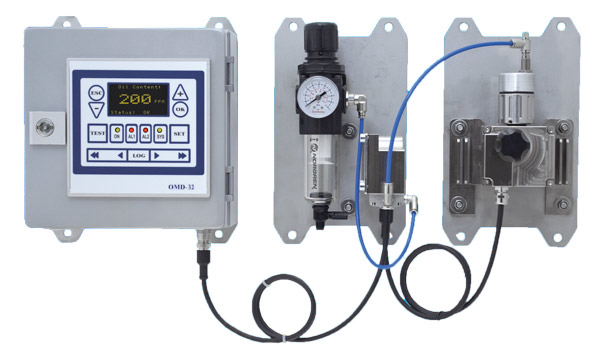
The Deckma Hamburg OMD-32 Series is an oil-in-water monitor developed specifically for use with oily water separator systems on MARPOL-applicable vessels. Built on the measurement and control technology of the Deckma Hamburg OMD series industrial instruments — a platform with a demonstrated track record in marine oil content monitoring — the OMD-32 is engineered to a specification that meets and in key performance areas exceeds the requirements of IMO Resolution MEPC.107(49). Deckma Hamburg GmbH is a German manufacturer with established credentials in marine bilge alarm equipment; the OMD product family is familiar to class surveyors, flag state inspectors, and marine engineers across the global fleet.
The concrete differentiator that sets the OMD-32 apart in the 15ppm bilge alarm category is its dual independently adjustable alarm system combined with a 0–30 ppm measurement range and a 4–20 mA analogue output. Most 15ppm bilge alarms provide a single alarm relay triggered at 15 ppm. The OMD-32 provides two independently configurable alarm points — each with its own adjustable operating delay — allowing Alarm 1 to function as an early-warning annunciation output and Alarm 2 as the control output that triggers overboard shut-off. This separation of annunciation and control functions gives the vessel’s bilge management system a graduated response capability that a single-alarm unit cannot provide, and it is a functional architecture that operational experience shows reduces both unnecessary shut-off events and the risk of late response to genuine oil breakthrough.
Key Features
Dual Adjustable Alarm Points — Separated Annunciation and Control Functions
The OMD-32 provides two independent alarm set points, both adjustable between 1 and 15 ppm via the front panel buttons. Alarm 1 is configured for annunciation — alerting the duty engineer when oil content is approaching the limit — with an operating delay adjustable between 1 and 540 seconds. Alarm 2 is configured for control — triggering overboard shut-off and process intervention — with a shorter operating delay adjustable between 1 and 10 seconds. This architecture means the alarm system can be tuned to the specific OWS performance characteristics of the vessel, providing early warning before the control threshold is reached rather than triggering shut-off without forewarning. Both alarm points ship from the factory set at 15 ppm and 10 ppm respectively, with on-site field adjustment available at any time.
0–30 ppm Measurement Range with ±2% Linearity
The OMD-32 measures oil concentration from 0 to 30 ppm with a linearity better than ±2% across the 0–30 ppm range, and provides trend indication up to 50 ppm. This extended measurement range — above the 15 ppm MARPOL threshold — provides continuous visibility of oil content even when OWS performance is degraded and discharge concentration is running above the compliant limit, rather than simply registering an alarm state without quantifying how far above threshold the actual reading is. The ±2% linearity specification meets the accuracy requirements of MEPC.107(49) and provides measurement precision appropriate for an instrument whose readings form part of the vessel’s MARPOL compliance documentation.
IP65 Degree of Protection
The OMD-32 carries an IP65 enclosure rating — dust-tight and protected against water jets from any direction. In the engine room environment, IP65 provides meaningful protection against the water spray, condensation, steam, and washdown exposure that are part of routine engine room operations. For a bilge alarm monitor located near the oily water separator — in proximity to bilge water pipework, pump seals, and washdown areas — IP65 is a practical minimum protection level rather than an over-specification. An instrument with inadequate enclosure protection in this environment accumulates moisture damage over time, with direct consequences for measurement reliability and service life.
Automatic Voltage Selection — 24 V to 240 V AC or DC
The OMD-32 accepts power supply from 24 V to 240 V AC or DC, with automatic voltage selection requiring no manual configuration. The wide voltage acceptance range covers the full spectrum of vessel electrical supply arrangements encountered in the international fleet — from 24 VDC instrument supply on smaller vessels to 220 V or 240 V AC on larger commercial ships, and the mixed voltage systems found on vessels with non-standard or multi-generation electrical installations. Automatic voltage selection removes a configuration step from the installation process and eliminates the risk of supply voltage mismatch errors during installation or following electrical maintenance.
0–20 mA / 4–20 mA Selectable Analogue Output
The OMD-32 provides a selectable 0–20 mA or 4–20 mA analogue output signal, active, into an external load of less than 150 Ω. This output supports connection to an external chart recorder, a bridge display, or the vessel’s integrated alarm management and monitoring system, providing a continuous analogue representation of the ppm reading that extends the instrument’s data output beyond the local front panel display. The 4–20 mA option is the industry-standard signal range for process control instrumentation, allowing direct integration with vessel automation systems and data recorders without signal conditioning. The live/broken-wire detection capability inherent in the 4 mA zero offset of the 4–20 mA range provides an additional layer of system integrity monitoring.
System Fault Detection with Dedicated LED and Relay
The OMD-32 includes a dedicated System Fault monitoring function — independent of the two alarm channels — that monitors instrument self-diagnostics and signals any malfunction condition through a change in the front panel System LED from blinking green to permanent red, combined with switching of a dedicated system fault relay contact. This means that an instrument malfunction is actively signalled rather than silently causing measurement failure. For a bilge alarm system where an undetected instrument fault could result in a period of non-compliant operation without alarm activation, the active fault signalling of the OMD-32 is a material safety and compliance feature.
Front Panel Adjustment — Field-Configurable Without Specialist Tools
Both alarm set points and their operating delays are adjustable at any time via the buttons on the OMD-32 front panel, without requiring specialist tools, laptop connection, or service engineer access. This field-adjustability allows the bilge management system to be tuned to the actual OWS performance characteristics of the specific vessel — tightening or relaxing alarm thresholds and delays based on operational experience — without scheduling a service call or waiting for drydock access. For vessels that change OWS units or trade into different water quality environments where bilge water composition changes, the ability to reconfigure alarm parameters on-site is a practical operational advantage.
Compact and Lightweight — 5.4 kg, IP65 Enclosure
The OMD-32 computer unit measures 360 mm W × 240 mm H × 100 mm D and weighs 5.4 kg — a compact form factor for a full-featured oil-in-water monitor with integrated display, dual alarm channels, fault detection, and analogue output. The compact dimensions simplify panel mounting and bulkhead installation in space-constrained engine room locations, and the 5.4 kg weight is manageable for a two-person installation without lifting equipment. Pipe connections are R ¼″ female, supporting standard instrument tubing connections to the OWS sample line.
Technical Specifications
Model: OMD-32 Series
Manufacturer: Deckma Hamburg GmbH, Germany
Function: Oil-in-water monitor / 15ppm bilge alarm for OWS systems
Compliance Standard: IMO Resolution MEPC.107(49)
Measurement Range: 0–30 ppm; trend indication to 50 ppm
Accuracy / Linearity: Per MEPC.107(49); better than ±2% over 0–30 ppm
Display: Yellow graphic display
Power Supply: 24 V–240 V AC or DC — automatic voltage selection
Consumption: <10 VA
Alarm Points: 2 × adjustable 1–15 ppm (works adjustment: Alarm 1 @ 15 ppm, Alarm 2 @ 10 ppm)
Alarm 1 Delay: 1–540 seconds adjustable (works adjustment: 2 sec)
Alarm 2 Delay: 1–10 seconds adjustable (works adjustment: 10 sec)
Alarm Indication: Red LEDs — Alarm 1, Alarm 2, System Fault
Alarm Contact Rating: Potential-free 1-pole changeover contacts, 3A / 240V (Alarm 1, 2, System Fault)
Output Signal: 0–20 mA or 4–20 mA selectable, active; ext. load <150 Ω
Sample / Fresh Water Pressure: 0–10 bar (recommended)
Sample Flow: Approx. 2 l/min
Sample Water Temperature: 1 to +65°C
Ambient Temperature: 1 to +55°C
Roll: Up to 45°
IP Rating: IP65
Weight: 5.4 kg
Dimensions (Computer Unit / Measuring Cell): 360 mm W × 240 mm H × 100 mm D
Pipe Connections: R ¼″ female
Benefits
The dual-alarm architecture of the OMD-32 delivers a practical operational benefit that single-alarm bilge monitors cannot: the ability to separate the warning function from the control function. In day-to-day OWS operation, Alarm 1 gives the duty engineer early notice that oil content is climbing toward the 15 ppm threshold — time to check the separator performance, adjust the OWS operating parameters, or prepare for a potential shut-off event. Alarm 2 acts when intervention is actually required. This graduated response reduces the frequency of unnecessary overboard shut-off events caused by transient OWS performance variation, while maintaining the control response that MARPOL compliance requires when oil content genuinely exceeds the threshold.
The 4–20 mA analogue output opens the OMD-32 to integration with vessel monitoring systems, chart recorders, and bridge displays that would not be possible with a basic alarm-only output. For vessels operating under management companies or charterers that require continuous electronic recording of bilge alarm readings, this output capability provides the data feed that supports that requirement without additional instrumentation. The 4 mA live zero also provides inherent broken-wire detection — the monitoring system will flag a wiring fault rather than silently losing the ppm signal.
The System Fault detection and dedicated fault relay mean that instrument malfunctions are not invisible. On a vessel where the bilge alarm is out of service — whether due to sensor failure, power supply issues, or internal fault — and the fault is not actively signalled, the vessel may continue bilge management operations under the assumption that the alarm is functioning. The OMD-32’s fault indication removes this assumption, ensuring that instrument serviceability is known at all times and that MARPOL compliance is not inadvertently dependent on an instrument that has silently failed.
For procurement teams evaluating total cost of ownership, the OMD-32’s field-adjustable alarm parameters reduce the service call costs associated with alarm reconfiguration after OWS changes or operational experience-driven parameter adjustments. The wide voltage acceptance range eliminates the need for supply transformers or signal conditioners in non-standard electrical installations. And the IP65 enclosure provides a level of environmental protection that supports a longer service life between refurbishment cycles compared with instruments with lower protection ratings in the same environment.
Who It’s For
Chief Engineers Seeking Greater Control Over Bilge Alarm Behaviour
A chief engineer on a general cargo vessel trading in PSC-intensive routes knows that bilge management during port approach sequences is one of the most operationally compressed tasks in the engine room. The OWS needs to be run, bilge levels need to be managed, and the alarm system needs to be trusted. The OMD-32’s dual-alarm architecture allows the chief engineer to configure the alarm system to the actual performance characteristics of the vessel’s OWS — setting Alarm 1 as an early warning at a threshold that matches the separator’s typical breakthrough behaviour, and Alarm 2 at the control threshold. The result is a bilge management process with fewer surprises and more controlled transitions.
Vessel Automation and Monitoring System Integrators
For a marine automation engineer specifying or retrofitting engine room monitoring systems, the OMD-32’s 4–20 mA output and three independent relay contacts — Alarm 1, Alarm 2, and System Fault — provide a comprehensive integration interface for vessel control and alarm management systems. The standard 4–20 mA output maps directly to analogue input cards without signal conditioning; the three relay contacts map cleanly to digital input points; and the potential-free contacts at 3A / 240V are compatible with the relay input specifications of standard marine alarm panel inputs. The OMD-32 integrates into a vessel automation architecture without requiring bespoke interface hardware.
Technical Superintendents Specifying Bilge Alarm Equipment for Fleet Renewal
A technical superintendent managing a fleet of Handysize bulk carriers through a cycle of drydock surveys and bilge alarm equipment renewal needs a unit with clear type approval documentation, a specification that exceeds MEPC.107(49) rather than merely meeting it, and a manufacturer with service support accessible in major drydock regions. The OMD-32’s MEPC.107(49) compliance, Deckma Hamburg’s established manufacturer credentials, and the instrument’s functional architecture — which reflects operational experience rather than minimum compliance engineering — provide the procurement rationale and technical justification that supports a straightforward approval decision.
Possible Applications
General Cargo Vessels and Multi-Purpose Carriers
General cargo and multi-purpose vessels operating on varied trade routes generate bilge water with variable composition depending on cargo, port environments, and weather conditions at sea. The OMD-32’s adjustable alarm delays — particularly the 1–540 second range on Alarm 1 — allow the instrument to be configured to filter out short-duration transient readings from the OWS that would cause nuisance alarms on a less configurable unit, while maintaining reliable response to sustained oil breakthrough.
Bulk Carriers — Extended Ocean Passage Bilge Management
Bulk carriers on deep-sea routes run OWS operations over extended periods during ocean passages. The OMD-32’s 4–20 mA continuous output supports connection to a chart recorder or vessel monitoring system for continuous ppm recording across the full duration of each OWS operation — providing the electronic record that supports Oil Record Book entries and demonstrates compliance during the full discharge period.
Tankers — Vetting and PSC Inspection Environments
Tankers operating under SIRE and CDI vetting regimes face detailed equipment inspections where bilge alarm type approval documentation, calibration records, and operational test results are reviewed as standard. The OMD-32’s MEPC.107(49) compliance credentials and Deckma Hamburg’s manufacturer documentation support the vetting documentation requirements without the gaps that arise from less thoroughly documented equipment.
Offshore Support Vessels with Integrated Monitoring Systems
OSVs typically operate with integrated engine room monitoring systems that consolidate alarm signals, sensor outputs, and system status across the full machinery space. The OMD-32’s relay contact outputs and 4–20 mA analogue output integrate directly into standard marine alarm management system architectures, providing bilge alarm status and ppm readings within the vessel’s centralised monitoring environment rather than as a standalone instrument requiring separate local monitoring.
Passenger Vessels and Cruise Ships — High Inspection Frequency Operations
Passenger vessels and cruise ships operate under the most intensive PSC inspection and flag state oversight in commercial shipping. MARPOL compliance equipment on passenger vessels is subject to routine verification during flag state surveys and PSC inspections at every port of call in major inspection regions. The OMD-32’s System Fault detection and active fault signalling ensure that instrument malfunction is immediately visible to the duty engineer — a characteristic that is specifically relevant on vessels where compliance documentation is under continuous scrutiny.
Industrial and Onshore Applications — Process Wastewater Monitoring
The OMD-32’s measurement range, accuracy, and analogue output make it suitable for industrial oil-in-water monitoring applications beyond the marine OWS environment — including effluent monitoring at fuel handling terminals, industrial washwater treatment discharge points, and oily water treatment plant outlets where regulatory discharge limits require continuous oil content monitoring and recording. The wide power supply range and IP65 enclosure support installation in industrial environments with variable electrical supplies and wash-down exposure.
Drydock Bilge Alarm Replacement — Class and Flag State Survey
Drydock periods are the primary window for bilge alarm equipment replacement when existing instruments are at end of service life or have accumulated maintenance histories that create compliance risk. The OMD-32’s field-adjustable alarm parameters allow the instrument to be configured to the vessel’s specific OWS arrangement during commissioning, and the comprehensive type approval documentation supports the class and flag state survey approval process during the drydock period.
Trust & Certifications
IMO Resolution MEPC.107(49) — Exceeds the Standard
MEPC.107(49) defines the performance requirements — measurement accuracy, response time, alarm behaviour, environmental test conditions, and automatic shut-off requirements — that a 15ppm bilge alarm must meet for type approval and installation on MARPOL-applicable vessels. The OMD-32 is built on the Deckma Hamburg OMD series industrial instrument platform, and its specification in key performance areas exceeds the MEPC.107(49) requirements rather than simply meeting the minimum. For procurement teams evaluating compliance risk, a unit that exceeds the standard provides a margin of performance that a minimum-compliance instrument does not.
Deckma Hamburg GmbH — Marine Oil Content Monitoring Specialist
Deckma Hamburg GmbH is a German manufacturer with a focused specialisation in oil-in-water monitoring instrumentation for marine and industrial applications. The OMD product series has accumulated a track record across multiple product generations in the international commercial fleet — class surveyors, flag state inspectors, and experienced chief engineers in major shipping markets are familiar with Deckma Hamburg equipment and the manufacturer’s documentation. For procurement decisions where manufacturer credibility and service support are relevant factors alongside instrument specification, Deckma Hamburg’s established market position provides a documented basis for supplier qualification.
IP65 — IEC 60529 Enclosure Protection Standard
IP65 under IEC 60529 designates complete protection against dust ingress and protection against water jets from any direction. In the bilge alarm application — where the instrument is located in the engine room in the vicinity of the OWS, bilge pumps, and associated pipework — IP65 provides appropriate environmental protection for the installation environment. This protection rating is verified through standardised testing under IEC 60529 and is documented in the instrument’s technical specifications, supporting the environmental suitability assessment that class society surveyors and flag state inspectors may require.
Classification Society Survey Compatibility
The major classification societies — including Lloyd’s Register, Bureau Veritas, DNV, ClassNK, and ABS — require MEPC.107(49) type-approved bilge alarm equipment as part of their pollution prevention survey requirements. The OMD-32’s type approval credentials and Deckma Hamburg’s established position in the classification society approval process support a straightforward survey experience. The instrument’s System Fault relay contact also supports integration with classification society-required alarm monitoring systems that must include bilge alarm status in the vessel’s centralised alarm annunciation.
MARPOL Annex I — Oil Record Book Support
The OMD-32’s 4–20 mA continuous output supports connection to chart recorders and data logging systems that provide the electronic record of bilge alarm operation referenced in MARPOL Annex I Oil Record Book compliance. Port state control inspectors in both the Tokyo MOU and Paris MOU regions routinely check bilge alarm operation and ORB consistency — the OMD-32’s continuous analogue output provides the data feed for an independent electronic record that corroborates ORB entries and supports a clean PSC inspection outcome.
Accessories & Variants
External Chart Recorder / Data Logger
The OMD-32’s 4–20 mA output is designed for direct connection to a chart recorder or electronic data logger for continuous ppm recording. An external recorder provides a permanent paper or electronic record of bilge alarm readings across OWS operations — a record that supplements the Oil Record Book and provides evidence of continuous compliance monitoring during PSC inspections and flag state surveys.
Remote Display / Bridge Display Interface
The 4–20 mA analogue output supports connection to a remote display unit or bridge display panel for visibility of the ppm reading outside the engine room. On vessels where bridge officers maintain oversight of bilge management operations during port entry and departure sequences, a bridge display of the bilge alarm ppm reading provides situational awareness without requiring communication with the engine room.
Related Deckma Hamburg Products
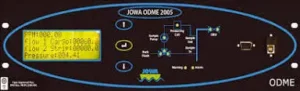
Deckma OMD-2005 — The OMD-2005 is Deckma Hamburg’s alternative bilge alarm monitor model, offering a single-alarm configuration suited to vessels where the dual-alarm architecture of the OMD-32 is not required. Contact us to discuss which model is appropriate for your vessel’s OWS configuration and monitoring system requirements.
OWS-Compatible Spare Parts and Service Kits — Consumables and service components for oily water separator maintenance, supporting the complete bilge treatment and monitoring system that the OMD-32 monitors. Contact us for spare parts availability for your OWS make and model.
Product Variants
OMD-32 Series — Standard Configuration — 0–30 ppm, dual adjustable alarm points, 4–20 mA output, IP65, automatic voltage selection. Works-adjusted at Alarm 1: 15 ppm, Alarm 2: 10 ppm. Field-adjustable to any set point between 1 and 15 ppm.
Alternative Set Point Configuration — The OMD-32 supports alarm set points above 15 ppm (e.g. 100 ppm) for non-MARPOL industrial applications where a higher oil content threshold is appropriate. Contact us to discuss configuration options for non-standard monitoring applications.
Get in Touch
If you are specifying a 15ppm bilge alarm for a vessel drydock, a new OWS installation, or a planned equipment upgrade — or if you need to evaluate the OMD-32 against your vessel’s monitoring system integration requirements — contact us to discuss the specification and confirm the correct configuration for your application.
Our team can assist with MEPC.107(49) type approval documentation, alarm configuration guidance for your OWS arrangement, 4–20 mA output integration with your vessel’s monitoring system, and supply timelines for Singapore delivery or regional port supply.
📍 3791 Jalan Bukit Merah #06-01, E-Centre @ Redhill, Singapore 159471