Cart (
Overview
Every 15ppm bilge alarm on a MARPOL-applicable vessel is required to do the same fundamental job: detect oil content in separator discharge water, alarm when the 15 ppm limit is approached, and shut off overboard discharge when the limit is exceeded. What varies significantly between bilge alarm designs is how much warning the system provides before the shut-off event, and how tightly the alarm architecture is integrated with the actual operating state of the oily water separator. These two factors — early warning threshold and separator integration — determine whether a bilge alarm supports proactive bilge management or simply reacts at the moment a violation is about to occur.
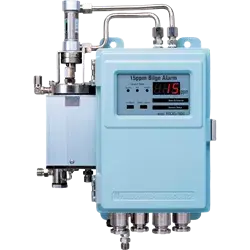
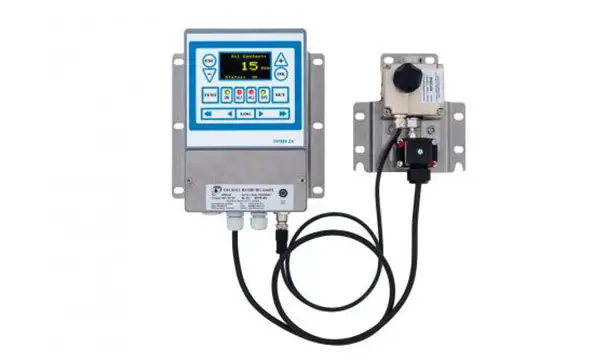
The Deckma Hamburg OMD-24 Series is a 15ppm bilge alarm unit designed specifically for use with oily water separator systems, with a specification and performance that exceeds the requirements of IMO Resolution MEPC.107(49). The OMD-24 is built on the same Deckma Hamburg OMD series industrial instrument technology platform as the wider OMD product family — a platform with an established track record across the international commercial fleet — and it brings that engineering foundation to a configuration specifically suited to OWS installations where separator operating status is available as an input signal to the bilge alarm system.
The concrete differentiating characteristic of the OMD-24 is its dual-threshold configuration: the unit ships works-adjusted with alarm points at both 5 ppm and 15 ppm, providing a two-stage alert system that gives the duty engineer a meaningful early warning at 5 ppm — well before the MARPOL threshold — and a control-action alarm at 15 ppm. This 5 ppm early warning threshold is a tighter intervention point than the single 15 ppm threshold that characterises many competing bilge alarm designs, and it reflects an operational philosophy focused on preventing discharge violations rather than simply stopping them at the threshold.
Key Features
5 ppm + 15 ppm Dual-Threshold Alarm Configuration
The OMD-24 ships from the factory with Alarm 1 set at 15 ppm and Alarm 2 set at 15 ppm as standard works adjustment — but the unit’s documented operating configuration is a 5 ppm + 15 ppm bilge alarm according to IMO Resolution MEPC.107(49), with both alarm set points fully adjustable between 1 and 15 ppm via the front panel. The 5 ppm threshold functions as an early-warning annunciation: it alerts the duty engineer when oil content is running at one-third of the MARPOL limit — a point at which OWS performance can be investigated and corrective action taken before the control alarm triggers. The 15 ppm alarm drives the control relay for overboard shut-off. Together, these two thresholds create a graduated response that significantly extends the window for human intervention before a compliance event occurs.
Separator Status Input for Data Logging Integration
The OMD-24’s data logging function operates in conjunction with a status input from the oily water separator — the bilge alarm receives a signal from the OWS indicating when the separator is actively running and discharging to the overboard line. This OWS status integration means the data log records are contextualised against actual separator operation, rather than logging ppm readings continuously regardless of whether the OWS is running. For Oil Record Book compliance, where MARPOL Annex I requires accurate recording of the start and stop times of each OWS operation and the corresponding ppm readings, a data log that is synchronised with separator operating status provides a more precise and defensible compliance record than a continuous background log without operational context.
0–30 ppm Measurement Range with ±2% Linearity
The OMD-24 measures oil concentration from 0 to 30 ppm with linearity better than ±2% across the full 0–30 ppm range, with trend indication extending to 50 ppm. This extended measurement range provides quantified visibility of oil content above the 15 ppm MARPOL threshold — the instrument continues to display a calibrated reading even when oil content exceeds the compliant limit, rather than simply sustaining an alarm state without indicating how far above threshold the actual concentration is. The ±2% linearity specification meets the accuracy requirements of MEPC.107(49) and provides measurement precision appropriate for an instrument whose readings are referenced in MARPOL compliance documentation.
IP65 Enclosure Protection
The OMD-24 carries an IP65 degree of protection — complete dust exclusion and resistance to water jets from any direction. Engine room locations near oily water separators expose instrumentation to water spray from pump seals and pipework, condensation, steam, and routine washdown. IP65 provides meaningful protection against these exposures, supporting the long service life between service interventions that commercial vessel operations require. An instrument with insufficient enclosure protection in this environment accumulates moisture ingress damage progressively — with consequences for display function, relay reliability, and ultimately measurement accuracy.
System Fault Detection with Active Front Panel Indication
The OMD-24 includes a System Fault monitoring function independent of both alarm channels. In normal operation, the System LED at the front panel blinks green. If a malfunction is detected — whether a sensor fault, electronics failure, or other system issue — the LED changes from blinking green to permanent red and a dedicated system fault relay contact is switched. This active fault signalling ensures that instrument malfunction is immediately visible to the duty engineer rather than causing silent measurement failure. For MARPOL compliance, silent instrument failure is as consequential as an active violation — the OMD-24’s fault detection closes this gap.
Adjustable Alarm Delays — Annunciation and Control Functions Separated
Alarm 1 (annunciation) carries an operating delay adjustable between 1 and 540 seconds; Alarm 2 (control) carries a delay adjustable between 1 and 10 seconds. The long adjustable delay on Alarm 1 allows the early-warning threshold to be configured to filter transient OWS performance variations that would cause nuisance alarms without representing a sustained oil breakthrough — particularly relevant when the 5 ppm annunciation threshold is set, since transient readings at 5 ppm are more common than sustained exceedances. The shorter Alarm 2 delay ensures the control relay responds promptly to sustained oil content above the 15 ppm threshold, maintaining the fast shut-off response that MEPC.107(49) requires.
0–20 mA / 4–20 mA Selectable Analogue Output
The OMD-24 provides an optional selectable 0–20 mA or 4–20 mA analogue output (0–30 ppm equivalent) for driving an external recorder or meter. The 4–20 mA option provides the industry-standard process signal range for integration with vessel monitoring systems, chart recorders, and bridge displays, with the inherent live-zero broken-wire detection that the 4 mA zero offset provides. This analogue output is optional on the OMD-24 — vessels requiring continuous ppm recording output should confirm the output option at time of order.
Automatic Voltage Selection — 24 V to 240 V AC or DC
The OMD-24 accepts power supply from 24 V to 240 V AC or DC with automatic voltage selection — covering the full range of supply arrangements found across the international commercial fleet without manual configuration or external voltage conversion. For vessel owners managing bilge alarm installations across a mixed fleet with varying electrical supply standards, automatic voltage selection eliminates a variable that would otherwise require case-by-case installation planning for each vessel type.
Technical Specifications
Model: OMD-24 Series
Manufacturer: Deckma Hamburg GmbH, Germany
Function: 5 ppm + 15 ppm bilge alarm monitor for OWS systems
Compliance Standard: IMO Resolution MEPC.107(49) — exceeds requirements
Measurement Range: 0–30 ppm; trend indication to 50 ppm
Accuracy / Linearity: Per MEPC.107(49); better than ±2% over 0–30 ppm
Display: Yellow graphic display
Power Supply: 24 V–240 V AC or DC — automatic voltage selection
Consumption: <10 VA
Alarm Points: 2 × adjustable 1–15 ppm (works adjustment: both at 15 ppm; operational config: 5 ppm + 15 ppm)
Alarm 1 Delay: 1–540 seconds adjustable (works adjustment: 2 sec) — annunciation
Alarm 2 Delay: 1–10 seconds adjustable (works adjustment: 10 sec) — control
Alarm Indication: Red LEDs — Alarm 1, Alarm 2, System Fault
Alarm Contact Rating: Potential-free 1-pole changeover, 3A / 240V (Alarm 1, 2, System Fault)
Output Signal: Optional 0–20 mA or 4–20 mA selectable, active; ext. load <150 Ω
Data Logging: Integrated; requires OWS separator status input
Sample / Fresh Water Pressure: 0–10 bar (recommended)
Sample Flow: Approx. 2 l/min
Sample Water Temperature: 1 to +65°C
Ambient Temperature: 1 to +55°C
Roll: Up to 45°
IP Rating: IP65
Weight: 5.4 kg
Dimensions (Computer Unit / Measuring Cell): 360 mm W × 240 mm H × 100 mm D
Pipe Connections: R ¼″ female
Benefits
The practical benefit of the 5 ppm early-warning threshold is that it gives the duty engineer time. At 5 ppm — one-third of the MARPOL limit — the OWS is underperforming but the discharge is still compliant. The duty engineer has the opportunity to check the separator, adjust operating parameters, or prepare for a planned shut-off before the 15 ppm control alarm forces an unplanned interruption to bilge management operations. On vessels where bilge management is time-sensitive — during port approach sequences, during heavy weather ballasting operations, or during cargo operations where engine room attention is divided — this additional warning time has real operational value that a single 15 ppm alarm cannot provide.
The separator status input for data logging creates a compliance record that is meaningful rather than simply continuous. A log that records ppm readings only during active OWS operation — synchronised with the separator’s actual run times — maps directly onto the Oil Record Book entry format that MARPOL Annex I requires. PSC inspectors reviewing ORB entries against instrument records can cross-reference start times, stop times, and ppm readings across the two documents. A data log that is operationally contextualised provides a more defensible compliance record than a background log that requires manual correlation with OWS run times.
For vessel management companies with a standard PSC compliance approach across their fleet, the OMD-24’s OWS integration and data logging capability supports a documentation standard that reduces the preparation burden for port inspections. Engineers familiar with the OMD-24’s data logging output can produce compliant electronic records for PSC review without additional data processing — the log format aligns with the ORB record structure by design.
The System Fault relay and active LED indication ensure that instrument serviceability is a known quantity rather than an assumption. For a chief engineer responsible for demonstrating MARPOL compliance during a PSC inspection, being able to show that the bilge alarm self-monitoring function is active and that no fault has been logged provides a verifiable basis for the claim that the instrument was operational during each recorded OWS run — a claim that instrument fault history makes impossible to sustain on a unit without active fault detection.
Who It’s For
Chief Engineers on Vessels Where OWS Performance Is Variable
A chief engineer managing an older oily water separator with inconsistent performance — common on vessels mid-way through their service life between drydock overhauls — knows that OWS output quality varies with bilge water composition, temperature, and separator condition. A bilge alarm that only triggers at 15 ppm provides no advance notice when the separator is drifting toward the threshold. The OMD-24’s 5 ppm annunciation gives the chief engineer visibility of OWS performance degradation before it becomes a compliance issue — actionable information rather than a sudden shut-off event.
Technical Superintendents Specifying OWS-Integrated Bilge Alarm Systems
A technical superintendent specifying a complete OWS system replacement — separator, bilge alarm, and associated instrumentation — for a vessel drydock will recognise the OMD-24’s separator status input as a design feature that creates a tighter integration between the OWS and the bilge alarm than is possible with instruments that operate as standalone units. For a superintendent building a bilge management system that can demonstrate continuous, OWS-synchronised ppm recording to flag state and PSC requirements, the OMD-24’s integrated data logging approach is the appropriate specification choice.
Vessel Operators Trading in High-Scrutiny PSC Inspection Regions
An operator managing vessels on routes that include frequent Tokyo MOU or Paris MOU PSC inspections — bulk carrier trades between Asia and Europe, container feeder services in Southeast Asia, tanker trades in the North Sea — needs bilge alarm equipment whose documentation, performance, and compliance record can withstand the detailed scrutiny of PSC inspectors who specifically look for gaps between equipment records and ORB entries. The OMD-24’s OWS-contextualised data log and active fault monitoring provide a compliance documentation standard that directly reduces the risk of ORB-related PSC findings.
Possible Applications
Vessels with Older OWS Systems — Performance-Variable Separator Operations
On vessels where the oily water separator is not performing at its original specification — due to age, wear, fouled coalescer packs, or variable bilge water composition — the OMD-24’s 5 ppm early-warning threshold provides continuous visibility of separator performance degradation. The early-warning alarm gives the engineering team the prompt to inspect and service the OWS before a compliance event occurs, reducing the reactive maintenance cycle that characterises under-monitored OWS operations.
Bulk Carriers and General Cargo Vessels on Deep-Sea Routes
Deep-sea bulk and cargo vessels run OWS operations over extended periods during ocean passages, often at night watch or during periods of reduced engine room manning. The OMD-24’s graduated alarm response — 5 ppm annunciation before 15 ppm control action — provides an early alert that can wake or summon the duty engineer before a shut-off event interrupts bilge management during a critical period of the watch, reducing the risk of bilge level buildup due to an unexpected mid-operation shut-off.
Tankers Subject to SIRE and CDI Vetting Inspections
Oil major vetting inspections under SIRE and CDI protocols include detailed assessment of bilge alarm equipment specification, type approval documentation, calibration records, and data log availability. The OMD-24’s MEPC.107(49)-exceeding specification and OWS-integrated data logging capability provide the documentation depth that thorough vetting inspections require — reducing the risk of vetting findings related to bilge alarm equipment that can delay charter approval or trigger additional inspection requirements.
Chemical Tankers and Product Tankers
Chemical and product tankers operate with strict environmental compliance requirements from both regulatory authorities and cargo charterers. Bilge alarm performance on these vessel types is subject to heightened scrutiny from both port state control and commercial vetting. The OMD-24’s 5 ppm + 15 ppm configuration provides the early-warning margin that gives engineering teams on these vessel types the intervention window needed to manage bilge operations without compliance events during port calls and coastal passages in environmentally sensitive areas.
Offshore Support Vessels with Integrated Engine Room Management Systems
OSVs operating with integrated engine room monitoring and alarm management systems can use the OMD-24’s separator status input, dual relay contacts, and optional 4–20 mA output to integrate the bilge alarm into the vessel’s centralised alarm management architecture. The separator status input in particular supports integration scenarios where the OWS is controlled via the vessel’s automation system, allowing the bilge alarm data log to be triggered and synchronised by the same control signal that starts and stops the separator.
Drydock New Installations and OWS System Replacements
When an OWS system is replaced at drydock — separator, bilge alarm, and associated piping — the OMD-24 provides a bilge alarm specification that is designed for tight OWS integration from the outset. The separator status input, adjustable alarm delays, and IP65 enclosure can be factored into the OWS system design during the drydock planning stage rather than added retrospectively, resulting in a bilge management system that is built around the OMD-24’s capabilities rather than adapted around a generic bilge alarm.
Passenger Vessels — High-Frequency PSC Inspection Operations
Passenger vessels face PSC inspection at nearly every port call in major inspection regions. For passenger vessel operators, the OMD-24’s OWS-synchronised data logging provides a bilge alarm compliance record that PSC inspectors can verify against the ORB without discrepancies — supporting a clean, efficient inspection outcome that minimises vessel delay at high-turnaround passenger ports where berthing time is commercially critical.
Trust & Certifications
IMO Resolution MEPC.107(49) — Specification Exceeds the Standard
MEPC.107(49) sets the measurement accuracy, response time, alarm performance, and automatic shut-off requirements that a 15ppm bilge alarm must satisfy for type approval. The OMD-24 is built to a specification that exceeds these requirements — the 5 ppm + 15 ppm dual-threshold configuration, the OWS separator status integration, and the extended measurement range to 30 ppm with trend indication to 50 ppm collectively represent a more capable instrument than the minimum MEPC.107(49) standard requires. For procurement teams evaluating compliance risk, specifying equipment that exceeds the standard provides a margin of performance that minimum-compliance instruments cannot offer.
Deckma Hamburg GmbH — Established Marine Oil Content Monitoring Manufacturer
Deckma Hamburg GmbH is a German manufacturer specialising in oil-in-water monitoring instrumentation for marine and industrial applications. The OMD product series is built on an industrial instrument technology platform with a demonstrated track record across multiple generations of commercial fleet deployment — familiar to classification society surveyors, flag state inspectors, and experienced marine engineers in major shipping markets. Manufacturer documentation, type approval certificates, and service support for Deckma Hamburg equipment are established and accessible through the company’s distribution network, supporting the procurement documentation requirements of vessel management companies and flag state compliance processes.
IP65 — IEC 60529 Verified Enclosure Protection
IP65 under IEC 60529 certifies complete dust exclusion and protection against sustained water jet exposure from any direction. This protection level is independently verifiable from the instrument’s technical documentation and provides a documented environmental suitability basis for installation in engine room locations with water jet, condensation, and washdown exposure — supporting the installation approval process for class society surveyors who may require evidence of environmental suitability for bilge alarm equipment placements near OWS systems.
Classification Society Survey Compatibility
The major international classification societies — Lloyd’s Register, Bureau Veritas, DNV, ClassNK, ABS — require MEPC.107(49) type-approved bilge alarm equipment as part of pollution prevention survey requirements. The OMD-24’s type approval credentials, combined with Deckma Hamburg’s recognised manufacturer status and the comprehensive technical documentation available for the OMD product series, support the class survey approval process for new installations, drydock replacements, and flag state inspections without the documentation gaps that arise from less thoroughly supported equipment.
MARPOL Annex I — Oil Record Book Compliance Support
MARPOL Annex I Regulation 17 requires all bilge water operations to be recorded in the Oil Record Book, including OWS start and stop times, overboard discharge volumes, and bilge alarm performance. The OMD-24’s separator status-integrated data logging directly supports the accuracy and completeness of these ORB entries by providing an instrument record that is synchronised with OWS operational events. For PSC inspectors cross-referencing ORB entries against bilge alarm instrument records — a standard inspection procedure in both the Tokyo MOU and Paris MOU regions — an OWS-contextualised instrument log reduces the risk of discrepancies that trigger deeper inspection scrutiny.
Accessories & Variants
Optional 4–20 mA / 0–20 mA Analogue Output
The OMD-24 is available with an optional selectable 4–20 mA or 0–20 mA analogue output for driving an external chart recorder or vessel monitoring system display. This option should be specified at time of order for vessels requiring continuous ppm recording outside the instrument’s integral data log. The 4–20 mA option integrates directly with standard marine automation and recording system analogue input cards.
External Chart Recorder
A compatible external chart recorder connected to the OMD-24’s optional analogue output provides a permanent paper or electronic record of ppm readings across all OWS operations. For vessels where Oil Record Book compliance documentation requirements include an independent electronic ppm record, an external recorder connected to the OMD-24 output provides the required data format without additional instrumentation beyond the recorder itself.
Related Deckma Hamburg Bilge Alarm Models
Deckma OMD-32 Series — The OMD-32 is the OMD-24’s counterpart in the Deckma Hamburg bilge alarm range, sharing the same core specification but without the specific OWS separator status input for data logging that characterises the OMD-24. The OMD-32 is suited to installations where OWS status integration is not required or not available. Contact us to discuss which model is the correct choice for your vessel’s OWS configuration.
Deckma OMD-2005 — The OMD-2005 provides an alternative bilge alarm configuration for applications where the dual-alarm architecture and OWS integration of the OMD-24 represent more capability than the installation requires. Contact us for a model comparison matched to your specific vessel type and OWS arrangement.
Product Variants
OMD-24 Series — Standard Configuration — 5 ppm + 15 ppm bilge alarm, 0–30 ppm range, dual adjustable alarm points, IP65, automatic voltage selection, separator status input for data logging. Works-adjusted at 15 ppm; field-adjustable to 5 ppm + 15 ppm or any set points between 1 and 15 ppm.
OMD-24 with Optional Analogue Output — As standard configuration plus selectable 0–20 mA / 4–20 mA output for external recorder or monitoring system integration. Specify output option at time of order.
Get in Touch
If you are specifying a bilge alarm for a new OWS installation, a drydock equipment replacement, or a fleet standardisation programme — and particularly if your vessel’s OWS system can provide a separator status signal for data logging integration — contact us to discuss the OMD-24 and confirm the correct configuration for your vessel and OWS arrangement.
Our team can assist with MEPC.107(49) type approval documentation, OWS integration guidance for your separator make and model, analogue output option selection, and supply timelines for Singapore delivery or regional port supply.
📍 3791 Jalan Bukit Merah #06-01, E-Centre @ Redhill, Singapore 159471