Cart (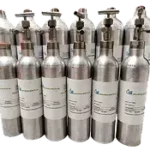
Overview
Carbon monoxide remains one of the leading causes of gas-related workplace fatalities — not because detection technology is inadequate, but because detectors that haven’t been properly calibrated cannot be relied upon to alarm at the concentrations that matter. For HSE officers, safety managers, and calibration technicians running CO monitoring programmes in high-risk environments, the quality and concentration accuracy of the calibration gas used to verify detectors is a direct factor in how well those instruments perform when it counts.
The CO – Carbon Monoxide 100 PPM Balance Air Calibration Gas Cylinder is a precision-blended span gas designed for span calibration, bump testing, and sensor verification of carbon monoxide gas detectors. At 100 ppm CO balanced with high-purity air, this mixture is formulated at a concentration well-suited for detectors with full-scale ranges of 200 ppm, 300 ppm, or 500 ppm — positioning the calibration point in the mid-to-upper working range where sensor accuracy and alarm threshold performance are most critical to verify.
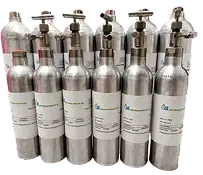
What makes this calibration gas a practical choice for procurement teams and calibration programmes is the five available C10 cylinder sizes — 34L, 58L, 103L, 110L, and 116 litres. From portable field cylinders for confined space entry teams to large-capacity bench cylinders for high-frequency calibration stations, this size range allows safety programmes to select the most operationally efficient volume for their specific site requirements — reducing gas wastage, cost-per-calibration, and supply chain complexity in a single sourcing decision.
Key Features
100 PPM Carbon Monoxide Concentration — Upper Working Range Calibration
At 100 ppm, this calibration gas sits at twice the OSHA permissible exposure limit (PEL) for CO and within the mid-to-upper measurement range of most deployed CO detectors. Calibrating at this concentration gives a meaningful verification of sensor response at levels that represent genuine alarm conditions — not just a low-end functional check. For safety programmes where alarm threshold accuracy is a priority, a 100 ppm reference point provides a more rigorous verification than lower-concentration bump test gases used only for basic sensor response confirmation.
Balance Air Formulation — Field-Representative Calibration Atmosphere
The balance gas is high-purity air, providing an oxygen-nitrogen background that accurately represents the atmospheric environment in which CO detectors operate in real field conditions. Electrochemical CO sensors — the sensor technology used in the majority of portable and fixed CO detectors — require the presence of oxygen for accurate response. A balance-air formulation ensures the calibration gas atmosphere matches field conditions, producing a calibration result that reflects genuine sensor performance rather than a modified response caused by an oxygen-deficient balance gas such as nitrogen.
Five Cylinder Sizes — 34L to 116L in C10 Format
The calibration gas is available across five C10 cylinder volumes: 34L, 58L, 103L, 110L, and 116 litres. The 34L and 58L cylinders are practical for field teams who need to transport calibration gas to the point of use — confined space entry locations, remote site areas, or offshore platform deck operations. The 103L to 116L range is better suited to fixed calibration stations, instrument service workshops, and large-fleet calibration programmes where a higher cylinder volume reduces changeover frequency and lowers the effective cost per calibration event.
Precision Gas Blending — Traceable Concentration Accuracy
Concentration accuracy is the single most important quality attribute of a calibration gas — a cylinder labelled 100 ppm that actually contains 85 ppm or 115 ppm will produce systematically incorrect calibration results across every detector it is used on. This CO 100 ppm balance air mixture is produced by precision gravimetric blending to certified concentration tolerances, with each cylinder accompanied by documentation that supports traceability to recognised gas mixture standards. For calibration programmes subject to regulatory audit or ISO 17025-referenced quality systems, certified concentration accuracy is a non-negotiable procurement requirement.
Broad Instrument Compatibility — Portable and Fixed CO Detectors
The 100 ppm CO balance air mixture is compatible with the full range of electrochemical CO sensors found in portable single-gas detectors, multi-gas personal monitors, and fixed-point industrial CO monitoring systems. Instruments from Industrial Scientific, Honeywell (BW Technologies), Draeger, MSA Safety, GMI, Crowcon, and comparable manufacturers can be calibrated or bump tested using this mixture. For procurement teams managing a mixed-brand instrument fleet, a single calibration gas specification covering multiple detector types reduces inventory complexity and the risk of using a mismatched gas on a particular instrument type.
Technical Specifications
Gas Type: Carbon Monoxide (CO)
Concentration: 100 ppm
Balance Gas: Air
Cylinder Format: C10
Available Cylinder Sizes: 34L / 58L / 103L / 110L / 116 Litres
Mixture Type: Span Gas (Single Component)
Application: Span Calibration, Bump Testing, Sensor Verification
Compatible Detectors: Portable CO Single-Gas Detectors, Multi-Gas Personal Monitors, Fixed Electrochemical CO Sensors
Product Category: Span Gas and Regulator
Benefits
Validates detector performance at a meaningful alarm concentration. At 100 ppm — twice the OSHA PEL and a concentration that represents a genuine evacuation-level CO exposure — span calibration with this mixture confirms that your detectors will respond accurately at the concentrations that matter most to worker safety. A basic low-concentration bump test confirms sensor response; a 100 ppm span calibration confirms accurate measurement across the range where alarm threshold decisions are made.
Supports defensible calibration records for regulatory compliance. Occupational health regulations require employers in CO-hazardous environments to maintain records demonstrating that gas detection instruments are functioning within their specified accuracy. Using a certified reference concentration with documented traceability gives your calibration records the evidential weight required to satisfy OSHA inspections, class society audits, ISM Code safety management reviews, and insurance or liability assessments following a workplace incident.
Cylinder size flexibility reduces procurement waste and cost. Buying a larger cylinder than your calibration frequency requires means carrying gas inventory past its expiry date — writing off usable gas that was never needed. The five available cylinder sizes allow you to match supply volume to actual consumption, improving cost efficiency across your calibration gas budget without compromising programme coverage.
Single gas specification covers multiple instrument types. CO 100 ppm balance air is a broadly applicable span gas concentration that works across most portable and fixed CO detector specifications. Standardising on a single calibration gas SKU for your CO detector fleet simplifies procurement, reduces the risk of handling errors during calibration, and makes calibration procedure documentation straightforward across multi-site safety programmes.
Balance air prevents calibration error from oxygen-deficient atmospheres. Using an air-balanced calibration gas instead of a nitrogen-balanced alternative ensures that the calibration atmosphere reflects real field conditions for electrochemical CO sensors. This is particularly important in calibration programmes where instruments are deployed in environments with normal atmospheric oxygen levels — calibrating in an oxygen-deficient nitrogen background can produce a sensor response that does not accurately represent field performance.
Who It’s For
The HSE Manager Responsible for a High-Frequency Confined Space Entry Programme
Your operation involves regular confined space entries — maintenance teams entering process vessels, storage tanks, utility tunnels, or sewage infrastructure on a daily or weekly basis. Your safety procedure mandates a bump test of every personal CO monitor before each entry, and a full span calibration at regular intervals per your gas detection management plan. You need a reliable CO calibration gas supply in a cylinder size that supports your programme frequency without running out mid-schedule or generating excess waste. The 100 ppm concentration gives you a meaningful bump test that confirms sensor response at a genuine alarm-level concentration — not just a trace-level functional check.
The Instrument Calibration Technician at an Industrial Facility
You manage calibration for a fleet of fixed CO monitoring points and portable instruments across a power plant, chemical processing facility, or large manufacturing site. Your calibration schedule, quality records, and instrument service logs require traceable reference gas documentation for every calibration event. You need a 100 ppm CO balance air cylinder with certified concentration documentation, available in a large enough volume to service your instrument count without weekly cylinder changes, and from a supplier who can confirm consistent supply. The 103L to 116L cylinder options are your bench standard; the certified concentration accuracy is your quality record requirement.
The Marine Superintendent Managing Gas Detection Across a Managed Fleet
Your fleet includes vessels where CO monitoring is required in engine rooms, pump rooms, and for crew confined space entry operations. Your gas detection management programme requires span gas to be available on board or supplied at port for scheduled calibration during port calls or drydocking periods. You need a calibration gas specification that matches the CO detector types in your fleet inventory, in cylinder sizes appropriate for shipboard storage, from a supplier who can confirm availability and provide gas certificates for your safety management system records. Having access to the full range of C10 cylinder sizes allows you to specify the right volume for each vessel’s programme without over-ordering across your fleet.
Possible Applications
- Confined space entry operations — Bump testing and span calibration of personal CO monitors before entry into tanks, voids, process vessels, manholes, and enclosed utility infrastructure
- Engine rooms and boiler houses — Span calibration of fixed CO sensors monitoring combustion areas on marine vessels and in industrial facilities where CO from fuel combustion is a recognised hazard
- Underground mining and tunnelling — Calibration of personal CO monitors worn by underground workers where diesel equipment exhaust and blasting operations create sustained CO exposure risk
- Vehicle workshops and enclosed loading areas — Calibration of fixed CO monitoring systems in vehicle maintenance workshops and loading bays where exhaust accumulation is a recognised occupational hazard
- Power generation facilities — Span calibration of CO monitoring systems in turbine halls, generator enclosures, and boiler rooms where combustion processes generate CO as a process byproduct
- Petrochemical and refinery operations — Calibration gas supply for CO sensors integrated into process area gas detection systems and personal monitor programmes across ATEX-classified site areas
- Gas detection instrument service workshops — Bench calibration gas supply for service companies providing CO detector calibration, certification, and maintenance services to industrial and commercial clients
- Offshore oil and gas installations — Calibration and bump test gas supply for CO monitors used in enclosed machinery spaces, accommodation modules, and confined space entry operations on offshore platforms and FPSOs
Trust and Certifications
Certified Concentration — Traceable to Recognised Gas Mixture Standards
The CO 100 ppm balance air mixture is produced to certified concentration tolerances using precision gravimetric blending methods. Each cylinder is accompanied by a certificate of analysis documenting the actual concentration, tolerance, and preparation standard — providing the traceable reference documentation required for calibration programmes operating under regulatory requirements, safety management system standards, or quality assurance frameworks.
OSHA CO Exposure Limit Context — 100 PPM as a Meaningful Reference Point
OSHA’s permissible exposure limit for CO is 50 ppm as an 8-hour time-weighted average. At 100 ppm — twice the PEL — this calibration gas concentration sits squarely within the range at which CO detectors are required to alarm to trigger worker evacuation or corrective action. Calibrating at this concentration gives safety managers direct confirmation that their detectors are accurately measuring CO at a concentration that represents a genuine occupational health risk — not just confirming sensor aliveness at a trace-level concentration.
Suitable for ISO 17025-Referenced Calibration Programmes
Calibration laboratories and instrument service organisations operating under ISO 17025 accreditation require all reference standards to be traceable to national or international measurement standards. Certified calibration gas cylinders with documented concentration tolerances and preparation standards support the traceability chain required by ISO 17025-accredited CO detector calibration procedures — providing the reference documentation that underpins accredited calibration records.
Supplied by Alright Engineering Solutions
The CO – Carbon Monoxide 100 PPM Balance Air Calibration Gas Cylinder is supplied through Alright Engineering Solutions Pte. Ltd., an authorised distributor of portable and fixed gas detection equipment, calibration gases, and span gas regulators in Singapore. Our team supports industrial, marine, and offshore clients with calibration gas sourcing, regulator supply, and gas detection programme advisory across Singapore and the regional market.
Accessories and Variants
Cylinder Size Variants
34 Litre (C10) — Compact portable cylinder for field teams, confined space entry operations, and low-frequency single-site use
58 Litre (C10) — Mid-size cylinder for regular site calibration programmes and small-to-medium instrument fleets
103 Litre (C10) — Large capacity cylinder for calibration benches and medium-to-high frequency programmes
110 Litre (C10) — High-capacity option for high-frequency programmes servicing large portable detector fleets
116 Litre (C10) — Maximum C10 capacity for calibration laboratories, instrument service workshops, and large industrial facilities
Compatible Span Gas Regulators
A correctly specified regulator is required to connect C10 calibration cylinders to your detector or calibration adapter at the appropriate flow rate. Alright Engineering Solutions supplies compatible span gas regulators for the C10 cylinder format in flow rate configurations suitable for both portable bump testing and bench calibration applications. Using a matched regulator ensures consistent, accurate gas delivery — preventing the under-delivery that can cause incomplete sensor saturation during calibration events.
Related Calibration Gas Products
CO 50 PPM Balance Air — Lower concentration CO span gas for bump testing programmes using 50 ppm as the reference concentration
Multi-Gas Calibration Mixtures (CO / H₂S / O₂ / LEL) — Combination span gas for calibrating multi-gas personal monitors in a single bump test cycle
H₂S Calibration Gas (Balance Air) — Hydrogen sulphide span gas for H₂S sensor verification in portable and fixed detectors
LEL Calibration Gas (Methane or Pentane Balance Air) — Combustible gas span mixtures for catalytic bead and infrared LEL sensor calibration
Get in Touch
If you are sourcing CO – Carbon Monoxide 100 PPM Balance Air calibration gas for your gas detection programme — whether for confined space operations, industrial fixed system maintenance, or instrument calibration services — contact Alright Engineering Solutions to confirm cylinder size availability and request a formal quotation.
Our team can advise on regulator compatibility, related calibration gas mixtures, and supply arrangements suited to your instrument fleet and programme requirements.
📍 3791 Jalan Bukit Merah #06-01, E-Centre @ Redhill, Singapore 159471