Cart (
Overview
Fire hose performance in a real emergency comes down to three things: whether it holds pressure without bursting, whether it flows water without restriction, and whether the crew carrying it can actually move quickly with it under load. A hose that is too heavy to carry at speed, too stiff to deploy around corners and through doorways, or too rigid to roll and store compactly creates operational problems long before a fire event — and those operational problems have direct consequences when seconds matter at an incident scene. The fire hose selection decision is not simply a procurement line item; it is a decision that shapes how effectively a crew can respond.
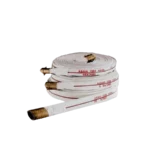
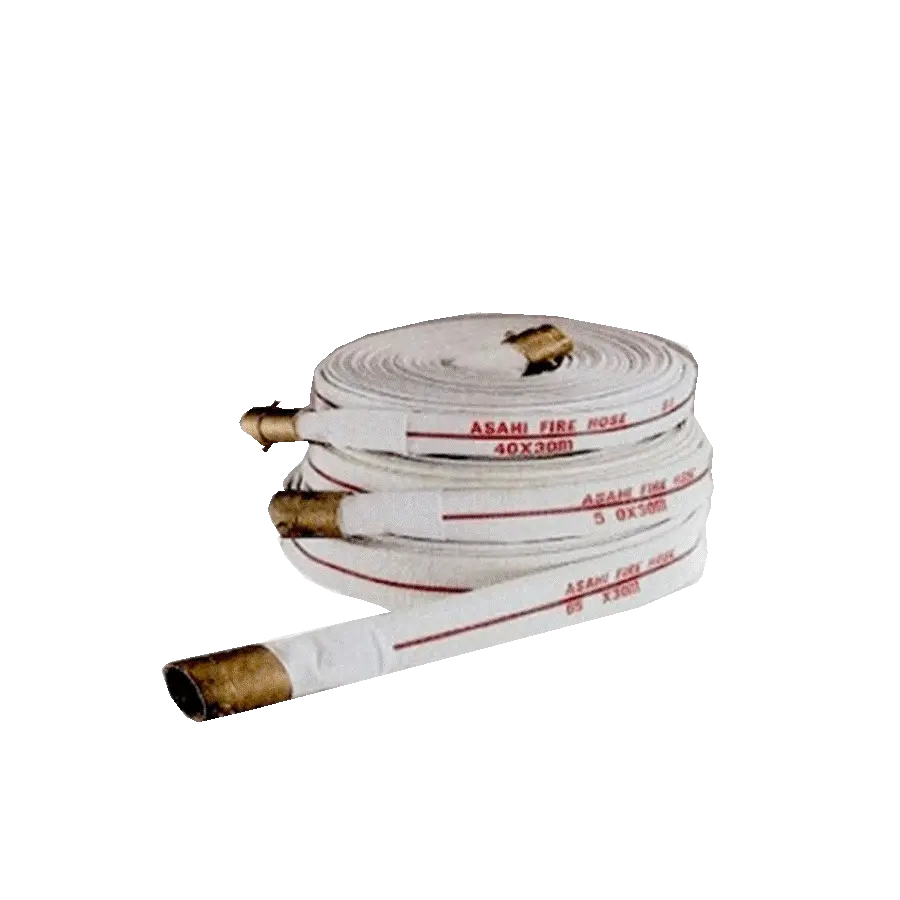
This Polyurethane Fire Hose with PVC Lining is a lay-flat construction fire hose manufactured from polyurethane jacket material with a PVC inner lining produced using advanced equipment and materials. The design addresses the three core operational requirements directly: the polyurethane construction produces a hose that is thinner, softer, and lighter than equivalent rubber-lined or traditional canvas hoses — without sacrificing the working pressure rating or durability that fire hose applications demand. The result is a hose that is meaningfully easier to carry, deploy, and recover in the field, with a working pressure range of 200–250psi that covers the supply pressure requirements of the majority of municipal and industrial fire main systems.
What distinguishes this hose from budget PVC lay-flat alternatives is the advanced manufacturing process behind the PVC lining. The lining is bonded to the jacket using precision equipment that produces a consistent, void-free bond between the jacket fibres and the inner tube — the failure point in many lower-cost lay-flat fire hoses, where delamination of the lining from the jacket under repeated pressure cycling causes the lining to collapse into the waterway, reducing flow and eventually causing the hose to fail. A well-bonded polyurethane-PVC construction maintains its internal geometry under pressure and across the hose’s service life, delivering consistent flow performance from the first deployment to the last.
Key Features
Polyurethane Construction — Thinner, Lighter, More Flexible Than Rubber Hose
The jacket material is polyurethane — a synthetic polymer that provides a substantially better strength-to-weight ratio than the rubber compounds used in traditional fire hose construction. The practical result is a hose that is thinner in wall section and lighter per metre of length than an equivalent rubber-jacketed hose at the same bore size and pressure rating. For fire crews carrying hose lengths up staircases, through confined spaces, and across rough terrain, the weight reduction is not a minor comfort improvement — it is an operational factor that directly affects how quickly the crew can advance a hose line and how long they can sustain operations before fatigue becomes a limiting factor.
PVC Inner Lining — Smooth Bore, Low Friction, Consistent Flow
The inner lining is PVC, produced using advanced manufacturing equipment and materials to achieve a smooth, consistent bore surface. The smooth bore is significant for flow performance: internal surface roughness in a fire hose creates friction losses along the hose length that reduce the water flow and nozzle pressure delivered at the business end. A smooth PVC lining minimises these friction losses and maintains the flow performance that fire engineers calculate when sizing hose systems for specific fire risks. It also prevents the particulate contamination accumulation inside the hose that occurs in rough-bore alternatives — a hygiene and performance consideration for hoses that are stored for extended periods between deployments.
200–250psi Working Pressure Rating — Covers Standard Fire Main Supply Pressures
The hose is rated for working pressures of 200–250psi, which covers the supply pressure range delivered by the majority of municipal fire hydrant systems, building fire main risers, and industrial fire pump systems in standard use. A hose rated to 200–250psi working pressure provides an appropriate safety margin over the operating pressures typically encountered in structural firefighting and industrial fire response — without the overspecification (and associated cost and weight penalty) of higher-rated hoses intended for specialised high-pressure applications. For procurement teams specifying fire hose for general building fire protection and first-attack firefighting applications, the 200–250psi rating is the correct specification point for the intended use.
Single and Double Jacket Options — Match the Jacket to the Application
The hose is available in both single-jacket and double-jacket constructions. A single-jacket hose has one layer of woven jacket over the PVC inner tube — lighter and more flexible, suited to interior firefighting applications and situations where ease of handling and storage compactness are the priority. A double-jacket hose adds a second woven layer, increasing the hose’s abrasion resistance and burst strength — suited to exterior applications, rough terrain deployment, and situations where the hose will be dragged across abrasive surfaces including concrete, gravel, and metal grating. The availability of both jacket specifications under a single product family allows procurement teams to specify the appropriate construction for each application within a building or site without managing multiple product lines from different suppliers.
Available in 2″, 2½”, and 2½” Sizes — Standard Fire Hose Diameters
The hose is available in 2 ½”, 2″, and 2 ½” nominal bore sizes — the standard diameters used in the majority of building fire hose installations, fire brigade attack hose, and industrial fire protection systems. These sizes correspond to the standard coupling thread specifications used on fire hydrant outlets, hose reel connections, and portable pump discharge ports across international fire service standards, ensuring the hose is directly compatible with the fittings and equipment already in use across the installation or fleet without the need for reducers or adaptor couplings. Confirm the specific bore size requirement against the system connection points and flow calculations for the intended application.
Lay-Flat Storage — Compact, Space-Efficient Stowage
As a lay-flat construction hose, this fire hose collapses flat when not under pressure — allowing it to be rolled, folded, or stored in flat-pack configuration in hose cabinets, appliance lockers, and hose storage racks at a fraction of the stowage volume required by semi-rigid or rubber hose alternatives. Lay-flat storage is the standard configuration for attack hose carried on fire appliances and stored in building hose cabinets and dry riser systems, and the thinner polyurethane wall section of this hose produces a more compact roll than rubber-jacketed lay-flat hose at equivalent lengths — relevant where hose cabinet depth or appliance locker volume constrains the length of hose that can be stored at a given point.
Technical Specifications
Product Type: Lay-Flat Fire Hose
Jacket Material: Polyurethane (single or double jacket)
Inner Lining: PVC — manufactured with advanced equipment and materials
Available Sizes: 2 ½”, 2″, 2 ½” (nominal bore)
Working Pressure: 200psi – 250psi
Jacket Options: Single Jacket / Double Jacket
Construction Type: Lay-Flat
Profile: Thinner wall section than rubber equivalent
Weight Characteristic: Softer and lighter than rubber hose — durable in quality
Standard Lengths: Confirm with supplier at order stage
Benefits
The most immediate operational benefit of this polyurethane fire hose is the weight and handling advantage it delivers to the crew using it. Fire hose management — carrying, advancing, recovering, and repacking — is physically demanding work, and hose weight is one of the dominant fatigue factors for crews working extended firefighting operations. A lighter, softer hose that rolls more compactly reduces the physical load at every stage of the hose deployment cycle, allowing crews to advance further, work longer, and recover the hose more quickly at the end of an operation. Over a full shift or an extended incident, this translates directly into crew capability and operational effectiveness.
For building fire protection and industrial fire safety installations, the compact lay-flat storage profile of the polyurethane construction means more hose length can be accommodated in a given cabinet or storage rack volume — or the same hose length can be stored in a smaller enclosure, with cost and space implications for the building design. The thinner wall section also makes the hose more flexible at low temperatures, reducing the stiffness that makes rubber hose difficult to deploy and repack in cold ambient conditions.
From a total cost of ownership perspective, the durability of the polyurethane-PVC construction — when properly maintained — produces a service life that is competitive with, or exceeds, that of rubber-jacketed alternatives in equivalent service conditions. A hose that does not delaminate internally, does not develop jacket rot from mould or mildew in damp storage conditions, and does not crack or harden from UV exposure in the way that natural rubber compounds can, represents a lower replacement frequency and lower long-term procurement cost than the initial unit price comparison alone might suggest.
The availability of both single and double jacket specifications under the same product family means the organisation can standardise on a single hose product range for all applications — interior attack, exterior deployment, and rough-terrain use — simplifying stock management, training, and maintenance across the hose fleet.
Who It’s For
Fire Brigade Equipment Officers and Fleet Managers
A fire service equipment officer responsible for specifying and procuring attack hose for a fleet of pumping appliances needs a hose that meets the service’s pressure rating requirement, provides the correct bore sizes for the appliance pump discharge connections in use across the fleet, and delivers a handling and weight profile that supports crew performance on the fireground. The polyurethane construction and PVC lining of this hose provide the pressure performance and smooth bore flow characteristics required for structural firefighting attack hose, in a lighter and more manageable package than the rubber hose that many services still carry. The single and double jacket options allow the equipment officer to specify the appropriate jacket weight for the operational profile of each appliance type in the fleet.
HSE Officers and Fire Safety Managers at Industrial Facilities
An HSE officer managing fire protection at a manufacturing facility, chemical plant, or warehouse complex needs to ensure that the lay-flat fire hose installed in hose reel cabinets and stored at hydrant points across the site is maintained in operational condition — and that it can be deployed effectively by site fire teams in a first-attack scenario. The lightweight, flexible characteristics of the polyurethane hose reduce the physical effort required for untrained or infrequently trained site fire team members to deploy a charged hose line, increasing the probability of effective first-attack firefighting by personnel who are not professional firefighters. The 200–250psi pressure rating covers the supply pressure of most industrial fire main systems, confirming the hose is appropriate for connection to the site’s fire water network.
M&E Contractors and Fire System Installers
A fire system installer fitting out hose reel cabinets and dry riser inlet/outlet points across a commercial building project needs fire hose that fits the cabinet dimensions specified by the architect and fire consultant, connects to the hose couplings fitted to the reel and landing valve equipment on site, and meets the building’s fire hose specification standard. The availability of this hose in standard bore sizes with single and double jacket options allows the installer to match the hose specification to the cabinet configuration and operational requirements at each installation point — from compact interior hose reel cabinet installations requiring a flexible single-jacket hose, to dry riser outlet landing valve positions where a more abrasion-resistant double-jacket hose is appropriate.
Possible Applications
Structural Firefighting — Fire Brigade Attack Hose
Lay-flat attack hose is the primary hose type carried on pumping fire appliances for structural firefighting operations. The polyurethane construction and 200–250psi working pressure rating make this hose appropriate for connection to a fire pump discharge and deployment as the primary attack line in building fires, vehicle fires, and outdoor fire incidents. The lighter weight and compact roll profile reduce the stowage volume required in appliance lockers and speed up hose deployment and recovery at the incident scene.
Building Dry Riser Systems — Landing Valve Hose
Multi-storey buildings with dry riser systems have hose lengths stored at landing valve outlet positions on each floor, ready for connection by fire brigade crews arriving on the floor above or below a fire. The compact lay-flat storage profile of this hose makes it appropriate for storage in the limited-volume recesses and cabinets adjacent to dry riser landing valve outlets — and the smooth PVC lining ensures unrestricted flow once the hose is connected and the landing valve is opened.
Industrial Fire Protection — Site Hydrant Hose
Manufacturing plants, chemical facilities, and large warehouse complexes with site fire hydrant networks store fire hose at hydrant point locations throughout the site for use by site fire teams and incoming fire brigade units. The 200–250psi working pressure rating covers the supply pressure of most industrial fire pump systems, and the double-jacket option provides the abrasion resistance needed for hose dragged across concrete plant floors, metal grating, and rough external surfaces during fire incident deployment.
Marine and Offshore Fire Protection
Vessels and offshore platforms carry fire hose as part of their firefighting equipment inventories to comply with SOLAS Chapter II-2 and flag state regulations. The lightweight polyurethane construction reduces the stowage weight of the hose inventory in confined shipboard spaces, and the flexible, soft handling characteristics make the hose manageable in the confined and often obstacle-strewn spaces of a vessel’s engine room, accommodation areas, and cargo holds where firefighting operations are most challenging.
Airports and Aviation Ground Support
Airport fire services carry large volumes of fire hose on foam-carrying Airport Rescue and Firefighting (ARFF) vehicles for aircraft incident response. The weight and storage volume of the hose inventory is a direct factor in the payload and equipment capacity of ARFF vehicles. Lightweight polyurethane lay-flat hose allows ARFF operators to carry greater hose lengths within the same appliance weight and volume constraints — directly increasing the operational reach and sustained firefighting capability of the vehicle at an aircraft incident.
Construction Site Temporary Fire Protection
Large construction sites install temporary fire protection water supply systems — including site hydrants and hose storage points — as part of the principal contractor’s construction phase fire safety plan. Lay-flat fire hose stored at site hydrant points provides first-attack firefighting capability for site fire teams responding to fires in construction materials, temporary buildings, and plant and equipment across the site footprint. The lightweight characteristics of the polyurethane hose make it easier for construction workers — who are not trained firefighters — to deploy and manage a charged hose line in a first-attack scenario.
Municipal Water Supply and Emergency Response
Local authority water supply and emergency response teams use lay-flat hose for water transfer operations during flood response, drought emergency pumping, and infrastructure repair situations where water needs to be moved over distance from a supply point to a discharge location. The smooth PVC lining minimises friction losses across long hose runs, maintaining flow at the discharge end, and the lay-flat storage allows large hose volumes to be transported and deployed rapidly from a response vehicle.
Trust & Certifications
Polyurethane Material Standard — Performance Advantage Over Traditional Rubber
Polyurethane is a high-performance synthetic polymer widely used in demanding fluid conveyance applications where a combination of flexibility, abrasion resistance, and low weight is required. In fire hose applications, polyurethane jacket construction is the recognised upgrade from traditional rubber-jacketed and canvas-jacketed hose construction — the material specification used by leading fire hose manufacturers for products targeted at professional fire service and industrial fire protection markets. The thinner wall section achievable with polyurethane at equivalent pressure ratings is a direct function of the material’s tensile strength characteristics — not simply a manufacturing decision to reduce material cost at the expense of performance.
PVC Lining — Advanced Manufacturing Process
The PVC inner lining of this hose is produced using advanced manufacturing equipment and materials — a specification point that distinguishes it from lower-cost lay-flat hoses where the lining is applied using simpler extrusion processes that produce less consistent bond quality between the lining and the jacket. A consistently bonded lining maintains its position and geometry under pressure cycling, preventing the lining collapse and delamination that causes premature flow restriction and hose failure in budget alternatives. The manufacturing process quality is the specification detail that determines how the hose performs after a year of service use, not just on the first deployment.
200–250psi Working Pressure — Standard Fire Hose Pressure Certification Range
Fire hose working pressure ratings are the primary performance parameter verified in fire hose type testing under international standards including EN 14540 (European lay-flat hose standard) and equivalent national standards. A 200–250psi working pressure rating, tested under the applicable standard, confirms the hose can sustain the specified pressure without leakage or structural failure across the test duration — providing the performance evidence basis for specification into fire protection systems designed to the relevant supply pressure. Confirm the specific test standard under which the hose has been certified with the supplier at procurement stage.
Single and Double Jacket — Standard Construction Classifications
Single and double jacket are the standard construction classifications for lay-flat fire hose recognised across international fire hose standards. Single jacket hose meets the requirements for interior firefighting hose and building fire protection hose applications. Double jacket hose provides the additional abrasion resistance required for exterior and rough-terrain applications where the jacket is exposed to abrasive surfaces during deployment and recovery. The availability of both classifications from this product range allows procurement to the correct construction standard for each application type within a single product family.
Accessories & Variants
Instantaneous and Storz Couplings — Hose Connection Fittings
Fire hose requires compatible metal couplings at each end for connection to hydrant outlets, pump discharge ports, nozzles, and other hose lengths. Instantaneous (quarter-turn) and Storz (symmetrical) couplings are the two principal coupling types in international fire service use — the correct type depends on the coupling standard used on the fire hydrant network and fire appliance equipment in the country or organisation of use. Confirm the coupling type and diameter specification required for your system before ordering, and ensure the couplings are specified and fitted at the same time as the hose length.
Branch Pipes and Nozzles
A fire hose without a branch pipe and nozzle delivers an uncontrolled water stream that cannot be directed effectively at a fire. Smooth bore, fog, and combination nozzles are available to match the hose bore size and the tactical requirements of the intended application — from high-flow smooth bore nozzles for structural firefighting to combination fog nozzles for vapour suppression and Class B fire knockdown. Specify the nozzle type and flow rate alongside the hose to ensure the complete hose line is configured for the intended fire risk.
Hose Reels and Storage Racks
Lay-flat fire hose is stored on hose reels, in hose cabinets, or on open storage racks at fire equipment positions. Hose storage equipment that keeps the hose dry, ventilated, and away from UV exposure and chemical contamination extends hose service life and ensures the hose is in deployment-ready condition at the point of need. Confirm the appropriate storage solution for each installation location at specification stage.
Available Size Variants
2 ½” Single Jacket — Standard interior attack hose for building firefighting and first-attack industrial applications
2 ½” Double Jacket — Exterior and rough-terrain deployment, industrial site hydrant hose
2″ Single Jacket — Lighter attack line for confined space and residential firefighting applications
2″ Double Jacket — Abrasion-resistant version for outdoor and industrial 2″ bore applications
Contact the supplier to confirm available lengths per reel, coupling options, and pricing for specific bore size and jacket configuration combinations.
Get in Touch
If you are procuring fire hose for a fire brigade fleet, building fire protection installation, industrial site fire protection system, or marine firefighting equipment inventory — or if you need to confirm the correct bore size, jacket specification, coupling type, and hose length for your specific application — contact us to discuss your requirement and request a formal procurement quotation.
Our team can assist with product selection against your fire system specification, confirm compatibility with your existing coupling and equipment standards, and support the procurement documentation required for fire safety audit and compliance purposes.
📍 3791 Jalan Bukit Merah #06-01, E-Centre @ Redhill, Singapore 159471