Cart (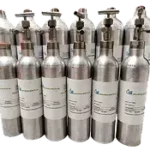
Overview
Photoionisation detector (PID) calibration is one of the more technically specific calibration requirements in industrial gas detection — and isobutylene (also written as iso-butylene or 2-methylpropene) is the calibration gas that the majority of PID instrument manufacturers specify for it. Unlike electrochemical or catalytic bead sensors, PID sensors measure volatile organic compound (VOC) concentration by ionising gas molecules with ultraviolet light, and the sensor’s response factor to each target compound is referenced back to isobutylene as the standard calibration gas. Calibrating a PID instrument with any gas other than isobutylene — or with an isobutylene mixture at the wrong concentration — produces a span result that is not directly comparable to the manufacturer’s published response factor tables, introducing a systematic error into every VOC reading the instrument produces.
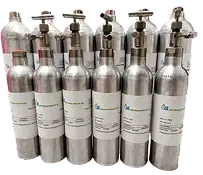
The Isobutylene (Iso Butylene) 100 ppm Balanced Air Span Gas is a precision calibration gas mixture formulated at 100 parts per million of isobutylene in a synthetic air balance. Supplied in aluminium cylinders across five size options — 34L, 58L, 103L, 110L, and 116 litres — this is the standard PID calibration gas for portable and fixed PID instruments across industrial hygiene, hazmat response, environmental monitoring, and confined space entry applications. For safety managers, instrument technicians, and HSE officers who need a reliable, certified isobutylene calibration gas source in the cylinder size that fits their programme volume, this product provides that without complexity.
The differentiating factor is the 100 ppm concentration in a synthetic air balance — the formulation that most PID instrument manufacturers reference in their calibration procedures. Some suppliers offer isobutylene calibration gas at different concentrations or in nitrogen balance, requiring the instrument technician to apply correction factors or verify compatibility with their specific instrument model before use. This product is formulated at the concentration and in the balance gas most widely specified across the major PID instrument platforms — reducing the verification burden and the risk of specifying a calibration gas that technically works but requires additional procedure steps to use correctly.
Key Features
100 ppm Isobutylene — The Standard PID Calibration Concentration
100 ppm is the isobutylene calibration concentration specified in the calibration procedures of the majority of portable PID instruments in common use across industrial hygiene, environmental monitoring, and hazmat response applications — including instruments from RAE Systems, Ion Science, Honeywell, and MSA, among others. Calibrating at the manufacturer-specified concentration ensures the instrument’s span is set correctly against the published response factor tables for the target VOC compounds the instrument is deployed to detect. Deviating from the specified concentration — even by a small margin — introduces a proportional error into the response factor calculations that determines how the instrument converts its isobutylene-referenced reading into a target VOC concentration value.
Synthetic Air Balance — Matched to PID Sensor Operating Conditions
PID sensors are sensitive to the oxygen content of the gas stream during calibration and operation — the UV lamp ionisation process is affected by the presence of oxygen, and PID instruments are calibrated and operated in atmospheric air conditions. A synthetic air balance — oxygen and nitrogen in atmospheric proportions — replicates those operating conditions during the calibration event, producing a span result that accurately reflects the instrument’s detection performance in normal atmospheric use. Nitrogen-balanced isobutylene calibration gas, by contrast, presents the PID sensor with a zero-oxygen gas stream during calibration, which can produce a response that diverges from the instrument’s atmospheric operating behaviour and requires additional correction to interpret correctly.
Five Cylinder Sizes — 34L, 58L, 103L, 110L, 116L — Scalable to Any Programme Volume
PID calibration gas consumption varies significantly between applications: a single environmental monitoring team with one PID instrument uses far less calibration gas per month than a safety equipment hire operation maintaining a fleet of 50 PID monitors on weekly recalibration cycles. The five cylinder sizes in this range allow procurement teams to specify the cylinder capacity that matches the actual gas consumption rate of their programme — avoiding the cost of residual gas left in oversized cylinders at end of service, and avoiding the stockout risk and calibration interruptions that come from undersized cylinders running out mid-cycle. For multi-site operations, different sites can be supplied with different cylinder sizes matched to their individual instrument counts and calibration frequencies.
Aluminium Cylinder — Lightweight for Field and Laboratory Use
All cylinders are manufactured from aluminium — materially lighter than steel at equivalent gas capacity, corrosion-resistant, and appropriate for the environments in which PID calibration is commonly performed: industrial plants, environmental monitoring field sites, hazmat response staging areas, and marine vessel spaces. The lighter cylinder weight reduces the physical handling burden for instrument technicians transporting calibration equipment to field locations, particularly when multiple cylinders or instruments are being carried to a single calibration site or vessel access point.
Certified Concentration — Traceable for Calibration Record Compliance
Each cylinder is supplied with a certificate of analysis confirming the verified isobutylene concentration against traceable reference standards. For PID calibration in particular — where the calibration gas concentration directly affects every subsequent VOC reading the instrument produces through the response factor calculation — the accuracy of the calibration gas concentration is not a secondary concern. It is the single most important technical parameter in the calibration event. A certificate of analysis provides documented evidence of that concentration accuracy, supporting the traceability requirements of ISO 17025 accredited calibration programmes, regulatory reporting frameworks, and safety management system audits where calibration records may be reviewed.
Technical Specifications
Cylinder: C10 — Aluminium
Available Sizes: 34L / 58L / 103L / 110L / 116 Litres
Isobutylene (Iso Butylene): 100 ppm
Balance Gas: Air (synthetic — atmospheric O2/N2)
Benefits
Calibrating at the manufacturer-specified concentration and balance gas eliminates systematic VOC reading error. PID instruments convert their isobutylene-referenced span reading into target VOC concentrations using published response factor tables. Those tables are derived from calibration at the specified concentration and balance gas. When the calibration gas does not match those parameters, every response factor calculation the instrument performs is based on a span that was not set under the conditions the response factors were determined at — introducing a systematic offset across all VOC readings that is invisible in normal operation but present in every measurement the instrument produces. Using the correct 100 ppm air-balanced isobutylene calibration gas removes that source of error from the calibration programme.
Standard formulation reduces pre-calibration verification burden on instrument technicians. When calibration gas is specified at a non-standard concentration or in a non-standard balance gas, the instrument technician must verify compatibility with the specific instrument model and apply correction factors where applicable before the calibration can proceed. At 100 ppm in synthetic air — the formulation most widely specified across the major PID instrument platforms — this product is compatible with standard PID calibration procedures without the additional verification step. That saves time per calibration event and reduces the risk of procedure errors caused by applying incorrect correction factors.
Cylinder size flexibility reduces calibration gas waste and total consumable cost across the programme lifecycle. Isobutylene calibration gas has a defined shelf life once the cylinder seal is broken and pressure begins to decrease — residual gas left in an oversized cylinder at end of service represents a direct cost that cannot be recovered. Conversely, running out of calibration gas before the scheduled calibration cycle is complete causes unplanned procurement and potential calibration delays that affect instrument availability. Specifying the cylinder size that matches actual consumption prevents both outcomes and optimises the cost-per-calibration-event across the full programme.
Certified traceability supports regulatory and management system calibration record requirements. VOC monitoring with PID instruments is deployed in contexts where the calibration record may be subject to external review — environmental permit compliance monitoring, occupational exposure assessments used in regulatory reporting, and hazmat incident response where post-incident instrument performance records may be examined. A certified, traceable calibration gas concentration provides the documented basis for those records that an uncertified or nominally specified gas cannot supply.
Who It’s For
The Industrial Hygienist or Environmental Health Officer Running VOC Exposure Monitoring
You use a PID instrument to assess worker VOC exposure in industrial settings — painting operations, solvent handling areas, chemical storage, or manufacturing processes involving volatile compounds. Before each measurement survey, you calibrate or bump-test the instrument against a certified isobutylene standard at 100 ppm. Your exposure assessment reports reference the instrument’s calibration records, and those records need to show that calibration was performed with a certified gas at the correct concentration. A reliable, consistently available supply of certified 100 ppm isobutylene balanced air is not an ancillary consumable in your workflow — it is the calibration foundation that the validity of every exposure reading depends on.
The Safety Equipment Manager or Instrument Technician Maintaining a PID Fleet
You maintain a fleet of PID instruments — portable units used by site workers for confined space entry, environmental monitoring, or hazmat response — on a scheduled calibration and bump-test cycle. Each instrument requires isobutylene calibration gas at every service interval, and the calibration records must be documented and traceable. Managing a fleet means gas consumption is predictable and volume matters: the right cylinder size keeps the calibration programme running without constant replacement orders, and consistent sourcing from a single supplier keeps the documentation straightforward. When the fleet spans multiple sites or vessels, the ability to supply the same certified calibration gas across all locations from one product source is a procurement efficiency you notice across every calibration cycle.
Possible Applications
- Industrial hygiene VOC monitoring — chemical and pharmaceutical manufacturing — Calibration of PID instruments used for worker exposure assessment in solvent handling, chemical reaction, and pharmaceutical synthesis environments where VOC concentrations must be measured against occupational exposure limits
- Confined space entry atmosphere testing — Span calibration of multi-gas monitors with PID channels used for pre-entry VOC screening in tanks, vessels, and enclosed spaces in petrochemical, refinery, and industrial maintenance applications
- Hazmat incident response — first responder equipment calibration — Pre-deployment calibration of PID instruments used by fire service hazmat teams, civil defence, and emergency response units for unknown atmosphere characterisation at chemical spill, leak, or release incidents
- Environmental site investigation and remediation monitoring — Calibration of field PID instruments used during soil and groundwater contamination investigations, vapour intrusion assessments, and remediation site air monitoring programmes
- Marine vessel cargo and enclosed space VOC monitoring — Span calibration of PID instruments used for cargo atmosphere monitoring on chemical tankers, solvent carriers, and vessels transporting volatile cargo where enclosed space VOC concentrations must be assessed before entry or cargo operations
- Paint spraying, coating, and surface treatment operations — Calibration of PID monitors used for personal exposure monitoring and area monitoring during spray painting, lacquering, and solvent-based coating operations in automotive, aerospace, and industrial manufacturing facilities
- Safety equipment hire and calibration service operations — Bulk isobutylene calibration gas supply for instrument hire companies and third-party calibration service providers maintaining PID instrument fleets requiring regular recalibration across diverse client industries and environments
Trust and Certifications
Certified Calibration Gas — Traceable Concentration Accuracy
Each cylinder is supplied with a certificate of analysis confirming the verified isobutylene concentration against traceable reference standards. Calibration gas traceability is a core requirement of ISO 17025 accredited instrument calibration programmes and is an expected element of calibration records reviewed in regulatory compliance audits, environmental monitoring verification, and occupational health programme assessments. The certificate provides documented evidence that the calibration event was performed with a gas of known and verified composition — the foundational requirement for a defensible calibration record in any context where the instrument’s readings carry regulatory or legal significance.
Aluminium Cylinder — Pressure Vessel Compliant Construction
Cylinders are manufactured and tested to applicable pressure vessel standards. Cylinders should be handled, stored, and transported in accordance with compressed gas cylinder safety requirements — secure upright storage away from heat and ignition sources, cylinder caps or valve guards fitted during transport, and connection only via compatible single-stage calibration gas regulators rated for the cylinder pressure and gas service. Cylinder re-qualification intervals must be observed in accordance with local compressed gas regulations applicable to the country of use.
Supplied by Alright Engineering Solutions
The Isobutylene 100 ppm Balanced Air span gas is supplied through Alright Engineering Solutions Pte. Ltd., an authorised distributor of portable and fixed gas detection equipment, calibration gas, and marine safety system components based in Singapore. Alright Engineering Solutions provides procurement support for calibration gas, PID instruments, and associated safety equipment across the Singapore and regional market.
Accessories and Variants
Calibration Gas Regulator
A single-stage calibration gas regulator is required to connect the cylinder to the PID instrument under calibration. Regulator selection depends on the cylinder valve outlet configuration and the instrument’s calibration gas inlet. Alright Engineering Solutions can advise on compatible regulator options for your specific PID instrument model and cylinder size — contact our team with your instrument make, model, and cylinder details for regulator compatibility guidance.
Available Cylinder Size Variants
34L Aluminium Cylinder — For low-volume use: single-site applications, small instrument counts, or project-based calibration requirements
58L Aluminium Cylinder — For moderate-volume use: multi-instrument sites or programmes with regular but not high-frequency calibration cycles
103L / 110L / 116L Aluminium Cylinders — For high-volume use: instrument hire fleets, multi-site safety equipment maintenance programmes, and calibration service operations with large PID instrument counts
Related Products from Alright Engineering Solutions
CO 5/10/50 ppm Bal Air Span Gas — Carbon monoxide calibration gas in three concentrations and five cylinder sizes for portable and fixed CO monitor calibration
CO2 1%–15% Vol Bal N2 Span Gas Range — CO2 calibration gas across five concentrations for confined space, process, and cargo atmosphere CO2 monitor calibration
GX-8000 Sample Draw Multi Gas Monitor — Portable marine sample draw multi-gas monitor with PID and standard sensor options for vessel confined space and cargo atmosphere monitoring
RX-8700 Portable Gas Detector — Portable multi-gas monitor with ATEX/IECEx/MED certification for marine and industrial applications
Fixed Gas Detection Systems — Fixed point VOC and multi-gas detectors for permanent installation in marine, commercial, and industrial environments
Get in Touch
If you need to source isobutylene 100 ppm balanced air calibration gas — whether for a single instrument, a scheduled fleet calibration programme, or ongoing consumable supply across multiple sites or vessels — contact Alright Engineering Solutions to confirm availability and request a formal quotation.
Our team can assist with cylinder size selection, compatible regulator sourcing, and calibration gas supply arrangements for your specific PID instrument models and programme requirements.
📍 3791 Jalan Bukit Merah #06-01, E-Centre @ Redhill, Singapore 159471