
 Cart (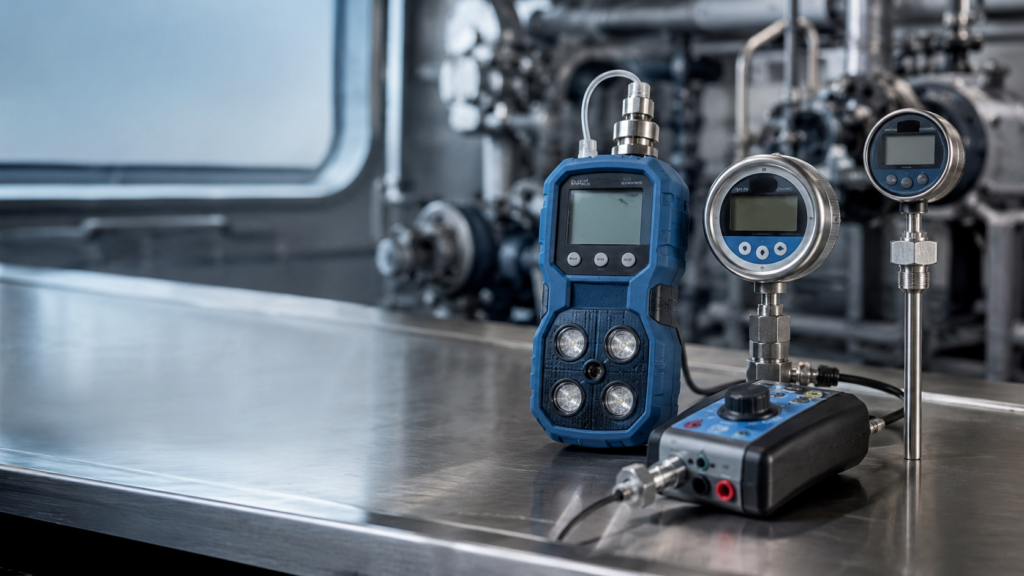
Marine Calibration Services in Singapore: Complete Guide to Ship Equipment Calibration & Compliance
Author: Marine Engineering Team, Alright Engineering Solutions Pte Ltd
Reviewed by: Technical Services Department, Alright Engineering Solutions Pte Ltd
Last updated: 20 July 2026
Singapore is one of the busiest transshipment ports in the world, which also makes it one of the most important hubs for marine calibration services. Every vessel calling at the port — from tankers and bulk carriers to offshore support vessels — carries dozens of safety-critical instruments that must be inspected, tested, and calibrated on a regular schedule to remain seaworthy and compliant with international regulations.
This guide explains what marine calibration actually involves, which shipboard equipment requires it, the standards that govern it, and what to look for when choosing a calibration partner in Singapore.
Why Marine Equipment Calibration Matters
Calibration is the process of testing an instrument against a known, traceable reference standard and adjusting it so its readings stay accurate over time. On board a vessel, that accuracy is not a formality — it directly affects crew safety, environmental compliance, and cargo integrity.
A gas detector that drifts out of calibration can fail to warn a crew of a toxic or explosive atmosphere in an enclosed space. An Oily Water Separator (OWS) or Oil Discharge Monitoring Equipment (ODME) that reads incorrectly can result in a MARPOL violation and heavy Port State Control (PSC) penalties. A pressure gauge that is out of tolerance can mask a developing fault in machinery long before it becomes a costly breakdown. Routine, documented calibration is what keeps these risks in check — and what keeps a vessel’s certificates valid during class surveys and PSC inspections.
Why Singapore Is a Strategic Hub for Marine Calibration
Singapore’s position on major East-West shipping lanes means vessels can schedule calibration and certification work during a routine port call rather than diverting to a dedicated repair yard. A few reasons Singapore has become a preferred location for marine calibration and marine engineering services:
- High vessel traffic — one of the world’s busiest ports, giving operators easy access to service providers during scheduled calls.
- Established class society presence — major classification societies and flag state surveyors are based in Singapore, simplifying certificate renewal.
- Skilled technical workforce — a concentration of licensed marine engineers and calibration technicians experienced with a wide range of manufacturers and equipment types.
- Fast turnaround windows — providers based near the anchorage and terminals can complete inspection, calibration, and re-certification within a single port stay.
Scope of Marine Calibration Services
A comprehensive marine calibration department typically covers annual inspection, testing, repair, and calibration across several categories of shipboard equipment. Below is the scope of equipment commonly covered under a full marine calibration service in Singapore.
Environmental & Pollution Prevention Equipment
- Oil Discharge Monitoring Equipment (ODME)
- Oily Water Separator (OWS) – 15ppm bilge alarm systems
- Main Engine Oil Mist Detection (OMD) systems
- Ballast Water Treatment System (BWTS) chlorine analysers
- BWTS chlorine and hydrogen fixed gas detectors
- CEMS – SO₂/CO₂ continuous emissions monitoring systems
Gas Detection & Safety Instruments
- Personal and portable single/multi-gas meters
- Fixed gas detection systems and fixed gas sampling systems
- IGS/IGG oxygen analyser systems
- N₂ generator oxygen analyser systems
- Vapour amidships oxygen and pressure monitors
- Alcohol testers
- Fire alarm systems
Pressure, Temperature & Process Instruments
- Pressure calibrators, gauges, switches, sensors, and transmitters
- Temperature calibrators, gauges, switches, sensors, and transmitters
- Multifunctional process calibrators
- Multimeters, megohmmeters, and mA loop simulators
- Torque wrenches
Tank & Level Monitoring Systems
- UTI meter gauges
- Tank level and draft gauging systems
- Tank pressure monitoring systems
- Tank temperature monitoring systems
- Tank high/high-high level alarm systems
Each item above is inspected against manufacturer specifications and international standards, with any deviation corrected and documented in a calibration certificate before the equipment is returned to service.
The Marine Calibration Process — Step by Step
A structured calibration job on board generally follows this sequence:
- Pre-inspection and scope confirmation — the technician reviews the vessel’s equipment list, previous calibration certificates, and any outstanding PSC or class deficiencies.
- Functional testing — each instrument is tested under real operating conditions to confirm it responds correctly before adjustment begins.
- Calibration against certified reference standards — readings are compared to traceable reference gases, pressure, or temperature sources.
- Adjustment and repair — any instrument outside tolerance is adjusted, repaired, or flagged for replacement.
- Re-verification — the instrument is re-tested to confirm it now reads within the acceptable tolerance band.
- Certification and documentation — a calibration certificate is issued for each instrument, which the vessel retains for class surveys and PSC inspections.
Standards & Compliance: IMO, SOLAS, MARPOL
Marine calibration work in Singapore is carried out against the framework set by the International Maritime Organization (IMO), and specifically against the requirements of:
- SOLAS (Safety of Life at Sea) — governing fire detection, life-saving appliances, and safety equipment readiness.
- MARPOL — governing pollution-prevention equipment such as ODME and OWS 15ppm systems.
- Classification society rules, which set the calibration intervals and documentation requirements verified during annual and intermediate surveys.
Equipment that is calibrated and certified against these frameworks reduces the risk of PSC detentions and keeps a vessel’s statutory certificates valid.
Why Choose Alright Engineering Solutions for Marine Calibration in Singapore
Alright Engineering Solutions Pte Ltd is headquartered in Singapore, with a service network extending across Malaysia, Indonesia, Bangladesh, India, China, Hong Kong, Dubai, Saudi Arabia, Thailand, Vietnam, Egypt, the UK, and Australia. A few reasons ship owners, managers, and operators choose our marine calibration department:
- In-house, direct workforce — our calibration and installation teams are our own Licensed Electrical Workers (LEWs) and technicians, not subcontractors. This means greater accountability, consistent workmanship, and faster turnaround.
- Full calibration scope under one roof — from ODME and OWS 15ppm to gas detectors, UTI meters, pressure and temperature instruments, oxygen analysers, and BWTS chlorine analysers, all annual inspection, service, repair, and calibration work is handled by a single technical team.
- IMO, SOLAS & MARPOL-aligned service delivery — every job is carried out to meet stringent regulatory requirements, supporting your vessel’s class and flag state compliance.
- Certified fire-fighting service station — in addition to instrument calibration, our fire-fighting service station holds class approvals authorizing inspection, servicing, and certification of fire extinguishers, SCBA, EEBD, and fixed fire-fighting systems.
- Responsive technical support — our marketing and technical teams respond to inquiries within one working day, helping minimize a vessel’s time in port.
For the complete list of departments — including navigation and bridge equipment, marine automation and control systems, hydraulic and mechanical repair, and ship provisions supply — see our full services page.
Frequently Asked Questions
How often should marine instruments be calibrated? Most shipboard measuring and safety instruments require annual calibration, though the exact interval depends on the equipment type, manufacturer recommendation, and classification society requirements. Some gas detection and pollution-prevention equipment may need more frequent checks based on usage.
Can calibration be completed during a port call in Singapore? Yes. Because of Singapore’s port traffic and the concentration of technical service providers, most calibration and certification work — including ODME, OWS 15ppm, gas detectors, and pressure/temperature instruments — can be completed within a scheduled port stay.
What happens if an instrument fails calibration? The instrument is either adjusted and re-verified within tolerance, repaired, or recommended for replacement if it can no longer meet the required accuracy. A report documenting the finding and the corrective action is provided to the vessel.
Does calibration cover both portable and fixed equipment? Yes. A full marine calibration scope covers both portable instruments — such as personal gas meters and UTI gauges — and fixed shipboard systems, such as fixed gas detection, tank monitoring, and fire alarm systems.
Is calibration the same as repair? Not exactly. Calibration verifies and corrects the accuracy of an instrument’s readings. Repair addresses a mechanical or electrical fault. In practice, a calibration visit often includes minor repairs where needed so the instrument can be returned to service within tolerance.
Get a Marine Calibration Quote in Singapore
If your vessel is scheduled to call at Singapore and requires annual inspection, testing, repair, or calibration of gas detectors, ODME, OWS 15ppm systems, pressure and temperature instruments, or tank monitoring equipment, Alright Engineering Solutions Pte Ltd can arrange service during your port stay.
- Phone: +65 8952 0394
- Email: sales@alrightes.com / service@alrightes.com
- Address: 3791 Jalan Bukit Merah, #06-01 E-Centre @ Redhill, Singapore 159471
- Request a quote: Contact Us