
 Cart (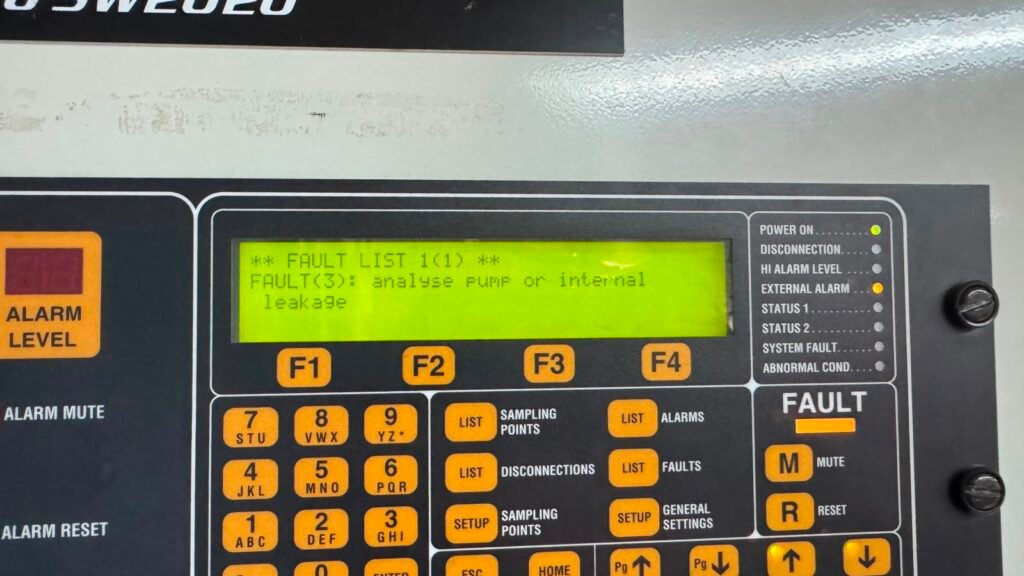
Troubleshooting a Consilium SW2020 Fixed Gas Detection System — Analyser Pump Internal Leakage Alarm
A Consilium SW2020 fixed gas detection system aboard a vessel calling at Singapore began triggering a recurring analyser pump / internal leakage alarm on its control panel. Our engineering team was called in to diagnose the fault, identify the root cause, and restore the system to full operational status — without delaying the vessel’s schedule.
Here’s a walkthrough of how the fault was traced and resolved.
The Fault
The vessel’s crew reported the system repeatedly flagging Fault (3): analyse pump or internal leakage on the control panel, with the external alarm indicator active. On a fixed gas detection system, this class of fault typically points to a pressure or flow problem somewhere in the sample line between the sampling point and the P/R (pump/reference) analyser — but the exact location has to be traced systematically, point by point.
Diagnosing the Root Cause
1. Confirmed the symptom at the pump. The P/R analyser pump was unable to hold sufficient pressure. After running for a short period, the system would shut itself down as a protective response to the perceived leak — consistent with a suction-side pressure loss rather than a sensor fault.
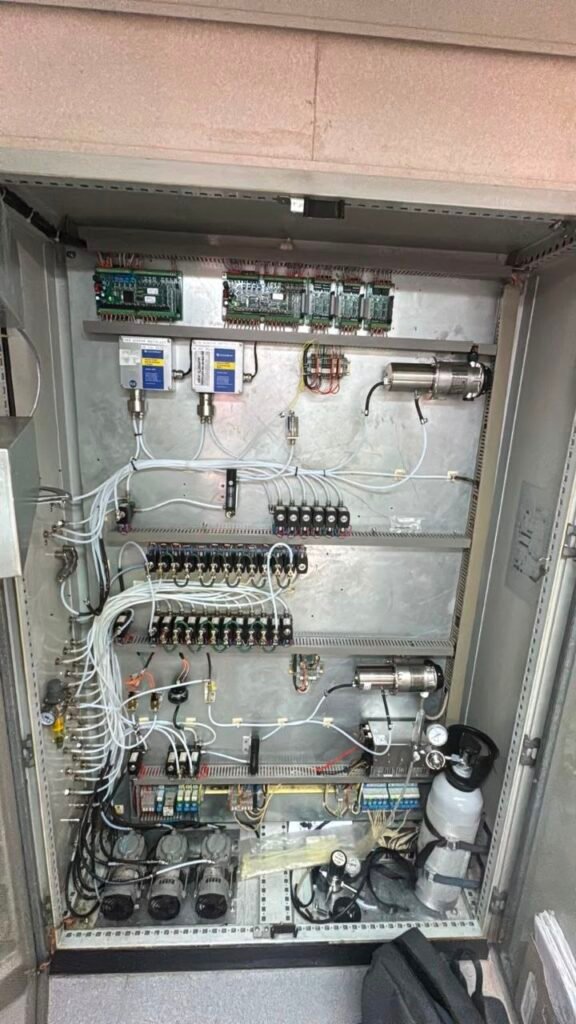
2. Traced the sample line from pump to suction valve. Working back along the tubing from the pump toward the suction valve, the fitting and valve were inspected closely.
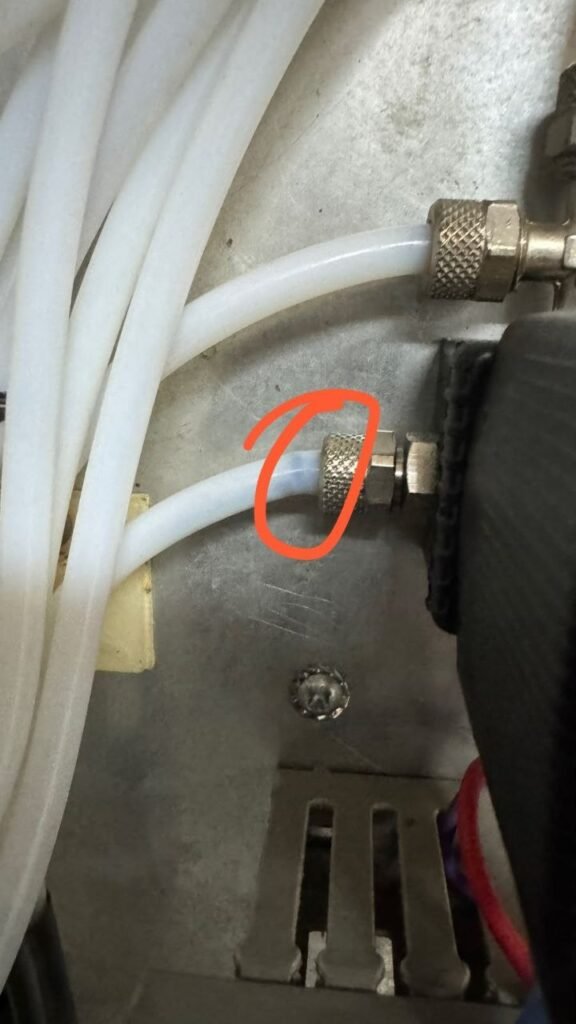
3. Found the cause — oil ingress in the tube and valve. A build-up of oil contamination inside the tubing and valve was restricting and disrupting the sample flow, which was preventing the pump from holding stable suction pressure.
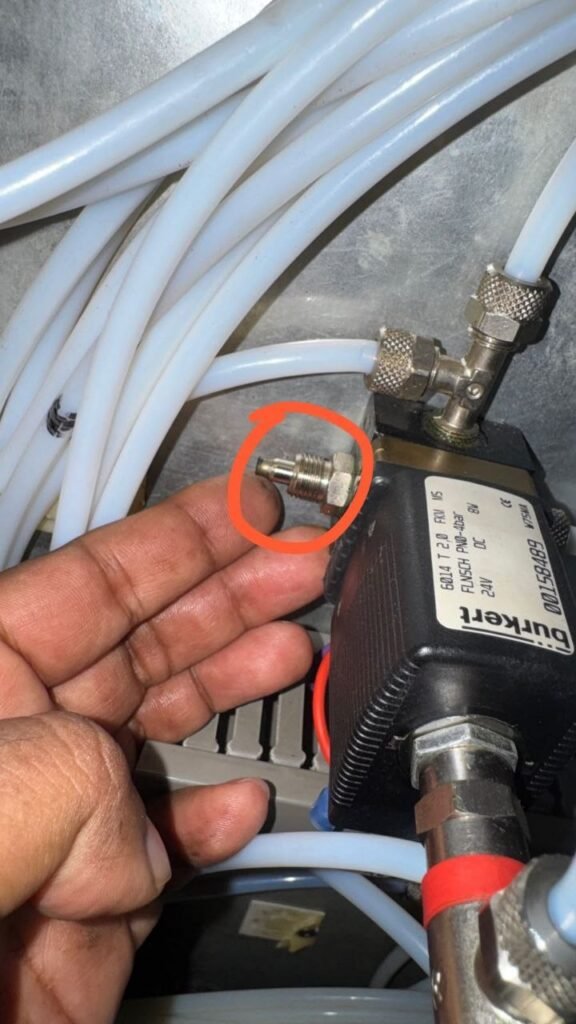
4. Cleaned the line and confirmed it was clear. The affected tube and valve were cleaned to remove the oil ingress, then dry air was blown through the line to verify the passage was fully clear before reassembly.
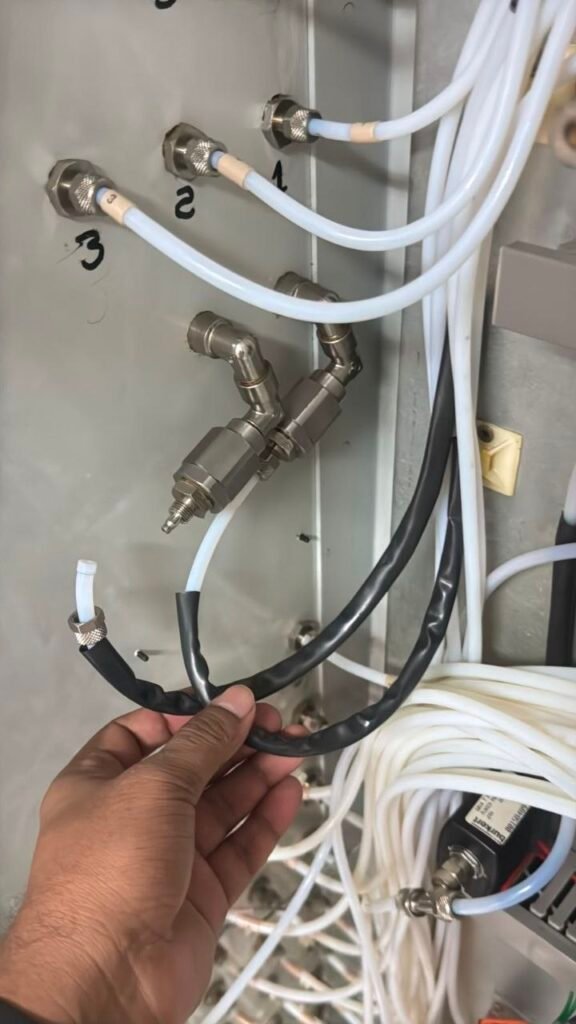
5. Checked the flow switch and sample manifold. Moving on to the flow-switch side of the circuit, a loose connection at the flow inlet tube was found on the sample point manifold (numbered ports 1–3). The fitting was tightened.
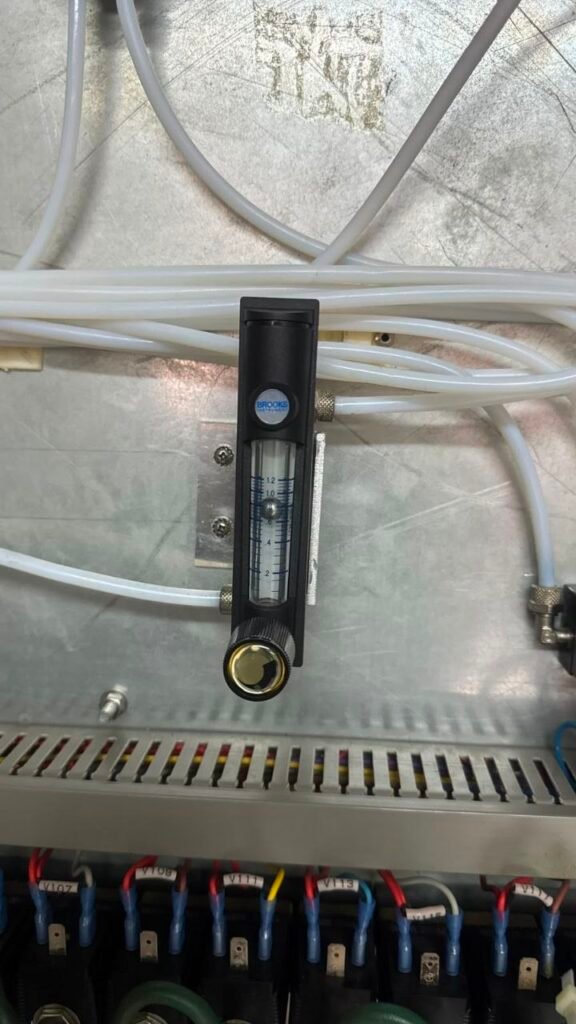
6. Verified flow rate at the rotameter. Flow was cross-checked on the panel’s Brooks flowmeter to confirm the sample flow rate was within the correct operating range after the fix.
7. Tested sensor suction outlet pressure — confirmed good.
8. Carried out a full valve service test from the control panel, cycling through the system’s sampling points and valves to confirm correct operation across the board.
Verifying the Fix
With the line cleaned and the fitting re-tightened, the system was left running for several hours under normal sampling conditions. Readings stayed stable throughout, with no recurrence of the internal leakage alarm.
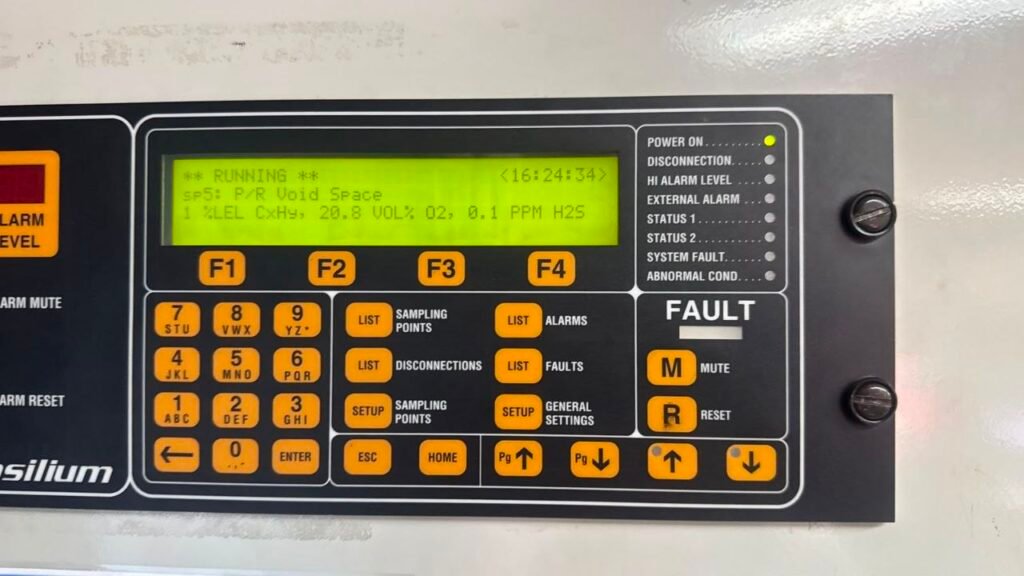
The Chief Officer was informed, and the system was handed over in good working condition, running fault-free.
Why a Fault Like This Matters
A fixed gas detection system is only as reliable as its sample path. On this vessel, the issue wasn’t a failed sensor or a control-board fault — it was oil contamination and a loose fitting, both of which are easy to miss without methodically working the sample line from pump to sensor point by point. Left undiagnosed, this kind of fault can lead to repeated nuisance shutdowns of a system that’s monitoring void spaces, pump rooms, and other spaces where gas detection is safety-critical — or worse, mask a genuine reading if the sample flow is compromised.
It’s also a reminder of why routine calibration and preventive servicing matter as much as breakdown repairs: a system that’s regularly checked is far less likely to reach the point of a full alarm-triggering shutdown at sea or at anchorage, when access to a qualified engineer isn’t immediately available.
About Alright Engineering Solutions
Alright Engineering Solutions Pte Ltd provides marine calibration and instrumentation services across Singapore’s ports, anchorages, and shipyards — covering fixed and portable gas detection systems, UTI meters, ODME, OWS 15ppm systems, and pressure/temperature instrumentation, backed by ISO 9001:2015, ISO 45001:2018, and BizSafe Star certification.
For fixed gas detection servicing, calibration, or fault diagnosis in Singapore, get in touch with our team.