Cart (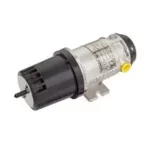
Overview
Gas monitoring on a tanker or in a large industrial facility with multiple enclosed spaces presents a specific engineering challenge that personal gas detectors and simple single-point fixed detectors cannot address adequately. A vessel with dozens of cargo tanks, pump rooms, cofferdams, pipe tunnels, and void spaces cannot be monitored by placing a dedicated fixed detector in every location — the number of instruments, the maintenance burden, and the cost would be prohibitive. Equally, relying on periodic manual sampling with portable detectors in high-risk enclosed spaces leaves significant exposure between monitoring events. The engineering solution developed for marine gas detection over decades of operational experience is the centralised gas sampling system: a single high-quality set of gas detectors serving multiple sampling points sequentially, with automatic scanning that ensures every monitored space is assessed on a regular cycle.
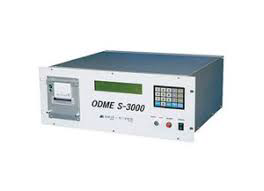
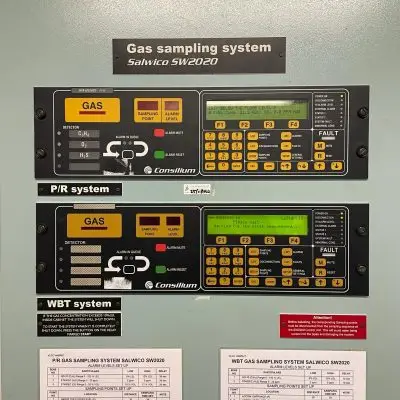
The Consilium Salwico SW2020 is an automatically scanning gas sampling system permanently installed for a number of sampling points. The gas detectors are common for all sampling points, allowing the use of high-quality gas detectors with good accuracy — and by its unique design it offers the possibility to connect any 4–20mA gas detector, up to four, in a system. A gas sample is drawn from each sampling point in sequence by the system’s vacuum pump, transported through the permanently installed pipe network to the analysing unit, measured by the gas detectors, and the result reported to the control unit with the sampling point identification. If a concentration exceeds the alarm threshold, the system identifies which sampling point is in alarm and activates the appropriate alarm outputs.
Manufactured by Consilium Safety — a Swedish marine and industrial safety systems company with over 40 years of experience supplying integrated fire, gas, and safety management systems to the global maritime sector — and supplied by Alright Engineering Solutions Pte Ltd, Singapore-based authorised distributors of Consilium Safety equipment serving the maritime and industrial sectors across the Asia-Pacific region, the SW2020 differentiates itself from competing marine gas sampling systems through its open 4–20mA gas detector interface: unlike proprietary systems that lock the user into a single manufacturer’s sensor technology, the SW2020 accepts any standard 4–20mA gas detector, including the GD10 infrared detector — giving operators access to the most appropriate sensor technology for each gas type being monitored, including IR, electrochemical, and catalytic options within the same system framework.
Key Features
1. Automatic Sequential Scanning — All Sampling Points on a Continuous Cycle
The SW2020 operates as a scanning system, automatically cycling through each configured sampling point in sequence, drawing a gas sample from each location in turn, measuring the concentration against alarm thresholds, and moving to the next point. The scanning cycle is continuous and automatic — the system requires no operator input to progress through its sampling programme during normal operation. Each sampling point is identified in the control unit display, so any alarm condition is presented with the specific location of the elevated concentration, not just a system-level alarm without location data. The scanning interval for each point depends on the number of sampling points configured and the pipe length from each sampling point to the analysing unit — longer pipe runs require longer transport times, which the system calculates and accommodates in the scan cycle timing.
2. Centralised High-Quality Gas Detection — Up to Four 4–20mA Detectors
The SW2020’s core design principle is that one or more high-quality gas detectors serve all monitoring locations, rather than lower-quality detectors being distributed throughout the installation. By concentrating the detection capability in the analysing unit — where the detectors are accessible, serviceable, and operating in a controlled environment — the system can use the best available sensor technology regardless of the physical conditions at the sampling point locations. The system accepts up to four 4–20mA gas detectors simultaneously, allowing multiple gas types to be measured at each sampling point during a single scan cycle. The GD10 infrared detector is documented as a compatible detector within the SW2020 system, providing the sensor poisoning immunity, oxygen independence, and factory calibration advantages of infrared detection at every monitoring point the system serves.
3. Complete Analysing Unit — All System Functions in a Single Assembly
The SW2020 analysing unit contains all functions for detection and transport of the test samples. Its components comprise gas detectors, solenoid valves, a sampling and transport pump, flame traps, a flow meter, remote I/O PCB-boards, a power supply unit, and terminals for power supply, alarm outputs connection to the control unit and repeater unit, as well as connections for all piping included in the system. All active components — the pump, solenoid valves, flame traps, and detectors — are housed within the analysing unit enclosure, accessible for maintenance at a single location rather than distributed across the monitored spaces. This centralised component architecture means scheduled maintenance visits — pump inspection, flame trap cleaning, detector calibration verification — are conducted at one accessible location, not across every monitoring point in the installation.
4. Flame Traps — Safety for Gas Sampling from Hazardous Spaces
Flame traps are installed in the SW2020 system’s sampling pipe connections to prevent any potential ignition within the analysing unit from propagating back through the sampling pipe to the monitored space. This is a critical safety requirement for systems that draw gas samples from spaces that may contain explosive concentrations — cargo pump rooms, cofferdams, and ballast tanks on tankers, or process enclosures in industrial applications. The flame traps are a fundamental design element of the SW2020’s safety architecture, not an optional accessory, and they are part of the analysing unit’s complete integrated assembly.
5. Solenoid Valve Sequential Switching — Precise Sample Point Selection
The SW2020 uses solenoid valves to direct the sampling pump’s suction to each sampling point in sequence, isolating all other sampling pipes during each individual measurement cycle to prevent cross-contamination between sampling points. The solenoid valve switching is controlled by the system’s PCB logic and is synchronised with the gas detector measurement timing to ensure each reading is taken from a stable, uncontaminated sample from the intended monitoring location. The solenoid valves are housed within the analysing unit assembly and are accessible for inspection and replacement during maintenance visits at the central unit.
6. Remote I/O PCB-Boards — Flexible System Integration
The SW2020 includes remote I/O PCB-boards within the analysing unit, providing the electrical interface for connection to the control unit, repeater unit (MN400), external alarm panels, and vessel or facility alarm management systems. Alarm outputs are configurable for connection to the ship’s Emergency Alarm System (EAS), alarm management system (AMS), or external alarm devices — ensuring gas alarm events from the SW2020 are integrated into the vessel’s central safety management infrastructure rather than operating as a standalone isolated system. The remote I/O architecture supports the integration requirements of modern vessel alarm management systems and industrial safety control platforms.
7. Permanently Installed Pipe System — Continuous Monitoring Without Confined Space Entry
The SW2020’s permanently installed pipe network connects each sampling point to the analysing unit, allowing the atmosphere in pump rooms, cofferdams, pipe tunnels, ballast tanks, and other enclosed spaces to be sampled continuously without anyone entering those spaces. This is operationally significant for spaces that are classified as confined spaces under the ship’s safety management system — the SW2020 enables atmospheric monitoring of these spaces as a matter of routine operation without triggering confined space entry procedures. The pipe system includes manual shut-off valves at each sampling point for maintenance isolation, and sampling pipe accessories for connection at each monitoring location.
8. Control Unit and Repeater Unit (MN400) Interface
The SW2020 system includes a control unit that displays the current sampling point, gas concentration readings, alarm status, and system operating condition for all monitored locations. A mini repeater unit (MN400) provides alarm status display and alarm acknowledgement capability at a remote location — typically the bridge or engine control room — allowing the officer on watch to monitor the system status and respond to alarms without physically going to the analysing unit location. The control unit stores system configuration, sampling point setup, alarm setpoints, and operating logs, and provides the interface for system commissioning, setup, and maintenance operations.
Technical Specifications
Model: Consilium Salwico SW2020 Gas Sampling System (Analysing Unit — Supplied by Alright Engineering Solutions Pte Ltd)
System Type: Automatically scanning sequential gas sampling system
Gas Detector Compatibility: Any standard 4–20mA gas detector; up to 4 detectors simultaneously; GD10 IR detector documented compatible
Sampling Method: Vacuum pump-assisted transport through permanently installed pipe network
Key Components (Analysing Unit): Gas detectors, solenoid valves, sampling and transport pump, flame traps, flow meter, remote I/O PCB-boards, power supply unit, alarm output terminals, pipe connections
Sampling Points: Multiple — system configurable; scan cycle time dependent on point count and pipe length
Monitoring Applications: Pump rooms, cofferdams, pipe tunnels, stools, ballast tanks, slop tanks, and other enclosed spaces
Control Interface: Control unit (scanning display, alarm management, configuration); Repeater Unit MN400 (remote bridge/ECR alarm display)
Alarm Outputs: Connected to control unit, repeater unit, external alarm panels; compatible with ship’s EAS/AMS systems
Power Supply: From emergency switchboard (per SOLAS requirements for gas detection systems)
Weight (Analysing Unit): Approximately 6.800 kg (Ref No.: SG-6151)
Display: Control unit LCD — sampling point identification, gas concentration, alarm status
Battery: Not applicable — mains powered; connected to emergency switchboard
IP Rating: Marine-grade enclosure — confirm specific IP classification with Alright Engineering Solutions
Wireless Connectivity: None (hardwired alarm outputs and control interfaces)
Data Logging: Via control unit — alarm events and system status logged; external connection to EMS/AMS for integrated logging
Safety Approvals: Consilium Safety products are certified to applicable marine class society requirements and IMO Resolution MSC.1/Circ.1401 (enclosed space entry) standards
Warm-Up Time: 30 minutes for full specification (consistent with GD10 IR detector warm-up); system performs self-test on start-up
Benefits
The fundamental operational benefit of the SW2020’s centralised scanning architecture is continuous, unattended atmospheric monitoring of multiple enclosed spaces that would otherwise require periodic manual entry for sampling. On a tanker, pump rooms and cofferdams are among the highest-risk enclosed spaces on the vessel — H2S from cargo residues, hydrocarbon vapours from cargo, and oxygen deficiency from inert gas blanketing are all credible atmospheric hazards that can develop rapidly and without visible warning. The SW2020 monitors these spaces continuously and automatically, alerting the crew to developing hazardous conditions before any entry is required, rather than discovering them during the entry procedure.
The use of high-quality centralised gas detectors shared across all sampling points provides a fundamentally better detection reliability than equivalent numbers of lower-quality distributed point detectors. A single well-maintained, regularly calibration-verified high-quality detector serving fifteen sampling points through the SW2020’s scanning system is more reliably accurate than fifteen individual lower-quality detectors, each subject to independent degradation, calibration drift, and maintenance gaps. For safety-critical applications like cargo pump room monitoring — where a missed alarm has potentially catastrophic consequences — this detection reliability argument is a meaningful technical justification for the centralised sampling system design.
The open 4–20mA detector interface allows the operator to select the most appropriate sensor technology for the gases being monitored — infrared detection for hydrocarbon vapours from cargo (using the GD10, which is immune to H2S poisoning from cargo residues), electrochemical detection for H2S and O2, or catalytic detection for specific applications. This technology flexibility means the SW2020 is not constrained to the sensor performance of a single proprietary detector — it can be equipped with the best available detector for the application, and that detector can be upgraded or changed without replacing the entire sampling system infrastructure.
Connection to the vessel’s emergency switchboard ensures the SW2020 continues to operate during a main power failure — exactly when gas detection is most critical during an emergency. Integration with the ship’s EAS/AMS through the remote I/O outputs means gas alarms from pump rooms and enclosed spaces are included in the vessel’s central alarm management, displayed at the bridge and ECR alongside fire and flooding alarms, and logged in the ship’s safety records — meeting the alarm system integration requirements of modern vessel alarm management standards.
Who It’s For
Ship Safety Officers and Chief Officers on Tankers and Chemical Carriers: If you are responsible for the gas safety of a tanker’s pump rooms, cofferdams, and enclosed cargo spaces, the SW2020 provides the continuous automated monitoring that manual periodic sampling cannot achieve — covering all monitored spaces on a scanning cycle that does not stop between watch handovers, during cargo operations, or at night. The alarm output to the bridge means the officer on watch is notified of any developing gas hazard in a monitored space automatically, without relying on someone at the analysing unit to observe a local alarm.
Marine Engineers and Vessel Superintendents Managing Gas Detection Systems: For marine engineers responsible for the maintenance and compliance of a vessel’s fixed gas detection system, the SW2020’s centralised analysing unit architecture means all critical maintenance activities — pump inspection, solenoid valve testing, flame trap cleaning, detector calibration verification — are conducted at a single accessible unit rather than requiring access to every monitored space on the vessel. The GD10 infrared detector’s factory calibration design, when fitted within the SW2020, further reduces the skilled maintenance resource required for calibration compliance across the system’s full operating life.
HSE Engineers and System Specifiers at Shipyards and Ship Management Companies: For naval architects, classification society surveyors, and ship management safety officers specifying gas detection systems for new builds or retrofits, the SW2020’s IMO compliance, class society approvals, and open 4–20mA detector interface provide a technically defensible specification that satisfies regulatory requirements while giving operators flexibility in detector selection. The system’s established track record in the Consilium Safety product range — a recognised brand in marine fire and gas safety systems — provides the procurement confidence that new or less established systems cannot offer.
Possible Applications
Tanker Pump Rooms — Primary Application: Continuous automated monitoring of cargo pump room atmospheres for hydrocarbon vapour (LEL) and H2S from crude oil, fuel oil, or chemical cargo residues — the most common and safety-critical application for the SW2020 on tankers, required under SOLAS and class society rules for tanker pump rooms.
Cofferdams and Void Spaces on Tankers: Monitoring of cofferdams between cargo tanks and other spaces for cargo vapour ingress — detecting leaks from cargo tank boundaries before concentrations in adjacent spaces develop to hazardous levels.
Pipe Tunnels and Duct Keels: Atmospheric monitoring in pipe tunnels running below cargo tanks, where cargo pipe leaks or seal failures may introduce hydrocarbon vapour or H2S into the enclosed tunnel space, which is routinely accessed by crew for maintenance.
Ballast Tanks and Slop Tanks: Monitoring of ballast tanks and slop tanks for hydrocarbon contamination and H2S — particularly relevant during ballast voyages when cargo residues may produce vapours in tanks not fully cleaned between voyages.
Offshore Platform Pump Rooms and Process Enclosures: Sequential gas sampling in offshore platform enclosed spaces — crude oil transfer pump rooms, process enclosures, and utility spaces — where continuous unattended monitoring replaces manual sampling rounds that would otherwise require regular confined space entry procedures.
Refineries and Petrochemical Plants — Multi-Point Area Monitoring: Industrial application of the SW2020’s scanning sampling principle for monitoring multiple process enclosures, equipment rooms, and confined spaces within a refinery or chemical plant from a centralised analysing unit — reducing the number of individual fixed detectors required across a large installation.
Food Industry and Silo Storage: Monitoring of enclosed silo spaces, storage rooms, and process enclosures for gas accumulation — H2S from grain decomposition, CO2 from fermentation, or combustible vapours from food processing operations — using the SW2020’s sequential sampling approach to cover multiple locations from a single analysing unit.
Wastewater Treatment Plants and Industrial Facilities: Sequential sampling from pump station wet wells, digester buildings, and enclosed process structures — allowing H2S, methane, and O2 monitoring across multiple confined space access points from a centralised unit, supporting the continuous monitoring requirements of facilities with formal confined space management programmes.
Trust and Certifications
IMO MSC.1/Circ.1401 Compliance — Enclosed Space Entry: The IMO circular MSC.1/Circ.1401 on the revised recommendations for entering enclosed spaces aboard ships establishes the requirements for atmospheric testing before and during enclosed space entry on vessels. The SW2020’s continuous automated monitoring of pump rooms and other enclosed spaces directly supports compliance with these requirements by maintaining a continuous monitoring record that supplements the manual pre-entry testing required before personnel enter monitored spaces.
SOLAS Chapter II-2 — Tanker Pump Room Gas Detection: SOLAS requires permanently installed gas detection equipment in tanker cargo pump rooms. The SW2020 satisfies this requirement through its permanently installed pipe network, automatic scanning operation, and alarm integration with the vessel’s emergency alarm system — meeting the intent and requirements of SOLAS Chapter II-2 for gas detection in these safety-critical spaces.
Marine Class Society Approvals: Consilium Safety products, including the Salwico range, are certified by major international classification societies including Lloyd’s Register, DNV, Bureau Veritas, and others for installation on vessels as required by classification rules. Class society type approval confirms the system has been independently assessed and approved for marine installation, meeting the structural, electrical, and functional requirements for shipboard safety equipment.
Emergency Switchboard Power Supply: The SW2020’s power supply connection to the vessel’s emergency switchboard ensures continuous operation through main power failure — a requirement for safety-critical systems under SOLAS emergency power provisions, confirming the system remains operational precisely when it is most needed during an emergency situation.
Consilium Safety — Salwico Marine Safety Systems Heritage: Consilium Safety’s Salwico brand has a heritage spanning more than 40 years in marine fire and gas detection, with an extensive installed base across tankers, chemical carriers, offshore platforms, and industrial facilities globally. The SW2020 is part of this established product line, with class society approvals, documented compliance history, and a global service and spare parts network appropriate for a system installed on ocean-going vessels operating across multiple port states and flag state jurisdictions.
Alright Engineering Solutions Pte Ltd — Authorised Distributor: Alright Engineering Solutions is a Singapore-based engineering solutions company serving the maritime and industrial sectors across the Asia-Pacific region. As an authorised distributor of Consilium Safety products including the Salwico SW2020, Alright Engineering Solutions provides full product support including supply, technical consultation, class society documentation assistance, installation guidance, and after-sales service. Full product portfolio available through alrightes.com.
Accessories and Variants
GD10 Infrared Gas Detector (for integration within SW2020): The GD10 IR detector is a documented compatible detector for the SW2020 system, providing factory calibration, oxygen independence, and silicon/H2S poisoning immunity within the centralised analysing unit. Recommended for hydrocarbon (LEL) and methane monitoring channels in the SW2020 system — supplied by Alright Engineering Solutions as part of a complete SW2020 system package.
Repeater Unit MN400: Mini repeater unit providing remote alarm display and alarm acknowledgement capability at the bridge, ECR, or other watch-keeping location — essential for ensuring gas alarms from monitored spaces are visible to the officer on watch without requiring presence at the analysing unit location.
Flame Traps (System-Integrated): Flame traps are a standard built-in component of the SW2020 analysing unit assembly, providing safety isolation between the analysing unit and the monitored hazardous spaces. Replacement flame trap elements are available through Alright Engineering Solutions for scheduled maintenance.
Sampling Pipe Accessories and Sampling Points: Standard sampling point fittings, manual shut-off valves, and pipe accessories for the SW2020’s permanently installed pipe network — connecting each monitored space to the analysing unit through the vessel’s or facility’s structure. Available through Alright Engineering Solutions for new installations, extensions, and replacement.
Spare Parts Set SW2020: Complete Consilium-documented spare parts set for the SW2020 system — covering solenoid valves, pump components, flame trap elements, PCB-boards, and consumable items for planned maintenance across the system’s operational life. Recommended for vessels on international trading routes where spare parts availability at remote ports may be uncertain.
Test Gas Cylinders and Flow Regulators: Calibration verification test gas appropriate for the detector type installed within the SW2020 — methane, propane, H2S, or other gases depending on system configuration. Available through Alright Engineering Solutions with flow regulator accessories for sample flow housing attachment to the GD10 detector.
External Alarm Panel: Additional alarm display panel for connection to the SW2020’s alarm outputs — providing alarm indication in additional locations beyond the standard control unit and repeater unit positions.
Ready to Specify the Salwico SW2020 for Your Vessel or Facility?
Whether you are equipping a new tanker build with SOLAS-compliant pump room gas detection, retrofitting an improved gas sampling system onto an existing vessel, or specifying a centralised multi-point sampling solution for an industrial facility with multiple enclosed monitoring locations, the SW2020 provides the scanning architecture, open detector interface, and marine-grade engineering that permanently installed gas sampling systems require.
To request a formal quotation, discuss system configuration including detector selection, sampling point count, and pipe network design, or get technical advice on class society approval requirements and integration with your vessel’s existing alarm management system, contact the Alright Engineering Solutions team directly. We supply the complete SW2020 system — analysing unit, control unit, repeater unit, detector selection, sampling pipe accessories, and spare parts — and can support the full specification and procurement process from initial system design through to installation, commissioning, and ongoing maintenance support.