Cart (
Overview
Catalytic bead (pellistor) sensors have been the default technology for fixed combustible gas detection for decades. They work reliably within their design parameters — but those parameters carry real limitations. Catalytic sensors require oxygen to function, meaning they fail in inert gas atmospheres without signalling a fault. They can be permanently poisoned by silicon vapours, H2S at high concentrations, lead compounds, and other contaminants commonly present in industrial environments. They saturate and give false low readings at concentrations above the LEL, and they require periodic calibration with certified reference gas to remain accurate. In safety-critical installations where a detector failing silently or going out of calibration between maintenance visits represents an unacceptable risk, these limitations matter.
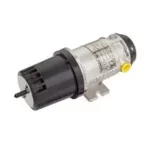
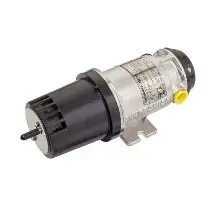
The GD10 infrared gas detector eliminates each of these failure modes. Based on non-dispersive infrared (NDIR) optical sensing with a silicon-based solid-state infrared source, the GD10 detects combustible gases through the infrared absorption characteristics of carbon-hydrogen bonds — a physical property that requires no chemical reaction, no oxygen dependency, and produces no consumable components in the measurement pathway. The result is a detector that functions in inert gas atmospheres, cannot be poisoned by silicon vapours or H2S, has no saturation effects at high concentrations, performs a continuous self-test that reports dirty optics and faults to the signal output, and carries the longest combined detector and IR source warranty available in the fixed gas detection market.
Manufactured by Teledyne Gas and Flame Detection (formerly Simtronics, formerly part of 3M) — an established specialist in fixed gas and flame detection for offshore, petrochemical, and industrial applications — and supplied by Alright Engineering Solutions Pte Ltd, Singapore-based authorised distributors of fixed gas detection equipment serving the maritime and industrial sectors across the Asia-Pacific region, the GD10 series stands apart from competing infrared point detectors through one verifiable differentiator: it offers the longest IR source warranty (15 years) and product warranty (5 years) on the market. For organisations specifying fixed gas detection with a long-term total cost of ownership perspective, warranty terms of this length provide a meaningful cost and reliability assurance that shorter-warranted alternatives cannot match.
Key Features
1. Silicon-Based Solid-State Infrared Source — No Moving Parts, Exceptional Service Life
The GD10 uses a silicon-based solid-state infrared source rather than the heated wire filament used in conventional NDIR detectors. Solid-state infrared sources have no moving parts, no filament to burn out, and no degradation mechanism comparable to the filament fatigue that limits the service life of conventional IR sources. The complete optomechanical design and construction is so stable that an ultra-fast speed of response can be achieved while providing unparalleled service life and detector stability, saving on maintenance and service costs. The 15-year IR source warranty is a direct consequence of this design stability — it is a warranty that Teledyne GFD can offer because the source design supports it, not as a marketing commitment unsupported by the product’s engineering.
2. No Oxygen Dependency — Functions in Inert Gas Atmospheres
Catalytic bead sensors require oxygen to complete the combustion reaction that generates their measurement signal — in an oxygen-depleted or inert gas atmosphere, a catalytic sensor simply stops responding and may fail to indicate the absence of oxygen as a fault. The GD10’s infrared measurement principle requires no oxygen — the detector measures infrared absorption by hydrocarbon molecules in the gas sample regardless of the oxygen content of the atmosphere. This makes the GD10 suitable for monitoring in inerting systems, nitrogen-blanketed storage tanks, CO2-protected equipment enclosures, and any other application where oxygen levels may be reduced as part of normal operations or emergency procedures — environments where a catalytic sensor would be unreliable or inoperative.
3. No Poisoning — Immune to Silicon Vapours, H2S, and Catalyst Contaminants
Catalytic bead sensors can be permanently poisoned by silicon-containing vapours (from silicones, sealants, and lubricants), H2S at high concentrations, lead compounds, and various other industrial contaminants — permanently reducing or destroying the sensor’s sensitivity without triggering a fault signal. This means a poisoned catalytic sensor may continue to appear to function normally while providing inaccurate or falsely low readings, creating the most dangerous failure mode possible in a safety-critical application. Since no chemical reaction occurs in the GD10’s infrared measurement process, silicon vapours and H2S have no effect on the detector or the measurement — immunity to poisoning is a fundamental property of the measurement physics, not a design mitigation.
4. Factory Calibration — No Field Calibration Required
The GD10P detectors have a fixed calibration from the factory. There are no means to change the calibration on-site — the calibration is set at the factory to the specified gas and concentration range and remains stable for the service life of the detector. Field visits consist of calibration verification tests — applying a certified test gas and confirming the reading is within specification — rather than calibration adjustment. This distinction has a practical consequence: calibration verification confirms the detector is working correctly; it does not require the same level of skill, equipment, or time as a calibration adjustment procedure. For organisations with large numbers of fixed detection points, the elimination of calibration adjustment visits reduces the skilled maintenance resource required to maintain the installation in a calibrated and documented state.
5. Continuous Self-Test with Dirty Optics Warning
The GD10 performs a continuous self-test function during normal operation, monitoring the integrity of the optical measurement path and reporting dirty optics and fault conditions through the 4–20mA signal output. When contamination begins to accumulate on the optical surfaces — dust, condensation, oil mist, or other airborne deposits — the dirty optics warning is generated before the contamination reaches a level that would affect measurement accuracy. This early warning allows scheduled optical cleaning to be planned as a preventive maintenance activity rather than an emergency intervention following a spurious alarm or measurement failure. The fault output via the 4–20mA signal (a current level outside the normal 4–20mA measurement range) provides automatic fault notification to the connected control system without additional discrete wiring.
6. HART Communication Interface — Remote Diagnostics and Configuration
The GD10 supports HART version 7 communication over the 4–20mA signal loop. HART (Highway Addressable Remote Transducer) is the industry-standard digital communication protocol for intelligent field instruments, allowing bidirectional digital communication with the detector using a HART communicator or HART-enabled asset management system alongside the standard 4–20mA analogue output — without additional wiring. Through the HART interface, maintenance engineers can remotely read detector diagnostics, gas concentration history, fault status, and identification data; perform fixed current output tests on the 4–20mA loop; and access calibration verification functions without visiting the detector location. For fixed detection points in hazardous, difficult-to-access, or remote locations, HART-based remote diagnostics significantly reduces the frequency of physical access required for routine maintenance and condition monitoring.
7. SIL 2 Certified — Suitable for Safety Instrumented Systems
The GD10 is SIL 2 certified, confirming it is suitable for use as a safety sensor in Safety Instrumented Systems (SIS) up to Safety Integrity Level 2. SIL certification under IEC 61511 (process industry) and IEC 61508 (general functional safety) is a requirement for gas detectors used in formally defined safety functions — emergency shutdown triggers, fire and gas alarm system inputs, and process interlocks where the gas detector’s reliability directly contributes to the system’s ability to achieve its defined safety function with the required probability. For organisations operating under process safety management frameworks, PSSR regulations, or COMAH requirements where safety function reliability must be quantified and documented, SIL 2 certification confirms the GD10’s reliability metrics have been independently assessed against the standard’s requirements.
8. Bridge Interface Available — Direct Retrofit to Existing Catalytic Systems
For retrofit applications where existing catalytic (pellistor) detectors are being replaced with the GD10, a bridge interface is available allowing the detector to be connected directly to catalytic systems using the existing cabling and control panel inputs — without rewiring or controller changes. This retrofit compatibility means the significant performance and reliability advantages of infrared detection can be introduced into an existing catalytic-based fixed gas detection installation without the capital cost and disruption of a full system replacement. The existing cable infrastructure, junction boxes, and control panel inputs are retained; only the detector heads at each monitoring point are replaced.
Technical Specifications
Model: GD10 Series Infrared Point Gas Detector (Teledyne Gas and Flame Detection — Supplied by Alright Engineering Solutions Pte Ltd)
Variants: GD10P (standard point detector) / GD10PE (extended — duct/pipe mounting, high-velocity airflow applications)
Detection Principle: Non-dispersive infrared (NDIR) — silicon-based solid-state infrared source
Target Gases: Methane (CH4), Ethylene (C2H4), Propane (C3H8), Acetylene, Butane, Carbon Dioxide (CO2), and other hydrocarbons with carbon-hydrogen bonds
Detection Range (Standard): 0–100% LEL (methane); other ranges available by gas type
GD10PE Range: 0–20% LEL methane (0–1% vol) or Ethylene 5,000 ppm
Response Time (Methane 0–100% LEL): T20 = 1s; T50 = 2.5s; T90 = 6s (standard); T90 = 1.6s (fast option)
Full Specification: Achieved after 30 minutes warm-up; 60-second start-up period
Output: 4–20mA current source (max. load impedance per datasheet); HART version 7
Fault/Fault signalling: Continuous self-test; dirty optics warning; fault output via 4–20mA signal; 0mA during start-up; 4mA = no gas detected in normal operation
Power Consumption: Approx. 3.5W
Power Supply: 24V DC
Housing: Weather-protected aluminium (GD10P) / Stainless steel 316L (GD10PE)
Weight: Approx. 2.9 kg (6.4 lbs)
Installation: Horizontal axis mounting; sensor vertical; weather protection cap standard
Calibration: Factory calibrated — no field calibration adjustment required; periodic calibration verification test only
Safety Approvals: ATEX: II 2G Ex d e IIC T5/T6 Gb; IECEx: Ex d e IIC T5/T6 Gb; CSA: C22.2 No 152-M1984 and ANSI/ISA 12.13.01-2000; INMETRO: Ex d e IIc T6 Gb; ABS; MED (Marine Equipment Directive); SIL 2 certified
Display: None on detector head — gas reading and fault via 4–20mA/HART output to connected control system
Battery: Not applicable — DC mains powered, continuous operation
Wireless Connectivity: HART version 7 over 4–20mA loop
Data Logging: Via connected control system/SCADA through 4–20mA/HART interface
Warranty: 5 years (detector); 15 years (IR source) — longest combined warranty on the market
Benefits
The fundamental operational benefit of the GD10 over a catalytic detector in the same monitoring location is measurement reliability that is independent of the environmental conditions that degrade catalytic sensor performance. In real industrial environments — offshore platforms, petrochemical processing areas, gas turbine enclosures, marine engine rooms — silicon vapours from sealants and lubricants, H2S from process gases, and inert atmosphere conditions during emergency inerting are all routine occurrences that a catalytic sensor cannot reliably operate through. The GD10 continues measuring correctly through all of these conditions without degradation, without requiring oxygen to function, and without risk of silent poisoning failure.
The factory calibration design changes the ongoing maintenance cost model for fixed gas detection. Instead of periodic calibration adjustment visits — which require skilled technicians, calibration gas cylinders, and time at each detector location — the GD10 requires only calibration verification tests, which are simpler, faster, and require less specialist skill to perform correctly. Over a five-year operational period across a large installation, the reduction in calibration maintenance visits translates into a meaningful cost saving that contributes to the GD10’s total cost of ownership calculation alongside its longer sensor and source service life.
The 5-year detector warranty and 15-year IR source warranty provide a cost certainty over the instrument’s operational life that short-warranted alternatives cannot offer. For facilities with capital project approval processes that require total cost of ownership modelling over a 10–15 year asset life, a detector with a 15-year source warranty and 5-year detector warranty provides a documented basis for projecting maintenance costs that substantially exceeds what a 1–2 year warranted catalytic or IR detector can support.
SIL 2 certification enables the GD10 to be used in formally defined safety functions within a Safety Instrumented System without additional reliability analysis or justification — the SIL 2 metrics are documented and certified. For process safety engineers working within IEC 61511 safety lifecycle requirements, this simplifies the safety function design and verification process by providing certified reliability data from the manufacturer rather than requiring field reliability data collection from the installed base.
Who It’s For
Process Safety Engineers Specifying Fixed Gas Detection for Offshore and Petrochemical Facilities: If you are specifying fixed combustible gas detection for a new offshore platform, an onshore petrochemical facility, or a gas processing installation where the combination of SIL requirements, inert gas operations, silicon contamination risk, and long-term reliability targets makes catalytic sensors inadequate, the GD10’s infrared measurement principle, SIL 2 certification, and 5-year warranty address all four requirements within a single detector specification. The HART interface integrates the GD10 into HART-enabled asset management systems for remote condition monitoring, and the bridge interface option enables staged replacement of existing catalytic installations without full system overhaul.
Marine and Offshore HSE Engineers Specifying Fixed Gas Detection for Vessel and Platform Applications: Consilium’s distribution of the GD10 reflects its established position in marine safety systems specifications. For marine engineers specifying combustible gas monitoring in engine rooms, gas turbine enclosures, and offshore module applications, the GD10’s MED (Marine Equipment Directive) approval, ABS certification, and ATEX/IECEx dual certification cover the certification requirements of the major marine classification societies and flag state regulations. The weather-protected aluminium housing (GD10P) and fully stainless steel 316L construction (GD10PE) provide the material options for sheltered below-deck and exposed topside or offshore installations respectively.
Facility Engineers Managing Long-Term Fixed Detection Maintenance Programmes: For industrial facilities managing fixed gas detection across large numbers of monitoring points — boiler plant rooms, turbine halls, compressor stations, gas processing areas — the GD10’s factory calibration, continuous self-diagnostics with dirty optics warning, and 5-year warranty transform the maintenance model for the detection system. Scheduled calibration visits become calibration verification events rather than adjustment procedures, the dirty optics warning allows planned preventive optical cleaning, and the HART interface enables remote condition monitoring between physical visits. The cumulative effect across a large installation is a meaningful reduction in the skilled maintenance resource required to maintain the system in its required state.
Possible Applications
Offshore Oil and Gas Platforms — Process Deck and Module Monitoring: Fixed hydrocarbon gas detection at compressor modules, wellhead areas, process equipment bays, and utility spaces on offshore platforms — where SIL requirements, salt-laden atmospheres, inert gas inerting systems, and the logistics cost of offshore maintenance make the GD10’s reliability, factory calibration, and long warranty particularly valuable.
Gas Turbine Enclosures and HVAC Air Intakes: The GD10PE variant is specifically designed for duct and pipe mounting in high-velocity airflow applications — combustion air inlets for gas turbines, ventilation air extract ducts, and HVAC system air intakes in living quarters and office buildings, where detection of combustible gas concentrations in the airflow before they reach the turbine combustion zone or the occupied space is the primary monitoring objective.
Marine Vessel Engine Rooms and Gas Turbine Ships: Fixed methane, propane, and hydrocarbon gas monitoring in marine engine rooms, gas turbine propulsion spaces, and LNG fuel system enclosures — where MED and class society certification requirements apply and where the engine room environment’s silicon contamination from lubricants and sealants makes catalytic sensor poisoning a realistic concern.
Boiler Plant Rooms and Industrial Heating Systems: Fixed natural gas (methane) and fuel gas monitoring in industrial boiler rooms, district heating plant, and large commercial building plant rooms — where continuous unattended operation, false alarm resistance, and minimum maintenance intervention are the primary operational requirements.
Petrochemical Processing and LNG Facilities: Fixed hydrocarbon and ethylene monitoring in refinery process areas, LNG storage and loading facilities, and ethylene production units — where SIL 2 certification supports formal safety function design under IEC 61511 requirements and where the range of detectable hydrocarbons (all molecules with carbon-hydrogen bonds) covers the complex mixture of gases present in process environments.
Inert Gas and Nitrogen-Blanketed Storage — Tank Farms and Chemical Storage: Fixed gas monitoring in nitrogen-blanketed storage tanks, inert gas-protected equipment enclosures, and inerting system areas where catalytic sensors cannot function without oxygen — the GD10’s oxygen-independence makes it the only appropriate fixed sensor technology for these applications.
Carbon Dioxide Detection — CO2-Enriched Environments: The GD10P is available calibrated for CO2 (0–5% vol) for fixed monitoring in CO2 storage areas, beverage carbonation facilities, fermentation areas, and CO2 fire suppression system enclosures — where infrared sensing is the appropriate technology for CO2 detection at the concentrations relevant to asphyxiation risk monitoring.
Pipeline Compression Stations and Metering Sites: Fixed methane and natural gas monitoring at above-ground pipeline infrastructure — compression stations, metering installations, pig traps, and pressure reduction stations — where outdoor installation, weather resistance, and long service life between maintenance visits are primary specification drivers.
Trust and Certifications
ATEX: II 2G Ex d e IIC T5/T6 Gb: The GD10 is ATEX certified to II 2G Ex d e IIC T5/T6 Gb — Category 2G equipment for Zone 1 hazardous areas with flameproof (Ex d) and increased safety (Ex e) protection concepts, covering Group IIC gases (the highest gas group, including hydrogen and acetylene). T5/T6 temperature class options cover the surface temperature requirements for different installation environments. Under the current ATEX Directive (2014/34/EU), this certification is required for fixed gas detectors installed in Zone 1 classified areas across EU member states and the UK.
IECEx: Ex d e IIC T5/T6 Gb: The GD10 is also IECEx certified to the same Ex d e IIC T5/T6 Gb standard — enabling deployment in IECEx-recognised international hazardous area installations across the Asia-Pacific region, Middle East, and global project environments without additional regional certification in most jurisdictions.
CSA — North American Certification: CSA certification to C22.2 No 152-M1984 and ANSI/ISA 12.13.01-2000 covers US and Canadian combustible gas detector standards. Class I, Division 2, Groups A, B, C, and D (US and Canada) certification enables deployment in North American classified hazardous locations in addition to ATEX/IECEx zones globally.
ABS and MED — Marine Certifications: American Bureau of Shipping (ABS) approval and Marine Equipment Directive (MED) type approval confirm the GD10’s suitability for installation on vessels classified by ABS and for use as marine safety equipment on vessels flying EU and UK flags — satisfying class society and flag state gas detection equipment requirements for marine applications.
INMETRO — Brazil: INMETRO certification covers hazardous area equipment requirements for deployment in Brazilian industrial installations — relevant for offshore and onshore upstream oil and gas applications in Brazil and other INMETRO-aligned markets.
SIL 2 Certified: Independent third-party SIL 2 certification confirms the GD10’s reliability metrics (PFD — Probability of Failure on Demand) have been assessed and certified to meet Safety Integrity Level 2 requirements under IEC 61508. SIL 2 certified detectors can be used in formally defined safety functions in Safety Instrumented Systems designed to IEC 61511 without additional reliability justification — a direct requirement for process safety applications in facilities operating under formal process safety management frameworks.
5-Year Detector Warranty and 15-Year IR Source Warranty: The longest combined detector and IR source warranty available in the fixed gas detection market. These warranty terms are backed by Teledyne GFD’s solid-state IR source design, which provides the engineering basis for the 15-year source warranty. For organisations procuring fixed gas detection with total cost of ownership modelling over a 10–15 year asset life, these warranty terms provide documented cost certainty that short-warranted alternatives cannot match.
Teledyne Gas and Flame Detection: Formerly Simtronics and 3M Simtronics, Teledyne GFD is a specialist gas and flame detection manufacturer with a global installed base across offshore oil and gas, marine, petrochemical, and power generation applications. The GD10 series is Teledyne GFD’s flagship infrared point detector, with an established multi-decade track record in the most demanding fixed gas detection applications globally.
Alright Engineering Solutions Pte Ltd — Authorised Distributor: Alright Engineering Solutions is a Singapore-based engineering solutions company serving the maritime and industrial sectors across the Asia-Pacific region. As an authorised distributor of fixed gas detection equipment including the GD10 series, Alright Engineering Solutions provides full product support including supply, technical consultation, installation guidance, and after-sales service. Full product portfolio available through alrightes.com.
Accessories and Variants
Sample Flow Housing (Part No. 499-810874): Press-fit accessory for functional calibration verification testing — attaches to the GD10P to deliver certified test gas across the optical surfaces during periodic calibration checks without removing the detector from its mounting position.
Weather Protection Cap: Standard weather protection accessory for outdoor and exposed installations — maintains optical surface cleanliness and protects against rain, condensation, and airborne contamination while maintaining gas access to the detector optics. Orientation of the weather protection relative to airflow direction affects response time.
Duct Mounting Bracket and Flange Kit (GD10P): Allows the GD10P to be positioned in the core airflow of wide ducts or pipes for ventilation duct monitoring applications — relevant for HVAC air intake monitoring and ventilation system combustible gas detection.
Bridge Interface — Catalytic System Retrofit: Signal conditioning interface allowing the GD10 to be connected directly to existing catalytic gas detection systems using existing cabling and control panel inputs — enables replacement of catalytic detector heads with the GD10’s infrared technology without rewiring or panel changes.
HART Communicator Compatibility: The GD10 supports HART version 7 — compatible with standard HART hand-held communicators and HART-enabled asset management systems for remote diagnostics, configuration reading, and loop testing without physical access to the detector terminal compartment.
Available Variants by Gas and Range:
GD10P — CH4 Methane: 0–100% LEL (standard) — the most common combustible gas detection configuration for industrial and offshore applications
GD10P — CH4 Methane: 0–5% vol (0–100% vol equivalent) — higher range for specific high-concentration applications
GD10P — C2H4 Ethylene: 0–100% LEL — petrochemical and polyethylene production applications
GD10P — C3H8 Propane, Acetylene, Butane: 0–100% LEL — LPG storage and distribution, industrial fuel gas monitoring
GD10P — CO2: 0–5% vol — CO2 monitoring for asphyxiation risk in storage, fermentation, and fire suppression applications
GD10PE (Extended): CH4 0–20% LEL (0–1% vol) or Ethylene 5,000 ppm — for high-velocity ventilation duct, turbine inlet, and HVAC air intake monitoring; stainless steel 316L construction; independently heated mirror and lens for high-temperature (up to 85°C) duct applications
Additional gas types and detection ranges available — contact Alright Engineering Solutions to specify the correct GD10 variant and configuration for your target gas and installation environment
Ready to Specify the GD10 for Your Fixed Gas Detection Installation?
Whether you are designing a new fixed gas detection system for an offshore platform or petrochemical facility, replacing legacy catalytic detectors with infrared technology using the bridge interface retrofit option, or specifying detectors for a Safety Instrumented System requiring SIL 2 certified sensors, the GD10 provides the infrared detection performance, certification coverage, and warranty commitment that demanding fixed gas detection applications require.
To request a formal quotation, discuss gas type and detection range selection, confirm certification requirements for your specific hazardous area classification, or get technical advice on the GD10P versus GD10PE variant for your installation environment, contact the Alright Engineering Solutions team directly. We support the full specification and procurement process — from initial gas hazard assessment and variant selection through to installation guidance, HART integration support, and ongoing calibration verification service.