Cart (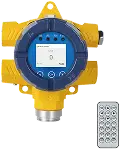
Overview
Fixed gas detection systems fail their purpose in one of two ways: they either alarm when they shouldn’t, or they don’t alarm when they should. Both failures erode trust in the system — and a detection system that operators have learned to distrust is worse than no system at all, because it creates the illusion of coverage without the substance. Behind most chronic false alarm and missed detection problems are three root causes: sensor technology that doesn’t suit the target gas, measurement resolution too coarse to distinguish meaningful concentration changes from background noise, and alarm systems that can’t be configured finely enough to match the actual risk thresholds that apply to the installation.
The K-G60 Fixed Gas Detector is a permanently installed, single-gas detection instrument that addresses all three root causes directly. It supports five sensor technology types — electrochemical, catalytic, semiconductor, infrared, and PID — covering every major fixed gas monitoring requirement in a single instrument platform. Its 24-bit ADC sampling provides measurement resolution that most fixed detectors don’t approach. And its 32-bit high-performance processor manages the signal processing, alarm logic, and data handling that underpins reliable, low-noise measurement from installation onwards.
The single concrete differentiator that sets the K-G60 apart from most fixed gas detectors in its category is the combination of PID sensor support with 1,000 alarm event records and VOC/VOCS detection capability in a wall-mounted industrial instrument rated for -40°C to 70°C continuous operation. For facilities that need fixed VOC monitoring in a certified, permanently installed format — rather than relying on periodic portable PID surveys — this capability in a fixed instrument is genuinely uncommon at this specification level.
Key Features
Five Sensor Technology Types — Electrochemical, Catalytic, Semiconductor, Infrared, PID
The K-G60 is compatible with five fundamentally different sensor detection technologies within the same instrument housing and installation footprint. Electrochemical sensors cover the widest range of toxic gases. Catalytic bead sensors are the standard for combustible LEL monitoring. Semiconductor sensors offer high sensitivity for certain gas types at lower cost. Infrared sensors provide long service life and stability for CO2, methane, and hydrocarbon detection without consuming the target gas. PID (photoionisation detector) sensors extend detection to volatile organic compounds (VOCs) that electrochemical and catalytic sensors cannot measure. The ability to specify any of these sensor types in the K-G60 housing means a single installation design covers the full range of fixed gas monitoring requirements without maintaining different instrument types for different sensor technologies.
VOC and VOCS Detection via PID Sensor
The K-G60’s PID sensor support enables fixed detection of volatile organic compounds — a monitoring requirement in pharmaceutical manufacturing, solvent handling, chemical processing, painting and coating facilities, and any environment where VOC exposure or VOC accumulation to flammable concentrations is a credible hazard. Fixed PID detection provides continuous atmospheric monitoring at the installation point throughout operational periods, replacing or supplementing the periodic portable PID surveys that are the typical alternative. For facilities where VOC concentrations vary with process cycles, ventilation performance, or seasonal temperature changes, continuous fixed monitoring captures the full exposure profile rather than the point-in-time snapshot of a survey.
32-Bit High-Performance Processor with 24-Bit ADC Sampling
The K-G60’s 32-bit processor and 24-bit analogue-to-digital converter represent the computational and measurement infrastructure behind its performance specifications. A 24-bit ADC provides measurement resolution of 1 part in 16 million — dramatically finer than the 12 or 16-bit ADCs typical of lower-specification fixed detectors. In practice, this resolves to a linear error of ≤±1% FS and a zero drift of ≤±2% FS/year — specifications that reflect what is actually achievable when high-resolution signal digitisation is combined with competent sensor technology. For installations where measurement accuracy is part of the safety case or occupational health compliance programme, documented accuracy specifications at this level provide meaningful assurance.
1,000 Alarm Event Records — Extended Data History
The K-G60 stores 1,000 alarm event records onboard — a data history capacity that covers an extended operational period of alarm events without requiring regular data download to prevent record overwriting. For fixed detection systems where alarm event records are used for incident investigation, regulatory reporting, or safety management system audits, 1,000 records provides a substantial historical data trail directly on the instrument. This is particularly relevant for installations in remote or infrequently accessed locations where regular data management visits are not practical.
Double Passive Contact Relay Output — Dual-Threshold Control Integration
Two independent relay outputs with free contact rated at 30V DC 2A / 125V AC 1A allow the K-G60 to trigger two separate control or alarm actions at different concentration thresholds. Practical applications include: first relay activating a local warning alarm at the lower action level; second relay triggering a ventilation system, process interlock, or building management system response at the higher alarm level. The double relay output architecture supports a two-stage response protocol directly from the detector itself, without requiring external logic in the connected control system to implement the second stage.
Extended Operating Temperature Range — -40°C to 70°C
The K-G60 operates across a working temperature range of -40°C to 70°C — a notably wide span that extends well beyond the -20°C to 50°C range of many comparable fixed detectors. The -40°C lower limit makes the K-G60 appropriate for outdoor installations in cold climates, refrigerated storage environments, and LNG or cryogenic facilities where ambient temperatures regularly drop below -20°C. The 70°C upper limit covers process areas with elevated ambient temperatures near heat sources, boilers, and outdoor installations in hot climates. For procurement teams specifying fixed detection for environments at either temperature extreme, the K-G60’s operating range removes a common specification barrier.
Multiple Gas Unit Switching — ppm, mg/m³, %LEL, %VOL
The K-G60 supports display unit switching across multiple measurement unit formats, covering the full range of units used in different regulatory and operational contexts: ppm for toxic gas occupational exposure monitoring, mg/m³ for occupational hygiene compliance, %LEL for combustible gas monitoring, and %VOL for oxygen and high-concentration gas monitoring. This flexibility means a single instrument can be configured to display readings in the unit most relevant to the applicable regulatory standard or site procedure, without requiring post-measurement unit conversion.
Four-Mode Alarm System (Sound, Light, Vibration, Display)
The K-G60 activates four simultaneous alarm channels — audible alarm, LED visual indicator, vibration alert, and on-screen display notification — when a gas threshold is crossed. For a fixed detector installed in an active industrial environment, the combination of local audible and visual alarms ensures workers in the monitored area receive an immediate, unambiguous warning, while the relay outputs communicate the alarm event to the connected control or monitoring system simultaneously.
Technical Specifications
Model: K-G60
Detect Gas: Single gas (sensor-specific — please see appendix for available options)
Sensor Types Supported: Electrochemical, Catalytic, Semiconductor, Infrared, PID
Sampling Method: Natural diffusion
Installation: Wall-mounted / pipeline type
Processor: 32-bit high-performance
ADC Sampling: 24-bit
Accuracy: ≤±5% FS
Linear Error: ≤±1% FS
Zero Drift: ≤±2% FS/year
Power Supply: DC 24V ± 3.6V
Working Temperature: -40°C to 70°C
Humidity: ≤95% RH (no dew)
Working Pressure: 86–106 kPa
Dimensions: 200 × 182 × 90mm
Weight: Approximately 1600g
Display: LCD with four-mode alarm (Sound, Light, Vibration, Display)
Response Time: T90 ≤30 seconds
Resume Time: ≤30 seconds
Relay Output: Two relays, free contact: 30V DC 2A / 125V AC 1A
Data Logging: 1,000 alarm event records (onboard)
Using Cables: >3×1.5mm² shielded wire
Connecting Thread: M20×1.5 (internal thread), G1/2 (inner tube thread)
Working Mode: Long-term continuous
IP Rating: Not stated on listing — confirm with supplier
Safety Approvals: Not stated on listing — confirm with supplier for hazardous area certification
Language: Chinese / English (switchable)
Benefits
For safety system designers and facilities engineers, the K-G60’s five-sensor-type compatibility removes the most common fixed detection system design constraint: having to specify different instrument types for different sensor technologies across the same installation. A single instrument platform, a single wiring standard, a single installation design, and a single maintenance protocol — regardless of whether the monitored gas requires electrochemical, catalytic, infrared, or PID detection. That simplification scales meaningfully across multi-point installations where each monitoring location may have a different gas hazard.
For HSE managers and occupational health teams, the K-G60’s 24-bit ADC measurement resolution and documented accuracy specifications — ≤±1% FS linear error, ≤±2% FS/year zero drift — provide a quantified basis for the measurement accuracy claims in the safety case or occupational health monitoring programme. Instruments with undocumented or poor accuracy specifications create ambiguity about whether a reading below the alarm threshold genuinely reflects a safe concentration or a measurement error. The K-G60’s documented accuracy removes that ambiguity.
For procurement teams assessing fixed VOC detectors or multi-sensor-type fixed gas monitoring platforms, the K-G60’s PID sensor support and VOC/VOCS detection capability in a fixed instrument format — rather than a portable survey instrument — changes the monitoring model for VOC-hazard environments from periodic surveys to continuous fixed monitoring. That shift typically improves both occupational health protection (by detecting VOC concentration peaks that surveys miss) and compliance documentation quality (continuous records vs. point-in-time survey reports).
Who It’s For
Safety System Designer — Multi-Gas-Type Industrial Installation
You’re designing a fixed gas detection system for a facility with multiple gas hazard types across different process areas — toxic gas in one zone, combustible gas in another, VOC monitoring in a solvent-handling area, and CO2 monitoring in a confined utility space. You need a single instrument platform that covers all these monitoring requirements through sensor selection rather than requiring different instrument types, wiring standards, and spare parts inventories for each sensor technology. The K-G60’s five-sensor-type compatibility and common installation architecture directly address this system design requirement.
HSE Manager — Pharmaceutical or Chemical Manufacturing Facility
Your facility handles a combination of toxic process gases, flammable solvents generating VOC atmospheres, and process chemicals requiring continuous fixed monitoring as part of your COSHH compliance and process safety management programme. You need fixed detection instruments with documented accuracy specifications that can withstand scrutiny in a regulatory inspection or safety audit, and you need VOC detection in a fixed format rather than relying on periodic PID surveys that miss concentration peaks between survey visits. The K-G60’s PID sensor support, 24-bit ADC accuracy, and 1,000-record data history address all three of these requirements.
Facilities Maintenance Manager — Large-Scale Fixed Detection System
You’re responsible for the ongoing maintenance of a fixed gas detection system with multiple monitoring points across a large industrial facility. You deal with false alarm investigations, calibration scheduling, and the operational disruption that detection system downtime causes. You need instruments with low zero drift (≤±2% FS/year) that hold their calibration between service visits, and an alarm record history long enough to reconstruct the sequence of events around an alarm without requiring manual log keeping. The K-G60’s documented drift specification and 1,000-record onboard history directly reduce your two most persistent maintenance management burdens.
Possible Applications
Pharmaceutical Manufacturing — VOC and Solvent Vapour Monitoring — Pharmaceutical production facilities using organic solvents in synthesis, extraction, or formulation processes require fixed VOC monitoring in production areas, solvent storage, and solvent recovery zones. The K-G60’s PID sensor support provides continuous fixed VOC detection that supplements or replaces periodic portable survey programmes.
Chemical Processing — Multi-Gas-Type Fixed Monitoring — Chemical production facilities with varied process gas hazards across different plant areas benefit from a single fixed detector platform that covers electrochemical, catalytic, and PID detection through sensor selection — simplifying system design, installation, and ongoing maintenance.
Petrochemical and Refinery Sites — Toxic and Combustible Gas Zones — Fixed detection across process areas on petrochemical sites requires monitoring of both combustible gas (LEL via catalytic sensor) and toxic gases (H2S, CO, NH3 via electrochemical sensor). The K-G60’s sensor flexibility covers both monitoring requirements within the same instrument specification.
Paint and Coating Manufacturing — Solvent Vapour Fixed Detection — Solvent-based coating manufacturing environments generate VOC atmospheres from solvent evaporation during mixing, application, and drying processes. Fixed PID detection via the K-G60 provides continuous concentration monitoring in production areas, mixing rooms, and spray booth environments.
Cold Storage and Refrigeration Facilities — Low-Temperature Fixed Detection — The K-G60’s -40°C lower operating temperature limit makes it appropriate for fixed gas detection in blast freezers, cold stores, and refrigerated warehouses where ammonia refrigerants require continuous monitoring at temperatures that exclude most standard fixed detectors.
LNG and Cryogenic Gas Facilities — LNG terminals, cryogenic gas storage, and liquid gas handling facilities involve both low ambient temperatures and methane/hydrocarbon monitoring requirements. The K-G60’s extended temperature range and infrared or catalytic sensor support covers the detection requirements of these environments.
Water Treatment and Chemical Dosing Areas — Fixed toxic gas monitoring for chlorine, ammonia, and other dosing chemicals in water treatment plant buildings requires electrochemical sensor fixed detectors with relay outputs capable of triggering ventilation or emergency isolation systems. The K-G60’s electrochemical sensor option and dual relay output address both the detection and control requirements.
Trust & Certifications
32-Bit Processor and 24-Bit ADC — Documented Measurement Performance
The K-G60’s 32-bit processor and 24-bit ADC are hardware specifications that directly underpin its documented accuracy figures: ≤±5% FS accuracy, ≤±1% FS linear error, and ≤±2% FS/year zero drift. These documented performance specifications are important for fixed gas detection systems used in safety cases and occupational health compliance programmes, where the instrument’s measurement performance is a formal input into the risk assessment or exposure monitoring methodology. Instruments without documented accuracy specifications cannot be formally relied upon in these applications.
Zero Drift ≤±2% FS/Year — Calibration Stability Assurance
A documented zero drift specification of ≤±2% FS per year provides a quantified basis for determining the maximum calibration interval that keeps the instrument within specification. For safety system operators who need to set calibration schedules that comply with both manufacturer recommendations and regulatory requirements, a documented drift rate provides the technical basis for that interval calculation — replacing the conservative default of “calibrate as frequently as possible” with a defensible, specification-based interval.
T90 Response Time ≤30 Seconds
The T90 ≤30 second response time is among the faster fixed detector response specifications in this instrument category, and is consistent with the performance requirement for fixed gas detectors used in safety instrumented systems where rapid detection is necessary for the safety function to operate within its required response time. A matching resume time of ≤30 seconds after alarm clearance minimises the operational disruption associated with alarm events that trigger ventilation or process interlock responses.
Note on Hazardous Area Certification
The K-G60 product listing does not state a specific ATEX, IECEx, or equivalent hazardous area certification. Buyers intending to install the K-G60 in classified hazardous areas (Zone 0, 1, or 2 for gas; Zone 20, 21, or 22 for dust) must confirm the applicable certification with the supplier before procurement to ensure the instrument meets the site’s installation requirements. For non-classified installations — general industrial areas, laboratories, or commercial premises — hazardous area certification may not be a prerequisite; confirm with your site’s electrical area classification drawings.
Accessories & Variants
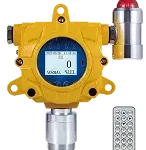
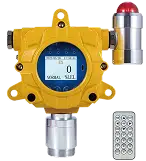
Remote Control Unit (shown in product image)
Compatible remote control for parameter adjustment and configuration without close approach to the installed instrument. Particularly valuable for instruments installed at height, in restricted access locations, or in process areas where repeated close approach for parameter changes requires PPE or access procedures.
Audible/Visual Alarm Beacon (shown in product image)
External alarm beacon providing extended-range visual and audible alarm indication for large process areas or outdoor installations where the detector’s onboard alarm may not be perceivable across the full monitored zone. The beacon connects to the K-G60’s relay output for direct alarm-triggered activation.
Shielded Signal Cable (3×1.5mm² minimum)
The K-G60 installation requires shielded cable for signal integrity in electrically noisy industrial environments. Specify and source cable to the ≥3×1.5mm² shielded requirement in accordance with the site’s hazardous area wiring standard where applicable.
Available Sensor Variants
Electrochemical — Toxic gas detection: H2S, CO, NH3, Cl2, SO2, NO2, O2, HCN, and other toxic gases (confirm available options with supplier)
Catalytic Bead — Combustible gas LEL detection: methane, propane, hydrogen, and other flammable gases
Semiconductor — Selected gas types at high sensitivity; confirm target gas availability with supplier
Infrared (NDIR) — CO2, methane, hydrocarbons; long sensor life, no oxygen dependency
PID — VOC/VOCS detection; confirm detection range and target compound suitability with supplier
Contact our technical team to confirm sensor availability for your specific target gas, detection range requirements, and installation environment before finalising your specification.
Request a Quote or Technical Consultation
If you’re specifying fixed gas detection for a multi-gas-type installation, a VOC monitoring programme, a cold-temperature environment, or a system where measurement accuracy documentation is a formal requirement in your safety case or compliance programme, the K-G60 is worth a detailed technical assessment.
Speak with our team to discuss sensor type selection for your target gas, confirm detection range and accuracy requirements for your application, clarify hazardous area certification applicability for your installation zone, or request pricing for individual units or multi-point system quantities. We work with safety system designers, HSE managers, occupational hygienists, and facilities procurement teams across industrial, pharmaceutical, and process industry applications.