Cart (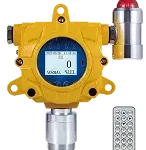
Overview
Individual fixed gas detectors do exactly what they’re designed to do — monitor gas concentration at a single point and trigger a local alarm when a threshold is crossed. What they don’t do, by themselves, is give a safety manager or control room operator a coherent picture of what’s happening across an entire facility. When you have multiple detection points across a plant, a building, or a process area, you need a central controller that receives signals from all of them, displays the status of each point clearly, manages alarm escalation across two threshold levels, and communicates with the broader site control and safety management infrastructure. Without that central layer, a fixed detection system is a collection of independent alarms rather than a coordinated safety system.
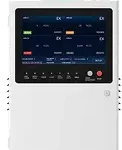
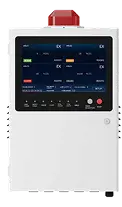
The BH-KZ103 Gas Controller is a wall-mounted gas detection control panel designed to sit at the centre of a multi-point fixed gas monitoring system. Its 10.1-inch high-definition touch screen displays real-time status across connected detection points, its RS485 digital communication with MODBUS protocol support connects it to SCADA systems, building management systems, and safety PLCs, and its four sets of relay contact outputs provide independent control actions for ventilation, isolation valves, audible alarms, and other automated safety responses.
What distinguishes the BH-KZ103 from simpler gas alarm panels in this category is the combination of a high-definition touch screen interface — providing a clear, operator-friendly display without the complexity of a dedicated SCADA terminal — with MODBUS RS485 digital communication that integrates the controller into a wider site monitoring and control architecture. For facilities that need both a standalone operator interface and digital integration with site-level systems, the BH-KZ103 provides both without requiring two separate pieces of equipment.
Key Features
10.1-Inch High-Definition Touch Screen
The BH-KZ103’s 10.1-inch touch screen provides an operator interface large enough to display multi-point gas detection status clearly and intuitively, with touch navigation that removes the need for dedicated keypads or rotary controls. For control room operators and safety managers monitoring multiple detection zones, a large clear display reduces interpretation time — the status of each connected detection point, current alarm states, and system health indicators are visible at a glance rather than requiring navigation through a menu structure. The touch interface simplifies configuration and alarm acknowledgement without requiring specialist training or familiarity with complex panel interfaces.
RS485 Digital Signal with MODBUS Protocol Support
The BH-KZ103 communicates via one-way RS485 digital signal using the MODBUS protocol — the most widely implemented communication standard in industrial automation, SCADA, building management systems, and safety PLCs. MODBUS RS485 support means the BH-KZ103 can be integrated into an existing site control infrastructure without requiring custom protocol conversion or proprietary gateways. Gas concentration data, alarm status, and system health information from the controller can be read by any MODBUS-compatible system on the RS485 bus, enabling gas detection data to be incorporated into site-level monitoring dashboards, historian databases, and safety management system records automatically.
Four Sets of Relay Contact Outputs
The BH-KZ103 provides four independent relay contact output sets, each assignable to different alarm conditions or detection zones. In a practical installation, these relay outputs can be configured to activate different automated responses at different alarm stages: one relay triggering a local audible alarm beacon, another activating a ventilation system, a third operating an emergency gas supply isolation valve, and a fourth signalling to a building management or fire alarm system. Four independent relay outputs give the system designer the control architecture to implement a multi-stage, differentiated response to gas alarm events without requiring external relay logic.
Two-Level Sound and Light Alarm (65–100 dB)
The BH-KZ103 implements a two-level alarm system — a lower-level warning alarm and a higher-level emergency alarm — with combined sound (65 dB to 100 dB within one metre) and light output for each level. Two-level alarming supports a tiered response protocol: the first alarm level prompts precautionary action (investigation, ventilation activation, personnel alert) while the second level triggers emergency response (evacuation, isolation, emergency services notification). This two-stage approach reduces the risk of over-response to normal alarm events while ensuring the emergency response is triggered automatically when concentrations reach the higher threshold.
DC 24V ±6V Output Voltage
The BH-KZ103 provides a DC 24V ±6V output voltage, supplying power to connected gas detection sensors and field instruments from the controller itself. This integrated power supply eliminates the need for separate 24V power supplies at each detection point, simplifying the installation design and reducing the component count of the overall detection system. The ±6V tolerance accommodates voltage drop across extended cable runs to remote detection points without requiring voltage regulation at each sensor location.
Two-Wire RS485 Digital Signal Output
The BH-KZ103 supports two-wire RS485 digital signal output alongside its relay outputs, providing a digital data transmission path to connected monitoring or control systems. Two-wire RS485 is the standard field bus wiring configuration for MODBUS industrial networks — it requires only two signal conductors between the controller and the connected system, reducing cabling costs and complexity for installations where the BH-KZ103 needs to communicate with SCADA, BMS, or DCS systems over longer distances.
Status Indicator Light
A dedicated status indicator light on the BH-KZ103 provides at-a-glance system health confirmation — confirming normal operation, alarm states, or fault conditions without requiring the operator to engage with the touch screen display. For control room environments where multiple systems are monitored simultaneously, a clear hardware status indicator that communicates system state without screen interaction reduces the cognitive load on operators managing multiple monitoring systems concurrently.
Technical Specifications
Model: BH-KZ103
Display: 10.1-inch high-definition LCD touch screen with status indicator light
Dimensions: 43 × 29 × 9.5cm
Weight: Approximately 8000g
System Power: ≤120W
Output Voltage: DC 24V ± 6V
Signal Input: Four sets of relay contact outputs
Signal Output: Two-wire RS485 digital signal
Digital Upload Protocol: One-way RS485, MODBUS protocol
Alarm Concentration: Two-level sound and light alarm; sound 65–100 dB within 1 metre
Working Temperature: 0°C to 40°C
Humidity: ≤95% RH (no dew)
IP Rating: Not stated — indoor installation, confirm with supplier for environmental requirements
Safety Approvals: Not stated on listing — confirm with supplier
Wireless Connectivity: Not specified — RS485 wired communication
Data Logging: Via connected MODBUS-compatible system or SCADA
Battery Backup: Not specified — confirm with supplier for UPS requirements
Benefits
For control room operators and safety supervisors, the BH-KZ103’s 10.1-inch touch screen transforms multi-point gas detection monitoring from a panel of individual indicator lights into a coherent, readable system status display. The difference between knowing that an alarm has activated somewhere on a panel and knowing which zone, at what level, and in what sequence events occurred is the difference between a system that supports an informed response and one that just generates noise. A clear, large-format display with touch navigation gives operators the situational awareness to act appropriately rather than simply react.
For HSE managers and safety system owners, the MODBUS RS485 integration means gas detection data stops being isolated in a standalone panel and becomes part of the broader site monitoring and records infrastructure. Alarm events, concentration data, and system health information flow automatically into SCADA historian databases and safety management system records — reducing the manual data extraction burden and improving the completeness and accuracy of the gas monitoring records that demonstrate compliance and support incident investigation.
For facilities engineers and system integrators, the BH-KZ103’s four relay outputs and integrated 24V sensor power supply simplify the installation design for multi-point gas detection systems. Fewer external components, a standard MODBUS communication interface, and a single controller that manages both the operator display and the automated control outputs reduce the installation complexity and the number of potential failure points in the overall system design.
Who It’s For
Control Room Operator — Industrial Process Plant or Building Management
You monitor multiple systems simultaneously from a control room, and gas detection is one of several safety systems you’re responsible for tracking. You need a gas controller that presents multi-zone detection status clearly on a single screen, responds to touch navigation without requiring specialist training, and communicates alarm events to your SCADA system automatically so they appear in your central monitoring dashboard alongside other safety system data. The BH-KZ103’s 10.1-inch touch screen and MODBUS RS485 integration address both the operator interface and the system integration requirements.
Safety Systems Designer — Commercial or Industrial Building
You’re designing a gas detection system for a building or facility with multiple detection zones — car parks with CO monitoring, plant rooms with combustible gas detection, kitchen areas with methane monitoring, and utility areas with toxic gas coverage. You need a central controller that receives inputs from all detection points, manages two-level alarm escalation, controls ventilation and isolation responses through relay outputs, and communicates with the building management system. The BH-KZ103’s four relay outputs, DC 24V sensor power supply, and MODBUS RS485 communication cover all four of those system design requirements.
HSE Manager — Multi-Zone Industrial Facility
You’re responsible for gas monitoring compliance across a facility with multiple hazard zones and a regulatory requirement to maintain records of alarm events and system status. You need a gas controller that logs alarm events in a form that can be incorporated into your safety management system records, and that presents a clear audit trail of system activity. The BH-KZ103’s MODBUS RS485 output enables automatic transfer of alarm and status data to your SCADA or BMS historian, providing the continuous, timestamped record that compliance documentation and incident investigation require.
Possible Applications
Commercial Car Parks — CO Monitoring Control Panel — Multi-level car parks require CO monitoring across multiple detection zones with centralised alarm management and ventilation control. The BH-KZ103 functions as the central controller for the CO detection system, managing zone alarms, activating ventilation fans through relay outputs, and displaying system status for building management personnel.
Industrial Process Plants — Multi-Zone Gas Detection Management — Process plants with fixed gas detection across multiple production areas, storage zones, and utility areas require a central controller that consolidates detection status from all points, manages two-level alarm escalation, and communicates with the site SCADA or DCS. The BH-KZ103’s MODBUS RS485 integration supports this connectivity requirement.
Commercial Kitchens and Catering Facilities — CH4 and CO System Control — Large-scale catering facilities with gas appliances across multiple kitchen areas require centralised monitoring and alarm management. The BH-KZ103 controls the detection system across all kitchen zones, triggers ventilation responses at the first alarm level, and activates gas isolation at the second level through its relay output architecture.
Hotel and Residential Developments — Centralised Gas Safety Management — Large residential and hospitality developments with gas installations across multiple units or floors benefit from a centralised gas controller that monitors all detection points, manages alarm escalation, and integrates with the building’s fire safety and building management systems via MODBUS RS485.
Pharmaceutical and Chemical Manufacturing — Safety System Integration — Manufacturing facilities requiring gas detection as part of a documented safety instrumented system benefit from the BH-KZ103’s MODBUS connectivity, which allows gas detection alarm data to be incorporated automatically into safety management system records and historian databases without manual data extraction.
Tunnels and Underground Infrastructure — Ventilation Control Integration — Road tunnels, rail tunnels, and underground utility corridors require CO and combustible gas monitoring with automated ventilation control. The BH-KZ103’s relay outputs and RS485 communication support integration with tunnel ventilation control systems and traffic management infrastructure.
Water Treatment and Utility Plants — Toxic Gas Detection Control — Water treatment facilities with chlorine, ammonia, and other toxic gas detection points across the plant site require a central controller for alarm management and automated isolation response. The BH-KZ103 manages multi-zone toxic gas detection with relay-controlled isolation valve and ventilation responses.
Trust & Certifications
MODBUS RTU Protocol Support — Industry Standard Integration
MODBUS is the most widely implemented communication protocol in industrial automation and building management systems globally, with implementations across virtually every SCADA platform, PLC manufacturer, and BMS system. MODBUS RS485 support in the BH-KZ103 means the controller integrates into any MODBUS-compatible site infrastructure without requiring proprietary gateways, custom protocol converters, or manufacturer-specific software. For safety system designers and control engineers, MODBUS support is a procurement prerequisite for any controller that needs to communicate with existing site automation infrastructure.
Two-Level Alarm Architecture — Regulatory Alignment
Two-level gas alarm systems — distinguishing between a warning threshold and an emergency threshold — are the approach recommended or required by gas detection installation standards and codes of practice across most industrial and commercial sectors. The BH-KZ103’s two-level alarm architecture directly aligns the controller’s alarm management with the tiered response protocols that these standards specify, supporting the safety case for the detection system without requiring external logic to implement the alarm escalation sequence.
65–100 dB Audible Alarm Output
The BH-KZ103’s alarm sound output range of 65–100 dB within one metre covers both the minimum audibility requirement for occupied commercial spaces (65 dB is consistent with requirements in building fire and gas alarm standards for spaces with background noise) and the higher output levels appropriate for noisy industrial environments. The documented dB range provides installers and safety system designers with the information needed to verify alarm audibility compliance for their specific installation environment without relying on subjective assessment.
Note on Safety Approvals and IP Rating
The BH-KZ103 product listing does not state specific safety approvals or an IP rating. As a wall-mounted indoor controller rather than a field-installed hazardous area instrument, ATEX certification is typically not required for the controller itself — it is the connected field sensors that require hazardous area certification. However, buyers should confirm applicable approvals for their specific installation environment and any regional electrical installation standards that apply to gas detection control panels in their jurisdiction.
Accessories & Variants
Compatible Fixed Gas Detectors (field sensors)
The BH-KZ103 connects to fixed gas detection sensors installed at individual monitoring points across the facility. Sensor selection should be matched to the target gas, detection range, and installation environment at each monitoring point. Compatible fixed sensors include the K-G60, GTYQ-Z60, and other 24V DC powered fixed gas detectors with 4–20mA or relay signal output compatible with the BH-KZ103’s input architecture — confirm sensor compatibility with our technical team.
External Alarm Beacon
External audible/visual alarm beacons connected to the BH-KZ103’s relay outputs extend alarm coverage to areas remote from the controller itself — relevant for large facilities where the controller’s onboard alarm may not be audible or visible across the full monitored zone.
UPS Battery Backup
For installations where continuous gas monitoring during mains power interruptions is a safety requirement, an external uninterruptible power supply (UPS) should be specified to maintain BH-KZ103 operation and 24V sensor power during power outages. Confirm UPS capacity requirements based on the number of connected sensors and required backup duration.
RS485 to Ethernet Gateway
For facilities where MODBUS data needs to be transmitted over Ethernet or TCP/IP networks to SCADA or BMS systems, an RS485-to-Ethernet gateway converts the BH-KZ103’s RS485 MODBUS signal to a network-compatible format — enabling integration with IP-based building management and monitoring platforms.
Request a Quote or System Design Consultation
If you’re designing or upgrading a multi-zone fixed gas detection system and need a central controller with a clear operator interface, MODBUS RS485 integration, multi-relay control outputs, and two-level alarm management, the BH-KZ103 is worth a detailed assessment against your system design requirements.
Speak with our team to discuss your detection zone layout, sensor compatibility requirements, relay output configuration, and MODBUS integration needs — or to request pricing for the BH-KZ103 as part of a complete fixed gas detection system supply. We work with safety system designers, building services engineers, HSE managers, and facilities procurement teams across commercial, industrial, and infrastructure applications.