Cart (
Overview
Overboard bilge water discharge is one of the most closely scrutinised operations on any MARPOL-regulated vessel. The consequences of a discharge that exceeds 15 parts per million — whether through instrument failure, inaccurate measurement, or inadequate overboard valve control — include port state detention, criminal prosecution of the chief engineer and master, and flag state sanctions that follow the vessel’s trading record for years. For operators managing tankers, bulk carriers, and other commercial vessels where bilge water quality varies significantly depending on cargo residues, fuel type, and machinery conditions, the reliability of the Oil Discharge Monitoring Equipment system is not a secondary concern. It is a direct compliance dependency.
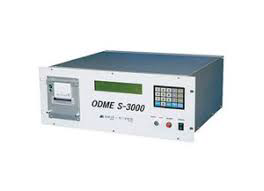
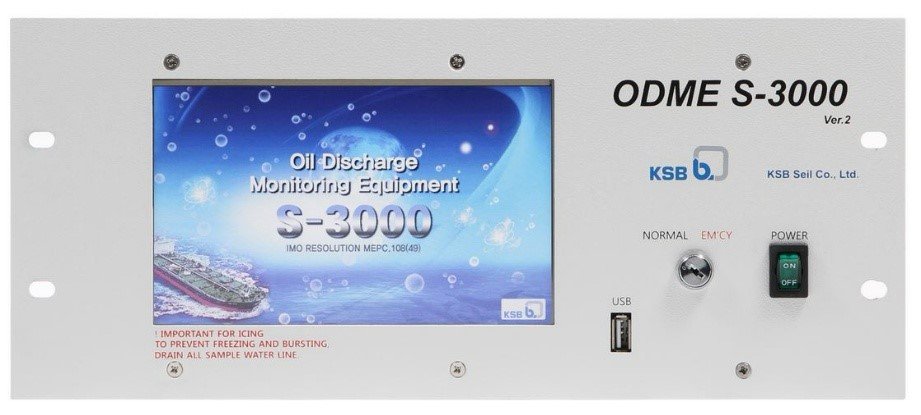
The KSB S-3000 Ver.2 Oil Discharge Monitoring Equipment is a continuously operating ODME system that samples oil-mixture water being discharged overboard, measures oil content in real time, and controls the discharge valve automatically based on the measured result — playing the central control role in the vessel’s overboard discharge management system. Developed and approved by KSB Sel Co. Ltd., the S-3000 Ver.2 has been independently tested and type-approved for crude oils, black and white petroleum products under IMO Resolution MEPC 108(49), and additionally for petroleum oil and bio fuel blends under MEPC 240(65) — covering the full spectrum of oil types encountered in current commercial vessel operations.
What distinguishes the S-3000 Ver.2 from comparable ODME systems is the combination of a self-cleaning optical measurement system, a four-optical-fibre measurement path, and vibration and motion-insensitive operation — design features specifically developed for the conditions of a working engine room where other measurement systems struggle to maintain accuracy. The result is an ODME that produces reliable ppm readings in the environments where reliability matters most: a tanker on a loaded passage in heavy weather, a bulk carrier with variable bilge water composition, or a vessel transitioning between conventional fuel and bio fuel blends mid-voyage.
Key Features
Continuous Sampling and Automatic Overboard Valve Control
The S-3000 Ver.2 continuously samples the oil-mixture water being discharged overboard — not on a timed interval basis, but as a live, ongoing measurement — and uses that real-time oil content reading to control the overboard discharge valve automatically. When measured oil content approaches or exceeds the 15 ppm threshold, the system closes the overboard valve and redirects water to the slop tank without requiring crew intervention. This continuous-control architecture means the system is managing the discharge decision in real time, not relying on the crew to act on an alarm before a non-compliant discharge occurs. For chief engineers managing multiple engine room tasks simultaneously during discharge operations, that automatic control capability is the difference between an incident-free discharge and a MARPOL violation.
Approved for Crude, Black & White Products, and Bio Fuel Blends
The S-3000 Ver.2 holds type approval for crude oils and both black and white petroleum products under MEPC 108(49), and for petroleum oil and bio fuel blends under MEPC 240(65). Many ODME systems approved before the MEPC 240(65) resolution came into force are not capable of accurately measuring oil content in bilge water containing bio fuel components — an increasing operational reality as the commercial fleet transitions toward HVO, FAME-blended distillates, and other bio fuel variants. The S-3000 Ver.2’s dual-resolution approval means it handles the full range of oil types the engine room is likely to produce, regardless of which fuel is currently being burned, without requiring the operator to switch measurement modes or recalibrate for different oil types.
Self-Cleaning System — Consistent Measurement Without Manual Maintenance
The S-3000 Ver.2 incorporates an integrated self-cleaning system for the optical measurement path. In bilge water service, the measurement optics are continuously exposed to oily, contaminated water that deposits films on sensor surfaces over time — fouling that, if unaddressed, degrades measurement accuracy and eventually produces false readings. The self-cleaning system removes these deposits automatically during operation, maintaining optical clarity and measurement accuracy without requiring the crew to manually clean the sensor at defined intervals. In practice, this means the ODME continues to produce accurate ppm readings throughout the discharge operation without the maintenance attention that systems without self-cleaning capability require.
Four Optical Fibres — Measurement Path Redundancy
The oil content measurement system uses four optical fibres, providing a multi-path optical measurement arrangement rather than a single-fibre measurement. Multiple measurement paths improve measurement reliability in water that contains suspended solids, emulsified oil droplets of varying size, or other optically complex contaminants — the real conditions in engine room bilge water rather than the clean water used in laboratory approval testing. For a vessel where bilge water composition varies significantly depending on separator efficiency, cargo residues, and machinery condition, a four-fibre optical system provides more consistent measurement performance than a single-fibre equivalent across the full range of water conditions the system will encounter in service.
Vibration and Motion Insensitive — Built for Sea Conditions
The S-3000 Ver.2 is specifically designed and tested to be insensitive to vibration and vessel motion. Engine room measurement instrumentation on a working commercial vessel operates in an environment of continuous machinery vibration, hull flexing, and motion from vessel movement in a seaway — conditions that can cause mechanical measurement systems to produce erratic readings or trigger false alarms. The S-3000 Ver.2’s insensitivity to vibration and motion means it maintains measurement accuracy during normal sea passage, not just in the controlled conditions of a port discharge where seas are calm. For tanker operators conducting at-sea slop discharge operations in open water, this characteristic is directly relevant to measurement reliability during the actual operation.
Sample Water Filter and Pneumatic Valve System
The system includes a sample water filter to condition the water sample before it reaches the measurement cell, removing particulate matter that could interfere with optical measurement accuracy or cause mechanical blockage in the sample path. Four pneumatic valves manage sample routing — directing water through the measurement cell, to the slop tank on high oil content detection, and through the self-cleaning cycle. The pneumatic valve system operates on a 4–9 bar air supply, using ship’s service air rather than requiring a dedicated compressed air system. The combination of filtered sample conditioning and pneumatic valve control produces a measurement and control system that handles real engine room bilge water rather than requiring pre-treated sample water to function accurately.
Pitot-Tube Flowmeter — Intrinsically Safe Design
The system’s flowmeter uses a Pitot-tube type probe design and is classified as intrinsically safe — meaning it is certified for installation in locations where flammable gases may be present, such as pump rooms, cargo pump areas, and other potentially explosive atmospheres on tankers and combined carriers. The intrinsically safe classification directly affects where the flowmeter can be installed in a vessel’s discharge piping arrangement without requiring an explosion-proof enclosure or other protective measures. For tanker operators where the overboard discharge piping runs through or near hazardous areas, intrinsically safe instrumentation is a classification and flag state requirement, not an optional feature.
Easy Installation — Minimal Shipyard Time Required
The S-3000 Ver.2 is specifically described as requiring little work and time for installation — a practical specification point for operators planning an ODME replacement during a port call or drydock with a defined and limited availability window. The bulkhead penetration arrangement is class-certified, reducing the approval paperwork associated with penetration through watertight or fire-resistant boundaries. The current loop communication method between the operator’s console and the oil content meter is a proven, interference-resistant signal transmission approach suited to the long cable runs and electrically noisy environments found in commercial vessel engine rooms. For a technical superintendent planning an ODME replacement on a vessel where drydock time is a cost, straightforward installation reduces project risk.
Technical Specifications
Model: ODME S-3000 Ver.2
Manufacturer: KSB Sel Co. Ltd.
Oil Content Meter Size: 151 × 151 × 130 mm, 2 kg
Measuring Range: 0–16 bar
Pump: 2.2 kW, D.O.L Motor, centrifugal type, max. suction head 8 m
Optical Fibres: 4
Self-Cleaning System: Yes
Pneumatic Valves: 4
Sample Water Filter: Yes
Air Supply: 4–9 bar
Flowmeter: 311 × 104 × 102 mm, 9 kg | Pitot-tube type probe | Intrinsically safe
Flowmeter Accuracy: Below ±1%
LCD Display: 40 × 4 characters
Communication: Current loop method (operator’s console to oil content meter)
Vibration & Motion: Insensitive
Bulkhead Penetration: Class certified
MARPOL Compliance: MEPC 108(49) — crude, black & white products | MEPC 240(65) — petroleum & bio fuel blends
Installation: Easy, requiring little work and time
Benefits
The most direct operational benefit of the S-3000 Ver.2 is that it removes the human decision point from the overboard valve control during bilge water discharge. The system measures continuously and closes the valve automatically when oil content exceeds the compliance threshold — the chief engineer does not need to be physically present at the valve or monitoring a display to prevent a non-compliant discharge. In an engine room where the watchkeeper is managing multiple systems simultaneously, that automatic control capability closes the gap between the legal requirement and what is practically achievable during a busy watch.
For operators running vessels on bio fuel blends, dual MEPC 108(49) and MEPC 240(65) approval eliminates the compliance uncertainty that comes with fitting an ODME approved only under the older resolution. The S-3000 Ver.2 is approved for the actual range of oil types the modern commercial vessel engine room produces — not a subset of them — which means the type approval remains valid regardless of fuel type changes during the vessel’s trading life.
The self-cleaning optical system and vibration-insensitive design translate into lower maintenance burden and more consistent measurement accuracy over the service life of the unit. An ODME that does not require regular manual sensor cleaning and that maintains accurate readings in heavy weather is an ODME that the crew can rely on to be operational when it is needed — not one that requires intervention before each discharge to confirm it is measuring correctly.
From a port state control perspective, an accurate, continuously operating ODME with a reliable discharge data record is the primary evidence basis for MARPOL compliance during an inspection. Vessels whose ODME records are consistent, complete, and corroborated by other evidence in the Oil Record Book are in a materially stronger position during a PSC examination than vessels with gaps or anomalies in their discharge records. A reliable ODME is not just a safety tool — it is a compliance documentation tool.
Who It’s For
Chief Engineers on Tankers and Bulk Carriers
If you are managing bilge water discharge operations on a crude tanker, product tanker, or bulk carrier where bilge water composition varies significantly depending on cargo residues, fuel type, and separator efficiency — and where the consequences of a MARPOL violation are directly personal as the officer responsible for the Oil Record Book — the S-3000 Ver.2’s continuous automatic valve control and dual bio fuel approval address the two most common ODME-related compliance risks you face on a regular basis. An ODME that controls the discharge automatically and that is approved for the oil types actually present in your bilge water is the system that reduces your compliance exposure during every discharge operation.
Fleet Technical Superintendents Managing ODME Replacement Programmes
For technical superintendents responsible for maintaining MARPOL compliance across a managed fleet and planning ODME replacement as units age out of service, the S-3000 Ver.2’s easy installation design and class-certified bulkhead penetration reduce the shipyard time and approval complexity associated with a replacement project. If your fleet includes tankers where the overboard discharge piping runs through or near hazardous areas, the intrinsically safe flowmeter eliminates a common installation complication. And if your fleet is transitioning toward bio fuel operation, MEPC 240(65) approval is built into the base product — not an upgrade you need to specify separately.
Vessel Owners and Managers Facing PSC Compliance Pressure
If your fleet has received MARPOL-related PSC deficiencies, or if you are operating on trading routes with high inspection frequency under the Paris MOU, Tokyo MOU, or USCG regimes, replacing ageing ODME equipment with a current, dual-resolution approved system is a concrete compliance improvement step that is directly visible to inspectors examining the vessel’s safety management records. The S-3000 Ver.2’s approval status, accurate continuous measurement, and automatic valve control represent the ODME performance standard that current PSC inspection criteria are benchmarked against.
Possible Applications
Crude Tanker Bilge Discharge Monitoring — Continuous oil content measurement and automatic overboard valve control on crude tankers where bilge water may contain crude oil residues and where MEPC 108(49) approval for crude oils is a direct operational requirement.
Product Tanker Black and White Product Operations — MEPC 108(49) type approval covering both black and white petroleum products makes the S-3000 Ver.2 directly applicable to product tankers carrying a range of refined products where bilge water composition changes with each cargo.
Vessels Transitioning to Bio Fuel Operation — ODME replacement or upgrade for vessels moving to HVO, FAME blends, or other bio fuels requiring MEPC 240(65) compliant equipment to maintain MARPOL approval with current flag state requirements.
Bulk Carrier Engine Room Bilge Management — Bulk carriers with variable bilge water quality depending on cargo type, loading conditions, and machinery status, where consistent ODME measurement accuracy across changing water compositions is required for reliable discharge control.
Tanker Operations in Hazardous Area Installations — Tanker and combined carrier installations where the overboard discharge piping and flowmeter location falls within a hazardous area classification, requiring the intrinsically safe flowmeter specification of the S-3000 Ver.2.
ODME Replacement During Scheduled Drydock — Planned replacement of ageing ODME equipment during drydocking, where the S-3000 Ver.2’s easy installation design and class-certified bulkhead penetration reduce drydock time allocation and approval complexity.
High-PSC-Frequency Trading Routes — Vessels on Paris MOU, Tokyo MOU, or USCG high-inspection-regime routes where ODME operational reliability and accurate discharge documentation are consistently scrutinised during port state control examinations.
Trust & Certifications
IMO Resolution MEPC 108(49) — Core ODME Performance Standard
Resolution MEPC 108(49) is the IMO performance standard that defines the measurement accuracy, response characteristics, overboard valve control requirements, and data recording obligations for Oil Discharge Monitoring Equipment under MARPOL Annex I. Type approval to MEPC 108(49) is the foundational compliance requirement for ODME installation on regulated vessels. The S-3000 Ver.2 holds this approval for crude oils and both black and white petroleum products, covering the full range of oil types relevant to tanker and combined carrier operations.
IMO Resolution MEPC 240(65) — Bio Fuel Compliance
MEPC 240(65) updates the ODME performance standard to address the measurement challenges presented by bio fuel components in bilge water — specifically the optical and chemical properties of bio fuel blends that differ sufficiently from conventional petroleum products to affect measurement accuracy in ODME systems approved only under MEPC 108(49). Effective from 1 January 2016, MEPC 240(65) compliance is required for vessels using bio fuel blends. The S-3000 Ver.2’s type approval under both resolutions ensures continued MARPOL compliance across fuel type transitions during the vessel’s operating life.
Class-Certified Bulkhead Penetration
The bulkhead penetration arrangement for the S-3000 Ver.2 installation is class-certified — meaning it has been reviewed and approved by the relevant classification society to maintain the integrity of the watertight or fire-resistant boundary being penetrated. This certification is required for any penetration through a classification society-surveyed boundary and is documented in the vessel’s classification records. For operators planning an ODME installation or replacement, a class-certified penetration arrangement reduces the additional engineering and approval work required to satisfy the class surveyor during the installation survey.
Intrinsically Safe Flowmeter — Hazardous Area Certification
The Pitot-tube type flowmeter supplied with the S-3000 Ver.2 is classified as intrinsically safe — certified for installation in areas where the presence of flammable gas cannot be excluded, as defined by the relevant IEC or equivalent hazardous area classification standard. Intrinsically safe certification is a flag state and classification society requirement for instrumentation installed in pump rooms, cargo areas, and other Zone 1 or Zone 2 hazardous areas on tankers and combined carriers. Using an intrinsically safe-certified flowmeter eliminates the need for an explosion-proof enclosure or barrier interface in these locations.
KSB Sel Co. Ltd. — Marine Instrumentation Specialist
KSB Sel Co. Ltd. is the manufacturer of the S-3000 ODME product line, with the S-3000 Ver.2 representing the current production version with updated MEPC 240(65) bio fuel approval. The S-3000 product series has an established installation base on commercial vessels across the tanker and bulk carrier segments. For procurement teams evaluating ODME suppliers, an established product series with documented type approval history and a traceable version development record supports the procurement decision and provides the manufacturer documentation trail required for class survey and flag state inspection records.
Accessories & Variants
U-Seal Assembly — MEPC 108(49) Section 6.3.10 Requirement
MEPC 108(49) Section 6.3.10 requires that sample water returning to the slop tank must not be allowed to free-fall into the tank — and that on tankers equipped with an inert gas system, a U-seal of adequate height must be arranged in the piping leading to the slop. The U-seal must be installed in accordance with this requirement as part of the complete ODME system installation. Confirm U-seal specification and supply arrangement with your supplier at the procurement stage to ensure the installation meets the MEPC 108(49) requirement in full.
Operator’s Console
The S-3000 Ver.2 uses a current loop communication method between the operator’s console and the oil content meter. The operator’s console provides the crew interface for monitoring discharge status, oil content readings, and alarm conditions. Confirm the console configuration and display specification with your supplier to ensure compatibility with your vessel’s engine control room layout and watchkeeping arrangement.
Sample Water Filter — Replacement Elements
The integrated sample water filter conditions the water sample before measurement to remove particulate matter that could affect optical measurement accuracy. Replacement filter elements should be held as a onboard spare to enable filter maintenance without waiting for port resupply. Confirm the correct filter element specification with your supplier at the time of equipment procurement to ensure the correct spares are stocked from the outset.
Available Variant
ODME S-3000 Ver.2 — Continuous oil content monitoring and overboard valve control | MEPC 108(49) approved for crude, black & white products | MEPC 240(65) approved for bio fuel blends | Intrinsically safe flowmeter | Self-cleaning optical system | Class-certified bulkhead penetration
For vessel-specific installation requirements, inert gas system U-seal configuration, or fleet procurement across multiple vessel types, contact your supplier to confirm the correct system configuration and accessories for your specific installation.
Get in Touch
If you are specifying an ODME replacement for a tanker transitioning to bio fuel operation, planning an installation during a scheduled drydock, or managing a fleet MARPOL compliance upgrade programme — or if you need to confirm MEPC 240(65) approval requirements, intrinsically safe specifications, or U-seal installation requirements for your vessel type — contact us to discuss your requirement and request a formal procurement quotation.
Our technical team can assist with product selection against your MARPOL compliance specification, confirm class approval and installation requirements for your flag state, and support the procurement documentation your vessel file and class survey records require.
📍 3791 Jalan Bukit Merah #06-01, E-Centre @ Redhill, Singapore 159471