Cart (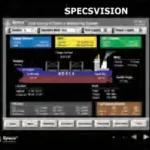
Overview
Oil mist in a ship’s engine room is not a minor inconvenience — it is a direct precursor to crankcase explosions, one of the most catastrophic failure events in marine propulsion. Diesel engines operating under normal combustion conditions generate some level of oil mist within the crankcase. But when bearing wear, piston blow-by, or lubrication failure causes oil mist concentration to rise above safe thresholds, the risk of ignition and explosion becomes a serious engineering and safety concern. Detecting that rise — reliably, early, and continuously — is the job of the oil mist detector, and it is one of the most critical continuously operating safety instruments on any vessel with a diesel propulsion plant.
The Specs Oil Mist Detector BWM is a dedicated crankcase oil mist detection system designed for continuous monitoring of oil mist concentration in diesel engine crankcases on commercial marine vessels. Manufactured by Specs — a recognised specialist in engine room safety monitoring equipment — the BWM model is available in both new and refurbished condition, offering vessel operators and ship managers a procurement option suited to both new vessel outfitting and in-service maintenance and replacement programmes.
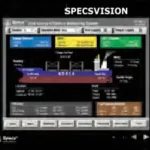
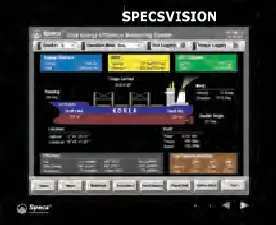
What sets the Specs BWM apart in the oil mist detector market is the combination of the SpecsVision monitoring interface with the BWM’s multi-cylinder detection architecture. The SpecsVision display system provides operators and engineers with a visual, real-time overview of oil mist conditions across all monitored crankcase bays simultaneously — not just a single alarm output — giving engineering staff the situational awareness to distinguish between a genuine developing fault and a transient condition before committing to an engine shutdown decision. For vessels where an unnecessary emergency slowdown or stop carries significant operational and commercial consequences, that level of decision-support is a meaningful operational advantage.
Key Features
Continuous Multi-Point Crankcase Monitoring
The BWM system monitors oil mist concentration across multiple crankcase bays simultaneously, providing continuous coverage of the entire crankcase rather than relying on a single measurement point. In a large bore two-stroke or four-stroke diesel engine, a developing bearing failure or piston fault will first elevate oil mist locally — and a single-point detector may miss early-stage fault development in a distant crankcase bay. Multi-point continuous monitoring allows the BWM to detect localised mist concentration increases that indicate a specific developing fault, giving engineering staff earlier warning and better fault location information than a single-measurement system can provide.
SpecsVision Operator Display Interface
The SpecsVision display provides a graphical, real-time visual overview of oil mist conditions across all monitored crankcase channels. Rather than a simple alarm indicator, SpecsVision presents a channel-by-channel status display showing current oil mist levels relative to alarm thresholds for each monitored bay. For the chief engineer or duty engineer assessing an alarm condition, the ability to see which specific crankcase bay is elevated — and by how much — supports faster, more informed decisions about whether to reduce load, slow down, or stop the engine. Clear visual data at the point of decision reduces the risk of both under-reaction and unnecessary emergency stops.
Alarm Output for Engine Room Safety Integration
The BWM provides alarm output signals that integrate with the vessel’s engine room alarm and monitoring system. When oil mist concentration exceeds the pre-set alarm threshold, the system triggers both local and remote alarms — alerting the duty watch officer on the bridge and the engine room monitoring station simultaneously. Integration with the vessel’s centralised alarm management system ensures that an oil mist alarm cannot be missed or silenced at a single location without appropriate acknowledgement and response — a requirement under SOLAS and class society rules for unmanned machinery space (UMS) operation.
Optical Detection Technology
The BWM uses optical detection principles — measuring light obscuration or scattering caused by oil mist particles in the crankcase atmosphere — to determine oil mist concentration. Optical detection provides a direct measurement of actual mist particle presence in the crankcase atmosphere, and is not affected by temperature fluctuations or changes in crankcase pressure in the way that some alternative detection technologies can be. The optical sensing elements require periodic cleaning and calibration as part of routine maintenance, and the system design supports in-situ maintenance without requiring the detector to be removed from service for extended periods.
New and Refurbished Availability
The Specs BWM oil mist detector is available in both new and refurbished condition — providing procurement flexibility for different operational situations. New units are appropriate for newbuild vessel outfitting, class-required replacement on vessels where the existing detector has reached end of service life, or fleet standardisation programmes. Refurbished units — inspected and tested before supply — provide a cost-effective and often faster-available option for in-service maintenance and repair, particularly on vessels where the existing BWM installation has a fault but the vessel cannot sustain the lead time or cost of a new unit. Both conditions are offered with supply support from an authorised distributor.
Designed for Unmanned Machinery Space (UMS) Operation
The BWM’s continuous automatic monitoring and integrated alarm output architecture supports UMS-compliant engine room operation — where the machinery space operates without a permanent duty engineer watch during normal at-sea passages. Class society requirements for UMS notation specify continuous automatic monitoring of crankcase oil mist with reliable alarm output to the bridge and ECR. The BWM’s design supports compliance with these requirements, making it appropriate for modern vessels operating under UMS class notation where continuous automated crankcase monitoring is a classification condition rather than an optional safety measure.
Technical Specifications
Maker: Specs
Model: BWM
Description: Specs Oil Mist Detector BWM
Application: Marine diesel engine crankcase oil mist detection
Detection Method: Optical (light obscuration / scattering)
Monitoring Architecture: Multi-point, continuous
Display System: SpecsVision graphical operator display
Alarm Output: Local and remote alarm integration
Suitable Operation: UMS (Unmanned Machinery Space) compliant
Condition: New & Refurbished
Benefits
Earlier fault detection reduces the risk of crankcase explosion. A crankcase explosion on a large bore diesel engine can cause severe structural damage, engine room fire, and — in worst-case scenarios — casualties and total propulsion loss. The BWM’s continuous multi-point monitoring provides an earlier warning of rising oil mist concentration than periodic manual checks or single-point detection can offer — giving engineering staff more time to assess the situation, reduce engine load, and take controlled protective action before conditions reach ignition threshold.
SpecsVision display supports better-informed engine management decisions. The difference between a developing main bearing failure and a transient mist spike from a brief lube oil temperature excursion is not always obvious from a single alarm signal. The SpecsVision channel-by-channel display gives the engineer actionable data — which bay is elevated, by how much, and whether it is rising or stabilising — that makes the difference between a well-justified engine slowdown and an unnecessarily aborted voyage passage.
Supports class society UMS requirements without additional integration complexity. Vessels operating under UMS class notation must demonstrate continuous automatic crankcase monitoring with bridge and ECR alarm integration as a condition of their UMS certificate. The BWM’s integrated alarm output architecture satisfies this requirement directly — reducing the integration engineering required to achieve class compliance for UMS operation.
Refurbished availability keeps vessels operational within realistic maintenance budgets. For operators maintaining older tonnage on constrained maintenance budgets, a refurbished Specs BWM unit — tested and verified before supply — provides a compliant crankcase monitoring solution at a cost significantly below new OEM pricing, without compromising on operational reliability or class acceptability.
Recognised manufacturer with established marine installation base. Specs oil mist detectors are installed across a broad range of commercial vessel types and engine types. Maintenance engineers and class surveyors are familiar with the BWM system — reducing the onboarding, training, and survey time associated with introducing an unfamiliar detection system into an existing engine room monitoring arrangement.
Who It’s For
The Chief Engineer on a Deep-Sea Commercial Vessel
You’re responsible for the safe and efficient operation of the main propulsion plant on a vessel completing long ocean passages under UMS operation. Your existing oil mist detector is giving intermittent faults and is due for replacement at the next scheduled port call. You need a direct replacement that your class surveyor will accept, that your watch engineers can operate without extensive retraining, and that will integrate with your existing engine room alarm system without a major wiring job. The Specs BWM is a like-for-like replacement option that satisfies all three of those requirements — available in refurbished condition for fast procurement within your drydocking or port-call maintenance window.
The Technical Superintendent at a Tanker or Bulk Carrier Management Company
You manage planned maintenance and critical safety system compliance across a fleet of vessels with large bore diesel main engines. You need to maintain class compliance for UMS operation across your fleet — which means continuous, functioning crankcase oil mist detection on every vessel, every voyage. You source replacement detectors when units fail or reach end of service life, and you need a supplier who can confirm availability, provide the correct unit for your vessel’s engine type, and support procurement with appropriate technical documentation. Alright Engineering Solutions can provide Specs BWM units with the technical support and documentation your fleet procurement process requires.
The Marine Safety Equipment Procurement Officer
You handle spare parts and safety equipment sourcing for a ship owner or ship manager. When the chief engineer reports a faulty oil mist detector, you need to source a replacement quickly — ideally within a port call turnaround — without compromising on class acceptability or paying full new-unit pricing if a refurbished alternative is available. You work with distributors who can confirm stock, provide correct documentation, and arrange delivery to the vessel’s next port. Alright Engineering Solutions provides that level of procurement support for the Specs BWM from Singapore, with regional delivery capability.
Possible Applications
- Deep-sea bulk carriers and dry cargo vessels — Continuous crankcase monitoring on large bore two-stroke diesel main engines during UMS ocean passages where no permanent engine room watch is maintained
- Oil tankers and product tankers — Crankcase oil mist detection on diesel propulsion plants on vessels operating under UMS notation with class society requirements for automatic safety monitoring
- Container ships and ro-ro vessels — Main engine crankcase monitoring on time-sensitive commercial vessels where an unplanned engine stop carries significant commercial consequences, and early fault detection enables controlled load reduction rather than emergency shutdown
- LPG and chemical tankers — Engine room crankcase safety monitoring on tanker vessels where engine room fire risk management is a heightened operational and regulatory priority
- Offshore supply vessels and platform support vessels — Crankcase monitoring on diesel propulsion and generator plants on offshore vessels operating in dynamic positioning mode, where engine reliability is critical to station-keeping safety
- Ferry and passenger vessel propulsion plant monitoring — Main engine crankcase safety monitoring on passenger vessels where class society and flag state safety requirements for propulsion plant monitoring are stringent
- Planned maintenance and drydock replacement programmes — Scheduled replacement of life-expired oil mist detectors during class renewal surveys, drydocking periods, and planned maintenance windows across managed fleets
- Fleet standardisation and spare parts provisioning — Procurement of Specs BWM units for fleet spare parts inventories on ship management companies standardising crankcase monitoring equipment across managed vessel types
Trust and Certifications
Specs — Established Marine Engine Safety Equipment Manufacturer
Specs is a recognised manufacturer of oil mist detection and engine safety monitoring equipment with an established installation base across commercial vessel types and engine makes. The BWM model has accumulated a service history across a broad range of propulsion plant types and vessel classes — providing the operational track record that engineering teams and class surveyors look for when evaluating safety-critical detection equipment. For operators sourcing a replacement oil mist detector, Specs’ established position in the marine market reduces the technical and commercial risk associated with sourcing from an unfamiliar manufacturer.
Class Society Acceptance for UMS Operation
Oil mist detectors fitted to vessels operating under UMS class notation are subject to class society review and acceptance as part of the UMS certification process. The Specs BWM is designed to satisfy the crankcase oil mist detection requirements of the major international classification societies — including Lloyd’s Register, DNV, Bureau Veritas, ClassNK, and ABS — for UMS-notated vessels. Class society acceptance of the oil mist detection system is a requirement for maintaining UMS notation, and procurement teams sourcing a replacement detector must confirm class acceptability before installation. Contact Alright Engineering Solutions to confirm class acceptance documentation for your vessel’s flag state and classification society.
SOLAS Chapter II-1 — Machinery Space Safety Requirements
SOLAS Chapter II-1 regulations for machinery installations on commercial vessels specify requirements for the protection of machinery spaces against the risk of crankcase explosion, including requirements for oil mist detection on diesel engines above a specified cylinder bore diameter. Continuous oil mist detection with automatic alarm is the recognised standard for compliance with these requirements. The Specs BWM is designed to satisfy SOLAS machinery space protection requirements for crankcase oil mist detection — providing the flag state compliance assurance that is a baseline requirement for commercial vessel operation.
Supplied Through Alright Engineering Solutions — Authorised Singapore Distributor
The Specs Oil Mist Detector BWM is supplied through Alright Engineering Solutions Pte. Ltd., an authorised distributor of marine safety monitoring equipment and engine room safety systems based in Singapore. Alright Engineering Solutions provides procurement support, technical documentation, and spare parts sourcing assistance for marine safety equipment across the Singapore and Southeast Asia regional market — with delivery capability to vessels calling at Singapore and regional ports.
Accessories and Variants
Replacement Optical Sensing Elements and Maintenance Spares
The optical sensing cells in the Specs BWM require periodic cleaning and eventual replacement as part of the system’s planned maintenance schedule. Alright Engineering Solutions can assist with sourcing replacement optical sensing elements, cleaning kits, and associated BWM maintenance spare parts to support your vessel’s planned maintenance programme and keep the oil mist detection system in continuous reliable operation between major overhaul periods.
SpecsVision Display System Components
For vessels where the SpecsVision operator display has developed a fault independently of the BWM detection unit, Alright Engineering Solutions can assist with enquiries for SpecsVision display system spare parts and replacement components. Contact our technical team with the display model and fault description for availability enquiry and sourcing support.
Related Engine Room Safety Monitoring Equipment
Portable Multi-Gas Monitor (GX-8000) — Sample draw portable gas monitor for confined space entry procedures in engine rooms, pump rooms, and cargo holds
RX-8700 Portable Gas Detector — ATEX/IECEx/MED-certified portable multi-gas detector for marine engine room and enclosed space safety
Fixed Combustible Gas Detection Systems — Fixed point combustible gas detectors for engine room bilge areas, battery rooms, and fuel handling spaces
Salwico CS3000 Spare Components — Replacement PCBs and spare parts for Salwico CS3000 fixed gas and fire detection systems on vessels with existing Salwico installations
Get in Touch
If you need to source the Specs Oil Mist Detector BWM — whether for an immediate in-service replacement, a planned drydock maintenance programme, or fleet spare parts provisioning — contact Alright Engineering Solutions to confirm availability and request a formal quotation.
Our team can also assist with sourcing maintenance spares, SpecsVision display components, and related engine room safety monitoring equipment for your vessel or fleet programme.
📍 3791 Jalan Bukit Merah #06-01, E-Centre @ Redhill, Singapore 159471