Cart (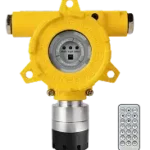
Overview
In process industries, the standard for fixed combustible gas detection isn’t just about detecting gas and triggering an alarm — it’s about integrating the detector into a broader safety and process control infrastructure. A detector that only provides a relay contact output leaves safety engineers with a binary signal: alarm or no alarm. A detector with a 4–20mA analogue output and RS485 digital communication gives the control system a continuous, proportional concentration signal that can be used for trend monitoring, graduated process response, safety instrumented function logic, and detailed event logging — turning the detector from a simple alarm trigger into a genuine process instrument.
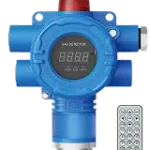
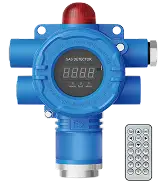
The GTYQ-DX 102 Fixed Combustible Gas Detector delivers that instrument-grade output capability. It provides a standard 4–20mA analogue signal and RS485 digital communication alongside a combined sound and light alarm, and an LED on-site concentration display — all in a die-cast aluminium IP66-rated enclosure certified to Ex db IIC T6 Gb and Ex tb IIIC T80°C Db for deployment in the most demanding explosive atmosphere classifications.
What differentiates the GTYQ-DX 102 from fixed detectors that provide only relay output is the 4–20mA signal. The 4–20mA standard is the universal language of process instrumentation — natively accepted by virtually every safety PLC, DCS, safety controller, and gas detection panel on the market without signal conversion or additional interface hardware. For safety engineers integrating fixed gas detection into an existing process control architecture, 4–20mA output is the specification that makes integration straightforward. The GTYQ-DX 102 provides it alongside RS485 — giving system designers both analogue and digital communication pathways in a single device.
Key Features
Standard 4–20mA Analogue Output — Universal Process Integration
The GTYQ-DX 102 provides a standard 4–20mA analogue output signal proportional to the detected gas concentration. 4mA represents zero concentration; 20mA represents full scale. This industry-standard signal is accepted directly by safety PLCs, DCS systems, gas detection controllers, and safety monitors without signal conditioning or conversion equipment. For process engineers integrating fixed gas detection into existing control infrastructure, 4–20mA output eliminates integration complexity and enables continuous concentration monitoring, trend logging, and graduated process response rather than binary alarm-only output.
RS485 Digital Communication
RS485 digital output allows the GTYQ-DX 102 to be networked with other instruments on a shared RS485 bus — connecting multiple detectors to a central monitoring system, SCADA, or gas detection controller on a single communication cable. For large-scale fixed detection installations with multiple detection points, RS485 networking simplifies wiring infrastructure and enables centralised monitoring, data logging, and alarm management across all detection points from a single interface.
LED On-Site Concentration Display
A local LED display shows the current gas concentration reading directly on the detector head. For operations personnel, maintenance engineers, and emergency responders who need to know the current atmospheric condition at a specific detection point without accessing a central control room, the local concentration display provides immediate, readable information from the detector itself. In emergency response scenarios, knowing the actual concentration at a detection point rather than just that an alarm has triggered is operationally useful information for response decision-making.
Sound and Light Alarm Output
The GTYQ-DX 102 provides combined sound and light alarm output when gas concentrations breach alarm thresholds. Local alarm output at the detection point provides immediate notification for workers in the immediate vicinity — complementing the central control room alarm signal with a local indicator that draws attention to the specific area of the detection event. For large facilities where a central alarm may not immediately communicate which area has triggered, local sound and light alarm at the detector head speeds up localisation of the detection event.
Ex db IIC T6 Gb and Ex tb IIIC T80°C Db Certification
The GTYQ-DX 102 carries dual hazardous area certification: Ex db IIC T6 Gb for gas atmospheres and Ex tb IIIC T80°C Db for dust atmospheres. “db” (flameproof/explosion-proof) enclosure design contains any internal ignition without propagating to the surrounding atmosphere. IIC gas group covers the most sensitive gases including hydrogen. T6 temperature class provides a surface temperature limit of 85°C — the lowest available classification, providing safety margin for the most sensitive ignition temperature gases. The additional Ex tb IIIC T80°C Db certification covers conductive dust environments. This dual certification makes the GTYQ-DX 102 suitable for deployment in environments with both gas and dust explosion hazards simultaneously.
IP66 Die-Cast Aluminium Enclosure
The die-cast aluminium shell provides both IP66 ingress protection — fully dust-tight and protected against powerful water jets — and the structural robustness required for permanent outdoor and process area installation. Aluminium construction provides corrosion resistance, mechanical strength, and heat dissipation in a housing that is significantly more durable than plastic alternatives for long-term fixed installation in industrial environments. IP66 protection ensures reliable operation in outdoor installations and areas subject to regular washdown or weather exposure.
Long-Term Continuous Working Mode — DC 24V Supply
The GTYQ-DX 102 operates in long-term continuous working mode from a DC 24V supply — the standard instrumentation voltage used in process control and safety systems globally. DC 24V supply compatibility means the detector connects directly to standard instrument power distribution without voltage conversion, simplifying installation wiring and ensuring compatibility with existing instrumentation power infrastructure. Continuous working mode with no duty cycling ensures the detector is always monitoring — critical for fixed gas detection where gaps in monitoring coverage create unacceptable safety risk.
T90 Response Time ≤30 Seconds
A T90 response time of 30 seconds or less means the detector reaches 90% of the actual gas concentration within 30 seconds of exposure — fast enough to provide a timely alarm signal to the control system and local personnel before gas concentrations reach critical levels. For safety instrumented function applications where the detector output feeds directly into a process interlock, response time is a direct input into the safety function performance calculation.
Technical Specifications
Model: GTYQ-DX 102
Target Gas: Combustible gas
Shell Material: Die-cast aluminium
IP Rating: IP66
Ex Grade: Ex db IIC T6 Gb / Ex tb IIIC T80°C Db
Output: 4–20mA analogue signal, RS485 digital communication
Alarm Method: Sound and light alarm output
Display: LED on-site concentration display
Sampling Method: Natural diffusion
Response Time: T90 < 30 seconds
Power Supply: DC 24V
Working Mode: Long-term continuous
Working Temperature: -40°C to 70°C
Working Humidity: ≤ 93% RH (non-condensing)
Benefits
Continuous proportional concentration signal — not just a binary alarm. The 4–20mA output provides the control system with a real-time, proportional gas concentration value throughout the monitoring period — not just a contact closure when a threshold is crossed. This continuous signal supports trend monitoring, predictive alarm management, graduated process response, and safety function performance verification that relay-only detectors cannot provide.
Native compatibility with existing process control infrastructure. 4–20mA is the universal standard for process instrumentation signals. The GTYQ-DX 102 connects directly to any safety PLC, DCS, or gas detection controller that accepts a standard 4–20mA input — without signal conditioning, conversion modules, or proprietary interface hardware. For system integrators and facilities with existing process control infrastructure, this native compatibility significantly reduces installation complexity and cost.
Dual gas and dust explosion certification — single device for mixed hazard environments. Ex db IIC T6 Gb and Ex tb IIIC T80°C Db certification covers both gas and conductive dust explosion hazards in the same device. For facilities — food processing, grain handling, chemical plants — where both gas and dust explosion hazards coexist, a single detector certified for both hazard types simplifies zone classification compliance and procurement.
Local concentration display for field personnel and emergency response. The LED display on the detector head means field operators, maintenance engineers, and emergency responders can read the current gas concentration at the detection point without accessing a control room. In emergency situations where rapid assessment of atmospheric conditions at specific locations is needed, local display reading is faster and more reliable than radio communication with a control room operator.
Die-cast aluminium construction for long-term outdoor and process area installation. Aluminium construction withstands the corrosion, mechanical stress, temperature cycling, and UV exposure of outdoor and process area installation over a 10+ year service life — maintaining the structural integrity and ingress protection performance that plastic-housed alternatives may not sustain across extended deployments in demanding environments.
Who It’s For
The Process Safety Engineer Designing a Safety Instrumented System
You’re specifying fixed gas detection as part of a safety instrumented function — where the detector output feeds directly into a safety PLC for automated process interlock or emergency shutdown logic. You need a detector with a 4–20mA output that integrates directly with your safety controller, IIC T6 certification for your hazardous area classification, and a T90 response time that satisfies your safety function response time requirement. The GTYQ-DX 102 addresses all three requirements directly.
The Instrumentation and Control Engineer Integrating Fixed Detection into an Existing System
You’re adding fixed gas detection points to an existing process control system with established 4–20mA input infrastructure. You need detectors that connect to your existing analogue input cards without additional signal conditioning, provide RS485 for connection to your SCADA historian, and are certified for the hazardous area zones in your facility. The GTYQ-DX 102’s dual 4–20mA and RS485 output, combined with IIC T6 Gb and IIIC T80°C Db certification, covers all three of those integration and compliance requirements.
The Facilities Manager at a Petrochemical, Chemical, or Food Processing Facility
You manage gas safety infrastructure across a process facility where both hydrocarbon gas and combustible dust hazards are present. You need fixed gas detection that covers both hazard types in a single certified device, provides local alarm and concentration display for field operators, and integrates into your existing process monitoring infrastructure. The GTYQ-DX 102’s dual gas and dust certification, local LED display, and 4–20mA process output address each of those operational requirements.
Possible Applications
- Petroleum refinery process areas — Fixed combustible gas detection at hydrocarbon process units, pipe racks, and equipment areas with 4–20mA integration into plant DCS and safety systems
- Chemical and petrochemical plants — Fixed LEL detection in process areas, storage tank farms, and loading facilities with RS485 networked monitoring and 4–20mA safety PLC integration
- Oil and gas production facilities — Gas detection at wellheads, separators, compressor stations, and gas processing equipment with continuous concentration monitoring via 4–20mA output
- LPG storage and distribution terminals — Fixed detection at LPG vessel areas, filling points, and distribution infrastructure requiring IIC-certified explosion-proof detection
- Food processing and grain handling — Facilities with both combustible gas supply and combustible dust hazards where dual gas and dust explosion certification covers both risk categories
- Offshore platforms and marine installations — Fixed gas detection in enclosed machinery spaces, gas compression areas, and process modules requiring outdoor-rated explosion-proof detection
- Power generation facilities — Natural gas detection at turbine halls, gas supply systems, and enclosed plant areas with integration into plant control systems
- Safety instrumented system applications — Fixed detection as a sensor element in a SIS safety function where 4–20mA output, certified response time, and hazardous area approval are SIL assessment inputs
Trust and Certifications
Ex db IIC T6 Gb — Flameproof, Highest Gas Group, Lowest Temperature Class
Ex db (flameproof/explosion-proof) enclosure design contains any internal ignition without propagating to the surrounding atmosphere — the most robust ignition protection concept for fixed instrumentation in explosive gas atmospheres. IIC gas group covers hydrogen and acetylene — the most ignition-sensitive gases — meaning the GTYQ-DX 102 is certified for the full range of explosive gas hazard categories without restriction. T6 temperature class limits the instrument surface temperature to 85°C — the most conservative temperature classification, providing a safety margin even for the lowest auto-ignition temperature gases in the IIC group.
Ex tb IIIC T80°C Db — Dust Explosion Protection
Ex tb (enclosure protection) for dust atmospheres, IIIC group (conductive dust, the most sensitive classification), T80°C surface temperature limit. This certification confirms the GTYQ-DX 102 can be deployed in environments where electrically conductive combustible dust is present — including metallic dust, carbon black, and other conductive particulates. For facilities where both gas and dust explosion hazards coexist, a single detector with dual certification eliminates the need for separate instruments for each hazard type.
4–20mA — Industry Standard Process Signal
The 4–20mA analogue signal is the universal standard for process instrumentation in industrial control systems. Its wide adoption means the GTYQ-DX 102 integrates with virtually any safety PLC, DCS, gas detection controller, or safety monitor without proprietary interface requirements. The 4mA live zero provides loop continuity monitoring — a break in the signal wiring reads as less than 4mA, distinguishing a wiring fault from a zero gas reading and providing diagnostic capability that simple on/off relay signals cannot offer.
IP66 — Outdoor and Washdown Rated
IP66 provides full dust exclusion and protection against powerful water jets from any direction — the ingress protection standard appropriate for outdoor process area installation and areas subject to regular washdown. Die-cast aluminium construction maintains this protection rating across the detector’s service life in a way that plastic housings may not sustain under continuous outdoor exposure.
Authorised by Alright Engineering Solutions
The GTYQ-DX 102 is supplied through Alright Engineering Solutions Pte. Ltd., an authorised distributor of fixed and portable gas detection equipment in Singapore. Alright Engineering Solutions provides local procurement support, system integration guidance, and technical assistance for the Singapore and regional market.
Accessories and Variants
Mounting Bracket and Hardware
Pole and wall mounting hardware for permanent installation in process areas, plant rooms, and outdoor locations. Positioning guidance for combustible gas detection (lighter or heavier than air depending on the specific gas) is available from Alright Engineering Solutions.
4–20mA Signal Cable
Shielded instrumentation cable for 4–20mA signal wiring — maintaining signal integrity over the wiring run between the detector and the receiving instrument or safety controller. Cable specification guidance is available for your specific installation distance and environment.
Gas Detection Controller / Safety Monitor
Multi-channel gas detection controllers with 4–20mA inputs for centralised monitoring, alarm annunciation, relay output management, and data logging across multiple GTYQ-DX 102 detection points. Contact Alright Engineering Solutions for compatible controller options matched to your system scale and SIL requirements.
Calibration Gas Kits
Available for periodic calibration verification of the 4–20mA output signal against certified reference concentrations — ensuring the proportional output remains accurate across the full detection range throughout the detector’s service life.
Related Products from Alright Engineering Solutions
GTYQ-S10 Fixed Gas Detector — Alternative fixed combustible gas detector with relay output, RS485, and calibration-free modular sensor replacement
BH-H5 Household Gas Alarm — Fixed residential/commercial CH4 alarm for light commercial applications
BELL LITE Multi Gas Detector — Personal portable 4-gas monitor for workers in areas covered by fixed detection systems
K40 Portable Gas Detector — Personal 4-gas portable monitor with IIC T4 Gb certification for field workers in classified hazardous areas
Get in Touch
If you’re specifying fixed combustible gas detection for process control integration, safety instrumented system applications, or outdoor process area installation requiring 4–20mA output and dual gas and dust explosion certification — the GTYQ-DX 102 is worth a detailed technical evaluation.
Contact Alright Engineering Solutions to request a formal quote, discuss 4–20mA integration requirements for your control system, or get technical guidance on detector positioning and installation for your specific facility.
📍 3791 Jalan Bukit Merah #06-01, E-Centre @ Redhill, Singapore 159471