Cart (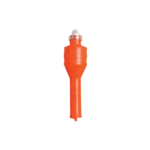
Overview
Every year, man-overboard incidents at sea result in fatalities — not always because rescue was impossible, but because the right equipment was not available, not accessible, or not capable of supporting the casualty long enough for rescue to arrive. A life ring buoy is one of the most fundamental pieces of lifesaving equipment carried on any commercial vessel, offshore installation, or passenger ship, and its performance in the critical first minutes of a man-overboard event directly determines whether a rescue succeeds. Under-specification in this area is not a procurement savings — it is a liability.
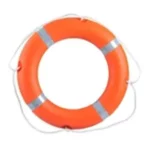
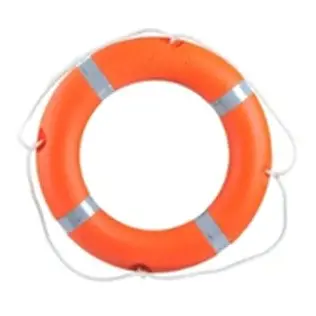
This Life Ring Buoy is a SOLAS-compliant, HDPE-covered hard PU foam ring designed to provide immediate, reliable buoyancy to a person in the water while being deployable by a single crew member in seconds. With a 14.5 kg buoyancy rating, 760 mm outside diameter, 460 mm inside diameter, and a polyethylene grab line secured by four attachment bands, it meets the dimensional and performance requirements of SOLAS Regulation III/7 and the LSA Code for ring lifebuoys carried on vessels subject to international maritime safety conventions. What sets this unit apart from lower-specification alternatives is the combination of hard PU buoyancy foam — which does not absorb water and does not degrade buoyancy performance over time — with a durable HDPE cover that resists UV exposure, salt water, and the mechanical wear of repeated stowage and deployment cycles aboard working vessels.
For vessel operators, HSE managers, and maritime procurement teams working to SOLAS compliance schedules, this life ring buoy provides a straightforward, specification-confirmed procurement option for a critical piece of mandated lifesaving equipment.
Key Features
HDPE Outer Cover — Durable, UV-Resistant Shell
The outer shell of this life ring buoy is constructed from high-density polyethylene (HDPE), a material chosen for its resistance to UV degradation, saltwater corrosion, impact damage, and the temperature cycles encountered on open vessel decks and exposed offshore structures. Unlike softer cover materials that can crack or split over time in harsh marine environments, HDPE maintains its structural integrity through extended service life — protecting the buoyancy core from damage and maintaining the ring’s shape for reliable deployment and casualty support. For safety equipment required to perform immediately and without failure after extended periods of deck stowage, cover material quality is not a secondary consideration.
Hard PU Buoyancy Core — Non-Water-Absorbing Foam
The buoyancy material is hard closed-cell polyurethane (PU) foam, which provides a consistent 14.5 kg buoyancy rating without water absorption over the service life of the unit. Open-cell or lower-density foam alternatives absorb water progressively during immersion, reducing effective buoyancy over time and compromising the unit’s ability to support a casualty during a prolonged rescue operation. Hard PU foam retains its buoyancy figure from the first deployment to the last — a requirement under SOLAS LSA Code performance standards and a genuine safety factor in real man-overboard scenarios where rescue may take several minutes or longer.
14.5 kg Buoyancy — SOLAS LSA Code Compliant
SOLAS LSA Code Chapter II, section 2.1.1.3 requires ring lifebuoys to provide a minimum buoyancy of 14.5 kg in fresh water. This unit meets that figure exactly, confirming compliance with the mandatory minimum for vessels subject to SOLAS regulations. For procurement teams and vessel operators preparing safety equipment inventories for flag state surveys, Port State Control inspections, or class society audits, a confirmed 14.5 kg buoyancy rating provides the specification evidence required for compliance documentation without additional testing or verification.
760 mm Outside Diameter / 460 mm Inside Diameter — Correct Dimensional Standard
The LSA Code specifies that ring lifebuoys shall have an outside diameter of not more than 800 mm and an inside diameter of not less than 400 mm. This unit’s 760 mm OD and 460 mm ID places it within the correct dimensional window — large enough to be thrown accurately and to encircle a casualty in the water, and with an inner opening sufficient to fit over the shoulders of an adult in bulky clothing or a lifejacket. The ±2 mm dimensional tolerance confirms precision manufacturing to consistent specifications, relevant for operators maintaining standardised equipment across a vessel fleet.
Polyethylene Grab Line — Four-Band Attachment
The polyethylene grab line is attached to the ring buoy by four bands positioned at equal intervals around the circumference. The four-point attachment distributes line tension evenly around the ring during use — whether the line is supporting a casualty in the water or being used to haul a ring back after a training throw — reducing the risk of line detachment under load. Polyethylene line is the material of choice for marine lifesaving applications due to its buoyancy, UV resistance, low water absorption, and resistance to rot and biological fouling in saltwater environments.
Orange Colour — High-Visibility Identification
The life ring buoy is manufactured in the international safety orange colour specified by SOLAS for lifesaving appliances. High-visibility orange provides maximum contrast against the grey, blue-green, and white surface conditions encountered at sea, allowing the deployed ring to be located quickly by the casualty in the water and by the bridge or rescue team monitoring from the vessel. SOLAS LSA Code requires ring lifebuoys to be of a highly visible colour — orange is the universally recognised colour for this equipment category and the standard expected by maritime safety authorities during inspections.
2.5 kg Weight — Single-Operator Deployment
At 2.5 kg, this life ring buoy is light enough to be thrown accurately by a single crew member — an important practical consideration in a man-overboard emergency where the first crew member to respond may be acting alone, under physical stress, and in adverse weather or sea conditions. The 2.5 kg weight is consistent with SOLAS LSA Code requirements that ring lifebuoys be capable of being quickly cast into the water, and it falls within the range that allows effective one-handed throwing to a useful distance from the vessel side or station.
Technical Specifications
Cover Material: HDPE (High-Density Polyethylene)
Buoyancy Material: Hard Closed-Cell PU Foam
Colour: Orange (SOLAS High-Visibility)
Outside Diameter: 760 ± 2 mm
Inside Diameter: 460 ± 2 mm
Weight: 2.5 kg
Buoyancy: 14.5 kg (fresh water)
Grab Line: Polyethylene, attached by four bands
Applicable Standard: SOLAS LSA Code Chapter II, 2.1
Benefits
The most immediate benefit of this life ring buoy is straightforward: it keeps a person in the water afloat long enough for the crew to complete a rescue. The 14.5 kg buoyancy figure is not a nominal figure — it is the minimum SOLAS requires because it is the amount proven to support an adult casualty, including one wearing a lifejacket or work clothing, through the duration of a typical shipboard rescue operation. Hard PU foam means that buoyancy figure does not degrade whether the ring is deployed once or twenty times over its service life.
From a regulatory compliance standpoint, carrying this unit satisfies the SOLAS LSA Code ring lifebuoy requirement for vessels subject to international maritime safety regulations — and the specification-confirmed dimensions, buoyancy, and material choices provide the documentation support needed for flag state surveys, Port State Control inspections, and class society audits without additional equipment testing. For procurement teams managing compliance across a fleet, specification-confirmed equipment reduces audit preparation time and eliminates the risk of non-conformance findings against lifesaving appliance inventories.
Operationally, the 2.5 kg weight and standard dimensions mean deck crew can deploy the unit rapidly under stress without specialist training, and the durable HDPE cover reduces the frequency of replacement due to surface degradation from UV exposure, saltwater, and normal deck wear — supporting a lower whole-life maintenance cost compared to softer-covered alternatives with shorter effective service lives.
Who It’s For
Vessel Masters and Deck Officers — SOLAS Compliance Management
A vessel master preparing for a Port State Control inspection or an annual safety equipment survey needs to confirm that ring lifebuoys on board meet SOLAS LSA Code requirements for buoyancy, dimensions, colour, and grab line configuration — and that replacement units being procured match the specification. This life ring buoy provides a clear specification match against SOLAS requirements, with confirmed dimensions and buoyancy rating that support compliance documentation without additional verification steps. For officers managing safety equipment across multiple stowage stations — bridge wings, lifeboat embarkation stations, and open deck positions — consistent specification across all units simplifies maintenance records and replacement scheduling.
HSE Officers and Safety Managers — Offshore and Port Facilities
Offshore platform safety officers and port facility HSE managers are responsible for ensuring that ring lifebuoys deployed at quayside, jetty, and offshore deck positions meet the applicable safety standards — whether that is SOLAS for vessel-associated equipment or local occupational health and safety regulations for onshore water-adjacent workplaces. The HDPE construction and hard PU core of this unit make it suitable for the prolonged outdoor stowage typical of quayside and offshore deck installations, where equipment may sit in position for months between inspections and needs to remain fully functional when deployed. For safety managers conducting routine visual inspections, the HDPE surface condition is a reliable indicator of overall unit serviceability.
Maritime Procurement Teams — Fleet and Vessel Outfitting
Procurement teams outfitting new vessels or replacing life-saving appliances across an existing fleet need a ring lifebuoy that is specification-confirmed against SOLAS requirements, available in quantity, and consistently manufactured to the same dimensions and buoyancy standard across production batches. The ±2 mm dimensional tolerance and confirmed 14.5 kg buoyancy figure provide the specification consistency required for fleet-wide procurement, and the identifiable material specifications (HDPE cover, hard PU core) support the procurement documentation required for class society approval of safety equipment inventories.
Possible Applications
Commercial Vessel Deck Stations
Ring lifebuoys are SOLAS-mandated equipment on commercial vessels, positioned at designated stations on open decks, bridge wings, and lifeboat embarkation areas. This unit meets the SOLAS LSA Code requirements for ring lifebuoys carried on vessels subject to international maritime safety regulations — cargo ships, tankers, bulk carriers, container vessels, and passenger ships operating on international voyages.
Offshore Oil and Gas Platforms
Offshore installations operating under MODU Code, OPITO, or facility-specific safety management systems are required to carry ring lifebuoys at muster stations, helideck perimeters, work deck positions, and lifeboat boarding areas. The durable HDPE construction and hard PU foam core make this unit suitable for the UV exposure, salt spray, and temperature cycling conditions of offshore platform deck environments in tropical, temperate, and Arctic operating areas.
Port and Harbour Facilities
Quayside, jetty, and terminal facilities are required under national occupational health and safety legislation in most jurisdictions to provide lifesaving equipment at water-adjacent working positions. Ring lifebuoys mounted at quayside stations, jetty access points, and lock and dock perimeters provide immediate man-overboard response capability for port workers — and the orange HDPE construction ensures the units remain visible and serviceable through extended outdoor stowage between uses.
Passenger and Ferry Vessels
Passenger ferries, cruise vessels, and ro-ro passenger ships carry ring lifebuoys at passenger deck stations, boarding areas, and crew-accessible positions throughout the vessel. SOLAS requirements for passenger ships include specific provisions for ring lifebuoy quantity, positioning, and light and line attachment — and this unit’s compliant dimensions and buoyancy rating provide the specification baseline for passenger vessel lifesaving appliance inventories.
Fishing Vessels
Fishing vessels operating under the Cape Town Agreement or national fishing vessel safety regulations are required to carry ring lifebuoys as part of their mandatory lifesaving appliance inventory. The practical 2.5 kg weight and standard 760 mm diameter are well-suited to the working deck environments of fishing vessels, where equipment is expected to be deployed by crew members under demanding physical conditions.
Naval and Government Vessels
Naval vessels, coast guard cutters, and government maritime patrol craft carry lifesaving equipment to SOLAS-equivalent or national naval standards. Ring lifebuoys meeting SOLAS LSA Code specifications are a baseline procurement option for government maritime procurement authorities working to internationally recognised safety standards for vessel lifesaving appliance inventories.
Marine Training Facilities and Survival Training Centres
STCW maritime training centres, survival training pools, and seamanship training facilities use ring lifebuoys in practical man-overboard response exercises and abandon ship drills. The durable HDPE construction and hard PU foam withstand the repeated deployment and recovery cycles of training use, and the confirmed SOLAS-compliant specification ensures that training equipment matches the standard of the operational equipment trainees will use at sea.
Trust & Certifications
SOLAS LSA Code — International Maritime Safety Standard
The International Convention for the Safety of Life at Sea (SOLAS) is the primary international treaty governing the safety of commercial vessels. The LSA Code (Life-Saving Appliances Code) is the mandatory technical standard adopted under SOLAS that specifies the design, performance, and testing requirements for all lifesaving appliances carried on SOLAS vessels — including ring lifebuoys. For ring lifebuoys, the LSA Code Chapter II, section 2.1 specifies minimum buoyancy (14.5 kg in fresh water), dimensional requirements (OD not more than 800 mm, ID not less than 400 mm), colour (highly visible), grab line specification, and construction requirements. This unit is specified to meet LSA Code Chapter II requirements — the standard required for vessels subject to SOLAS flag state and Port State Control enforcement.
IMO Resolution MSC.81(70) — Revised Recommendation on Testing LSA
IMO Resolution MSC.81(70) provides the revised recommendations on testing of life-saving appliances, establishing the test protocols against which LSA Code compliance is assessed. Lifesaving appliances sourced for SOLAS-flagged vessels are expected to have been tested in accordance with these recommendations — the basis on which flag state administrations and recognised organisations evaluate LSA performance claims. Procurement teams should confirm type approval documentation from the flag state administration relevant to their vessel’s registration.
Material Specification Traceability — HDPE and Hard PU
The use of HDPE (High-Density Polyethylene) for the outer cover and hard closed-cell PU foam for the buoyancy core are both identifiable, established material specifications — not proprietary descriptions. HDPE is a standardised thermoplastic material with recognised properties for UV resistance, chemical resistance, and structural performance in marine environments. Hard closed-cell PU foam is a non-water-absorbing buoyancy material used in a wide range of marine safety applications. These material identifications allow procurement teams and vessel class surveyors to verify material compliance against applicable standards without reliance on proprietary test data alone.
Accessories & Variants
Ring Lifebuoy Light — SOLAS Self-Igniting
SOLAS Regulation III/7.1.3 requires that at least one ring lifebuoy on each side of the vessel is fitted with a self-igniting light. SOLAS-approved self-igniting lights attach to the grab line of the ring lifebuoy and activate automatically on contact with water, providing a visible light source to assist night-time casualty location. Confirm the correct attachment method for your specific unit with your supplier.
Ring Lifebuoy Line and Buoyant Smoke Signal
SOLAS Regulation III/7.1.2 requires that at least one ring lifebuoy on each side of the vessel is fitted with a buoyant lifeline of not less than 30 metres in length, and that two ring lifebuoys are fitted with self-activating smoke signals and self-igniting lights. These accessories supplement the ring lifebuoy for specific SOLAS-mandated station configurations — confirm the applicable requirements for your vessel type and service area with your flag state or class society.
Ring Lifebuoy Bracket and Mounting Box
Wall-mounted brackets and weatherproof storage boxes for ring lifebuoys allow secure stowage at deck stations, quayside positions, and jetty installations while keeping the unit immediately accessible for deployment. Mounting hardware is available in GRP and stainless steel configurations for marine and offshore environments — confirm the appropriate stowage arrangement for your specific installation with your supplier.
Available Variants
Standard Life Ring Buoy — 760mm OD / 460mm ID | 2.5 kg | 14.5 kg buoyancy | HDPE cover | Hard PU foam | Orange | Polyethylene grab line | SOLAS LSA Code compliant
For life ring buoys with pre-fitted self-igniting lights, buoyant lifelines, or smoke signals as required for specific SOLAS station configurations, or for ring lifebuoys to alternative dimensional specifications for non-SOLAS applications, contact the supplier to confirm available options and compliance documentation.
Related Lifesaving Equipment
Lifebuoy Self-Igniting Lights — SOLAS-approved water-activated lights for ring lifebuoy night-time visibility requirements
Buoyant Lifelines — 30-metre polyethylene lifelines for ring lifebuoy deployment with line, as required by SOLAS Regulation III/7
Immersion Suits and Lifejackets — Personal lifesaving appliances for crew and passenger use, specified to SOLAS LSA Code requirements
Man-Overboard (MOB) Poles and Markers — Quick-deploy MOB marker systems for immediate casualty position marking at man-overboard incident locations
Get in Touch
If you are procuring life ring buoys for a commercial vessel, offshore installation, port facility, or fleet outfitting programme — or if you need confirmation of SOLAS compliance documentation, quantity availability, or compatibility with self-igniting lights and lifeline accessories — contact us to discuss your specific requirement and request a formal procurement quotation.
Our team can support product selection against your SOLAS or facility safety specification, confirm current stock availability, and provide the documentation required for class society approval and Port State Control compliance.
📍 3791 Jalan Bukit Merah #06-01, E-Centre @ Redhill, Singapore 159471