Cart (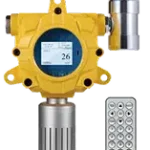
Overview
Airborne dust in industrial environments is a hazard that operates on two separate timescales simultaneously. In the short term, high dust concentrations create explosion risk in environments where combustible particulate matter — coal dust, grain dust, wood dust, metal powders — can ignite from a single spark. Over the long term, workers chronically exposed to respirable dust accumulate silica, asbestos fibres, coal particles, or other hazardous particulates in their lungs, leading to occupational lung disease that develops over years without obvious acute symptoms. Both risks require continuous, real-time monitoring — not periodic manual sampling — to be effectively managed.
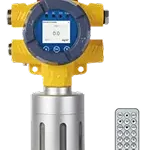
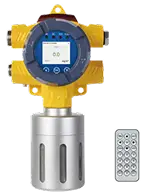
The BH-DX 103-TSP fixed dust detector is a permanently installed, continuously operating total suspended particulate (TSP) monitor designed for industrial dust monitoring applications. Using laser scattering technology to measure airborne particulate mass concentration in real time, it outputs a standard 4–20mA analogue signal alongside an RS485 digital communication interface — connecting directly into a facility’s DCS, PLC, or building management system for centralised monitoring, alarm management, and data logging without requiring any proprietary controller or gateway hardware.
Manufactured by Bosean Electronic Technology Co., Ltd. and supplied by Alright Engineering Solutions Pte Ltd — Singapore-based authorised distributors of fixed gas and dust detection equipment serving the maritime and industrial sectors across the Asia-Pacific region — the BH-DX 103-TSP stands out in the fixed TSP monitor category through the combination of its die-cast aluminium explosion-proof and corrosion-resistant housing, its humanised GUI colour LCD display, and its dual analogue/digital output capability. Most fixed dust monitors at this level offer either 4–20mA or RS485, not both simultaneously — the dual output allows the BH-DX 103-TSP to integrate into analogue-based safety alarm systems and digital data management platforms at the same time, without signal splitting hardware.
Key Features
1. Laser Scattering TSP Detection — 0 to 300 mg/m³ Range
The BH-DX 103-TSP uses laser scattering as its measurement principle — the same optical sensing technology used in high-accuracy environmental monitoring instruments. A laser beam passes through the sampled air; particles in the beam scatter light in proportion to their size and concentration, and the detector’s photodetector array converts this scattered light signal into a mass concentration reading in mg/m³. The detection range of 0–300 mg/m³ covers the full span from background dust levels in clean industrial environments through to the heavy dust concentrations encountered during active mining, grinding, or bulk materials handling operations. TSP measurement captures all airborne particulate matter regardless of size — including the larger particles above 10 µm that are excluded from PM10 measurements but which contribute to explosion risk, visibility reduction, and equipment fouling in industrial environments.
2. High-Definition Colour LCD Display — Humanised GUI Interface
The BH-DX 103-TSP features a colour LCD screen with a humanised graphical user interface designed for readability and ease of use at the detector head. Real-time TSP concentration readings, alarm status, output signal level, and system diagnostics are displayed simultaneously without requiring the operator to navigate menus to find current measurement data. The colour display differentiates between normal operating status, warning levels, and alarm states through colour-coded screen states — providing immediate visual indication of dust concentration status to any worker passing the installation point. For facilities where walk-around monitoring rounds are part of the daily operational routine, a readable, information-rich display at each detector head reduces the dependency on a central monitoring room for basic operational status checks.
3. Dual Output — Standard 4–20mA Analogue and RS485 Digital
The BH-DX 103-TSP provides both a standard 4–20mA analogue output and an RS485 digital communication interface simultaneously. The 4–20mA signal can be wired directly into any compatible safety alarm panel, PLC input card, or DCS analogue input — the industry-standard signal for process instrumentation, compatible with virtually all industrial control and safety system hardware without signal conditioning. The RS485 digital output carries the full measurement data — concentration value, alarm status, device identifier, and diagnostics — to a supervisory computer or SCADA system, enabling higher-resolution data logging, remote configuration, and integration with facility-wide environmental monitoring platforms. Having both outputs active simultaneously means the BH-DX 103-TSP can feed the safety alarm system through the 4–20mA channel while simultaneously logging detailed concentration data through the RS485 channel — two functions served by one installed instrument.
4. Integrated Sound and Light Alarm with Adjustable Setpoints
The BH-DX 103-TSP incorporates an integrated audible and visual alarm system at the detector head, activated when TSP concentration exceeds the user-configured alarm threshold. The alarm setpoint is adjustable to match the facility’s specific dust exposure limits, regulatory thresholds, or internal safety policy triggers. Local alarm activation at the detector head provides immediate warning to workers in the immediate vicinity of the dust source — independently of whether the central control room is staffed or the supervisory system has processed the alarm. This local alarm capability is particularly valuable in large facilities where the time between a dust concentration spike and a control room response may be long enough for significant exposure to accumulate, or where the control room is not continuously manned during all operational hours.
5. Explosion-Proof and Corrosion-Resistant Die-Cast Aluminium Housing
The BH-DX 103-TSP’s enclosure is constructed from die-cast aluminium with an explosion-proof and corrosion-resistant finish — appropriate for permanent installation in environments where combustible dust concentrations may themselves create explosion hazard classifications. In industries handling coal dust, grain dust, wood dust, or metal powders, the dust being monitored may be explosive, which means the monitoring instrument must itself be rated for installation in that explosive dust atmosphere. The die-cast aluminium construction provides the housing integrity required for explosion-proof ratings while delivering significantly better corrosion resistance than steel housings in humid, chemically active, or coastal environments. Wall-mounted or pipeline-type installation is supported through the standard mounting arrangements on the housing.
6. Long-Term Continuous Operation — DC 24V, Natural Diffusion Sampling
The BH-DX 103-TSP is powered from a standard DC 24V (13.6V) industrial supply — the same power rail used for fixed gas detectors, transmitters, and instrumentation in industrial installations, simplifying integration into existing instrumentation power distribution. Natural diffusion sampling draws airborne dust passively across the laser measurement cell without a pump — eliminating the moving parts, maintenance requirements, and potential failure modes of pump-assisted dust monitors. The working mode is long-term continuous operation, with a working temperature range of -40°C to +70°C covering the full range of industrial and outdoor environments encountered across the Asia-Pacific region, from tropical coastal installations to cold storage facilities and high-altitude industrial sites.
7. Embedded Microcontroller Technology — Simple Operation, High Reliability
The BH-DX 103-TSP uses embedded micro-control technology with a humanised operation interface designed for straightforward field use by non-specialist personnel. Configuration of alarm setpoints, output scaling, and display parameters is accessible through the front panel interface without requiring laptop software, proprietary programming tools, or specialist calibration equipment. The embedded processor applies signal processing to the raw laser scattering data to produce stable, repeatable concentration readings that are resistant to false alarms from transient vibration, optical contamination, or rapid environmental changes — important for instruments in active industrial environments where measurement stability directly affects operational confidence in the monitoring system.
Technical Specifications
Model: BH-DX 103-TSP Fixed Dust Detector (Bosean — Supplied by Alright Engineering Solutions Pte Ltd)
Detection Parameter: Total Suspended Particulate matter (TSP)
Measurement Range: 0–300 mg/m³
Measurement Principle: Laser scattering
Sensor Type: Laser sensor
Sampling Method: Natural diffusion
Display: Colour LCD — humanised GUI interface
Analogue Output: Standard 4–20mA
Digital Output: RS485
Alarm: Integrated sound and light alarm; adjustable alarm setpoint
Supply Voltage: DC 24V (13.6V)
Working Temperature: -40°C to +70°C
Working Humidity: ≤95% RH (no condensation)
Working Pressure: 86–106 kPa
Working Mode: Long-term continuous operation
Housing Material: Die-cast aluminium — explosion-proof and corrosion-resistant
Installation: Wall-mounted or pipeline type
Dimensions: 265×15×170mm (approximately 2kg)
Weight: Approximately 2kg
IP Rating: Suitable for harsh industrial environments (confirm with supplier for specific IP classification)
Wireless Connectivity: None (RS485 hardwired digital output)
Battery: Not applicable — DC mains powered, continuous operation
Data Logging: Via connected RS485 host computer or DCS/SCADA system
Benefits
The most direct operational benefit of deploying the BH-DX 103-TSP at dust-generating locations in a facility is the shift from reactive dust management to data-driven dust control. Without continuous monitoring, dust levels are assessed through scheduled manual sampling — providing a snapshot of conditions at the moment of sampling, which may not reflect the peak exposures that workers experience during active operations. The BH-DX 103-TSP provides a continuous concentration record that captures peak events, shows the duration and magnitude of elevated dust episodes, and provides the data that occupational hygienists, HSE managers, and process engineers need to identify whether engineering controls — ventilation, water suppression, enclosure — are actually reducing dust concentrations to safe levels.
The dual 4–20mA and RS485 output capability means the BH-DX 103-TSP integrates into both the safety alarm layer and the data management layer of a facility’s monitoring infrastructure simultaneously, without additional hardware. The 4–20mA output drives alarm panel inputs and PLC-based interlocks that activate ventilation or process shutdowns when dust levels reach preset thresholds — making the detector an active component in the facility’s dust control system. The RS485 output feeds time-stamped concentration data to a central logging system or SCADA platform, building the historical exposure record needed for occupational health compliance reporting, dust risk assessment reviews, and regulatory submissions.
For facilities operating in industries where dust exposure is regulated under specific occupational health standards — Singapore’s Workplace Safety and Health Act, Australia’s Work Health and Safety Regulations, or equivalent frameworks across the Asia-Pacific region — continuous fixed-point TSP monitoring with a logged data record provides a significantly stronger compliance demonstration than periodic manual sampling alone. Regulators increasingly expect continuous monitoring data rather than spot samples for high-risk dust environments, and the BH-DX 103-TSP’s RS485 digital output is designed specifically to support this continuous data collection requirement.
The -40°C to +70°C operating temperature range and die-cast aluminium explosion-proof housing mean the BH-DX 103-TSP can be permanently installed in the locations where it is most needed — at dust generation sources inside process enclosures, at conveyor transfer points, at grinder exhausts, in mill buildings — rather than being restricted to clean, controlled environments that are unrepresentative of actual worker exposure conditions.
Who It’s For
Occupational Hygienists and HSE Managers in Mining and Minerals Processing: If you are responsible for demonstrating that worker exposure to respirable and total dust is being controlled within regulatory limits at an underground or surface mining operation, a quarry, or a minerals processing facility, the BH-DX 103-TSP provides the continuous fixed-point TSP monitoring data that manual personal sampling alone cannot deliver. Fixed monitoring at key locations — crusher feeds, conveyor transfer points, drill areas, screening plants — builds a continuous operational exposure record that supplements personal monitoring results and supports the dust control programme’s effectiveness review.
Process Engineers and Safety Managers in Combustible Dust Industries: In industries handling coal, grain, wood, starch, metal powders, or any other combustible dust, ATEX/IECEx or equivalent dust explosion classification requirements apply to fixed electrical equipment installed in areas where explosive dust atmospheres may be present. The BH-DX 103-TSP’s explosion-proof die-cast aluminium housing addresses this requirement, allowing permanent installation at dust monitoring points within classified areas — where monitoring is most needed — without compromising the area’s hazardous classification integrity. Fixed TSP monitoring at ignition-critical locations provides the real-time concentration data needed to implement automated dust suppression or process shutdown controls before concentrations reach explosive levels.
Environmental and Compliance Officers in Industrial Facilities: For facilities subject to environmental permit conditions that limit fugitive dust emissions — from bulk handling terminals, cement plants, asphalt mixing operations, or industrial processing sites with community-proximity dust management obligations — continuous fixed-point TSP monitoring with RS485 data logging provides the real-time and historical data needed to demonstrate permit compliance, respond to dust complaints with factual concentration records, and support applications for permit renewals or condition modifications with documented monitoring data.
Possible Applications
Underground and Surface Coal Mining: Continuous TSP monitoring at working faces, roadway intersections, conveyor transfer points, and ventilation measurement stations — supporting statutory dust monitoring requirements and providing real-time data for water spraying and ventilation control systems.
Quarrying and Aggregates Processing: Fixed dust monitoring at crushers, screens, conveyors, and loadout areas where stone, sand, and gravel processing generates high-concentration dust events that require both worker exposure management and community impact control.
Grain Handling and Food Processing: TSP monitoring in grain silos, elevator legs, bucket conveyors, and milling areas where grain dust creates both chronic worker exposure risk and explosion hazard from accumulated settled dust and airborne concentrations above the MEC (minimum explosive concentration).
Cement Manufacturing and Construction Materials: Fixed dust monitoring in clinker handling areas, cement grinding mills, packing lines, and raw material transfer points — environments with high TSP concentrations requiring both occupational health monitoring and regulatory dust emission compliance.
Metalworking and Welding Fabrication Shops: Fixed monitoring in grinding areas, cutting zones, and welding bays where metal dust and fume creates chronic exposure risk and, in the case of reactive metal dusts (aluminium, magnesium), explosion hazard.
Woodworking and Timber Processing: TSP monitoring in sawmills, sanding operations, and wood machining areas where wood dust is a respiratory hazard and a combustible dust explosion risk — particularly relevant for fine dust from medium-density fibreboard (MDF) and hardwood machining.
Pharmaceutical and Chemical Powder Manufacturing: Fixed dust monitoring in powder handling, blending, filling, and packaging areas where active pharmaceutical ingredient (API) dust and chemical powder concentrations require both occupational exposure control and explosion prevention monitoring.
Port and Bulk Materials Handling Terminals: Perimeter and operational area TSP monitoring at bulk commodity terminals handling coal, iron ore, grain, fertiliser, or other dusty cargoes — supporting both worker protection and community dust impact management under environmental permit conditions.
Trust and Certifications
Laser Scattering Measurement Principle — Established Industrial Standard: Laser scattering (also termed optical particle counting or nephelometry depending on the measurement approach) is a well-established and internationally recognised measurement principle for airborne particulate matter monitoring in both occupational health and environmental monitoring contexts. It is the technology used in reference instruments for regulatory compliance monitoring and in continuous ambient air quality monitoring networks globally. The BH-DX 103-TSP applies this measurement principle in a fixed-installation industrial form factor with industrial-grade signal outputs, bringing the accuracy and continuity of laser-based dust monitoring to in-process industrial environments.
4–20mA Output — Industry-Standard Process Signal: The 4–20mA analogue signal is the universal standard for process instrumentation in industrial safety and control systems. It is compatible with safety controllers, PLCs, DCS systems, and alarm panels from all major automation system manufacturers, making the BH-DX 103-TSP directly integrable into any existing industrial instrumentation infrastructure without proprietary interfaces.
RS485 Digital Communication: RS485 is the industry-standard serial communication protocol for industrial instrumentation, supporting multi-drop wiring (multiple devices on a single bus), long cable runs up to 1,000 metres, and compatibility with SCADA systems, industrial computers, and data loggers from all major suppliers. RS485 connectivity allows the BH-DX 103-TSP to be integrated into a facility’s dust monitoring data management system with standard, universally available hardware and software.
Explosion-Proof and Corrosion-Resistant Die-Cast Aluminium Housing: The housing is constructed to explosion-proof standards suitable for installation in environments where combustible dust creates a classified hazardous area — the same environments where the TSP monitor is most needed. Die-cast aluminium provides superior corrosion resistance to steel enclosures in humid, chemically active, and coastal environments, extending the installed service life of the instrument.
Bosean Electronic Technology Co., Ltd.: Bosean is an established specialist gas and dust detection manufacturer producing fixed, portable, and multi-parameter detection instruments for industrial, environmental, and commercial safety applications globally. The BH-DX 103-TSP is part of Bosean’s fixed dust detector product line, with full technical documentation available through the authorised distribution network.
Alright Engineering Solutions Pte Ltd — Authorised Distributor: Alright Engineering Solutions is a Singapore-based engineering solutions company serving the maritime and industrial sectors across the Asia-Pacific region. As an authorised distributor of fixed gas and dust detection equipment, Alright Engineering Solutions provides full product support including supply, installation guidance, technical consultation, and after-sales service. Full product portfolio available through alrightes.com.
Accessories and Variants
Mounting Bracket (Wall-Mounted Installation): Standard mounting hardware for wall-mounted installation at the selected monitoring point. Positioning guidance — sensor height, distance from dust source, airflow direction — available from Alright Engineering Solutions for specific application and location requirements.
Pipeline Installation Fittings: For pipeline-type installation where the BH-DX 103-TSP is mounted in line with a duct, exhaust stack, or process enclosure — allowing dust concentration measurement within a controlled airflow path rather than in the open environment.
RS485 to USB Converter: For connection of the BH-DX 103-TSP’s RS485 output to a PC or laptop for configuration, data viewing, and data export during commissioning, maintenance, and periodic data review without a permanent SCADA connection.
4–20mA Signal Cables and Junction Boxes: Standard 3-core shielded instrumentation cable and weatherproof junction boxes for analogue signal wiring from the BH-DX 103-TSP to the connected alarm panel or PLC input — available locally or through Alright Engineering Solutions for turnkey supply.
Compatible Central Alarm Controllers and Data Loggers: The BH-DX 103-TSP’s 4–20mA and RS485 outputs are compatible with a range of central dust monitoring controllers, gas alarm panels, and industrial data loggers. Alright Engineering Solutions can advise on compatible central monitoring solutions for installations requiring multi-point dust concentration management and data archiving.
Available Variants:
BH-DX 103-TSP (this model): Total Suspended Particulate, 0–300 mg/m³, laser scattering, wall-mounted or pipeline installation
Alternative detection ranges and particulate size fractions (PM10, PM2.5) may be available on the BH-DX platform — contact Alright Engineering Solutions to confirm available configurations for your specific monitoring requirement and regulatory threshold
Ready to Specify the BH-DX 103-TSP for Your Facility?
Whether you are establishing a new dust monitoring system at a mining operation, extending existing monitoring coverage at a bulk handling terminal, or replacing older dust measurement equipment with a laser-based continuous monitoring solution, the BH-DX 103-TSP offers the measurement capability, signal outputs, and housing robustness that industrial fixed-point TSP monitoring requires.
To request a formal quotation, discuss installation requirements and system integration, or get technical advice on detector positioning, alarm setpoint configuration, and RS485 network design for your application, contact the Alright Engineering Solutions team directly. We support the full specification and procurement process — from initial monitoring point selection through to installation guidance and ongoing instrument maintenance support.