Cart (
Overview
In industrial environments where gas hazards are a daily operational reality — mines, refineries, sewers, chemical plants, confined spaces — personal gas detection is not a feature of a safety programme. It is the baseline. The question for procurement teams and HSE officers is not whether to deploy personal gas monitors, but which instrument offers the right balance of reliability, durability, detection capability, and cost of ownership for their specific workforce and environment.
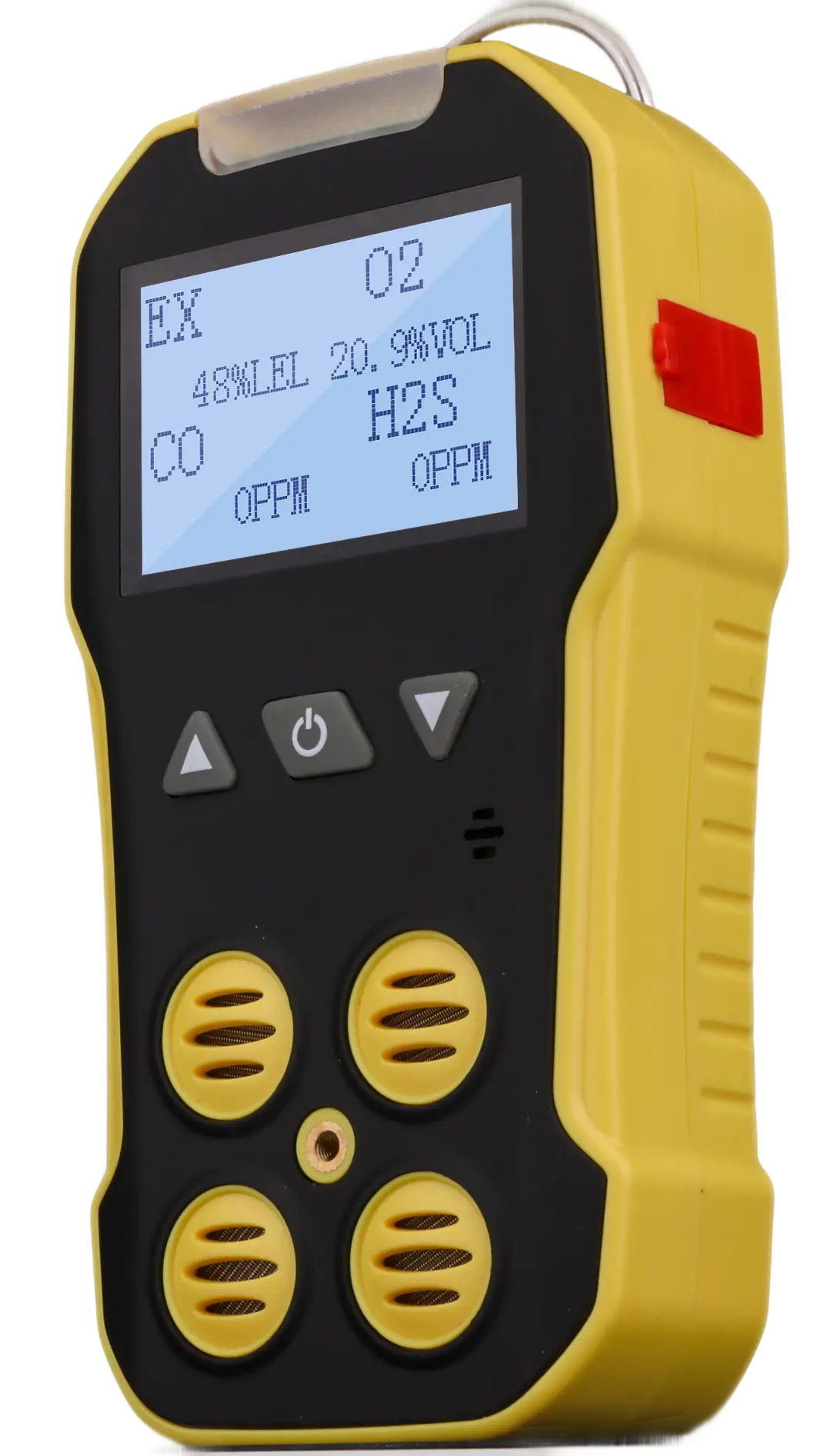
The BH-4A portable multi gas detector from Bosean is a purpose-built industrial four-gas monitor designed for exactly this context. It detects oxygen (O2), hydrogen sulphide (H2S), carbon monoxide (CO), and combustible gases (LEL) simultaneously — the four parameters that form the basis of confined space entry requirements under virtually every industrial safety standard globally. It does this with high-quality industrial-grade electrochemical sensors, a rugged three-defence housing (waterproof, dustproof, explosion-proof), and a 32-bit built-in MCU that provides the processing reliability that field instruments need to perform consistently over a 2-year sensor lifespan.
Manufactured by Bosean Electronic Technology Co., Ltd. and supplied by Alright Engineering Solutions Pte Ltd — Singapore-based authorised distributors of personal and portable gas detection equipment for the maritime and industrial sectors across the Asia-Pacific region — the BH-4A stands out in its category through the combination of its Ex IIB T3 Gb explosion-proof certification, its industrial-grade sensor specification, and its compact 200g form factor. At those dimensions and that weight, it is genuinely wearable all day without worker fatigue or interference with other PPE — something that heavier, more feature-loaded instruments in the same price bracket cannot always claim.
Key Features
1. Simultaneous Four-Gas Detection — O2, H2S, CO, and LEL
The BH-4A monitors all four standard confined space entry gases at the same time from a single instrument. Oxygen (O2) is measured across a 0–30% VOL range, hydrogen sulphide (H2S) from 0–100 ppm, carbon monoxide (CO) from 0–999 ppm, and combustible gases (EX/LEL) from 0–100% LEL. Detection accuracy is rated at better than ±5% full scale across all channels, and the device ships factory calibrated — ready to switch on and use immediately without requiring a calibration event before first deployment. For teams that need to get instruments into service quickly without in-house calibration capability, this is a meaningful practical advantage.
2. Industrial-Grade Electrochemical Sensors with 2-Year Sensor Life
The BH-4A uses high-quality electrochemical sensors — the detection technology used in professional-grade industrial gas monitoring instruments for toxic gas and oxygen measurement. Electrochemical sensors provide excellent sensitivity, good selectivity, and a well-understood degradation profile, which is why they remain the standard technology for H2S, CO, and O2 detection in safety-critical applications. The sensors are rated for a 2-year operational life under normal usage conditions, which sets the maintenance interval for sensor replacement planning and calibration schedule management. The 32-bit built-in MCU provides high reliability and self-adaptation capability, maintaining measurement accuracy as sensor characteristics change gradually over the sensor’s operational life.
3. Three-Defence Design — Waterproof, Dustproof, and Explosion-Proof
The BH-4A’s housing meets the three-defence standard that is effectively the minimum requirement for portable gas detectors used in heavy industrial environments: waterproof protection against rain, wash-down, and incidental liquid exposure; dustproof protection against particulate ingress in dusty mining, construction, and processing environments; and explosion-proof design rated to Ex IIB T3 Gb, certifying the device for use in Group IIB explosive atmospheres. The outer shell is constructed from high-strength ABS engineering plastics with composite anti-slip rubber, providing a secure grip in contaminated or wet hand conditions and meaningful impact resistance against the kind of drops and knocks that happen in active field work. The combination of these three protective characteristics is what separates an instrument designed for industrial use from one that is merely rated for it on paper.
4. Ex IIB T3 Gb Explosion-Proof Certification
The BH-4A carries an Ex IIB T3 Gb explosion-proof rating — certifying it for use in Group IIB hazardous areas, which covers a range of gases including ethylene and hydrogen in addition to the more commonly encountered Group IIA gases like methane and propane. The Gb equipment protection level confirms suitability for Zone 1 areas where explosive atmospheres are likely to occur under normal operating conditions — not just occasionally. For HSE teams operating in petroleum refining, chemical processing, or any environment where Group IIB gases may be present, this certification level is a non-negotiable procurement requirement. Deploying a device with a lower explosion-proof rating in a Group IIB environment is not a cost saving; it is a compliance and liability risk.
5. Three Alarm Methods — Sound, Light, and Vibration
When any monitored gas reaches a preset alarm threshold, the BH-4A activates three simultaneous alarm channels: an audible buzzer (up to 80dB), LED visual alarm indicators, and a vibrating alert. Alarm setpoints are user-adjustable for both Low and High thresholds across each gas channel, allowing safety managers to configure the device to match site-specific exposure limits or internal safety policies rather than being locked to factory defaults. In environments where noise levels or hearing protection might reduce the effectiveness of an audible-only alarm — underground mines, engine rooms, heavy processing facilities — the combination of visual and vibration alarms ensures the worker is alerted regardless of the ambient conditions. All alarm events are logged with a digital timestamp, providing an automatic exposure record for compliance documentation and incident investigation.
6. 2.0-Inch LCD Display with Real-Time Multi-Gas Readout
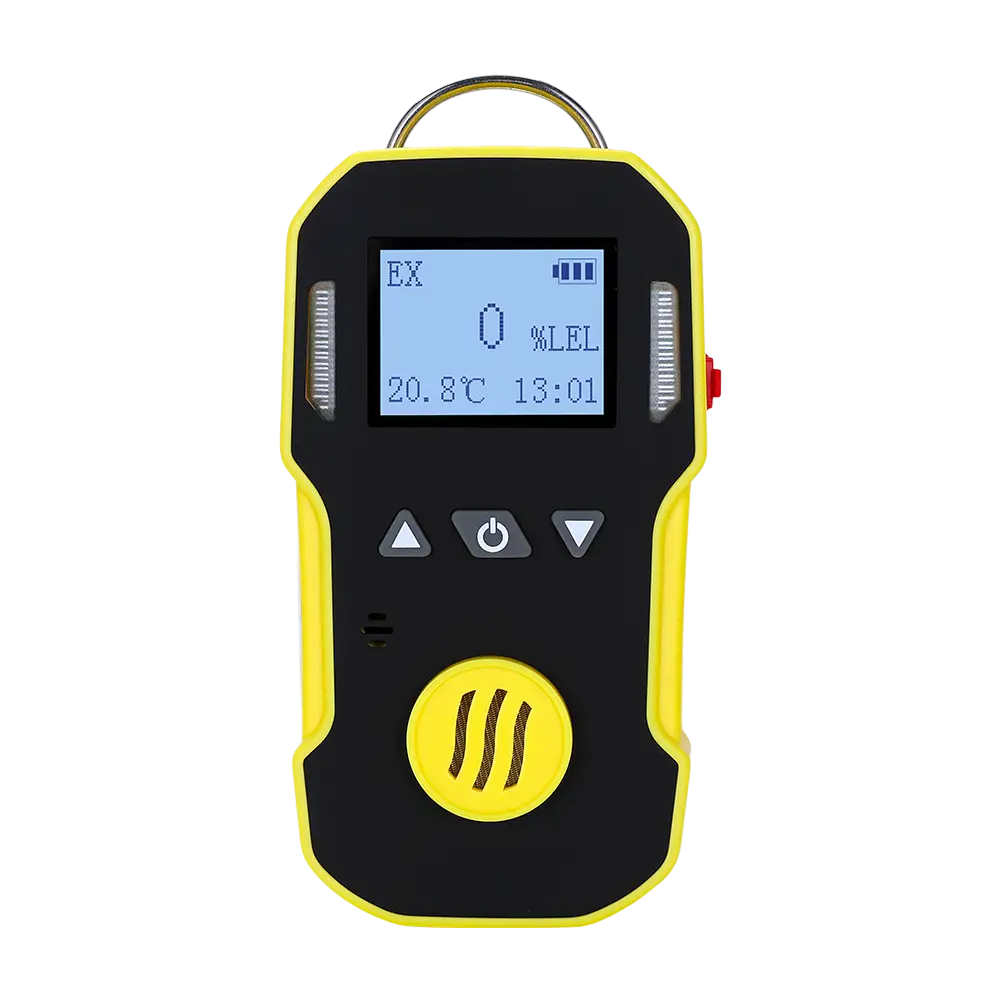
The BH-4A’s 2.0-inch LCD screen displays real-time concentration readings for all four monitored gases simultaneously, alongside battery status and system indicators. The display is described as providing intuitionistic, abundant, and clear indication — designed so that a worker can read their current gas exposure levels at a glance without needing to navigate menus or switch between screens. For field workers who need to keep their attention on the work rather than on the instrument, a clear and unambiguous display is as important as sensor accuracy. The LCD also displays alarm status and device operating mode, keeping the worker informed about instrument condition throughout the shift.
7. Large-Capacity 1800mAh Battery — 8 Hours Continuous Working Time
The BH-4A runs on a 1800mAh lithium battery rated for 8 hours or more of continuous working time — sufficient for a standard industrial shift without mid-shift recharging. The battery has an estimated lifespan of approximately 800 charge cycles before capacity degradation becomes significant, providing several years of daily charge-use cycles before replacement is needed. Charging time is 6 hours or less via the Micro USB port. The device operates at DC 3.7V, and the battery capacity is appropriately sized for the BH-4A’s diffusion-only sensor configuration without the additional power demands of wireless connectivity modules or pump motors.
8. Compact and Lightweight — 130×67×30mm at Approximately 200g
At 130×67×30mm and approximately 200g, the BH-4A is genuinely compact for a four-gas instrument. It fits in a shirt or jacket pocket, clips to a belt or harness, and does not add meaningful physical burden to a worker wearing it alongside other PPE for a full shift. For organisations equipping large numbers of workers — maintenance teams, confined space entry crews, inspection engineers — the physical wearability of the chosen instrument has a direct impact on compliance. Workers are more likely to wear a device consistently throughout a shift if it is unobtrusive; a bulky or heavy instrument gets left in a bag or vehicle.
Technical Specifications
Model: BH-4A Portable Multi Gas Detector (Bosean — Supplied by Alright Engineering Solutions Pte Ltd)
Display: 2.0-inch LCD — real-time multi-gas concentration, battery status, system indicators
Dimensions: 130×67×30mm (L×W×H)
Weight: Approximately 200g
Sampling Method: Natural diffusion
Gas Detection: O2 (0–30% VOL), H2S (0–100 ppm), CO (0–999 ppm), LEL/EX (0–100% LEL)
Detection Accuracy: ≤±5% full scale across all channels
Battery: 1800mAh lithium battery; DC 3.7V; ~800 charge cycles
Charging Interface: Micro USB
Charging Time: ≤6 hours
Working Time: ≥8 hours continuously
Response Time: T90 ≤60s (natural diffusion)
Operating Temperature: -10°C to +55°C
Operating Humidity: ≤95% RH (no condensation)
Alarm Types: Sound (up to 80dB), LED visual, vibration; adjustable Low/High setpoints per channel; digital timestamp alarm logging
Wireless Connectivity: None (USB data transfer to PC)
Data Logging: Digital timestamp alarm event logging; USB connection to host computer
Sensor Life: 2 years (dependent on specific usage environment)
Safety Approvals: Ex IIB T3 Gb (explosion-proof, Group IIB gases, Zone 1 / Gb equipment protection level)
IP Rating: IP65 (dustproof and protected against water jets)
Housing: High-strength ABS engineering plastics with composite anti-slip rubber; waterproof, dustproof, explosion-proof (three-defence design)
Benefits
The BH-4A’s most immediate practical benefit is straightforward: a single instrument that covers the complete standard four-gas confined space entry requirement — O2, H2S, CO, and LEL — at a form factor and weight that makes it genuinely wearable for a full shift. For organisations where personal gas detection has historically suffered from poor compliance because workers find instruments bulky or uncomfortable, the BH-4A’s 200g, pocket-sized profile removes the physical barrier to consistent device wear.
Factory calibration on delivery means the BH-4A is immediately deployable. There is no waiting for a calibration event before first use, no specialist calibration equipment needed at point of delivery, and no delay in getting instruments into the hands of workers who need them. For procurement teams responding to an urgent safety requirement or scaling up a programme quickly, this is a meaningful operational advantage over instruments that require calibration before first use.
The Ex IIB T3 Gb certification provides a level of explosion-proof protection that covers a broader range of gas hazards than the more commonly specified IIA rating. For operations in petrochemical environments, offshore facilities, or any site where ethylene, hydrogen, or other Group IIB gases may be present alongside the standard four-gas hazards, this certification means the BH-4A can be deployed without requiring a separate, higher-rated instrument for hazardous area entry — simplifying equipment management and reducing the total number of instrument types in a safety programme.
The digital timestamp alarm logging ensures that every exposure event is recorded automatically — with time, gas type, and concentration captured without any manual input from the worker. For HSE teams maintaining COSHH exposure records, responding to incident investigations, or demonstrating compliance to regulatory bodies, this automatic audit trail is produced as a by-product of normal device operation, not as an additional administrative task.
Who It’s For
Confined Space Entry Teams in Utilities, Wastewater, and Construction: If your team enters manholes, sewers, tanks, vaults, and underground service corridors as a routine part of their work, the BH-4A gives every worker a fully capable four-gas personal monitor at a weight and size that does not interfere with the physical demands of confined space work. It covers the four gases that your permit-to-work procedure requires monitoring for, and the factory calibration means new units are ready to issue immediately upon arrival without any intermediate calibration event.
HSE Officers and Equipment Managers in Mining and Heavy Industry: If you are responsible for equipping workers in underground mines, quarries, or heavy processing plants with personal gas detection, the BH-4A’s Ex IIB T3 Gb rating, three-defence housing, and industrial sensor specification make it a credible choice for environments where the conditions are physically demanding and the gas hazards span both toxic and combustible categories. The 2-year sensor life and standardised Micro USB charging simplify fleet maintenance planning, and the compact form factor reduces the likelihood of workers removing or not wearing their monitors during the shift.
Procurement Managers Standardising Multi-Site Gas Detection Programmes: If you are sourcing personal gas detection equipment across multiple sites or a large workforce, the BH-4A offers a proven four-gas instrument at a practical price point, with the industrial credentials — explosion-proof certification, three-defence housing, industrial sensors — that justify deployment in a broad range of site environments without needing different instrument specifications for different locations. Standardising on a single instrument type across a programme reduces training time, simplifies calibration scheduling, and makes spare parts and sensor replacement management significantly more straightforward.
Possible Applications
Confined Space Entry — Tanks, Vessels, and Underground Structures: Pre-entry atmospheric monitoring and continuous in-space personal protection for workers entering storage tanks, process vessels, sewers, manholes, and below-grade service infrastructure where O2, H2S, CO, and LEL hazards must be monitored simultaneously.
Underground Mining and Tunnelling: Personal four-gas monitoring for underground mine workers and tunnel construction crews where methane (LEL), CO from blasting, O2 deficiency, and H2S from geological sources are concurrent hazards.
Oil and Gas — Upstream and Downstream: Personal monitoring for workers at wellheads, processing facilities, pipeline inspection stations, and refineries — environments where H2S, combustible gas, and CO are routine hazards alongside potential O2 deficiency in enclosed process areas.
Wastewater Treatment and Sewerage Operations: H2S and methane monitoring alongside O2 and CO for treatment plant operators, sewer inspection crews, and pump station maintenance workers in environments where biological decomposition creates rapid and unpredictable gas accumulation.
Shipbuilding and Ship Repair — Enclosed Spaces: Four-gas monitoring for shipyard workers entering cargo holds, double-bottom tanks, ballast tanks, and void spaces during construction, inspection, and repair operations — environments where O2 deficiency, LEL, H2S, and CO hazards are commonly co-present.
Chemical Manufacturing and Processing: Personal monitoring during maintenance shutdowns, vessel entry, and equipment inspection in chemical plants where toxic and combustible gas releases are process hazards and documented atmospheric monitoring is a requirement of the permit-to-work system.
Firefighting and Emergency Response: Post-incident atmospheric assessment in structures or industrial environments following fire or explosion — the four-gas combination covers the primary by-product gases of combustion (CO, combustibles) alongside the O2 and H2S hazards that may be present in industrial post-incident environments.
Facilities Management — Boiler Rooms, Plant Rooms, and Underground Car Parks: CO and combustible gas monitoring for building services engineers and facilities managers working in enclosed mechanical plant environments where combustion equipment and vehicle exhaust create ongoing gas hazards.
Trust and Certifications
Ex IIB T3 Gb — Explosion-Proof Certification: The BH-4A is certified to the Ex IIB T3 Gb explosion-proof standard, covering use in Group IIB hazardous areas — environments where gases including ethylene and hydrogen may be present. Group IIB covers a broader range of explosive gas hazards than the more commonly specified Group IIA rating, making the BH-4A suitable for petrochemical, hydrogen-handling, and chemical processing environments in addition to the standard oil and gas applications. The Gb equipment protection level confirms Zone 1 suitability — areas where explosive atmospheres occur under normal operating conditions, not just in fault scenarios.
IP65 Protection Rating: The BH-4A carries an IP65 ingress protection rating — fully dustproof and protected against water jets from any direction. This level of protection covers the physical exposure conditions of most industrial working environments including rain, wash-down water, and dusty processing or mining environments.
Three-Defence Design Standard: Waterproof, dustproof, and explosion-proof — the three-defence designation confirms the BH-4A meets all three physical protection requirements that industrial portable gas detectors must satisfy for deployment in heavy industrial, mining, and hazardous process environments.
Factory Calibration: The BH-4A is supplied factory calibrated, with detection accuracy rated at better than ±5% full scale across all gas channels. This accuracy standard is consistent with professional industrial gas monitoring requirements and means monitoring data is usable for compliance purposes from the first day of deployment.
Bosean Electronic Technology Co., Ltd.: Bosean is an established specialist gas detection manufacturer producing a comprehensive range of portable, fixed, and multi-gas detection instruments for industrial, environmental, and commercial safety applications globally. The BH-4A is one of Bosean’s core portable multi-gas detector models, with a well-established track record across international industrial markets.
Alright Engineering Solutions Pte Ltd — Authorised Distributor: Alright Engineering Solutions is a Singapore-based engineering solutions company serving the maritime and industrial sectors across the Asia-Pacific region. As an authorised distributor of personal and portable gas detection equipment, Alright Engineering Solutions provides full product support including supply, technical consultation, calibration guidance, and after-sales service. Full product portfolio available through alrightes.com.
Sensor Warranty: 2-year sensor life under normal usage conditions. Bosean provides a limited warranty covering manufacturing defects — warranty terms available on request through Alright Engineering Solutions.
Accessories and Variants
Aluminium Storage and Carry Case: The BH-4A is recommended for storage in its metal aluminium carry case when not in use — protecting the device from physical damage and environmental exposure during transport and storage between deployments.
Calibration Cap: Included with the device for zero and span calibration procedures. The calibration cap is used to deliver calibration gas to the sensor array during field calibration events, ensuring accurate coverage of all four sensor channels.
Calibration Gas (Available on Request): Appropriate four-gas calibration mixtures for the BH-4A’s standard O2, H2S, CO, and LEL configuration — available through Alright Engineering Solutions for field calibration and bump testing use.
Micro USB Charging Cable: Standard Micro USB — compatible with most generic USB chargers, power banks, and vehicle charging adapters. Replacement cables are universally available if the original is lost or damaged in field conditions.
Available Gas Detection Ranges — Standard Configuration:
O2 (Oxygen): 0–30% VOL
H2S (Hydrogen Sulphide): 0–100 ppm
CO (Carbon Monoxide): 0–999 ppm
LEL / EX (Combustible Gases): 0–100% LEL
Custom gas type configurations and alternative detection ranges are available on request — contact Alright Engineering Solutions to discuss specific gas combination requirements for your application and site environment.
Ready to Specify the BH-4A for Your Site?
Whether you are equipping a confined space entry team with their first four-gas monitors, replacing ageing instruments across an existing programme, or scaling up personal gas detection across a larger workforce, the BH-4A offers a proven industrial platform with the certifications, sensor quality, and physical durability that demanding environments require.
To request a formal quotation, discuss configuration options, or get technical advice on suitability for your specific site environment and hazardous area classification, contact the Alright Engineering Solutions team directly. We are here to help you make the right specification decision — not just to process a purchase order.