Cart (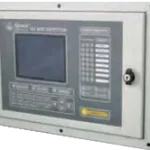
Overview
A crankcase explosion on a large bore diesel engine is not an abstract risk — it is a well-documented failure mode with a history of serious casualties in the commercial marine sector. The mechanics are consistent: bearing wear, piston blow-by, or lubrication failure raises the oil mist concentration inside the crankcase until it crosses the lower explosive limit; a hot surface or residual ignition source triggers detonation; the resulting pressure wave ruptures crankcase doors, projects debris across the engine room, and frequently ignites a secondary oil fire. The technical response to this risk — continuous, automatic crankcase oil mist monitoring with immediate alarm — has been a class society requirement and a SOLAS compliance standard for decades. The quality of that monitoring, however, determines how much warning the crew actually receives and how much time they have to respond before conditions become critical.
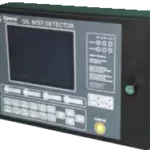
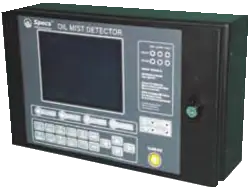
The Specs Oil Mist Detector COMD is Specs’ dedicated crankcase oil mist detector — a panel-mounted monitoring system with an integrated LCD display and front-panel control interface, designed for continuous automatic monitoring of oil mist concentration in diesel engine crankcases on commercial marine vessels. The COMD has achieved worldwide recognition for its quality and function in the crankcase oil mist detection application, alongside Specs’ AOMD engine room ambient detector — a recognition that reflects an established international installation base and the operational track record that comes from sustained deployment across diverse vessel types, engine configurations, and trading environments.
The differentiating characteristic of the COMD within the Specs monitoring family is its position as the crankcase-specific complement to the broader Specs engine room monitoring platform. Vessels deploying the COMD benefit not only from a dedicated crankcase monitoring instrument with worldwide recognition, but from the potential to expand that monitoring capability — adding the AOMD for engine room ambient coverage, the BWMS for bearing wear prediction on two-stroke engines, and the SEEMS for IMO-compliant energy efficiency reporting — all within a single manufacturer’s platform, with a consistent interface approach and a single support relationship. For ship managers looking to consolidate engine room monitoring rather than manage a collection of single-function instruments from different suppliers, the COMD is the natural starting point for a Specs platform deployment.
Key Features
Dedicated Crankcase Oil Mist Detection Architecture
The COMD is purpose-built for crankcase oil mist monitoring — not a general-purpose gas analyser or a smoke detector adapted for crankcase duty, but an instrument whose detection sensitivity, sampling architecture, and alarm logic are calibrated specifically for the crankcase oil mist application. The crankcase environment presents specific monitoring challenges: a sealed atmosphere with variable temperature and pressure conditions, background oil vapour from normal lube oil operation, and the need to distinguish a genuine oil mist concentration rise from normal operational variation. The COMD’s purpose-designed architecture addresses these challenges with detection parameters appropriate to the crankcase environment — providing reliable alarm triggering on genuine concentration rises without generating nuisance alarms from normal crankcase conditions.
Panel-Mount Enclosure with Integrated LCD Display
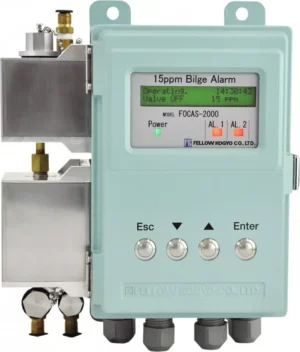
The COMD is housed in a robust panel-mount enclosure with an integrated LCD display and front-panel control buttons — visible and accessible from the instrument panel installation position. The LCD display provides real-time monitoring data, alarm status, and system information in a readable format appropriate for the engine room and engine control room environment. Panel-mount installation integrates the COMD into the engineer’s existing instrument environment — bringing crankcase monitoring data to the location where the engineer is already working, rather than requiring a separate monitoring station. The front-panel controls allow direct local access to monitoring data and system settings without requiring a laptop or external configuration terminal for routine operation.
Continuous Automatic Monitoring with Integrated Alarm Output
The COMD operates continuously and automatically — monitoring crankcase oil mist concentration without manual sampling cycles or periodic test procedures — and provides alarm outputs that integrate with the vessel’s engine room alarm and monitoring system. When oil mist concentration exceeds the pre-set threshold, the COMD triggers simultaneous local and remote alarms, alerting bridge watch officers and the engine room monitoring station. For vessels operating under UMS (Unmanned Machinery Space) class notation — where the engine room runs without a permanent duty engineer watch during at-sea passages — continuous automatic monitoring with reliable remote alarm output is a class requirement. The COMD’s architecture satisfies that requirement directly.
Part of the Specs Integrated Engine Room Monitoring Platform
The COMD is developed and supported within the Specs engine room monitoring family — alongside the AOMD (engine room ambient oil mist detector), the BWMS (bearing wear monitoring system for two-stroke engine crank-train bearings), and the SEEMS (ship energy efficiency monitoring system with IMO EEOI and CO2 reporting). For vessel operators deploying multiple monitoring functions, building around a single manufacturer’s platform reduces spare parts complexity, crew familiarisation requirements, and the service coordination burden of managing systems from multiple suppliers. The COMD is the crankcase safety monitoring foundation of that integrated Specs platform.
BWMS Integration — Bearing Wear Prediction Before Oil Mist Events Develop
Specs’ BWMS (Bearing Wear Monitoring System) is designed to predict bearing wear in two-stroke diesel engines — monitoring crosshead, crank, and main bearings — and provides early warning alarm and automatic slowdown signals before bearing wear reaches the condition that generates dangerous oil mist concentration. Deploying the COMD and BWMS together on a two-stroke main engine addresses the crankcase explosion risk at two stages: the BWMS provides predictive early warning of the developing mechanical condition that causes oil mist; the COMD detects the oil mist itself if concentration rises despite the BWMS warning. That two-layer monitoring architecture — prediction and detection — provides more comprehensive crankcase risk management than either system alone.
SEEMS Integration — Energy Efficiency and Emissions Monitoring
Specs’ SEEMS (Ship Energy Efficiency Monitoring System) collects real-time operational efficiency signals, calculates EEOI and CO2 values in accordance with IMO guidelines, and produces daily, voyage, and sea trial reports with trend graphs across variable time periods — covering more than 150 different monitored data points. For vessels subject to IMO CII (Carbon Intensity Indicator) rating requirements, SEEMS within the Specs platform provides an integrated efficiency reporting capability alongside the COMD’s safety monitoring function — consolidating both regulatory compliance monitoring requirements within a single platform deployment.
New and Refurbished Availability
The Specs COMD is available in both new and refurbished condition. New units are appropriate for newbuild vessel outfitting, class-required replacements, or fleet standardisation programmes migrating to the Specs monitoring platform. Refurbished units — inspected and functionally tested before supply — provide a cost-effective option for in-service replacements on vessels where the existing crankcase oil mist detector has developed a fault and operational or budget constraints favour a tested refurbished alternative over new-unit procurement. Both conditions are available through Alright Engineering Solutions with appropriate supply documentation for class survey support.
Technical Specifications
Maker: Specs
Model: COMD
Description: Specs Crankcase Oil Mist Detector COMD
Application: Marine diesel engine crankcase oil mist detection — continuous automatic monitoring
Enclosure: Panel-mount with integrated LCD display and front-panel controls
Monitoring Type: Continuous automatic crankcase oil mist concentration monitoring
Alarm Output: Integration with vessel engine room alarm and monitoring system
Platform: Part of Specs engine room monitoring family (AOMD, BWMS, SEEMS)
Suitable Operation: UMS (Unmanned Machinery Space) compliant
Condition: New & Refurbished
Benefits
Worldwide recognition reduces class survey uncertainty and procurement risk. Procuring a crankcase oil mist detector from a manufacturer without established class society acceptance history introduces risk into the survey process — class surveyors unfamiliar with a detector model may raise observations or require additional documentation before accepting the installation. The Specs COMD’s worldwide recognition means that class surveyors and marine engineering teams are familiar with the system, reducing the likelihood of survey complications and the time required to establish class acceptability for a new installation.
Panel-mount integration puts crankcase monitoring data where engineers are already working. Crankcase monitoring data should not require the engineer to leave the ECR or main instrument panel to check a separate standalone unit. Panel-mount installation integrates the COMD’s display into the instrument environment the engineer is already monitoring — reducing the risk that crankcase status is not checked during busy operational periods and supporting faster alarm response from the engineer’s normal work position.
Platform deployment consolidates monitoring investment across safety and performance functions. A vessel deploying COMD, AOMD, BWMS, and SEEMS within the Specs platform replaces four separate single-function instruments from potentially four different manufacturers with an integrated monitoring capability from one. That consolidation reduces spare parts inventory complexity, simplifies crew training, and creates a single service and support relationship for all engine room monitoring systems — reducing the operational management burden without compromising the monitoring coverage provided by each individual system.
BWMS combination addresses crankcase explosion risk at the mechanical source, not just the symptom. Oil mist is the symptom of a developing mechanical fault — bearing wear, piston ring deterioration, or lubrication failure. The COMD detects the oil mist; the BWMS identifies the bearing wear before it generates oil mist. Deploying both means the vessel has a chance to identify and address the root cause before the crankcase atmosphere reaches alarm concentration — not just to respond to oil mist after it has already risen to a dangerous level.
Refurbished availability supports cost-effective compliance maintenance on in-service vessels. For ship managers maintaining older tonnage on controlled maintenance budgets, a tested refurbished COMD unit provides class-compliant crankcase monitoring at a cost significantly below new-unit pricing — without compromising the functional reliability or class acceptability of the installed system.
Who It’s For
The Chief Engineer on a Two-Stroke Main Engine Vessel
You’re running a large bore MAN B&W or Wärtsilä two-stroke main engine on a vessel operating UMS passages across the Pacific. Your existing crankcase oil mist detector is ageing — it’s been generating occasional spurious alarms, the display is difficult to read, and you’re not confident it’s giving you a reliable measurement anymore. You need a replacement that your class surveyor will accept without question, that integrates with your existing alarm system, and that gives you clear local readout of crankcase status from the ECR without having to walk out to a standalone unit on the engine. You’ve also been considering the BWMS for bearing wear monitoring — the COMD as the starting point of a Specs platform deployment gives you that upgrade path without committing to the full system upfront.
The Technical Superintendent Standardising Fleet Monitoring
You manage a fleet of bulk carriers and tankers — some with existing Specs monitoring, others with a mix of different manufacturers’ crankcase detectors, bearing monitors, and efficiency logging systems. Every time a monitoring system develops a fault on one of your mixed-manufacturer vessels, you’re sourcing spares from a different supplier, your engineers are dealing with a system they’re less familiar with, and your class survey documentation is more complex than it needs to be. You’ve decided to standardise new monitoring installations and replacements on the Specs platform — COMD for crankcase monitoring, AOMD for ambient coverage, BWMS where the engine type warrants it — and you want a Singapore-based distributor who can supply and support across your fleet. Alright Engineering Solutions can manage that programme.
The HSE Manager Responding to a Safety Management System Audit Finding
An internal safety audit has identified that several vessels in your managed fleet are operating with crankcase oil mist detectors that are either out of service, giving unreliable readings, or have not been calibrated within their required maintenance interval. You need to source replacements — confirmed class-acceptable, with documentation to close the audit finding — and you need a procurement route that can supply multiple vessels across a short timeframe without requiring a separate supplier relationship for each vessel. Alright Engineering Solutions provides the Specs COMD in both new and refurbished condition, with class documentation support, for fleet-level procurement through a single Singapore-based distributor contact.
Possible Applications
- Large bore two-stroke diesel main engines — bulk carriers and tankers — Continuous crankcase oil mist monitoring on MAN B&W and Wärtsilä two-stroke main engines, deployed alongside the Specs BWMS for combined oil mist detection and bearing wear prediction on vessels where crank-train bearing protection is a priority
- Medium speed four-stroke main engines — ferries and offshore vessels — Crankcase monitoring on four-stroke propulsion engines operating under variable load conditions where lube oil system performance and bearing condition monitoring are ongoing operational concerns
- UMS deep-sea cargo vessels — container ships and ro-ro vessels — Continuous automatic crankcase monitoring satisfying UMS class notation requirements on high-utilisation commercial vessels where engine reliability directly affects schedule and commercial performance
- Oil tankers and chemical tankers — Crankcase safety monitoring on tanker main engines where engine room fire risk management is subject to heightened class society, flag state, and charterer vetting requirements
- LNG and LPG gas carriers — Crankcase oil mist detection on gas carrier propulsion plants where engine room safety monitoring standards reflect the elevated consequence of engine room fire events on vessels carrying flammable gas cargoes
- Offshore platform supply vessels and anchor handling tugs — Continuous crankcase monitoring on offshore support vessel main engines where unplanned propulsion loss in proximity to offshore installations creates complex casualty and rescue scenarios
- Specs platform consolidation deployments — COMD installation as the crankcase monitoring foundation of a broader Specs engine room monitoring deployment, expanding to AOMD, BWMS, and SEEMS on vessels standardising engine room monitoring on the Specs platform
- Class survey deficiency rectification — Replacement installation on vessels where the class surveyor has identified a defective or non-compliant crankcase oil mist detector during a scheduled survey, requiring confirmed replacement before the vessel can continue trading on the current class certificate
Trust and Certifications
Worldwide Recognition for COMD and AOMD Quality and Function
Specs has achieved worldwide recognition for the quality and function of both the COMD crankcase oil mist detector and the AOMD engine room ambient oil mist detector. That recognition reflects a sustained international installation history across diverse commercial vessel types, flag states, and class societies — providing the operational credibility that procurement teams and class surveyors look for when evaluating safety-critical monitoring equipment. For procurement managers sourcing a replacement crankcase detector, a manufacturer with worldwide recognition in the specific application reduces the class acceptance uncertainty and procurement risk associated with less-established alternatives.
Class Society Acceptance — UMS Crankcase Monitoring
Crankcase oil mist detectors installed on UMS-notated vessels are evaluated by classification societies as part of the UMS certification and periodic survey process. The Specs COMD is designed to meet crankcase oil mist detection requirements for UMS operation as specified by the major international classification societies — including Lloyd’s Register, DNV, Bureau Veritas, ClassNK, and ABS. Procurement teams sourcing a COMD for installation on a classed vessel should confirm applicable class documentation requirements with Alright Engineering Solutions before ordering — our team can provide documentation support for class survey purposes.
SOLAS Chapter II-1 — Crankcase Explosion Protection
SOLAS Chapter II-1 Regulation 26 requires diesel engines above specified cylinder bore and crankcase volume thresholds to be fitted with oil mist detectors or equivalent crankcase protection devices. Continuous automatic oil mist monitoring with alarm is the established standard for compliance with this regulation on commercial vessels operating on international voyages. The Specs COMD satisfies the continuous automatic crankcase monitoring requirement of SOLAS II-1 Regulation 26 — providing the flag state compliance basis required for vessels on international service.
IMO EEOI and CII Compliance Support via SEEMS
Vessels deploying the Specs SEEMS alongside the COMD benefit from IMO-compliant EEOI and CO2 emission calculation and voyage reporting within the same monitoring platform. As IMO CII rating requirements increase the operational and commercial significance of fuel consumption and carbon intensity monitoring, SEEMS provides an integrated pathway to CII compliance reporting — consolidating regulatory performance monitoring within the same platform as the COMD’s safety monitoring function.
Supplied Through Alright Engineering Solutions — Authorised Singapore Distributor
The Specs Oil Mist Detector COMD is supplied through Alright Engineering Solutions Pte. Ltd., an authorised distributor of marine engine room safety and monitoring equipment based in Singapore. Alright Engineering Solutions provides procurement support, class documentation assistance, and marine safety equipment sourcing for vessel operators, ship managers, and procurement teams across Singapore and the Southeast Asia region — with delivery capability to vessels in port and at regional ship repair and drydock facilities.
Accessories and Variants
Specs AOMD — Engine Room Ambient Oil Mist Detector
The Specs AOMD is the natural complement to the COMD — providing ambient oil mist monitoring coverage for the open engine room space that the crankcase-specific COMD cannot cover. Oil mist events from lube oil leaks, seal failures, and fuel system incidents in the open engine room are invisible to crankcase monitoring systems; the AOMD addresses that coverage gap. Deploying COMD and AOMD together provides comprehensive oil mist monitoring across both the crankcase and the engine room atmosphere — covering all significant oil mist generation scenarios in the machinery space.
Specs BWMS — Bearing Wear Monitoring System
The Specs BWMS monitors crank-train bearing wear on two-stroke diesel engines — crosshead, crank, and main bearings — and provides early warning alarm and automatic slowdown signals before wear reaches a critical condition. The BWMS addresses the mechanical root cause of crankcase oil mist events: bearing wear leading to lubrication irregularities and crankcase atmosphere contamination. Deploying BWMS alongside the COMD creates a two-layer crankcase risk management architecture: predictive bearing condition monitoring backed by direct oil mist detection.
Specs SEEMS — Ship Energy Efficiency Monitoring System
Specs’ SEEMS collects real-time operational efficiency data, calculates IMO EEOI and CO2 emission values, and produces daily, voyage, and sea trial reports across more than 150 monitored data points. For vessels subject to CII reporting requirements, SEEMS provides an integrated efficiency reporting capability within the same Specs platform as the COMD — consolidating safety and regulatory compliance monitoring within a single system deployment and a single manufacturer support relationship.
Replacement Sensing Elements and Maintenance Spares
Optical sensing elements within the COMD’s detection circuit require periodic cleaning and scheduled replacement as part of the unit’s planned maintenance programme. Alright Engineering Solutions can assist with sourcing compatible replacement sensing components and maintenance spares for the COMD — contact our technical team with your installation details for parts availability and maintenance schedule support.
Get in Touch
If you need to source the Specs Oil Mist Detector COMD — for an in-service replacement, a planned drydock programme, a class survey deficiency rectification, or as the starting point of a broader Specs monitoring platform deployment — contact Alright Engineering Solutions to confirm availability and request a formal quotation.
Our team can advise on the full Specs monitoring family — COMD, AOMD, BWMS, and SEEMS — and support fleet-level procurement programmes for ship managers standardising engine room monitoring across managed vessels.
📍 3791 Jalan Bukit Merah #06-01, E-Centre @ Redhill, Singapore 159471